James Forsyth

James Forsyth

James Forsyth is former political editor of The Spectator.

Are Rishi’s No. 10 dreams dashed?

From our UK edition

24 min listen

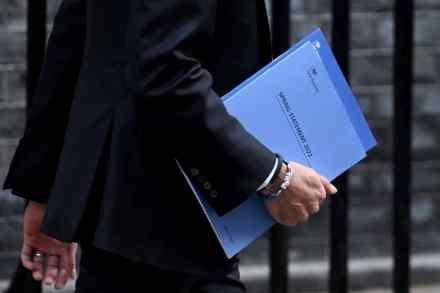
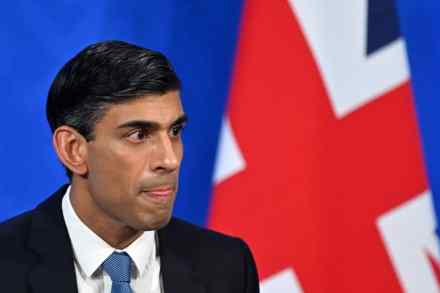
For the last two years, Rishi Sunak has appeared the frontrunner in any future Tory leadership election. But has his spring statement and damaged his standing within his party and among the public? Katy Balls speaks to Fraser Nelson and James Forsyth about Rishi Sunak's future and Britain's economic forecast.

Will inflation bring back austerity?

From our UK edition

The return of inflation has changed politics, I say in the Times today . Until recently, it was possible to argue that the government should borrow to slashes taxes, or to cover almost any additional spending. It was so cheap to do so that it was almost rude not to, the argument went. Inflation was also dismissed as a dog that hadn’t barked since the early 1990s. Johnson was relaxed, while last September Liz Truss thought that – if necessary – borrowing would be a better way to pay for the government’s social care policy than raising National Insurance. But debt payments are now expected to quadruple. They will absorb an extra £96 billion between now and 2027, which puts a limit on how much more the government should want to borrow.

Is Nato still unified?

From our UK edition

11 min listen

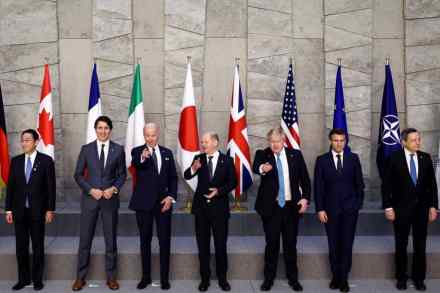
The Prime Minister has just returned from a Nato meeting in Brussels. So far, the alliance's members have been unified in their response to Russia, but with President Zelensky now asking for Nato to send tanks to Ukraine, are we going to see cracks emerge?Katy Balls talks with James Forsyth and Isabel Hardman.

Did the spring statement go far enough?

From our UK edition

12 min listen

Well the papers haven't been too kind about Rishi Sunak's spring statement. To unpack if it truly deserves this level of vitriol Cindy Yu talks to James Forsyth about the UK's economic future as well as Nato's more unified front.

The Chancellor’s difficult choices

From our UK edition

The Office for Budget Responsibility was designed to protect the Chancellor from accusations that he is cooking the books. If the forecasts are prepared by an independent body, there can’t be the suggestion – as there often was before the OBR’s creation in 2010 – that they have been politically influenced. But what the OBR cannot do is eliminate uncertainty. In recent years, the likely trajectory of the financial future changed quite a lot from one month to the next: from interest rates and inflation to the Covid pandemic and Russia’s invasion of Ukraine. The OBR itself admits that it had to conduct its work without knowing the full economic implications of the war. But it has cut its growth forecast for the UK economy anyway.

Is there a stealth tax hidden in the spring statement?

From our UK edition

17 min listen

While on the surface there might seem like a lot to like in Rishi Sunak's spring statement. Yes, the NI tax increase is still there, but the tax threshold to pay it is being raised. And there is even a promise of an income tax cut coming in 2024. But does the spectre of inflation mean that many of these supposed benefits won't be felt tangibly for the average taxpayer and may even see the amount they give to the government go up?Katy Balls is joined by James Forsyth, Kate Andrews and Fraser Nelson to discuss.

Rishi Sunak has just defined the next election

From our UK edition

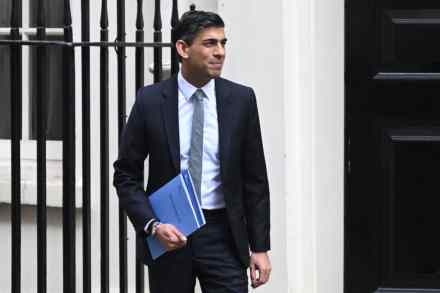
The biggest surprise of Rishi Sunak’s spring statement was the announcement that the basic rate of income tax will be cut by one penny come 2024. This is the first cut in the basic rate since the cut to 20p announced by Gordon Brown in his last Budget in 2007, which was of course partly paid for by abolishing the 10p starting rate of tax. Cynics will be quick to suggest that there is a long way to go before 2024 and so the tax cut might not happen. But this is to ignore the politics. The most likely date for the next election is May 2024. It would be bizarre, and electorally disastrous, for a government to announce that it intends to cut taxes just before that date and then fail to do so. Sunak has lashed himself – and the government – to the mast.

What are Sunak’s motives on the NI rise?

From our UK edition

15 min listen

Tomorrow is the spring statement. The proposed NI rise set to be outlined in it has been described by the Labour leader Keir Starmer as a 'cynical' move so the Chancellor can cut taxes before the next election for political brownie points. But what are Rishi Sunak's true motives?Cindy Yu deciphers them with Katy Balls and James Forsyth.

Was Boris’s Ukraine/Brexit comparison a mistake?

From our UK edition

16 min listen

Over the weekend, Boris Johnson sparked a wave of criticism after he linked the Ukraine crisis to Brexit. During his speech at the Conservative Party's Spring Conference, the PM suggested that Ukraine's decision to 'choose freedom' was reminiscent of Brexit. 'I think it was up there with the Jimmy Saville joke which he made about Keir Stamer in things which should not have been said.' - Fraser Nelson.Also on the podcast, will Rishi Sunak be forced to u-turn on his commitment to low taxes? In the week of the Chancellor's Spring Statement, Russia's full-scale invasion of Ukraine means that the goalposts have moved. All to be discussed as Isabel Hardman is joined by Katy Balls, James Forsyth and Fraser Nelson.

How to stop China from attacking Taiwan

From our UK edition

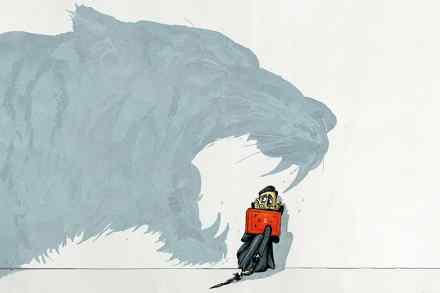
Since Russia invaded Ukraine, the West has got many things right. Yet there is no doubt that Western mistakes over the past few years, and splits in the weeks and months beforehand, made Putin think he could get away with his invasion. The West cannot afford to repeat these with Taiwan, I say in the Times today. There are four lessons that the West should learn from Ukraine if it is to deter China from attacking Taiwan. First, it should be explicit that Beijing will be hit with sanctions at least as strong as those on Russia if it tries to blockade or take Taiwan. The West should move to equip the Taiwanese forces now rather than waiting until the invasion fleet is on the horizon Second, the West should act now to reduce its dependence on China.

Is a boost to defence spending feasible?

From our UK edition

15 min listen

As Rishi Sunak finalises his Spring Statement, how can he resolve the trilemma of an ageing society, no peace dividend and low growth? Meanwhile, there is a broad Tory desire for increased defence spending amid the Russia Ukraine invasion. But from where will this money be taken? 'This isn't an easy time for Rishi. If you look at what it is costing us just to service the debt, it's going up by billions and billions of pounds' - Kate Andrews. All to be discussed as Katy Balls speaks to Kate Andrews and James Forsyth.

Is partygate no longer an issue for Boris Johnson?

From our UK edition

14 min listen

The Tory spring conference is this weekend. Before the invasion of Ukraine, when partygate dominated the headlines, it was predicted to have the feel of a pageant show for potential candidates to replace Boris Johnson. But now, with even Labour quieting their cries for resignation, what will the atmosphere of this event be?Max Jeffery talks to James Forsyth and Katy Balls.

Why has P&O ferries laid off its staff?

From our UK edition

13 min listen

Today P&O ferries announced to 800 staff that they were being made redundant with immediate effect as security mounted to ferries to escort the staff off the premises. The company said the staff will be served with "enhanced" severance packages, calling it a "necessary decision" to protect its remaining 2,200 staff. Was this fair when they received furlough pay from the taxpayer all through lockdown?Also on the podcast, the Bank of England has announced a rise in interest rates in a bid to curb inflationary pressures. Can this help ease the looming cost of living crisis?All to be discussed as Katy Balls speaks to Kate Andrews and James Forsyth.

What can save China from Covid?

From our UK edition

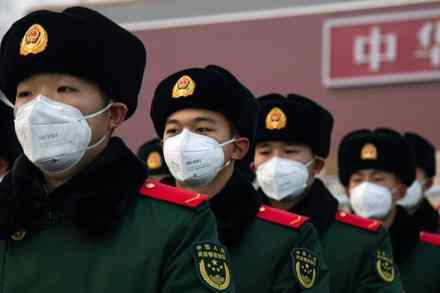
It is tempting to believe that we have gone from one crisis to another: Russia invaded Ukraine hours after Covid restrictions were lifted in England. Tempting, but wrong. Covid is now manageable because of high levels of immunity from vaccines and prior infection (just look at how our high case rate isn’t leading to calls for the reintroduction of restrictions). But it remains problematic in less highly vaccinated countries, particularly those pursuing a zero-Covid strategy. The most dramatic example is China. There are approximately 15 million unvaccinated over-eighties in the country (Beijing prioritised immunisation by profession rather than age).

Why has Iran finally released Zaghari-Ratcliffe from prison?

From our UK edition

10 min listen

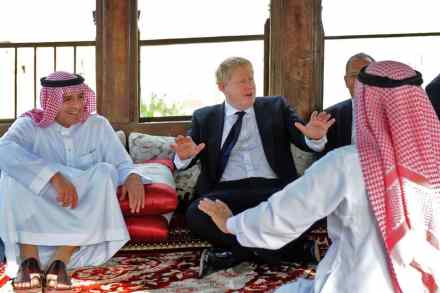
After 6 years in jail in Iran, Nazanin Zaghari-Ratcliffe has been released and will return home to her husband and their seven-year-old daughter. The UK has paid a debt of £400 million as part of this negotiation which has been an ongoing diplomatic dispute between Britain and the Iranian government. Who were the key players in her release negotiations? And is this a win for Boris Johnson?Also on the podcast, Boris Johnson's Saudi Arabia trip continues as he aims to encourage Mohammed bin Salman to increase oil exports to the UK.'Now we see a sort of Boris of Arabia heading off into Riyadh. He's always had a good relationship with bin Salman ever since he was Foreign Secretary, they are on texting terms' - Fraser Nelson.

The West has to bite its lip for Saudi oil

From our UK edition

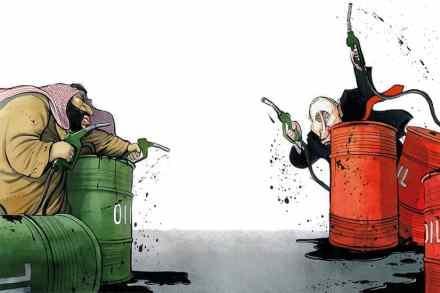
It would be ridiculous to claim that Boris Johnson’s visit to Saudi Arabia is not morally problematic. He is going to a country which held a mass execution for 81 people this weekend – a record number – and to visit a man who US intelligence blames for the brutal murder of the journalist Jamal Khashoggi. Yet, if the West wishes to reduce Vladimir Putin’s leverage – and stabilise the oil market – then it needs Saudi Arabia to pump more; no country has more spare capacity than Saudi Arabia, which could produce another 1.5 to 2 million barrels a day if it wanted to.

David Frost’s solution to cool UK-EU relations

From our UK edition

Since David Frost quit the government in December over its political direction, he has not said that much about the future of UK-EU affairs. But in the Churchill lecture at the University of Zurich tonight, he sets out a potential new basis for relations. His tone is warm and marks a deliberate attempt to move on from the scratchy relations of the last few years: he argues that there is a ‘need to recognise that the EU is a natural ally of the United Kingdom, and that we should seek – as sovereign equals – ways to cooperate and work together more.

Will Saudi oil really fix Britain’s energy crisis?

From our UK edition

11 min listen

Boris Johnson is travelling to the Middle East tonight, where he'll be meeting Gulf leaders and trying to convince them to pump more oil. With Britain's energy price cap likely to rise to £3,000 in October, how important is it for the Prime Minister to get what he wants? And will more supply alone fix the problem? Max Jeffery speaks to James Forsyth and Katy Balls.

Will Boris Johnson charm the Saudis?

From our UK edition

14 min listen

Vladimir Putin's war in Ukraine has caused the prices of oil and gas to skyrocket. One of the Prime Minster's strategies to combat this appears to be a visit Saudi Arabia this week, where he'll ask Crown Prince Mohammed Bin Salman to release more oil. But what's the chance of this working?Katy Balls is joined by James Forsyth and Isabel Hardman.

Can Boris get the Saudis to pump more oil?

From our UK edition

The oil price is up by more than 40 per cent since the start of the year. It is being driven up by the Russian invasion of Ukraine, the lack of investment in oil and turning the world economy on and off again: US production is still not back to pre-pandemic levels. In the immediate term, as I say in the Times today, pretty much the only way to bring the price down is to get Saudi Arabia – which has 1.5 to 2 million barrels a day of spare capacity – to pump more. The West’s relationship with Saudi Arabia has always been morally problematic.