James Forsyth

James Forsyth

James Forsyth is former political editor of The Spectator.

A significant moment in the battle for the 1922 Committee

From our UK edition

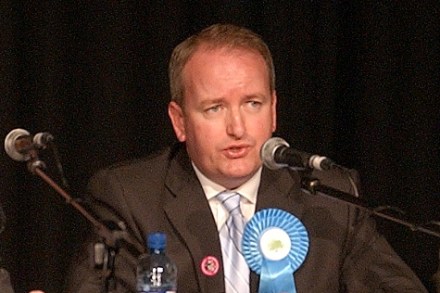
It might mean little to people outside Westminster, but the decision of Mark Pritchard not to stand for re-election to his job as Secretary of the 1922 Committee is a significant moment. It suggests that the Cameroons might be making some progress in their attempt to gain control of the internal structures of the parliamentary party. Pritchard has been a thorn in Number 10’s side ever since he started warning against the ‘Purple Plotters’ who wanted to merge the two coalition parties back in January of last year. Since then, his positions on circus animals, his role in the rebellion of the 81 and his general willingness to speak out against the government have driven Cameroons into a rage.
The government’s options for a child benefit tweak

From our UK edition

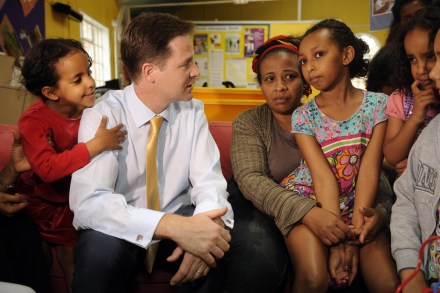
Nick Clegg has confirmed this morning that the coalition is looking at how to tweak its policy of removing child benefit from families in which someone pays the higher rate of income tax. As I wrote in the Mail on Sunday, there are three options being explored. The first is designed to address the fact that, a family where one parent works and earns £45,000 while the other stays at home raising the children would lose their child benefit while the one next door where both parents are on £40,000 would keep theirs. This change would see families with one higher rate taxpayer lose only half of their child benefit. But, I understand, that this is not the preferred tweak at the moment.

Hilton’s return hinges on Cameron’s radicalism

From our UK edition

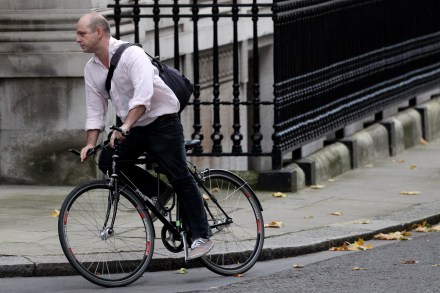
It is a sign of the influence that Steve Hilton has on the Cameron project that there have been more column inches devoted to his departure from Downing Street than there would be to most Cabinet resignations. But even after he heads to California in May, Hilton will still be part of the Cameron brains trust. He is already scheduled to work on the Prime Minister’s conference speech. Hilton has, I understand, been mulling the idea of taking a sabbatical since last summer. His decision to go ahead and take next year off seems to have been motivated by a variety of factors. But those closest to him stress that family reasons genuinely were key. This is not to say that Hilton is not frustrated.

Cameron’s pitch to women voters

From our UK edition

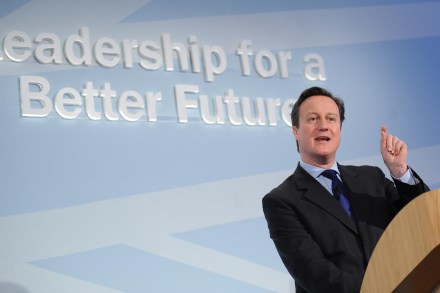
David Cameron’s speech today is another reminder of how concerned the Tories are about losing their traditional advantage among female voters. The message that the Tories are cutting so that the country is passed on in a better state to the next generation is a direct response to the fact that the party’s polling has found mothers to be deeply concerned that their children will not have as good a quality of life as they have had. At the away day for Tory MPs last week, Andrew Cooper — the PM’s chief political strategist — said that talking about deficit reduction in these terms was crucial to winning over female swing voters.

Politics: The Liberal Democrats hold the key to boundary reform – and therefore the next election

From our UK edition

The Cameroons believe they have come up with a policy that will deliver at least 20 more Tory seats at the next election. No. 10 is, understandably, determined to get this measure through: nothing else promises them anything like the same electoral dividend. But this silver bullet isn’t a tax cut or a new approach to Europe. It is a set of changes to the constituency boundaries. This boundary review has been designed to limit the pro-Labour bias in the Westminster electoral system. It reduces the number of parliamentary seats from 650 to 600, which notionally reduces the number of Labour MPs by 28. If its recommendations are enacted, the effect on British politics would be dramatic.

After Hilton

From our UK edition

Perhaps, the greatest testament to Steve Hilton’s influence in Downing Street is that everyone chuckles when you ask if anyone will replace him. His role in Number 10 as the senior adviser was one he had carved out for himself so that he could work on what he wanted to. It is deliberately designed not to fit on any ‘org chart’, the kind of document that the post-bureaucratic Hilton has little patience for. Hilton was for years caricatured as being not really right-wing. But, in reality, the opposite is true — he was, in some ways, the most right-wing man in Downing Street. Few matched him on subjects like 50p tax and labour market regulation. The Lib Dems were right when they called him ‘Thatcher in a t-shirt’.

Europe is being strangled by the Franco-German alliance

From our UK edition

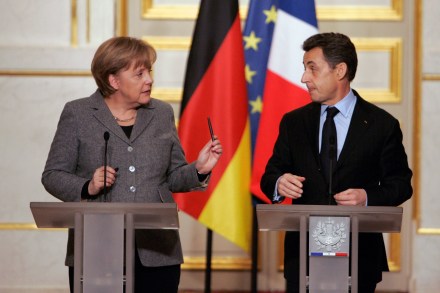
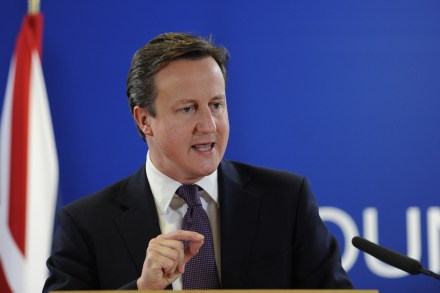
David Cameron’s complaints at last night’s EU meeting about the lack of a growth agenda have, in part, been addressed by the new draft conclusions. Cameron — who was supported by the Dutch, Italians and Spanish — seems to have secured promises on the completion of the single market, deregulation and the services directive in the summit’s draft conclusions. This isn't going to turn around the European economy. But it is a step in the right direction and a small, but possibly significant, victory for the PM.   I understand from sources in Brussels that there has been frustration with the extent to which the conclusions presented last night simply echoed the views of the Germans and the French.

Imagine if Cameron hadn’t vetoed…

From our UK edition

When David Cameron headed to Brussels last December, it was far from certain that he would veto the proposed treaty. It was only when Nicolas Sarkozy proved totally uninterested in accommodating Britain’s demands that the Prime Minister decided that he could not sign up to it. In a way, Sarkozy did Cameron a favour. Imagine if Britain had got the safeguards the Prime Minister wanted and had signed up to the treaty. How would he then have reacted this week, when the Irish announced that they were going to hold a referendum on it? The pressure from the Tory benches to let the British people vote on it would have been immense.

Grayling bows to the inevitable

From our UK edition

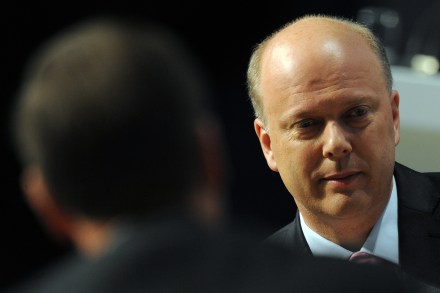
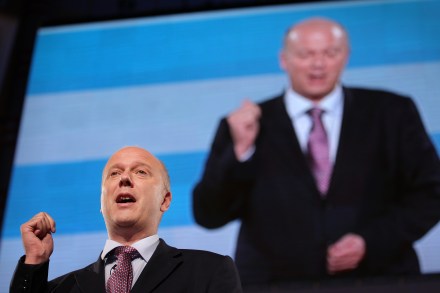
The changes announced to the work experience programme today have been designed to reassure the companies involved. Those on the scheme will now only face any benefits sanction if they commit the equivalent of gross misconduct. Once some big corporations started getting cold feet about the scheme some tweaks to it were inevitable. As Matt d'Ancona wrote on Sunday, corporate Britain has proved remarkably spineless in the face of attacks from a bunch of hard-line left-wingers. But the tweaks announced today by Chris Grayling — whose robustness on the issue has impressed Tory high command — maintain the purpose of the scheme. Offering those who are unemployed structure and a way back into the workforce are crucial in moving them from welfare into work.

What James Murdoch’s move tells us

From our UK edition

When Rupert Murdoch visited the Sun newsroom recently, eyebrows were raised by the fact that he was accompanied not by James Murdoch but Lachlan Murdoch. James Murdoch, who has never had his father’s emotional commitment to the newspaper side of the business, has now stepped down as executive chairman of News International, though he remains as deputy COO of News Corporation.   James Murdoch has not come out well of the various investigations into hacking. He has appeared to have been oddly uninterested in developments at the company. His performances in front of parliamentary select committees have left several questions unanswered. James Murdoch, though, will now have left News International before the Culture, Media and Sport select committee reports.

Miliband can count on the NHS in PMQs, but not much else

From our UK edition

Today’s main PMQs drama came after the session itself had ended. Julie Hilling, a Labour MP who Cameron had said was ‘sponsored’ by the union whose leader threatened to disrupt the Olympics last night, said in a point of order that she was not ‘sponsored’ by Unite. The Labour benches were in full flow, jeering at Cameron as he was leaving the chamber. Cameron then returned to the despatch box and pointed out that she had declared a donation from Unite to her constituency Labour party in the register of members’ interests. I suspect that this row about the meaning of the word sponsorship will rumble on. Labour hate the charge while the Tories think it is politically potent.

McCluskey versus the Olympics

From our UK edition

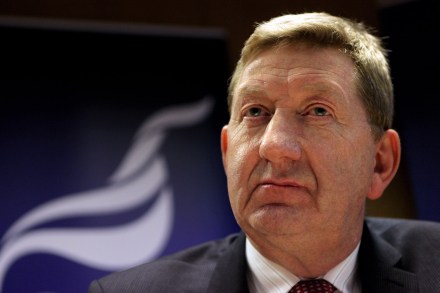
The declaration by Len McCluskey, the leader of Unite, that public sector unions should consider disrupting the Olympics is going to re-ignite the whole debate about union power. McCluskey tells Andrew Sparrow that ‘The attacks that are being launched on public sector workers at the moment are so deep and ideological that the idea the world should arrive in London and have these wonderful Olympic Games as though everything is nice and rosy in the garden is unthinkable.’ McCluskey’s ill-considered threat is a headache for Labour. Unite is Labour’s largest donor and the Tories are already calling on Miliband to denounce him. I suspect that the Boris campaign will be making the same demand of Ken Livingstone soon.

The private sector must be revived in Northern Ireland

From our UK edition

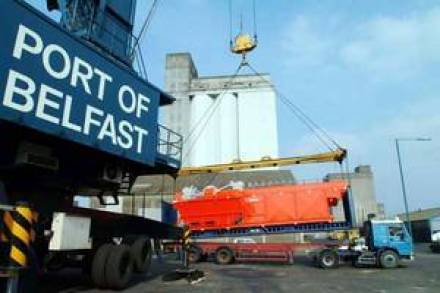
One quirk of the welfare reform debate is that many of the reforms won’t automatically apply in one of the parts of the United Kingdom with the worst welfare problems: Ulster. As Owen Paterson, the Northern Ireland Secretary, points out in a speech tonight, ‘Northern Ireland has proportionately one third more households living on out of work benefits as the rest of the UK’. He also notes that 1 in 10 of the population there are on Disability Living Allowance, double the UK average. But the Work Programme doesn’t apply in Northern Ireland and any welfare reform there will have to be done by the Executive. Paterson is now campaigning to make the case to local politicians for reform, for maintaining parity with the rest of the United Kingdom.

Clegg shifts into NHS attack mode

From our UK edition

The letter from Nick Clegg and Shirley Williams to Lib Dem MPs and peers raises several interesting questions. The first of which is why did Clegg champion these health reforms back in the day? Four days after the first reading of the bill, the deputy Prime Minister had this exchange with Andrew Marr: Andrew Marr: 'Huge change to the NHS just coming down the line. Was that in the Liberal Democrat manifesto?' Nick Clegg: 'Actually funnily enough it was. Indeed it was.' Second, how does the Clegg-Williams claim that ‘This is not the Bill that we debated as a party last March’ fit with the Tory line that the amendments to the bill have largely been to deal with misunderstandings about what it allows?

Tories question Lib Dems’ commitment to post-election cuts

From our UK edition

The mood of this morning’s ‘Growth Forum’ hosted by the Free Enterprise Group of Tory MPs and the Institute for Economic Affairs was summed up by Kwasi Kwarteng’s introductory remark that to meet the OBR’s ‘ambitious growth targets’, the coalition ‘can’t just bumble along’. The headline news coming out of the event is Andrew Tyrie, the influential chair of the Treasury Select Committee, calling for it to be made clear that the government’s ambition is to get state spending down to 40 per cent of GDP. David Ruffley also caused a stir by saying that BIS and, possibly, DCMS should be abolished.

The coalition for a Boris victory

From our UK edition

When David Cameron addressed Tory MPs on Friday, he told them that the London Mayoral elections were ‘the binary moment of 2012’. He argued that if Labour lost in London, one of their traditional strongholds, it would be a disaster for Ed Miliband. In the Cameron narrative, a Boris victory in May would mean that the Labour leader would remain under pressure and continue to be the subject of regular attacks in the press. Interestingly, there are Liberal Democrats close to Nick Clegg who share this analysis. Their worry is that a Livingstone victory combined with bad local election results for Lib Dem could turn the deputy Prime Minister back into the party leader under pressure.

The two types of Tory modernisation — and which one’s on the rise

From our UK edition

There have always been two types of Tory modernisers. Both wanted to talk about issues that the party had neglected — public services, the environment and the like. But the soft modernisers were more prepared to compromise ideologically, to go with the flow of the age. The hard modernisers’ interest, by contrast, was in applying Tory thinking to these areas. Michael Gove’s education reforms are, perhaps, the best example of hard modernisation in action. As Charles Moore puts it in the Telegraph today, ‘Mr Gove offers an attractive combination — complete loyalty to the Cameron modernisation, but a Thatcher-era conviction politics as well’.

Irreconcilable differences

From our UK edition

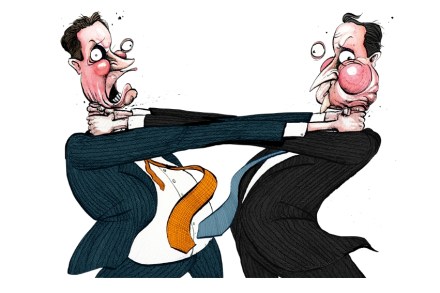
It has become clear over the last few weeks that we are witnessing the beginning of the end of the coalition. Once, the rows between Tories and Lib Dems used to be about peripheral issues, but they are now about the central planks of government policy. In happier times, disputes used to lead to better policy-making; now they result in crude horse-trading. The coalition used to be underpinned by trust between the central players in each party. That trust is now breaking down and there is a growing feeling that the coalition cannot go the distance until 2015. One Downing Street adviser told me this week, with a fatalistic air, that a ‘2014 election wouldn’t be too bad really. David would have done his best, Nick would have done his best.

Gove knows the importance of adoption

From our UK edition

https://www.youtube.com/watch?v=bORDrO3hA5w The coalition’s work on adoption is one of its more impressive bits of public service reform. It starts from the right premise, that adoption is vastly preferable to children being in care. It then uses changes to the regulations, transparency and a plethora of providers to try and increase the number of adoptions. It is, for example, absurd that the current system has left to children being left in care because of worries that their ethnicity does not match that of their potential adopters. Or, that people are being denied the chance to adopt because they smoke. These reforms are being pushed hard by both Number 10 and the Department for Education. Michael Gove, the education secretary, was himself adopted.

Grayling mounts a robust defence

From our UK edition

The Work Experience scheme is a sensible policy innovation. Giving the unemployed structure to their days, the chance to earn some experience and learn some skills is surely preferable to doing nothing for them beyond bunging them some money every week. Indeed, I would say that it was by far the more compassionate policy. Chris Grayling’s robust response to Polly Toynbee’s criticisms is a welcome example of the coalition taking on its critics. Grayling, who had a torrid election campaign, has recovered his footing at DWP and the Work Programme he is running is potentially transformative. It is based on the idea that the companies and voluntary organisations involved are paid by results.