James Forsyth

James Forsyth

James Forsyth is former political editor of The Spectator.

Politics:  Which party will win the anti-politics vote?

From our UK edition

One might think that the Cameroons would be desperate about a poll showing their leader’s personal approval rating to be the lowest it has ever been. But the Prime Minister’s negative rating, minus 27, looks positively healthy when compared to those of the other two party leaders: the same poll showed Ed Miliband at minus 41 and Nick Clegg at minus 53. We are now in an era when the public are dissatisfied with all political parties and their leaders. Ask them which of Cameron, Clegg and Miliband would make the best prime minister and 46 per cent of them say they just don’t know. This is part of a broader sense of national alienation.
The Blair-Brown wars continue

From our UK edition

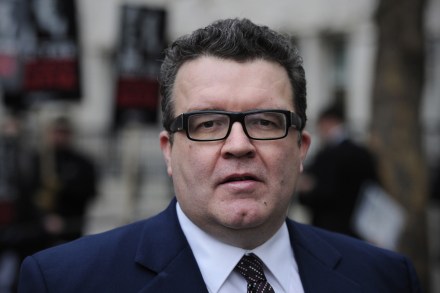
It took the Tory party 15 years to recover from the bad blood created by Margaret Thatcher’s forced resignation. So it is, perhaps, unsurprising that five years on, the bitterness from Tony Blair’s being pushed out of office has not yet subsided. Phil Collins, who was a speechwriter to Blair, has today written a scathing piece about Tom Watson, the leader of the so-called curry house coup against Blair. Collins accuses Watson of putting the ‘occupation of internal power’ in the party by his faction above the interests of the Labour party.

The resistance to elected mayors shows how badly they’re needed

From our UK edition

The old political establishment in the cities is fighting back against the idea of city mayors. They know that a directly elected mayor threatens their traditional power base. As Jill Sherman reports in The Times today, ‘In Nottingham, the Labour council has put up posters around the city to demonstrate its opposition while the Labour group has sent newsletters to residents saying that a “Tory Extra Mayor” will cost £1 million.’ But it is not just Labour councils who are desperately trying to stop yes votes on May 3rd. Lib Dem-run Bristol City Council is also fiercely against the idea of a directly elected mayor.

Where will the disenchantment with mainstream politics lead?

From our UK edition

The big question in British politics right now is what happens when the voters are dissatisfied with all the three main parties and their leaders. According to a recent opinion poll, David Cameron’s approval rating is now down to minus 27. According to the invaluable Anthony Wells, this is the lowest it has been since Cameron became Tory leader. But the PM’s numbers look positively healthy compared to Miliband's (minus 41) and Clegg's (minus 53). Dissatisfaction with political leaders isn’t the only indicator that people aren’t happy. As I report in the column this week, senior Downing Street aides have been much struck by polling showing that more than 40 per cent of Britons would emigrate if they could.

Shapps has ‘deep reservations’ about the ‘conservatory tax’

From our UK edition

There is deep unease among Tory ministers about the proposals for a so-called ‘conservatory tax’. The idea, which was pushed hard by Chris Huhne when he was Energy Secretary, is that when anyone does substantial home improvement work they would be made to make other changes to make their house more energy efficient. It is estimated that this would add about 10 percent to the cost of adding a conservatory or an extension to your house. The government is currently consulting on the policy. But I understand that Grant Shapps, the housing minister, has ‘deep reservations’ about it. He fears that the proposals are anti-aspiration and could risk bolstering the impression that the coalition is out of touch.

The teachers’ unions take on Ofsted, Osborne and Gove

From our UK edition

I counted five issues which the NUT conference suggested that teachers might strike over. But in a conference full of the usual bluster, the most noteworthy threat was not to cooperate with Ofsted inspections. Ever since the new chief inspector Sir Michael Wilshaw — who was hugely successful as the head of Mossbourne academy — announced that a merely satisfactory grade would no longer be regarded as good enough, the teaching unions have taken agin him. But not cooperating with Oftsed would be unlawful. Anyone who tried to block an inspection would be liable to prosecution and a fine. Another issue exercising the unions is George Osborne’s proposals for regional pay for the public sector.

The Tory leadership is still fighting John Major’s battles

From our UK edition

Bruce Anderson has written a typically trenchant piece today describing the Tory party’s treatment of John Major as ‘the most unworthy, the most shameful, period in Tory history.’ Based on both how close Bruce is to those around David Cameron and my own conversations, I would say that this is a verdict that many in the Tory leadership would agree with. Indeed, the way in which Major was treated by some Tory backbenches has informed — often with calamitous consequences — Cameron’s approach to party management. Take, for instance, Cameron’s effort straight after the election to neuter the 1922 Committee and turn it into the Conservative Parliamentary Party.

Mr Cameron goes to Leveson

From our UK edition

One of the media’s vices is to assume that the public are as interested in stories about journalism as journalists are. This always makes me slightly reluctant to write about the Leveson inquiry - more fascinating for my trade than to anybody else. But the Leveson inquiry is about to enter its political phase which, I think, makes it more relevant. Politicians will start appearing before it from towards the end of next month and, as I say in the Mail on Sunday, David Cameron is scheduled to face the inquiry which he created in mid-June. Six other Cabinet ministers are expected to be summoned before the inquiry. For Cameron, this is going to be a tricky moment (think horses, Oxfordshire weekends etc).

Osborne’s Easter gift to Boris

From our UK edition

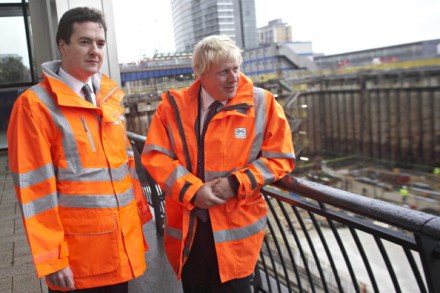
George Osborne indicating that he is open to him and other ministers having to publish their tax returns is testament to two things. First, the Tory leadership, who know how crucial a Boris victory in London is to the Cameron project regaining momentum, is keen to keep the pressure on Ken Livingstone over his tax affairs. They have no desire to let a row over whether they’ll publish theirs distract attention from the problems of Labour’s mayoral candidate. As Osborne himself stresses in the Telegraph interview, “The reason we are talking about this now is that this is a smokescreen for Ken Livingstone’s tax affairs. Let’s not take the focus off him.

Politics: How Boris could rescue Dave

From our UK edition

Downing Street is, in the words of one senior aide, in a mood of ‘sober reflection’ about how and why so many things have gone wrong in the past fortnight. The question now is whether the government can expect more of the same for the rest of the year. The answer will turn on two elections in May, the contest for the London mayoralty and the one to choose the 1922 Committee of Tory backbenchers. Even those in No. 10 who most dislike Boris Johnson know that his re-­election is crucial to their prospects. A Boris triumph would make the last few weeks seem like a blip rather than a permanent shift in the political landscape. If Labour can’t take the capital, there’ll be a fresh bout of speculation about Ed Miliband’s leadership.

The importance of sacking bad teachers

From our UK edition

The opposition of the National Union of Teachers to the government’s plans to make it easier to fire bad teachers is entirely predictable. The NUT has long placed the interests of the worst of its members above those of the children being educated in the state system. Given what we know about just how crucial good teaching is to a child’s educational achievement then it is absolutely vital that the coalition does push these changes through. One of the most important parts of these changes is ending the process by which bad teachers are simply shuffled around the system. Academy schools already have the power to vary pay. But, sadly, few are choosing to use it.

The implications of today’s tax releases

From our UK edition

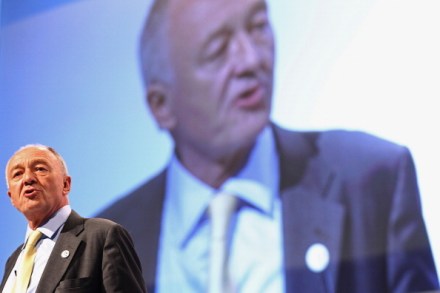
I suspect that three important consequences will flow from the release today of the London mayoral candidates tax returns. First, voters will see that Boris Johnson’s rage at Ken Livingstone on Tuesday as being thoroughly justified. Second, they’ll see that Ken Livingstone, despite all his left-wing rhetoric, is the only one of the four main candidates to have tried to make his affairs tax efficient. The third consequence is that a precedent has now been set that politicians running for office should publish their tax returns. I’ll be shocked if one of the three party leaders doesn’t try and steal a march at the next election by volunteering to publish their information and challenging the others to do the same.

The coalition to defeat Ken Livingstone

From our UK edition

The most striking thing about tonight’s mayoral hustings on Newsnight was how often Brian Paddick attacked Ken Livingstone. Paddick, who turned in the most assured performance of all the candidates, accused Livingstone of being like a ‘bad 1970s comedian who plays to whatever audience he’s talking to.’ He also, interestingly, sided with Boris Johnson when the discussion turned to the 50p tax rate and then the candidate’s own tax affairs. It is tempting to see Paddick’s performance tonight as testament to how keen the Liberal Democrat top brass are to see Livingstone defeated in London.

Ed Davey’s ‘pro-European’ claim has Tory ministers fuming

From our UK edition

There’s barely disguised fury among Conservative ministers about Ed Davey’s claim that the coalition may well be more pro-European than the Labour government was. One complained to me earlier that it was typical Lib Dem mischief making and that ‘if they are not going to behave like normal ministers then we shouldn’t either’. Indeed, this minister went on to suggest that William Hague should publicly slap down Davey for his comments. I doubt this is going to happen. Davey is the leading Lib Dem on the Cabinet’s European Affairs Committee and I suspect there’s little appetite in the Foreign Office for a coalition row over Europe.

Boris is right, but will anyone listen?

From our UK edition

The tensions that have been bubbling away in the London mayoral contest spilt out into the open today with Boris Johnson accusing Ken Livingstone of lying about both of their tax affairs. On the facts of the matter, it looks pretty clear that Boris is right: he doesn’t use a company to reduce his tax liability. There are, though, those claiming that accusing Livingstone of being an ‘f***ing liar’ will hurt Boris. But I doubt this; it is hard to imagine Boris as an angry or mean-spirited person. What this exchange does do, though, is raise the stakes for their televised hustings tomorrow night. I expect that Livingstone will try and rile Boris.

Cameron loyalists say his Tory critics are a small minority

From our UK edition

The drumbeat of criticism of David Cameron and George Osborne by various Tory MPs, summed up on the front page of today’s Telegraph, has drawn a reaction from those MPs loyal to the leadership. Kris Hopkins, the founder of the 301 group of Tory MPs, complains that the trouble is being whipped up by a ‘small group of disaffected people’ and that ‘the nature of their criticisms shows that this is about their egos not making the country a better place.’ At issue here is who speaks for Tory MPs.

Tory ire focuses on Dave’s uni friend

From our UK edition

The grumbling in the Conservative party at the moment is reminiscent of Tudor court politics. No one is prepared to criticise the king directly so instead various personal favourites of the monarch are targeted. At the moment, the chief proxy for discontent is Andrew Feldman. To the Cameroons’ critics, he sums up everything that is wrong with the way the PM and his team do politics. Feldman is co-chairman of the party not because of his standing in the party or the country but because he is a friend of Cameron. To further irritate their critics, their friendship dates back to them serving together on the ball committee of their Oxford college many years ago. As a friend of Cameron, Feldman has got away with errors that would have finished off others.

Cameron must take on Whitehall

From our UK edition

I doubt that, come the election in 2015, many voters will remember the row about putting VAT on pasties or Francis Maude’s advice to fill up a jerry can with petrol. But what will be on their minds is whether the government is competent and, to use that dread phrase, ‘in touch’ with their day to day struggles. It is for this reason that the key question about the last ten days is whether they make David Cameron realise that the civil service machine just doesn’t work anymore and that he needs to change the way he governs. The early indications on this front are encouraging. Those who have been involved in COBRA discussions these past few days have been shocked by how the failings identified during the fuel crisis of 2000 still exist.

Galloway’s ugly politics

From our UK edition

Helen Pidd’s report of George Galloway’s victory in Bradford West recounts what happened just after he had arrived back from the count: 'Galloway climbed on top of a grey car and was handed a megaphone to preach to the assembled faithful. All praise to Allah!" he yelled, to jubilant cries of "Allah Allah!" And on it went. "Long live Iraq! Long live Palestine!" ' First of all this suggests that enthusiasm for Galloway wasn’t, as some are suggesting, driven by his opposition to austerity but by his sectional appeal. Second, it is a depressing reminder of what is happening to British politics. There’ll be a lot of ink spilled in the next few days on the limitations of Britain’s political parties.

Politics: The cost of giving

From our UK edition

David Cameron was in a foul mood on Monday night. ‘Cash for Cameron’, the scandal about a Tory treasurer trying to lure donors with the prospect of dinner in the Camerons’ Downing Street flat if they coughed up £250,000, is precisely the kind of story that gets under his skin. He knows that it matters, but hates the fact that it does. Part of him thinks that it is all beneath his prime-ministerial dignity. It also irritates him that he is receiving little credit for being more transparent than any of his predecessors. He tetchily said to colleagues that evening that ‘if I am anymore transparent, I’ll be telling the press when I see my own family’. But, deep down, he realises the potency of any story about the Tories and a moneyed elite.