James Forsyth

James Forsyth

James Forsyth is former political editor of The Spectator.

Tory MPs are trapped in partygate limbo

From our UK edition

The Tory party is in stasis. Currently, Tory MPs aren’t prepared to move against their leader. But they don’t want to look as though they are trying to cover for him, either – which is why the government had to drop its amendment yesterday. As I say in the Times this morning, the loudest sound at Westminster at the moment is the silence of Tory MPs who are trying to avoid saying anything either way. Tory MPs are exhausted by partygate, it has been rumbling on for more than five months now and the Times reports that the privileges committee investigation likely won’t conclude until the autumn. Tory MPs just want this story to go away, but they know it won’t.
Boris’s problem is bigger than partygate

From our UK edition

Today has been a double blow to Boris Johnson. First, he now faces an investigation by the Privileges Committee into whether he deliberately misled the house when he said that the Covid rules were followed in Downing Street. At the very least, this means that this story – which is exhausting Tory MPs – won’t end with the publication of the Gray report. Second, the U-turn has shown that Tory MPs aren’t prepared to go all in on defending Johnson. Most Tory MPs will keep their counsel until after the local elections next month The new whipping operation has generally received positive reviews from Tory MPs. But the amendment it put down last night misread the mood of the parliamentary party.

Why did No. 10 U-turn on the vote?

From our UK edition

13 min listen

The government's response to Labour wanting to refer the Prime Minister to the Privileges Committee – who could then rule that he mislead the Commons – has been messy. At first, Conservative MPs were to be forced to vote with the government against the motion, but No. 10 then changed its position, saying it would be a free vote. Why the U-turn? Cindy Yu talks to James Forsyth and Katy Balls.

How much longer can Boris Johnson keep going?

From our UK edition

41 min listen

In this episode: Is Boris going to limp on? In her cover piece this week, Katy Balls writes that although Boris Johnson believes he can survive the partygate scandal, he has some way to go until he is safe, while in his column, James Forsyth writes about why the Tories have a summer of discontent ahead of them. They both join the podcast to speculate on the Prime Minister’s future. (00:44)Also this week: Why is the Rwandan government taking our asylum seekers?We have heard the arguments behind the Home Office’s plan to send migrants to Rwanda. But why is Rwanda up for this arrangement?

The Tories’ summer of discontent

From our UK edition

Mid-term unpopularity is a given in British politics. Veterans from the Thatcher era like to joke that a government that isn’t behind at the halfway point of its term isn’t doing its job properly. But the worry for the Tories is that their current unpopularity is different. The usual explanation for the mid-term blues is that a prime minister seeks to get the politically difficult stuff out of the way as soon as possible after an election victory. The government loses support initially before – if everything goes to plan – reaping the rewards of its tough decisions in time for the next general election. Straight after the Tories came into office in 2010, George Osborne hiked taxes and cut spending in his Budget.

Will Tory MPs rebel in partygate vote?

From our UK edition

11 min listen

Tomorrow there will be a vote in the Commons where Labour is pushing for an investigation into whether Boris Johnson is in contempt of Parliament over his comments on partygate. Which way will the Tory MPs vote?'Tory MPs are sick to the back teeth of partygate now' - James Forsyth.All to be discussed as Katy Balls speaks to James Forsyth and Fraser Nelson.

Tory MPs do not want a vote on partygate

From our UK edition

Nearly every Tory MP I have spoken to this morning has used the word ‘exhausted’ to describe their mood. They are tired of this scandal and worried about how long it may have to run. Their general view on yesterday was that Boris Johnson did ‘enough to get through’. But there are, as Katy notes, increasing nerves about tomorrow’s vote on whether to refer Johnson to the privileges committee over his Commons statements that no rules were broken in Downing Street. They know how Labour will use the vote against them and they worry that Starmer might bring this motion again once the Sue Gray report is out.

Boris says sorry. Is it enough?

From our UK edition

13 min listen

Boris Johnson faced MPs today for the first time since he was issued a fine for breaking lockdown rules. He apologised in the Commons, but maintained that he did not know he was breaking any rules at the time. Is that enough?Katy Balls speaks to Isabel Hardman and James Forsyth.

Boris isn’t safe yet

From our UK edition

It is worth thinking back to late January when Boris Johnson’s premiership seemed in the greatest danger. As I say in the Times today, back then those Tories trying to remove Johnson were split into two camps. One group thought that they should go hell for leather to get the letters to force a no-confidence ballot. They worried that if they waited, Johnson might escape a police fine. He could then use that as a shield against the criticisms that the Gray report would contain. The other faction, which contained several former cabinet ministers, argued that the danger in going early was that Johnson could survive the no-confidence ballot. Better, they argued, to wait for the police to fine him and then move at a point when they could be sure he would lose.

The Tories will welcome challenges to the Rwanda plan

From our UK edition

The government’s announcement today that it wants to send a number of those who cross the Channel in small boats to Rwanda will be subject to challenge in both the Lords and the courts. It is hard to see how the policy gets through the upper house, where the Tories do not have a majority. But, I suspect, that a fight with peers over the policy is regarded by many in government circles as a feature not a bug of this policy. Even if the policy does get through the Lords in the end, there will almost certainly be legal challenges to it; Johnson referred to the likelihood of this in his speech this morning. Again, I suspect that there will be Tories who privately welcome this—remember how well the government’s defeat over prorogation played for Johnson in 2019.

The first ministerial resignation over partygate – could more follow?

From our UK edition

We have just had the first ministerial resignation over partygate. David Wolfson, the justice minister in the Lords, has quit over the matter saying that he doesn’t believe that continuing to serve is inconsistent with his ‘ministerial and professional obligation to uphold the rule of law’. Wolfson, who was a highly successful QC before becoming a peer and a minister in 2020, writes: I regret that recent disclosures lead to the inevitable conclusion that there was repeated rule-breaking, and breaches of the criminal law in Downing Street.

What does victory for Ukraine look like?

From our UK edition

24 min listen

This week it looks like the war in Ukraine is turning. The Ukrainian resistance has moved from the defensive to the offensive against their invaders and American intelligence has reported that the Russian forces are struggling by almost every metric. Though for the Western world this is a very encouraging sign what does a true victory look like and what should our attitude to Russia be if this conflict ends in a fully free Ukraine?Cindy Yu is joined by Fraser Nelson, James Forsyth and Paul Mason to discuss.

Boris Johnson’s party management problem

From our UK edition

The U-turns on conversion therapy last night reveals a problem for Downing Street. After its partygate troubles, No. 10 is very keen to avoid issues that cause tensions with Tory MPs. I understand that desire, in part, lay behind the decision to drop legislation to ban LGBT conversion therapy.  But the problem is that there are a host of issues on which Tory MPs don’t agree. So as soon as news of the U-turn broke last night, taking several of the ministers you would have expected to have been involved by surprise, there came pressure from another set of Tory MPs for a U-turn on the U-turn. The result: No. 10 U-turned again and there will now be a ban on gay conversion therapy, but not conversion therapy for trans people.

Does national security need to be redefined?

From our UK edition

11 min listen

The cost of living crisis became a reality as millions today face a £700 per year price hike to their energy bills. What can the government do to support those that fall into fuel poverty?Also on the podcast, the government has quietly approved the takeover of Newport Wafer Fab by a Chinese owned technology company, Wingtech. As the largest microchip firm in the country, what could this mean for China's dominance in the semiconductor market?'China wants to create a market-dominant position which could create vulnerabilities for the UK' -James Forsyth.All to be discussed as Cindy Yu speaks to James Forsyth.

Can Boris convince Nato to send tanks?

From our UK edition

12 min listen

We've learnt from a speech this morning from GCHQ director Jeremy Fleming that the Russian army is in even more disarray than was previously thought. This has led some to think that not only could the Ukrainians succeed in holding the Russians at bay but even opens up the possibility of them retaking some of the lands that the Kremlin has already captured. But to be successful in this they would need to be sent more offensive weaponry than the UK and Nato have given so far. Boris Johnson seems keen to help in this manner but will other allies be as enthusiastic? Isabel Hardman talks to James Forsyth and Katy Balls.

The three stumbling blocks to a Ukraine peace deal

From our UK edition

A month in, and the war in Ukraine looks very different to how anyone expected. On the first day of the invasion, western intelligence sources believed that Kyiv would fall to Russian forces within 72 hours, underestimating the Ukrainians’ ability to defend their territory and overestimating the Russian military’s capabilities. Among Vladimir Putin’s many errors was his underestimation of western unity. He did not predict the severity of the sanctions against Russia or that his act of aggression would snap Europe (most notably Germany) out of its complacency over defence spending. In some ways, Putin, by going for a full-on invasion, made it easier for the West to adopt a unified position.

Have the Tories forgiven Boris for partygate?

From our UK edition

12 min listen

Despite the fines issued yesterday, Keir Starmer's attacks at Prime Minister's Questions today failed to land on Boris Johnson. In part, this was down to the Prime Minister's 'remarkably pugnacious' attitude, according to James Forsyth on this episode. What's more, it seems that Conservative MPs are happy to allow partygate to take a back seat for now. James remarks that 'previously when Boris Johnson tried that kind of very aggressive tactic... you could see the discomfort on Tory benches. Today I thought that was much less visible.'This all comes after a team bonding dinner at the Crowne Plaza last night, where Boris Johnson gave a boisterous speech to backbench MPs, followed by after-dinner remarks from broadcaster Gyles Brandreth. Was this good timing?

Will we find out who got fined?

From our UK edition

11 min listen

Partygate is back in the news with fines being issued by the Metropolitan Police to twenty individuals. But this is not the end of the matter, this is only the first batch of fines and the full Sue Grey report is still to come. Is this scandal still enough to bring down the Prime Minister or have the party and the public moved on?Isabel Hardman talks with James Forsyth and Katy Balls.

Can the UK become energy independent?

From our UK edition

15 min listen

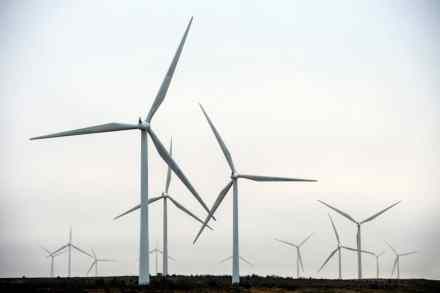
During the tail end of his Europe trip, President Biden stated of Vladimir Putin 'for God's sake, this man cannot remain in power.' This was quickly walked back by his staff saying that the US had no plans for regime change in Russia. But with the potential of the Russia Ukraine situation turning into long-term conflict, the UK needs to adjust its priorities, particularly when it comes to energy. Whether that future is in wind, nuclear, or fracking.Cindy Yu talks to James Forsyth and Katy Balls.

White House backtracks on Biden’s claim that Putin can’t stay in power

From our UK edition

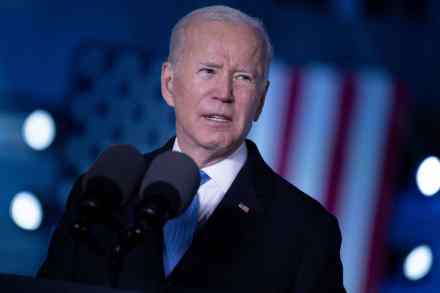
In his speech in Warsaw today, Joe Biden said of Vladimir Putin: ‘For God’s sake, this man cannot remain in power.’ This comes after Biden condemned Putin as a war criminal and ‘a butcher’. So, what did Biden mean by this? At first blush, it looks like a call for either a palace coup or a popular uprising in Russia – the two ways that Putin could be ousted from power. But the White House has been quick to downplay the remark, telling US reporters: ‘The President’s point was that Putin cannot be allowed to exercise power over his neighbours or the region. He was not discussing Putin’s power in Russia, or regime change.