James Forsyth

James Forsyth

James Forsyth is former political editor of The Spectator.

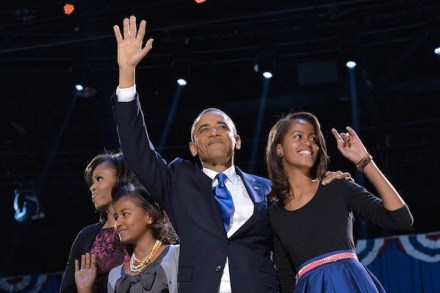
US election 2012: Obama’s re-election

In the end, Barack Obama won re-election comfortably. The Obama political team again demonstrated its ability to get the vote out where it needed it. The margin might have been narrower than in 2004. But it was, in purely operational terms, a more impressive victory; triumphing against the backdrop of a still stuttering economy. For the Republicans, there’s much to reflect on. The party’s demographic problems are now too serious to ignore. In 2004, Bush won 41% or 44% of the Hispanic vote—depending on which pollster you want to use. But this time, Obama won 72% of Hispanics.
UKIP are being taken more seriously but they have got to cut out the unforced errors

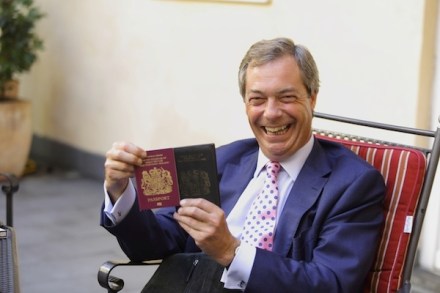
With UKIP regularly challenging the Liberal Democrats for third place in the polls, the party is now beginning to be treated with the seriousness it deserves. In an interview on the Sunday Politics, Nigel Farage made his usual, spiky case for leaving the European Union. Farage argued that he wants a free-trade deal with the rest of the EU and that the other countries would agree because ‘they need us more than we need them’. Even if Farage is right on the numbers, there’s a major doubt if the rest of Europe would be inclined to cut a deal in the wake of a British exit: a country leaving and then prospering outside would be very damaging to the European project.

David Cameron tries to drum up interest in the Police and Crime Commissioner elections

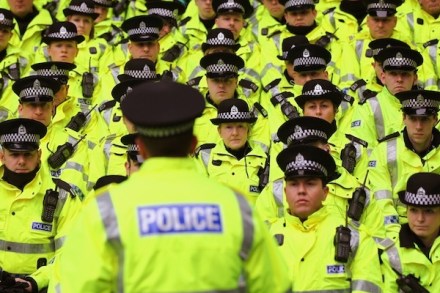
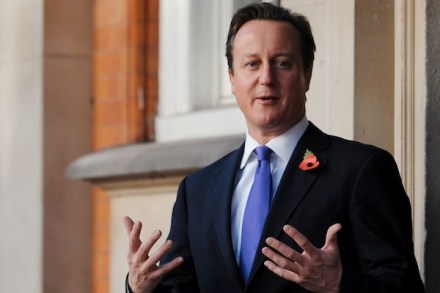
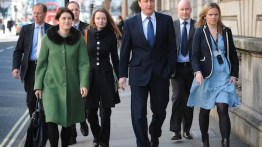
David Cameron spent yesterday campaigning for Conservative Police and Crime Commissioner candidates in Bedfordshire and Leicestershire. The visits, though, received scant national attention: the only coverage I’ve spotted so far is on page 33 of The Times. Talk to ministers and they maintain that the Police and Crime Commissioner elections are more visible out in the country than they are in London, where there’s no contest. They argue that the capital-centric nature of the media explains why the press keep writing the elections off as a damp squib. There is, I suspect, some truth to this charge. But an average turnout of only 20 percent would still not be impressive.

Can Labour avoid another Bradford West?

There’s no such thing as a safe seat in a by-election as Bradford West demonstrated. But it would still be a major shock if Labour lost Rotherham, a seat they’ve held since 1933. But the three by-elections coming up after Corby—Middlesborough, Croydon North and, now, Rotherham—will test how much Labour has learnt from the Bradford West experience. In all three seats, Labour has a large majority and no obvious challenger. Respect are already trying to repeat their by-election success, selecting Lee Jasper—the former Ken Livingstone adviser and chair of the London Race and Criminal Justice Consortium—in Croydon North. Respect have already declared that he’ll be 'targeting' black voters.

David Cameron needs to detail EU referendum plans soon to avoid future rebellions

‘I thought it would hurt more than it did’ one loyalist minister remarked after last night’s government defeat on the EU budget. The fact that the vote isn’t going to bring the government down or bind its hands is what is consoling Cameron loyalists. They are also pointing out that the Eurosceptic vote split with Jacob Rees-Mogg, Priti Patel and Andrea Leadsom staying on the government side this time. But what should worry Number 10 about this rebellion is its flash mob nature. As Isabel pointed out last night, there wasn’t — unlike with the Lords revolt or the EU referendum vote — months of planning put into this one. Instead, it was a rebellion that flared up as soon as the amendment went down — gaining 24 supporters in the first 24 hours.

The end of the recession, but just the beginning of the PM’s problems

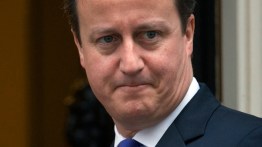
Since the end of the recession was confirmed a few days ago, confidence has returned to at least one part of -Britain. Ministers are beginning to strut again as they wander round Whitehall and their conversations include the occasional reference to a second term. Political recovery will, they think, follow economic recovery. As evidence for this, they point to polling which shows that the coalition’s reputation for economic management has already returned to pre-Budget levels. David Cameron, though, is more cautious. Over the past difficult few months, he did his best to keep his own and others’ spirits up. Colleagues were regularly told, ‘Well, it was never going to be easy.’ But now he is airing some of his suppressed irritation.

Government suffers humiliating defeat on EU budget

The government has just suffered an embarrassing defeat on the EU budget. The rebel amendment, which called for a cut rather than the real terms freeze David Cameron is proposing, passed by 307 votes to 294. There are, I think, three significant consequences of tonight’s vote. First, it has been yet another reminder that David Cameron can barely control his party when it comes to Europe. We’re waiting for the precise number of Tory rebels tonight but it seems like about 50 MPs defied the whips. This means that if Labour is prepared to join with the Tory rebels, it can overturn the coalition’s majority.

David Cameron reassures MPs that he’d prefer a cut in EU budget

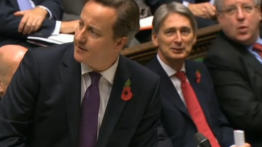
The Prime Minister needed to reassure his own side at PMQs today on the EU budget and give his whips something to work with. He largely did that, saying almost immediately that his position was that at best, he’d like it cut and at worst, frozen. That Cameron has said he’d like it cut will give those of his backbenchers who stick with him tonight some cover. They’ll be able to say that they’re supporting the government which already wants a cut. Ed Miliband’s decision to lead on the issue and try and use it to paint Cameron as ‘weak’ has also made the issue more partisan. I suspect that a few Tory MPs who might otherwise rebel will balk at walking through the lobbies with Ed Balls.

PMQs: David Cameron needs to show he has control of EU vote

At PMQs today, David Cameron will need to go some distance to meet his backbenchers and head off a government defeat tonight on the EU budget. He’ll need to say that he personally would like to see the EU Budget reduced and that if other countries are prepared to agree to that, he’d be delighted. But that the one thing he’ll guarantee is that he’ll veto any real terms increase. He’ll also need to take the fight to Labour on the matter, pointing out how Blair gave up a chunk of the rebate for the vaguest of promises on CAP reform. Part of the reason that Europe votes keep causing Cameron so much trouble is that Number 10 goes into Maastricht mode every time one comes along.

Change at Number 10

Gabby Bertin is one of David Cameron’s long-marchers; she has been with him since he won the leadership in 2005. Bertin has acted as his political spokeswoman for the last seven years, pushing the Cameron message and dealing calmly with the inevitable crises and mishaps. Few people know what Cameron thinks as well as Bertin does and are as prepared as her to tell him when he is going wrong. Cameron, for his part, values Bertin’s ability to, in his words, ‘see round corners.’ But in a fortnight’s time, she goes off on six months maternity leave. I understand that Susie Squire, currently running the press operation at CCHQ, will step into Bertin’s shoes.

Why David Cameron isn’t proposing a cut in the EU budget

Cutting the EU budget is a very good idea. Much of it is spent inefficiently and its priorities are all wrong, 40 percent of it goes on agriculture. Given that a cut would also be popular with voters, why doesn’t David Cameron propose one? The reason is that there’s virtually no chance of getting agreement to it. If there’s no agreement, the EU will move to annual budgets decided by qualified majority voting—stripping Britain of its veto. But Labour’s tactical positioning in calling for an EU budget cut has been, as Isabel said earlier, extremely clever. It has left Cameron defending a complicated position which puts him on the wrong side of public opinion and many of his own MPs.

Liam Fox: all weaker Eurozone members should leave the single currency simultaneously

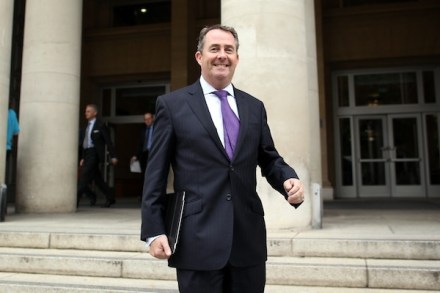
Since leaving the Cabinet, Liam Fox has acted as a cross between a scout and an out-rider for various of his former Conservative Cabinet colleagues. In a speech in Oslo tomorrow, he’ll argue that the only way to deal with the Euro crisis is for all of those countries who cannot realistically cope with the demands of the single currency to leave in one go. Otherwise, he argues the markets will simply pick the weaker countries off one by one. Fox is certainly right that if Greece left, or was forced out, of the single currency, Spain and Italy would then find themselves under intense—and, probably intolerable—market pressure. But I suspect that the Eurozone lacks the political and economic awareness to make the kind of clean break that Fox is proposing.

Danny Alexander: We’d do it all over again

Danny Alexander told Andrew Neil on The Sunday Politics that even if he had known the economy would only grow by 0.6% rather than the five and a half percent plus that the Office of Budget Responsibility predicted in 2010, he would still have backed the austerity programme. ‘The judgment we made was the right one’, he declared. He cited how the deficit reduction programme had reassured the markets from which Britain still has to borrow and that the OBR’s view is that fiscal tightening has not been a major reason why its forecasts were so out. Alexander refused to concede that a mansion tax was dead, despite the Chancellor unequivocally ruling out. He also wouldn’t comment on whether companies that are aggressively avoiding tax are ‘morally repugnant’.

The Conservative renegotiation strategy

In The Spectator this week, Charles Moore argued that David Cameron — despite his oft-stated desire to renegotiate the terms of Britain’s EU membership — doesn’t actually have a European policy. Charles’ criticisms have clearly stung. For in his Telegraph column, he outlines what post-2015, the Conservatives would seek in any renegotiation: “In essence, the scheme is to turn the EU into two concentric rings. The inner ring shares the euro and undergoes political union. The outer ring avoids both these things and has a looser, trading membership grounded in national parliamentary sovereignty. You could say that this split already exists, in fact if not in theory, but the difference is that, in the emerging model, the EU would be legally reconstituted.

The Brussels budget imbroglio

The EU budget negotiation, now a month away, promises to be David Cameron’s next big European test. The Prime Minister has repeatedly declared that he wants to see the EU budget frozen at 2011 levels and that he’s prepared to use the need for unanimity to achieve that. The Economist this week has a very useful scene-setter for the budget talks. It sketches the contours thus: ‘Countries are coalescing around loose (yet often divided) groups. There are the 'friends of cohesion': the net recipients of regional spending, such as Poland, Hungary and the Baltic states. And there are the 'friends of better spending': the net contributors, such as Germany, France, Britain and several northern European states.

Can Ed Balls leave his past behind?

A large part of the Tory message at the next election will be ‘don’t let Labour ruin the economy again’. One of the things that will help the Tories make this a topic of the campaign is Ed Balls’s constant desire to defend the record of the last Labour government. As Jonathan noted earlier, when Andrew Neil pointed out that Labour was — contrary to Balls’s earlier denials — running a structural deficit in 2007, Balls got into a long-winded attempt to justify both that and his denial of this point last year.

Adding a bit of mongrel to Number 10

The saga of whether Lynton Crosby, the hard-charging Australian strategist who ran Boris Johnson’s successful mayoral campaigns, will join the Cameron operation continues. I understand that contrary to popular belief the obstacle to Crosby coming in is not the money. One senior source tells me that ‘If it was just about money, Andrew Feldman would be sent out to raise it’. Amongst senior figures, there’s also confidence that a compromise could be reached on both Crosby’s desire for control of polling and his desire not to lose all of his current corporate clients. But the blockage is the level of control that Crosby wants. There’s a sense among the Number 10 team that coalition means that the normal political rules don’t apply.

Economic growth faster than expected as Britain exits recession

The economy is out of recession. It grew by 1 per cent in the third quarter of this year, which is the fastest quarterly growth rate since 2007. This positive number makes it a lot easier for the coalition to claim that the economy is ‘healing’. Expect to see ministers heading to TV studios to talk about how a million more private sector jobs have been created, how there are record number of new start ups and that inflation is down. Being out of recession makes it a lot easier for the coalition to defend its economic record. Today’s number should also serve to boost consumer confidence, to provide a little bit of a ‘feel-good’ factor. Now, there are obviously unique factors involved in this growth figure. Olympic ticket sales, for instance, added 0.

The Conservatives’ Major anxiety

There’s a spectre haunting the Conservative party, the spectre of a voteless recovery. Under the gothic arches of the House of Commons, small groups of Tory MPs stand around nervously debating whether ‘it’s John Major all over again’. Their fear is that a Conservative government will preside over an economic recovery but receive scant thanks for it from the voters. This concern has been sparked by a dire set of weekend newspaper headlines for the party. What worried MPs, and even some ministers, most was that these awful front pages followed a week in which the government actually had quite a lot of good news to talk about. Unemployment, crime and NHS waiting times were all down.

‘Prisoners are not getting the vote’, Cameron confirms

David Cameron was in a particularly irritable mood at Prime Minister's Questions today. But he did what he needed to do and made clear that ‘prisoners are not getting the vote under this government’. It seems there may be another Commons vote to further demonstrate the will of the House on this matter. If there is, it’ll be fascinating to see whether the Attorney General, who is far more concerned about upsetting the Strasbourg court than his Conservative colleagues, chooses to excuse himself. Ed Miliband enjoyed mocking the Prime Minister and the Chancellor in his questions; I’ve rarely seen the Labour leader more confident on his feet at PMQs. But Cameron, even on slightly poor form, now has a ready-made response: to point to the encouraging economic news.