James Forsyth

James Forsyth

James Forsyth is former political editor of The Spectator.

Attorney General to reject warnings of gay marriage legal challenge

I understand that when the gay marriage bill is published, the Attorney General will make clear that the chance of a legal challenge at the European Court of Human Rights to religious institutions that don’t want to marry gay couples is ‘negligible’.  As Isabel says, what wavering Tory MPs think of this legal opinion will be key to determining how they vote. The debate inside the Tory parliamentary party about this issue is becoming increasingly rancorous. There’s real fury among some MPs about the language being used by some of the opponents of same-sex marriage. David TC Davies decision to opine on whether parents want gay children has infuriated many MPs.
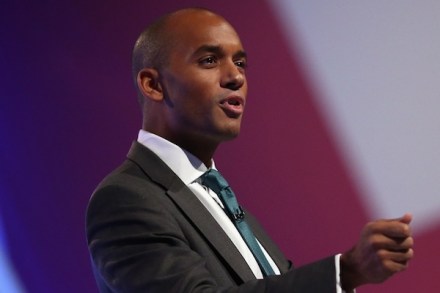
The only Labour business supporter that Chuka Umunna can name is a Labour peer

Chuka Umunna’s interview on The Sunday Politics today highlighted several of the problems facing the Labour party. When Andrew Neil pressed him on whether he could name any heads of big companies backing Labour, the shadow Business Secretary could only name a Labour peer who the party ennobled in 1998. Here’s the exchange: AN: Tony Blair said that Labour can’t go into the next election without the support of a single chief executive from a big company. Can you name the boss of a big major company who’s backing Labour? CU: The Chairman of ASOS who is Waheed Alli. He has backed the Labour Party. AN: Is that a public company on the FTSE? CU: I’m not sure that ASOS is listed. It may be or it may be just outside the FTSE 100. AN: Any others? Any others?

The coalition’s next big test

With the political dust settling from the autumn statement, attention in Whitehall is turning to the mid-term review. The mid-term review is the last chance for the coalition to embark on further radical reform: any significant change not started in 2013 is unlikely to be bedded in by 2015. I understand that the coalition parties are close to an agreement on social care. There’ll also be more details of the single tier pension in the mid-term review. We also know that there’ll be a ‘Learn or Earn’ scheme introduced for the under 21s. There are also ongoing discussions about how to get more private investment into the road network. But, at the moment, no politically palatable way has been found to do this.

Jeremy Heywood, just call him very influential

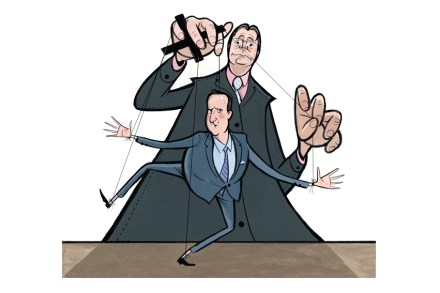
The main topic of conversation in Whitehall today has been The Guardian’s profile of the Cabinet Secretary Sir Jeremy Heywood. One particular passage has raised some eyebrows in several ministerial offices: He believes, they say, that reports of his power are overstated and the very suggestion that he might be making decisions on behalf of politicians makes him "cringe". He prefers to describe himself, they say, as simply very influential. Heywood, and this irritates some in Number 10, briefs journalists personally. He is known to be particularly concerned about his image. I’m told that after The Spectator cover depicting him as the PM’s puppet-master, there was much discussion over what should be done to finesse things.

For the Autumn Statement, stability: for the mid-term review, ambition

After months of squabbling and not-so-civil war, the coalition now appears to be functioning again. This is one immediate consequence of George Osborne’s Autumn Statement. The Chancellor was allowed to present a package to the House that had not been leaked earlier by coalition partners in an act of preemptive spin. This matters not only for the orderly proceeding of affairs of state but also because the Autumn Statement was the first of a two-part coalition effort to seize the political initiative. The second will come in the new year with the publication of its mid-term review. Time is running out for further radical reform. The Autumn Statement was limited in its ambitions, and the mid-term review will be the last chance.

Labour aims to change political dynamic around benefits uprating

It now looks almost certain that Labour will vote against the 1 per cent uprating for most working age benefits. Labour is pointing out that because this also includes tax credits, most of the people hit by this will actually be in work. The party hopes that this changes the political dynamic around this subject. But, as a Liberal Democrat minister pointed out to me last night, the coalition can portray any attempt to uprate by more than 1 per cent as special treatment for those on benefits. The minister stressed that public sector pay was only going up by 1 per cent and the threshold for the 40p rate was, again, only being increased by 1 per cent. The other thing the coalition will hit Labour with is how they would pay for uprating by more than 1 per cent.

Osborne is the St Augustine Chancellor – he wants to balance the books, but not yet.

After months of squabbling and not-so-civil war, the coalition now appears to be functioning again. This is one immediate consequence of George Osborne’s Autumn Statement. The Chancellor was allowed to present a package to the House that had not been leaked earlier by coalition partners in an act of preemptive spin. This matters not only for the orderly proceeding of affairs of state but also because the Autumn Statement was the first of a two-part coalition effort to seize the political initiative. The second will come in the new year with the publication of its mid-term review. Time is running out for further radical reform. The Autumn Statement was limited in its ambitions, and the mid-term review will be the last chance.

The Pickles plan

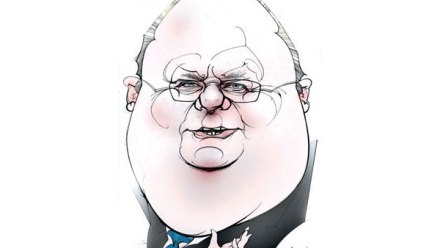
Some Cabinet ministers develop airs in office. Eric Pickles isn’t one of them. Sitting at the head of a conference table that looks like it’s been purchased from a discount office supplies catalogue, he explains his outlook on life. ‘There are two kinds of people,’ he says. ‘There are those who open that door and courteously speak to people, and there are those who bellow. There are those who write long memos on the temperature of your cappuccino and those who are just grateful if you get a warm beverage, and I’m the latter.’ He would place himself in an even rarer group: a minster who gets things done.

The autumn statement was the antithesis of the Budget

George Osborne was in good spirits when he turned up to address the 1922 Committee of Conservative backbenchers. He received a warm reception. The sense was that the autumn statement had avoided the last Budget’s mistakes. As one senior Tory MP said to me afterwards, ‘it shows what he can do when he puts his mind to the job.’ This backhanded compliment sums up the mood among Tories tonight. In his speech, Osborne stressed the importance of cancelling the 3p rise in fuel duty. He told them that they should tell voters that this shows that the government understands how hard family budgets are being squeezed right now and is trying to help.

Autumn Statement: George Osborne moves into a stronger position

There’s a sense of satisfaction among Tories, and Osborne allies in particular, this afternoon. First, the Autumn Statement didn’t all leak out in advance. Instead, the Chancellor had some news to make on the day—notably the cancelling of the 3p fuel duty rise and a further increase in the personal allowance. Second, it has drawn political battle-lines that they believe favour them. Labour now has to decide whether to accept the coalition decision to up-rate most working age benefits by only 1 per cent for the next three years. This saves more than two billion pounds by 2015-16 and will, judging from previous polling on welfare, be popular. But Labour MPs don’t like it, and even Ed Balls himself could be seen shaking his head when Osborne announced it.

Does the South East need its own party?

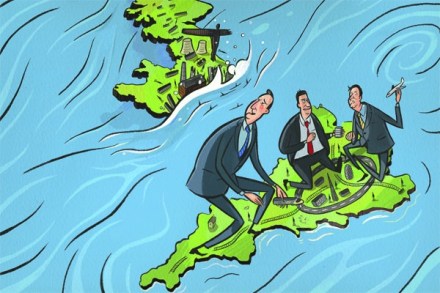
Kelvin MacKenzie wants a British version of the Italy’s Northern League. His aim is to have a Southern Party that would push for home rule for London and the South East and oppose fiscal transfers from the South East to the rest of the country. The piece is classic MacKenzie polemic. But it does speak to the growing regionalisation of British politics, a subject that Neil O’Brien addressed for us in his final piece before becoming an adviser to George Osborne. Outside of London, Labour only have four MPs in the South East and in the European elections, Labour came fifth in the region — behind even the Greens. For their part, the Tories are on the verge of extinction in the urban north and hold just two seats in the North East.

The prisoner voting farce makes the case for Britain leaving the jurisdiction of the Strasbourg Court

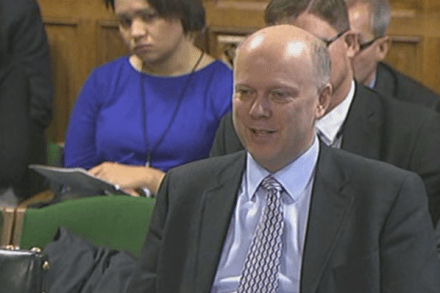
It is hard to watch Chris Grayling’s interview with Andrew Neil on BBC1's Sunday Politics and not conclude that Britain’s relationship with the European Court of Human Rights needs changing. The Justice Secretary effectively concedes that he can’t, as Lord Chancellor, vote to maintain the ban on prisoners voting. But ‘Parliament has the right to overrule the European Court of Human Rights.’ So we're not stuck, Britain can do what it likes. Or, more accurately, what Parliament votes for. It looks likely that we’ll end up with Parliament resolving to uphold the ban on prisoner voting, but with the Secretary of State - as Lord Chancellor - obliged to sit out the vote.

What would Thatcher do if she was in power now?

It is testament to Margaret Thatcher’s remarkable influence on British politics that 33 years after she won her first general election victory she still has such a hold on our political discourse. One of the things that the Tory party needs to do is understand both why Thatcher was so successful and how she changed Britain. In an interview with The Spectator this week, Elizabeth Truss, the new education minister who proudly describes herself as a ‘bit of a Thatcherite’, offers an interesting take on the question.

George Osborne hires head of leading centre-right think tank to push through new Tory agenda

George Osborne has recruited Neil O’Brien, the director of the leading centre-right think tank Policy Exchange, as an adviser. O’Brien will start work in the New Year with a particular focus on the next phase of coalition policy development. I also suspect that O’Brien will have a major influence on Tory thinking heading to 2015 and beyond. The Northern Lights report he commissioned at Policy Exchange is regarded in Tory circles as one of the most important assessments of the challenge facing the party in trying to win a majority. I understand that Osborne has been impressed by the work that O’Brien has produced at Policy Exchange. At Policy Exchange, O’Brien has sought to craft a more economically focused centre-right agenda.

Leveson report: David Cameron left in a minority over press regulation

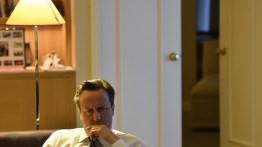
Following this afternoon’s statements I am certain that David Cameron is in a minority in the House of Commons in not wanting to create a statutory back-stop for a press regulator. But, so far, no one can explain how even an alliance of Labour, the Liberal Democrats and the Eustice Tories can force the Prime Minister to provide parliamentary time for a bill that he doesn’t want. Cameron got the tone and content of his statement right. I’m reassured that Cameron appreciates that while he set up an inquiry, he didn’t outsource his judgment to Lord Justice Leveson. He is also surely correct that a press law, however brief, would have worrying consequences. Just before the statement, a visibly agitated Miliband walked over to Cameron to talk to him.

Leveson report: To pass a law you don’t just need a majority in parliament, but time too

There’s understandable excitement about whether a pro-Leveson Commons majority could be formed. At first glance, this looks likely if you add Labour, the Lib Dems and a handful of the Eustice Tories together you can get to 326 quite easily. But, in terms of passing a bill, you need more than majority. You need time. The vast majority of parliamentary time remains in the government’s gift. If the Prime Minister won’t let the government bring forward legislation, then there almost certainly won’t be a press law passed. David Cameron has tweeted that he’ll give a ‘clear sense of direction’ in his statement at 3pm. We will then after that have Nick Clegg’s statement.

The human hand grenade

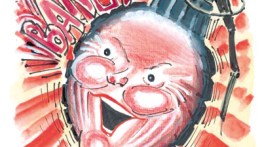
You can tell a lot about a minister from their bookshelves. Some display photos of themselves with the great and the good, others favour wonky texts. As you walk into Elizabeth Truss’s seventh-floor office in the Department of Education, the first thing you see is a think-tank pamphlet: ‘The Profit Motive in Education: Continuing the Revolution’. Knowing Truss, I half expect she put it there to provoke; a symbol of her radicalism. She grew up in a left-wing household and says, ‘My first political experience was going on a CND march, which taught me a certain political style.’ I’ve heard her nickname in the department is the human hand grenade. When I ask why, her response shows the hand grenade in action.

Now is the time to buy stock in George Osborne

Few politicians have a more volatile share price than George Osborne. His career to date has been a tale of highs (the inheritance tax announcement, the 2010 emergency budget) and lows (yacht-gate and the aftermath of the 2012 budget). Westminster’s stockbrokers were waiting for next week’s autumn statement to decide if his stock was on the up again. But the Chancellor has beaten them to it. His success in persuading Mark Carney, the governor of the Canadian Central Bank, to take on the role of Bank of England governor, is a market-moving intervention. To be sure, few voters will head to the polls in 2015 determined to return to government the man who put a Canadian in charge of the Bank of England.

The Coalition split over Leveson

I'm informed by someone involved in the coalition negotiations on the issue that the reason the Liberal Democrats want to be able to make their own statement on the Leveson Report is that they intend to back the rapid creation of a statutory back-stop for newspaper regulation. By contrast, I hear that David Cameron doesn’t want to back any press law, at least for now. The key moment tomorrow will come with a meeting of the Cabinet’s coalition committee at noon. It is scheduled for an hour and is meant to thrash out whether a common position can be agreed. Michael Gove, the government’s most passionate opponent of statutory regulation, is a member of it as are all five Liberal Democrat Cabinet Ministers and David Laws.