James Forsyth

James Forsyth

James Forsyth is former political editor of The Spectator.

MPs back gay marriage, but it’s not the Tory result Cameron was hoping for

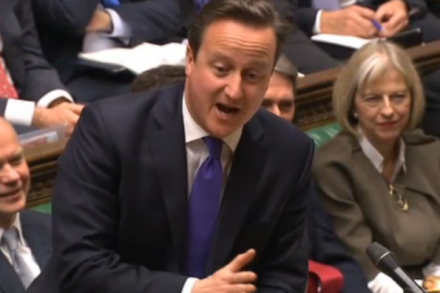
More Tory MPs have voted against gay marriage than have voted for it, with initial estimates from the vote (which was won 400 votes to 175) suggest 139 Tories voted against the legislation and 132 voted in favour. This was not the result that David Cameron was hoping for when his government introduced gay marriage legislation. Of course, tonight’s division was a free vote. Many of those Tories who voted no are fierce Cameron loyalists—think of Michael Fallon. But everyone knew which way the Tory leadership wanted its MPs to vote: tellingly, there was a Tory party press officer in the gallery for the vote. Tonight’s news is a blow to David Cameron as it shows that a plurality of his MPs do not share his views on gay marriage.
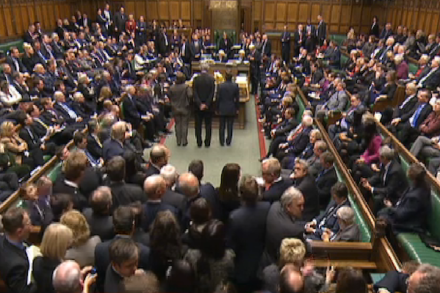
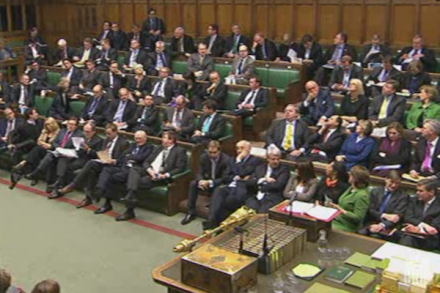
Gay marriage vote: where’s Cameron?

As soon as the government announced plans to bring in gay marriage, it was clear that the press was going to turn the vote on it into a referendum among Tory MPs on Cameroon modernisation. Even, though, it is a ‘free vote’, a failure to secure the support of at least half the parliamentary party for the bill was going to be treated as a blow to Cameron’s authority. But rather than leaning into this fight, Cameron has shied away from it. Absurdly, he isn’t even on the front bench for the opening of today’s debate and one has to go back months for his last major public statement on the issue. Cameron’s decision to vacate the field is a mistake for several reasons. First, no one explains the Conservative case for gay marriage better than him.

Chris Huhne resignation: CCHQ cranks up the by-election machine

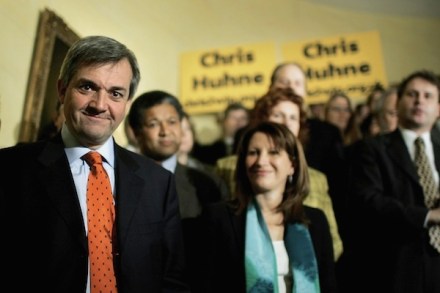
Chris Huhne’s guilty plea alters the political landscape. There’s now no need for a reshuffle to accommodate his return to the top table of British politics. Huhne, who ran for the Lib Dem leadership twice and some thought would do so again, is now standing down as an MP. In this respect, Huhne’s departure from the scene makes the coalition more stable. But the coming by-election in Eastleigh will be quite a fight between the coalition parties. Even Tory ministers are looking forward to landing a few blows on their coalition partners. One I spoke to just now, declared ‘we’ll throw everything at it. You have to win by-elections’. I understand that CCHQ is already moving resources to the seat.

William Hague: Somalia, Pakistan and Afghanistan is where the threat to the British homeland is coming from

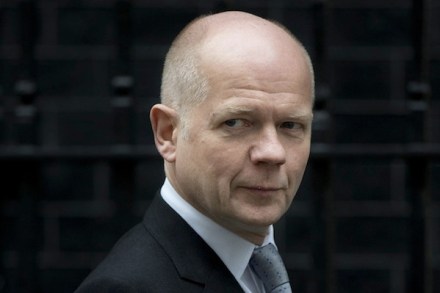
On the Sunday Politics, William Hague confirmed that the greatest terrorist threat to the British homeland come from Somalia, Pakistan and Afghanistan. But he argued that without intervention, the Sahel could become as dangerous to Britain. Those hoping for Hague to put flesh on the bones of the government’s European strategy will have been disappointed. The Tory leadership remains determined not to give out anything akin to a renegotiation scorecard. When pressed by Andrew Neil on whether he would advocate leaving if only the status quo was on offer, Hague said that the government would have to ‘use our judgment at the time.’ On gay marriage, Hague reiterated his support for it.

More Tory splits and plots

David Cameron arrived back in the UK this morning to newspapers full of talk of Conservative splits and plots. The moment of unity that followed his Europe speech has well and truly passed. There’s no doubt that the gay marriage is causing a ruckus in Conservative Associations up and down the country and that Conservative MPs will go through different lobbies on Tuesday night. To some extent, this division in the Conservative ranks was priced in. What was not is the continuing and increasingly frenzied leadership speculation. The Mail and The Independent this morning detail plans by allies of the Home Secretary Theresa May to position her for the leadership in the event of a vacancy.

Govt confusion on defence shows how painful the next spending review will be

The government’s position on defence spending is, to put it politely, confused. After the completion of the SDSR and the defence spending settlement, there was an expectation that the military budget would begin to rise again in real terms from 2015. There has long been talk in Whitehall that David Cameron assured senior military figures that this would be the case and, as James Kirkup notes, he told the Commons that he believed that this would happen. So, this morning when we woke to the news from the Prime Minister’s plane that the defence budget would rise in 2015-16, it seemed that Cameron had imposed his will on the bureaucracy. But then Philip Hammond took to the airwaves and said that the only thing that was guaranteed was that the equipment budget would increase.

Cameron will have to fund his Mali adventure

‘This is the hour of Europe, not the hour of the Americans,’ Jacques Poos, foreign minister of Luxembourg, declared in 1991. Yugoslavia, he said, was a problem in Europe’s neighbourhood and Europeans would solve it. In the end, a decade of genocidal ethnic conflict was only ended thanks to substantial US involvement. The hour of Europe has arrived again with the conflict in Mali. This time, though, it is the Americans telling the Europeans that it is up to them to solve the problem. The Obama administration has wasted no time in making clear that it thinks France’s aims in Mali are overly ambitious. It is also dragging its feet in terms of offering assistance, complaining about the cost and publicly wondering what the exit strategy is.

How the terms of debate on Europe changed

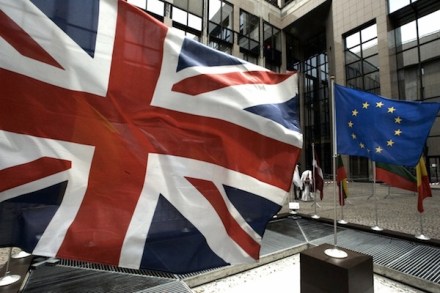
The website of the new Centre for British Influence through Europe reveals just how far on the back foot the pro-Europeans are. Its introductory article states: ‘It is also wrong that the other extreme think that they own the European flag in their belief that the only future is full on in.’ This is a major concession by the pro-European forces. It is strikingly different from the Britain in Europe message that this country must join the single currency and be at the heart of Europe. Now pretty much everyone accepts that Britain isn’t going to join the Euro and isn’t going to pursue ever closer union with the rest of the European Union. The debate is about how much looser Britain’s relationship with the other EU member states should become.

Why is Adam Afriyie being touted for leader? Expenses.

The Adam Afriyie leadership stories this Sunday confirmed several things. First, there’ll be no shortage of candidates when David Cameron goes. A large tranche of backbenchers have become increasingly irritated at what they view as a magic circle of ministers, special advisers and journalists who, they claim, are deciding who is and isn’t considered a serious player in Westminster. A result of this will be a determined effort to bust this alleged cartel come the next leadership contest. The second, and more important, thing is that the whole issue of pay and rations for MPs is still shaping our politics. Many of those most hostile to Cameron are those who feel that he hung them — or their colleagues — out to dry during the expenses scandal.

Europe Minister won’t give renegotiation specifics

There’s ‘no secret plot to get Britain out of the EU’ declared David Lidington on the Sunday Politics. In an interview with Andrew Neil, the Europe Minister was determinedly vague on the issue of what powers the next Conservative manifesto will seek a mandate to repatriate. But he made clear that the free movement of people is not going to be part of the renegotiation nor will Britain seek the right to strike its own trade deals with other countries. Having given the speech, David Cameron and his team don’t want to give a running commentary on what they might or might not seek to change about Britain’s terms of EU membership. Indeed, I suspect that they would like to go into the next election seeking as vague as possible a mandate.

The Americans accuse the French of being too ambitious in Mali as British involvement grows

It might have been pushed down the news agenda this week by David Cameron’s Europe speech and the bad economic news, but the situation in Mali is offering us a preview of the next decade in international relations. This decade will, William Hague warns in The Times today, be far more dangerous than what we have seen so far this century. This is a sobering statement when you consider that in the last 13 years we have had 9/11, 7/7, Iraq and Afghanistan. One of the striking things about the Mali mission is it shows how the US is far less interested in playing the role if global policemen these days. The New York Times reports today that the Obama administration thinks that the French aims in Mali are too ambitious.

Cameron & co relieved by Merkel reaction to speech

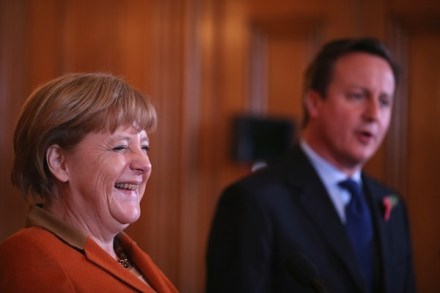
Angela Merkel’s statement yesterday was a big fillip to David Cameron’s European strategy as it suggested renegotiation was possible. One senior government source called it ‘as good as we could have hoped for'. I understand that Merkel and her officials have indicated to the Cameron circle that they want Britain to stay in the EU and are prepared to consider Britain’s concerns. But Merkel does not wish to look like she is interfering in British domestic politics; she doesn’t want to appear to be endorsing the Cameron approach. Secondly, she does not yet know how much room for manoeuvre she has.

Will the real radicals please stand up?

At the next election, all parties will agree that Britain is in a mess. They will disagree about is who is to blame. Both the Tories and the Liberal Democrats will say that Labour left behind an even bigger set of problems than people realise; their government has started to fix things, they’ll argue, but they need more time. Labour will claim that the ‘austerity coalition’ has choked off growth. But what’s odd — given that we’re heading for a second election where the voters will say ‘no’ when asked whether they’re better off now than five years ago — is the lack of radicalism in British politics. The ideas doing the rounds in Westminster do not meet the test of the moment.

Interview with Sajid Javid, the bus driver’s son who may end up leading the Tories

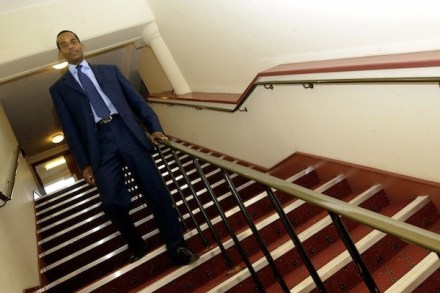
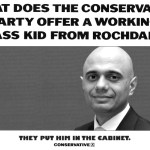
Sajid Javid seems the very model of a rising young Tory: student politics, then investment banking, then a junior Treasury minister in his first parliament; well-cut suit trousers, crisp white shirt, pastel-blue tie. But what sets him apart, and so excites some of his colleagues, is his background. His father arrived in Britain from a Pakistani village in 1961, with £5 to his name. It is from his father that Javid got his politics; specifically, from watching the Nine O’Clock News with him during the winter of discontent.

PMQs: It’s Cameron’s turn to have some fun

Last week at PMQs, Ed Miliband had great fun, mocking the wait for David Cameron’s Europe speech. He lampooned the Prime Minister as the weak leader of a divided party. It was a performance that disturbed even some normally calm Number 10 aides. But this week, it was Cameron who was relishing PMQs. By the end of the session, he was even telling Dennis Skinner — who normally brings out the Prime Minister’s irritable side — that he might agree with the speech Cameron is  giving in Davos tomorrow. Now that Cameron has set out his position, Miliband is under pressure to follow suit. Miliband appeared to rule out a referendum, responding to Cameron’s taunts with the line ‘No, I don’t want an In/Out referendum.

Cameron doesn’t want Britain to stay in the EU come what may

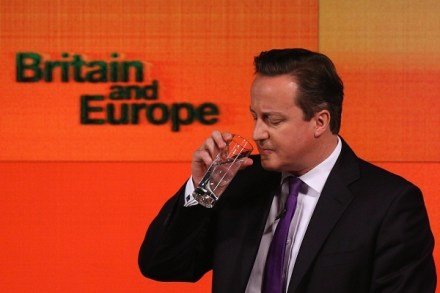
One of the more intriguing lines in David Cameron’s speech this morning was his declaration that ‘when the referendum comes let me say now that if we can negotiate such an arrangement, I will campaign for it with all my heart and soul.’ This begs the question of what Cameron will do if we can’t negotiate such an arrangement. Now, Cameron made clear earlier in the speech that his strong preference and inclination is for Britain to stay in the EU. This seems to apply even if he can’t get everything he asks for in the renegotiation. As he put it: ‘You will not always get what you want. But that does not mean we should leave – not if the benefits of staying and working together are greater.

David Cameron puts Nick Clegg on the spot

Downing Street always hoped that once David Cameron had given his Europe speech, the pressure would shift on to the other party leaders. They believed that once Cameron had committed himself to a referendum, Ed Miliband and Nick Clegg would be required to say whether or not they’ll match this pledge. But Cameron has put particular pressure on the Deputy Prime Minister by making clear that renegotiation and a referendum will happen if he is Prime Minister after the next election. In other words, this is not up for debate in any 2015 coalition negotiation. Every interviewer can now ask Nick Clegg if he and the Liberal Democrats could be part of a government that was committed to renegotiating Britain’s terms of EU membership and then putting the result to a referendum.

David Cameron redoubles his commitment to interventionism

David Cameron’s Commons statement on Algeria just now was the most interventionist speech he has made since the one he delivered at the Foreign Policy Centre during his 2005 leadership bid. But this speech is far more important than that one because it is what he actually believes; the 2005 speech was written by Michael Gove and was given more to tick the leadership contest’s foreign policy box than anything else. Listening to Cameron today, it is clear that the events of recent days have led him to redouble his commitment to interventionism. Indeed, in his talk of the ‘generational challenge’ and the need to ‘beat them [the terrorists] militarily’ one could hear echoes of Blair and Bush post 9/11.

Why the Tory leadership thinks it can push gay marriage and boost its support among ethnic minority voters

If the Tory party doesn’t improve its performance with ethnic minority voters, it’ll be nigh-on-impossible for it to win a general election in a generation’s time. The single biggest driver of not voting Tory is not being white and more than one in four under fives in Britain are non-white. This is the background to the Tories’ big push to increase their support among ethnic minority voters and David Cameron’s decision to devote Wednesday’s political Cabinet to the subject. Now, I’m always wary of parties talking about appealing to specific groups rather than individuals.

Can the West solve a problem like Mali?

I fear that we are all going to have to learn a lot about Mali and the Sahel—and fast. It is rapidly becoming the latest front in the war on terror. Or, to be more precise, the West’s attempt to prevent the emergence of ungoverned spaces that can be exploited by Al Qaeda and its offshoots. The New York Times today has a good primer on the challenge facing the French in Mali: “The French are fighting to preserve the integrity of a country that is divided in half, of a state that is broken. They are fighting for the survival of an interim government with no democratic legitimacy that took power in the aftermath of a coup.