James Forsyth

James Forsyth

James Forsyth is former political editor of The Spectator.

UKIP surge in Eastleigh

From our UK edition

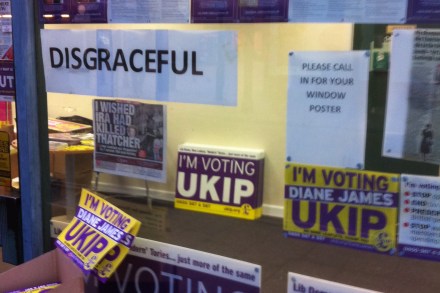
By-elections are notoriously hard to call. But everyone who comes back from Eastleigh says the same thing, UKIP are the party with forward momentum. This morning’s Populus poll bears that out. They are in third place with 21 per cent, with the Tories second on 28 and the Lib Dems ahead with 33. But, as the indispensable UK Polling Report points out, if you don’t reallocate some of the undecides to the party they voted for last time, UKIP are doing even better. The numbers then are UKIP 25%, Tories 26% and Lib Dems 31%. As I said in the magazine this week, UKIP are picking up support from all three parties. Things could get very interesting there if more Labour voters shift to UKIP as the best anti-coalition vote.
AAA loss is politically difficult for Osborne

From our UK edition

The United Kingdom’s triple A rating is now lost with one credit rating agency, Moody’s. This is a politically difficult moment for George Osborne. Back in February 2010, he set keeping the triple A rating as one of the key tests of a Conservative government’s economic policy. His opponents will delight in pointing out that he has failed the test he has set himself, while nervousness on the Tory benches about the coalition’s economic strategy will be heightened by this news. Economically, though, I doubt that this will have much impact. In recent weeks, Britain’s debt has been trading more like that of France, which has lost its triple A rating, than Germany, which still has it.

Eastleigh shows how difficult the 2015 Tory/Lib Dem fight will be

From our UK edition

The good news for Nick Clegg—and the bad news for David Cameron—is that the Liberal Democrats are racing certainties to hold Eastleigh in the by-election next Thursday. As I say in the magazine this week, the Liberal Democrats' base in the constituency - they hold every ward in the seat - has given them an insuperable advantage. This victory means that Clegg will be spared the Spring conference crisis that would have followed a defeat there; for if the Lib Dems could lose Eastleigh where they are so well dug in, they could lose anywhere. Cameron, by contrast, will have to deal with an intensely restless party. The Tories' failure to take Eastleigh in these circumstances highlights just how difficult it is going to be for the Tories to take seats off the Lib Dems in 2015.

Have the Tories lost Eastleigh?

From our UK edition

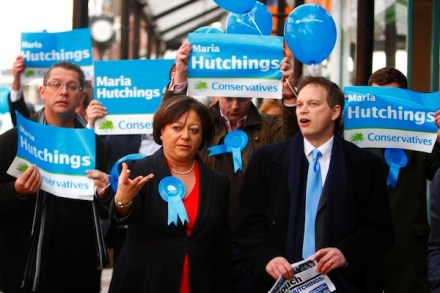
Monday morning. Grant Shapps, the enthusiastic Tory party chairman, is sitting in a people-carrier, putting the final touches to a scathing press release attacking his Cabinet colleague, the Deputy Prime Minister. Press release dispatched, Shapps gets out of the car and embraces his candidate, Maria Hutchings, and the pair set off to canvass. On this sunny morning, Shapps and Hutchings are followed by a large number of photo-graphers, a couple of journalists, a few press officers and a camera-wielding Tory MP. The only problem is there’s hardly anybody home, so it is the retired who are bearing the brunt of this manic campaign war. Shapps and Hutchings go from house to house with no luck. Then, success! Somebody is in.

Mitch’s pitch on Europe

From our UK edition

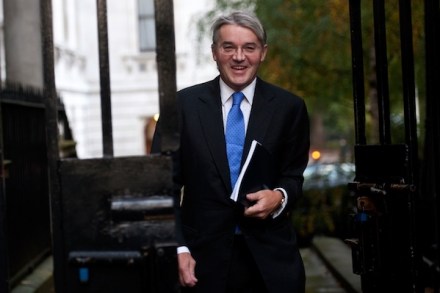
Andrew Mitchell’s piece in the FT today marks his return to normal politics post-Plebgate. Up to now, Mitchell has confined his post-resignation comments either to his old stomping ground of development or to the sequence of events that led to his premature departure from government. By contrast, today’s piece sees Mitchell getting involved in a frontline political issue, Britain’s relationship with Europe. The article is full of suggestions, joint-sittings of the UK-Polish parliament and meetings of the UK-Dutch Cabinets. But Mitchell is clearly determined to work within the framework set out by Cameron’s Europe speech. No one could say that the articles rocks the boat. But what makes it significant to my mind are two things.

Vicky Pryce jury discharged, retrial starts Monday

From our UK edition

The jury in the trial of Vicky Pryce has been discharged having failed to reach a verdict. The decision comes after the jury informed the judge that they were highly unlikely to come to even a majority verdict. The retrial is scheduled to start on Monday. There are, obviously, limits to what can be said for legal reasons. We can, though, report that the jury asked the judge ten specific questions during their deliberations. It would be a surprise if the court decided to sentence Chris Huhne before a verdict had been reached in this case. This means that it is unlikely that Huhne will be sentenced before the Eastleigh by-election on the 28th of February. Comments on this post have been closed for legal reasons.

The taxing question Labour can’t answer

From our UK edition

The details of Labour’s mansion tax proposal remain, to put it politely, sketchy. Here’s the exchange between Andrew Neil and Sadiq Khan on the Sunday Politics on how Labour would work out which homes are worth more than two million pounds: AN: Do you rule out a re-evaluation of all properties? SK: There are a number of options to look into. AN: Do you rule out a re-evaluation?

Selling RBS

From our UK edition

The state owning banks is not a good thing. It is, as the annual row over bonuses at RBS demonstrates, very difficult to keep politics out of the running of the business. So, it’s encouraging news that the Treasury is moving to sell the government’s 82 percent stake as soon as possible. Today, the Mail and The Independent report that George Osborne is considering simply handing over the shares to taxpayers, who would then be able to sell them when they at a time of their choosing. As I wrote earlier this month, Osborne is very keen to avoid a row over RBS bonuses in February 2015, just three months before the general election.

Make your mind up, Tory MPs tell Cameron

From our UK edition

At the moment, the Tories intend to head into the next election with the worst of all airport policies. They won’t have announced where the much-needed extra runway capacity in the south east will be. But neither will they be ruling out extra runways at various existing airports or an entirely new airport. The risk for the Tories is that voters under the Heathrow flight path assume that they are going to build a third runway there. Meanwhile those close to Stansted fear that it is going to be turned into a four-runway airport. Seventeen Tory MPs in the south east have now written to David Cameron protesting about the policy not to have a policy.

Ed Miliband’s bold redistributive rebuke to Brown

From our UK edition

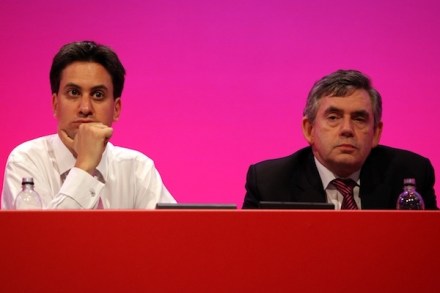
Those close to Ed Miliband stress that if elected, Labour will introduce a mansion tax to pay for the return of a 10p tax rate. I’m told that ‘short of publishing the manifesto two years early, we couldn’t be any clearer’. This new 10p band will apply to the first thousand pounds of income, making it a £100 a year tax cut. (Although the Cameroon think tank Policy Exchange calculates that low-paid working families would actually only be 67p a week better off under this policy.) The politics of the move, which has been in the works since Christmas, is fascinating. It is both a bold redistributive gesture and a rebuke to Gordon Brown, who scrapped the 10p rate. It also appealed to Miliband because it fits his whole critique of how politics works in this country.

The horsemeat scandal shows the true extent of Europe’s power in Britain

From our UK edition

There’s something gripping about a food scandal. The idea we could be inadvertently eating something taboo exercises a fascination on the public mind. But where has all the horsemeat in supermarket bolognese and burgers come from? At the moment, attention inside government is focused on Romania and Mexico. Romania is in the frame because of a 2007 law banning animal-driven carts. This led to huge numbers of horses and donkeys being slaughtered. All this meat couldn’t be sold in country. The fear is that it has ended up crossing the European Union, with the label changing from horse to beef on the way.

Owen Paterson worried by risks of Mexican horsemeat in British food

From our UK edition

The horsemeat scandal illustrates just how much of our daily government now takes place in Brussels. Owen Paterson is heading there today, for any real action on this crisis will have to be taken at a European level. One of those involved in the government’s response to this crisis tells me the problem is that once products are inside the European single market they are very few checks on them. This figure called it, ‘a faith based system that isn’t working'. This is particularly alarming because the horsemeat that is turning up in British food could not be from here or even Romania but the US via Mexico. In 2007, court judgments led to the last equine abattoirs in the US shutting down. But some American horses were still killed for food.

PMQs: Ed Miliband fails to bowl Cameron out

From our UK edition

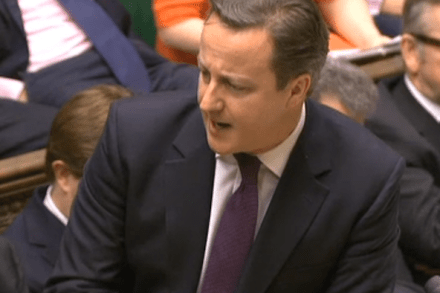
I suspect that David Cameron was in a better mood at the end of PMQs than at the start. He sailed through the session with relative ease. Ed Miliband went on living standards, his specialist subject, but his delivery was oddly flat. It was as if he was giving Cameron throw-downs in the nets rather than trying to bowl him out. Cameron, who has been bested on the joke front these past few weeks, also had the better one liners. He gleefully read out an email from the Labour press office inviting people to a Miliband speech on the economy but warning there was no new policy in it. Labour, though, are claiming that they’re grateful for the plug for the speech.

Tory poll weaknesses show why an Eastleigh win is so important

From our UK edition

The latest ICM poll for The Guardian is interesting because it highlights the weakness in both the Tory and Labour positions. The Tories are 12 points behind on 29, doing appallingly with women voters—trailing Labour 25-51, and haven’t managed to halt UKIP’s momentum. But Labour’s position is not as strong as the headline figures suggest. A plurality of voters still places the blame for the economic slowdown on Labour’s ‘unsustainable spending’. Polls in mid-term do not tell us that much. But the more bad news they bring for the Tories, the grimmer the mood on their benches will become. This is one of the things which makes Eastleigh so important for Cameron.

What Iran wants in Syria

From our UK edition

The Washington Post has an important story about how the Iranian regime is preparing for post-Assad Syria. The paper reports that American and Middle Eastern governments believe that Tehran is backing a 50,000 strong militia in the hope of keeping Assad in power and, if that’s not possible, defending its interests in the aftermath of his downfall. Iran’s ultimate aim, the paper suggests, is the establishment of a client state on the coast. This would enable it to continue funneling weapons to Hezbollah in Lebanon allowing it to maintain its influence in Lebanese politics and to carry on supporting terrorist attacks against Israel.

Where’s the outrage?

From our UK edition

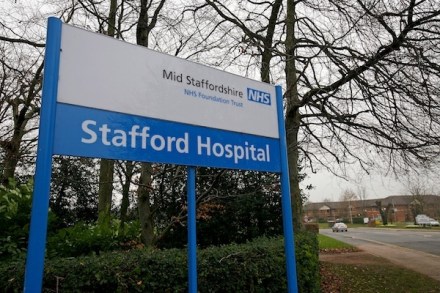
There’s normally no shortage of outrage in our politics. In Britain today, we specialise in working ourselves into a bate. This is what makes the lack of outrage at what happened at Mid Staffs all the more peculiar. If the government had received a report detailing such appalling behaviour in any institution other than an NHS hospital and responded so meekly, there would have been a series of angry front pages denouncing Whitehall complacency. The government is considering changing the law of the land because of what happened at the care home Winterbourne View, which was appalling but nowhere near as serious as what happened at Mid Staffs. But when it comes to the NHS, we all suspend our critical faculties.

Cameron closes in on EU Budget success

From our UK edition

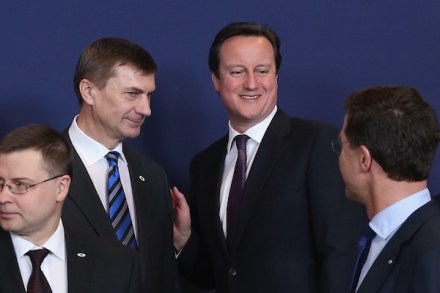
The news coming back from Brussels is all pretty good for David Cameron, as Isabel noted this morning. He’s not isolated and looks set to succeed in his fight to see a cut in the overall EU Budget. Admittedly, the British contribution will still go up—a result of deals Tony Blair struck at the time of enlargement. But it is still a good result, and one that will please all but the most truculent members of his parliamentary party. Even better for Cameron, is the idea that the European Parliament might veto the deal in a secret vote. Now, this idea is so absurd that it is hard to believe that it is anything other than a Brussels rumour. But if it does happen, it will sum up the kind of spendthrift, opaque, unaccountable Europe that Cameron is opposed to.

IDS accuses Miliband of pathetic scaremongering over ‘bedroom tax’

From our UK edition

The political row over the changes to housing benefit, labelled the ‘bedroom tax’ by opponents, intensified this evening. In an open letter to the Labour leader (reproduced below), Iain Duncan Smith accuses Miliband of ‘a pathetic exercise in political point scoring and scare mongering’. In the feisty letter, Duncan Smith argues that the taxpayer is currently paying for close to a million spare rooms. He argues that taxpayers ‘should not be paying for what is effectively a benefit subsidy for empty rooms’. He also takes issue with the personal case stories that Labour are using.

The battle of Eastleigh will be bloody

From our UK edition

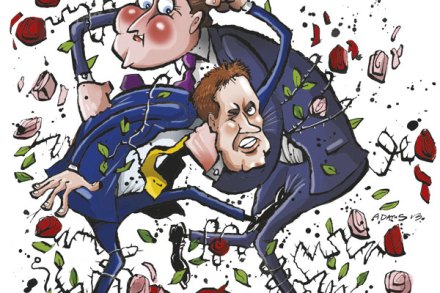
This week’s Cabinet meeting was a deceptively straightforward affair. Conservative and Liberal Democrat ministers met as usual, and discussed economic competitiveness and their priorities for the next Queen’s speech. It was a convivial gathering of coalition allies. But no one mentioned the elephant in the room: the Eastleigh by-election, a contest that will pit minister against minister. As one Cabinet member puts it: ‘This will be very difficult to handle, as both sides really have to win.

PMQs: Ed Miliband’s ‘bedroom tax’ attacks ignore the facts

From our UK edition

At a particularly unedifying PMQs today, one Labour MP even suggested that ministers need cognitive behavioural therapy. The cause of all this rancour: the so-called ‘bedroom tax’. Now, the ‘bedroom tax’ is not actually a tax. Rather, it is a reduction in the amount of housing benefit paid to those who — according to the local authority — have spare capacity in their homes. If the Labour leadership genuinely does not grasp this distinction, then this country is in worse trouble than we thought. Ed Miliband peppered Cameron with questions about difficult cases. It was an effective debating tactic as there was little Cameron could say without knowing all the details.