James Forsyth

James Forsyth

James Forsyth is former political editor of The Spectator.

Cameron sticks to the script at the ’22

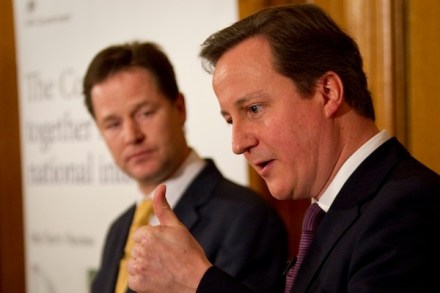
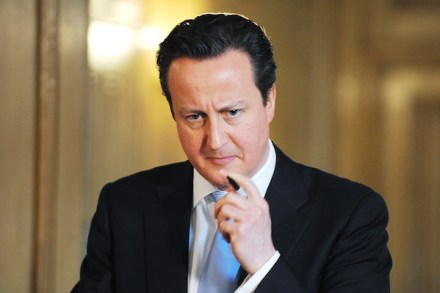
David Cameron has just delivered his end of term address to the 1922 Committee of Conservative backbenchers. The Prime Minister made little news apart from going out of his way to praise Maria Hutchings, making clear he had no truck with efforts to blame her for the party’s poor performance in the Eastleigh by-election. He stuck to the same messages that he had when addressing the parliamentary party the other week, one backbencher left complaining ‘we’ve heard it all before.’ But what should cause some concern Number 10 is how few MPs turned up to hear the Prime Minister. The audience was estimated at between 80 and 100, less than a third of the parliamentary party.

The Cyprus drama has only just begun

Analysts today are talking about the GDP of Cyprus falling by 20 per cent over the next four years, and stressing that this is a conservative estimate. This, and the attitude of the Church there, does make me wonder if the Cypriots might not reject the bailout again, revert back to the Cypriot pound and try and devalue their way to recovery. This could hardly be more painful than a bailout that will make credit nigh-on-impossible to obtain in Cyprus. The second thing is surely any company or institution with large cash reserves is moving them out of any bank in the Eurozone periphery. If, as the head of the Eurogroup has said, Cyprus is a template for dealing with failing banks, then no one should want to have more than €100,000 in anything but the strongest banks.

It’ll take more than Eddie Mair to stop Boris

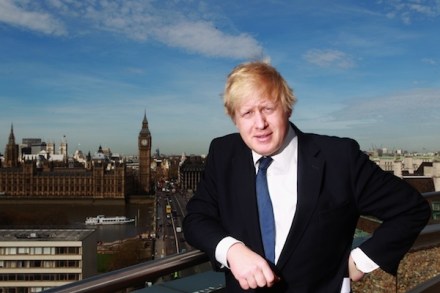
I’ve just watched the Boris interview with Eddie Mair and I have to say, these dogs won’t hunt. Mair threw three accusations at Johnson and I think all three of them are dealable with. The first was an allegation that Boris had made up a quote, something that he lost his job at The Times for. Now, I suspect that anything in which Boris can claim the defence that he had only moved something from ‘before Piers Gaveston’s death’ to after it isn’t going to end a political career. Also considering that Boris rose to journalistic prominence after this incident, it is hard to claim that it is disqualifying. The second was about his affair with Petronella Wyatt. Again, I don’t think this is career ending stuff.

No thawing in Ed Miliband’s attitude to the Liberal Democrats

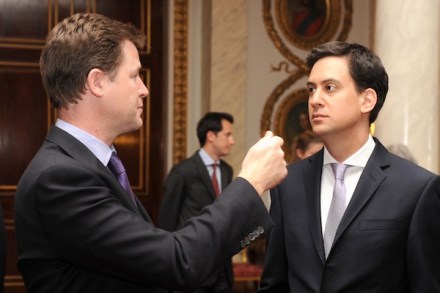
Ed Miliband’s interview with The Times today is striking for the language he uses about the Liberal Democrats. There’s no attempt to follow up last week’s Clegg, Miliband outflanking of Cameron with a love bombing of the deputy Prime Minister. Instead, there’s an emphasis that it would be ‘very difficult to work in a future Labour government with somebody who has taken the opposite position in a Tory government’. There are no warm words for Vince Cable either: “He flirts with the right position but doesn’t consummate it." I think this reveals two things. First, Miliband knows that the coalition is surprisingly solid; it is not going to collapse anytime soon whatever the differences over press regulation.

The durable coalition

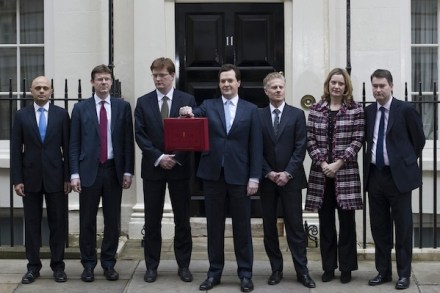
This time last week, Westminster was full of speculation about alternative coalitions. Politics-watchers, myself included, all started speculating about what the Clegg Miliband alternative coalition on press regulation meant. But the Budget was a reminder of how solid the coalition actually is. The Quad still agrees on the government’s economic strategy. Vince Cable — as his recent essay demonstrated — may have his doubts. But it would be hard to find much distance between Cameron, Clegg, Osborne and Alexander. Indeed, it was striking the relish with which Danny Alexander tore into Labour’s Chris Leslie on Newsnight last night. Going through the whole Budget, it is — unlike last year — quite hard to find the coalition trade-offs.

For once, Osborne will be glad not to be the story

A few years ago George Osborne would have bristled at the idea that one of his budgets wouldn’t be the biggest event of the political week. His ability to conjure rabbits out of hats had already prevented electoral defeat for the Tories once (his 2007 inheritance tax pledge, now consigned to history, scared Gordon Brown out of calling an election he would have won). But this week a low-key Budget was just what Osborne wanted — and delivered. One imagines, though, that he can’t be happy with the careless way that Downing Street managed to alienate almost the entire press just 72 hours before he got up to deliver it. I understand that an inquest is now under way at No.

The Budget puts petrol in the Tories’ political tank

For the opening half of George Osborne’s Budget speech, the Labour front bench was busy waving around copies of the Evening Standard’s front page. This was visibly putting Osborne off; he wouldn’t be human if the fear that another of his Budgets was going to be dashed on the media rocks hadn’t crossed his mind. But by the time he sat down, the storm over the Standard front had died down thanks to a quick and dignified apology from the paper itself. Osborne will also have been pleased by the cheers of his own side as he returned to his seat. For all the speculation got up by the irreconcilables, most Tory backbenchers seemed as pleased as could be expected with a Budget that was delivered against such a grim fiscal backdrop.

Leveson Royal charter debate: statutory or non-statutory?

The three party leaders have just opened the debate on the Royal Charter. David Cameron was at pains to stress that this is not a ‘statutory approach’. But this was undermined by the deputy Prime Minister describing the approach as ‘a mix of Royal Charter and Statute.’ It was Miliband, though, who looked most satisfied with the deal. He dished out praise to those involved in securing agreement as if he was the Prime Minister. Labour are still in shock about how Letwin wandered into Ed Miliband’s office to negotiate last night without a political adviser or the backing of any other minister. One of the things that worries me most is the fact that all three leaders referred to having a deal that the victims could accept.

Number 10: Cameron was awake and available throughout the negotiations

A senior Number 10 source tells me that David Cameron was awake and available throughout the Leveson negotiations. They also point out that Nick Clegg left the meeting at 11.30pm, before the crucial business was done. On the Hacked Off point, they insist that Oliver Letwin ‘very politely’ asked them to leave the room for the sensitive part of the discussions. I’m told that Cameron then chaired a 6am conference call on the result of the negotiations where he declared himself satisfied. He feels that he’s avoided a press law. Downing Street is bristling at the idea that they got the worst end of the deal. They argue that Hacked Off wanted full statutory regulation and they haven’t got that.

Which Tories will be Hacked Off’s useful idiots?

Reading the Hacked Off memo on how to lobby Tory MPs is to be inducted into a wholly cynical world view. It declares, ‘These people are likely to be people you instinctively distrust, dislike and despair of. If they are what we need to win, however, we must understand their value and not confuse our values with their intentions’. The memo, leaked to the Mail on Sunday, reveals that Hacked Off think that the Tory MPs who support them are likely to be ‘social authoritarians’, those ‘who have suffered at the hands of the press themselves’ or those who ‘simply want to bring David Cameron down’. This memo is also explicit that Hacked Off’s aim is ‘an independent statutory regulator with punitive powers’.

Afriyie fails the interview test

The Adam Afriyie leadership speculation has now got to the point where he’s been interviewed by Andrew Neil on the Sunday Politics. His first big broadcast interview as a potential leadership candidate was always going to be a big test for Afriyie and he failed to impress today. Afriyie, who looked like he’d been heavily coached for the encounter, failed to properly answer the questions put to him or to make a case for any alternative vision. He was even unprepared to say whether or not he supported means-testing pensioner benefits. On the whole question of his own ambitions, Afriyie was hugely unconvincing. Moments after declaring ‘I have no ambition to lead my party’ he referred to ‘my team around me’.

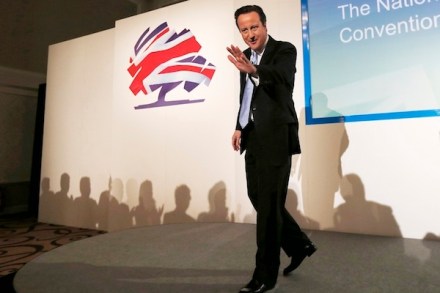
David Cameron tells Tory Spring conference: Our battle is with “socialist” Labour

The Tories know that if the next election is a referendum on the current government, it’ll be very difficult for them to win. But if it is a choice between them and a Labour government, then they are in with a good chance. David Cameron’s speech to his party’s Spring Forum today ends with a list of what a Labour government would do in its first 100 days in office. It shows how keen the Tories are to frame the next election as a choice, not a referendum, that Cameron is prepared to publicly contemplate defeat to do this. Interestingly, there's no mnetion of the Liberal Democrats or the coalition in the speech.

Leveson talks failure is bad omen for 2015 coalition negotiations

David Cameron’s decision to go it alone and call a vote on a press Royal Charter on Monday is a reminder both of how fundamental the differences between the coalition partners are on press regulation and that the next election is less than 25 months away. Cameron’s statement that if he loses next week and statutory regulation passes, then a majority Conservative government would repeal it shows that he’s prepared to make this an election issue. The coalition won’t fall over Monday’s vote. But it will be a moment of high parliamentary drama.

David Cameron’s secret Budget plan

It was the night that the Conservatives’ dream of a majority died. The first televised election debate in British history was meant to be the moment that David Cameron moved decisively ahead in the polls. Cameron and his camp had arrived at the Granada Studios in confident mood on 15 April 2010. But the evening didn’t go according to plan. Only 26 per cent of those who watched thought Cameron had won, compared to 43 per cent for Nick Clegg. When those numbers flashed up on the screen in the media centre after the debate, the room drained of Conservatives. The politicians and spin doctors, who had been busy briefing away, beat a retreat. But George Osborne came back and kept on going until the last laptop was powered down.

Exclusive: Number 10’s plan to break the spending review log-jam

George Osborne yesterday set the date for completion of the 2015-16 spending review as 26 June. But it is hard to see how an agreement between the Treasury and the un-protected spending departments will be reached in the next 105 days. The Tory branch of the National Union of Ministers want the welfare settlement reopened before their budgets are cut further. For their part, the Liberal Democrats remain resolutely opposed to more welfare reductions. But I understand that the departing head of the Number 10 policy unit Paul Kirby has drawn up an alternative spending review plan which would break this log-jam.

Tory loyalists strike back

Lynton Crosby spoke to Tory MPs this evening about the imporance of party discipline. With the Chief Whip in the chair, meetings of the Tory parliamentary party are normally fairly loyalist events. Tonight’s was no exception and with David Cameron and Lynton Crosby in attendance there was an even greater incentive to good behaviour. I’m told that James Morris, who sits for a West Midlands marginal, earned cheers when he implored colleagues to remember that when they sound off, they hurt those like him who are trying to cling on to their majorities. Kris Hopkins, the no nonsense leader of the 301 Group, complained about ‘self indulgent buffoons’ who keep popping up to tout themselves as alternative leaders.

Some cheer for Tory election planners: Clegg determined to oppose EU referendum

The last few weeks have, to put it mildly, not been encouraging for those working on the Tories’ 2015 campaign. But today brings news to gladden their hearts. For the FT’s Kiran Stacey reports that Nick Clegg is so opposed to David Cameron’s plan for renegotiation followed by a referendum that he’s considering making it a red line for any future coalition negotiation. This is good news for Tory campaigners as it indicates that the Liberal Democrats will go into the next election opposed to giving the people a say on Europe. Now, to most voters Europe is not the deciding issue when they cast their ballot.

Clegg: the Tories are like a broken shopping trolley – they always veer to the right.

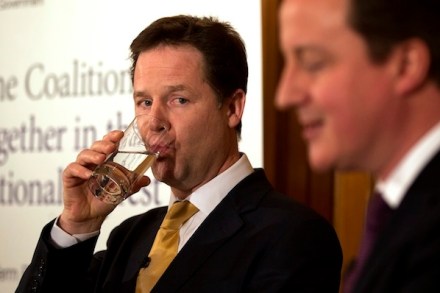
If you want to know what the Liberal Democrat’s message at the next election will be, read Nick Clegg’s speech to the party’s Spring Conference today. He kept to the refrain that the Liberal Democrats are for a stronger economy and a fairer society and you can’t trust the Tories with society or Labour with the economy. In a sign of the new, more disciplined Lib Dem machine there were no detours from this core theme. Listening to Clegg, you would have had no idea that the leadership had lost a vote on secret courts this morning. Clegg knows that his internal position hasn’t been this strong since the Liberal Democrats entered coalition.

May blossoms

The question about Theresa May has always been what does she believe? Well, today in the widest-ranging speech of her political career she went a long way to answering that. You can read the speech, delivered at the Conservative Home conference, here. Several things struck me about the speech. First, on economics May is not a classical liberal or a Lawsonian. Instead, she is more in the Michael Heseltine camp. She made the case for a buy British government procurement programme that strikes a ‘better balance between short-term value for the taxpayer and long-term benefits to the economy’. But, in other areas, May is prepared to be more free market than the Tory party has been to date.

Tories and Lib Dems strike deal on mansion tax vote

Further to Isabel’s post this morning, I understand from a senior coalition source that the two parties have now reached an agreement on how to handle Tuesday’s vote on Labour’s mansion tax motion. The Liberal Democrat leadership has assured their coalition partners that they’ll back a government amendment to it. This amendment will concede that the coalition parties have different views on the issue. The only question now is whether the speaker John Bercow will call it. I suspect that this agreement has been helped by a desire to limit coalition tensions post-Eastleigh and pre-Budget. There is also reluctance on the part of the Liberal Democrats to get dragged into playing Labour’s game.