James Forsyth

James Forsyth

James Forsyth is former political editor of The Spectator.

Once civil servants have praised one Prime Minister, they must praise them all

Sir Jeremy Heywood and Sir Bob Kerslake have penned a civil service tribute to Margaret Thatcher in today’s Telegraph. They laud her as the ‘best kind of boss.’ They are full of praise for her habit of producing home-cooked shepherd pie for civil servants working late, a hint—perhaps—to the current occupant of Downing Street. But I have to say that the whole thing makes me slightly queasy. These two men place a huge value on civil service neutrality but applauding her for the fact the ‘civil service was modernised’ on her watch does seem to be, or risks being seen, as a political statement.
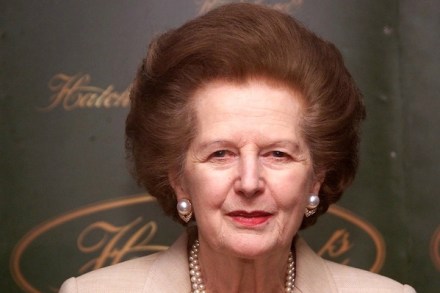
Grant Shapps on the Tories and Thatcher

It is one of the paradoxes of modern British politics that in the post-war era the power and hold of political parties have declined and our system has become more presidential. But the two most electorally successful leaders of this era have both been deposed by their respective parties. This has created problems for both parties, as today’s Sunday Politics with Andrew Neil demonstrated. After John Reid had been on to discuss Tony Blair’s comments on Ed Miliband, Grant Shapps was up to be questioned on Margaret Thatcher’s legacy for the Tories. Shapps was reluctant to declare that the Tories are a Thatcherite party. Trying to suggest that it is but only to the extent that it is also a John Major party.

Where are today’s titanic Cabinet battles?

Reading Norman Fowler’s recollections of the Thatcher years in the Telegraph, whose coverage this week has been simply superb, is to be reminded of how much debate there was in her Cabinet. Take Fowler’s account of the pre-Budget Cabinet in 1981: “Jim Prior described the proposals as ‘disastrous’, adding that they would do nothing for growth and send unemployment figures above three million. He was supported by the so-called economic ‘wets’, such as Ian Gilmour and Peter Walker, who on this occasion were joined by Francis Pym and Christopher Soames. Even Keith Joseph had his doubts as he argued for more private investment in public industries.

Thatcher knew the Tories had to be the anti-establishment party. Does David Cameron?

What lessons can today’s Tories learn from Margaret Thatcher is one of Westminster’s discussion points this week. In terms of detailed policy prescriptions, not that much: current circumstances are too different from those of 1979. But they can learn an awful lot from the spirit of Thatcherism. One thing that Thatcher grasped was that deference was dead, that the Tory party couldn’t be the political wing of the establisment. Instead, it needed to be an anti-establishment force: siding with the citizen against over-mighty government, rejecting corporatist stitch-ups and redistributing power. As I say in the politics column this week, today’s Number 10 could learn a lot from this. It has, at times, an overly-establishment mindset.

The Tory modernisers are Margaret Thatcher’s true heirs

Margaret Thatcher’s death has inevitably prompted intense reflection among Tories about what lessons the party should learn from her time in office. ‘We must finish the job’ is the refrain on the lips of Thatcherite ministers, and there are more of those today than there were a year ago. The experience of office has had a radicalising effect on the Cameroons. To be sure, today’s circumstances are not the same as those of 1979 or ’89. Her exact policy prescription is not what is required. This is something that Thatcher, a politician who relished fresh thinking, would have appreciated. But what the party does need is the spirit of Thatcherism, that understanding of what a centre-right party should be in the modern age.

Party leaders pay their respects to Thatcher

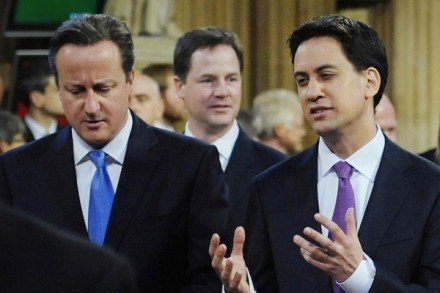
The House of Commons develops a special atmosphere on occasions such as this. David Cameron chose to be magnanimous, perhaps too magnanimous. He paid tribute to those ‘from all parties, who profoundly disagreed with her’ who had nevertheless come to the House today to pay their respects. As Cameron pointed out she had redefined political debate. Labour and the Tories might still argue about tax, but — as he said — no one wants to go back to tax rates of 98 per cent. One sensed that after saying this, Cameron was waiting for a heckle. But none came. Cameron rightly pointed out that you couldn’t appreciate what she had done unless you thought back to the 1970s and the state this country was in.

David Cameron places himself in Margaret Thatcher’s tradition

‘For many of us, she was, and is, an inspiration’, David Cameron said of Margaret Thatcher in his tribute to her. It was him, firmly — and proudly — placing himself in her tradition. Cameron has moved in Thatcher’s political direction as leader. He has become —partly, through circumstance and necessity — less interested in being a unifying figure, and more interested in getting things done. There has, in recent years, been an end to any attempts to distance the party from her legacy. Thatcher’s life-story is a truly remarkable one. Cameron rightly dwelled on the sexism she had to take on to become Tory leader. But she also had to overcome the class prejudice of large sections of the Tory party. Parliament will be recalled on Wednesday.

How Margaret Thatcher transformed politics and this country

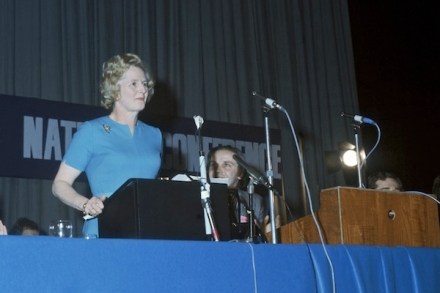
Margaret Thatcher is the most significant British political figure of the past 50 years. In her time in office, she transformed the British economy, promoted the vigorous virtues and offered strength and support to the dissidents of Eastern Europe and. On top of all this, she was — of course — Britain’s first female Prime Minister. In future, people will find it hard to believe just how nationalised Britain’s economy was before the Thatcher revolution. As she said in her 1982 conference speech, ‘How absurd it will seem in a few years' time that the State ran Pickford's removals and Gleneagles Hotel.’ With the benefit of hindsight, it is easy to underestimate the state of crisis that this country was in before Margaret Thatcher’s election in 1979.

Liam Byrne tries to answer Labour’s welfare question

One can’t help but feel sorry for Liam Byrne. He is a fish out of water in Ed Miliband’s Labour party, something he implicitly acknowledged when he announced his intention to run for Mayor of Birmingham. But then Birmingham voted against having a mayor so he had to stay in the shadow Cabinet, albeit having lost control of Labour’s policy review. In The Observer today, Byrne floats the idea of increasing the contributory element in welfare. Now, Labour keep musing about this without setting out any details. I suspect this is because it’ll be very expensive if it simply leads to higher payments for those who’ve paid in over the years.

David Cameron and the Union

Alex Massie asks why I didn’t mention the Union in my piece in this week’s magazine on what David Cameron’s legacy will be. It is a good question. Indeed, one former Cameron aide told me that he thought that the likely preservation of the Union would be Cameron’s greatest achievement. But the reason I didn’t mention it was because Cameron’s strategy on Scotland has been to keep a relatively low profile. He has, deliberately, not made it his fight. He realised that Alex Salmond wanted to present himself as the opposition to an English Tory Prime Minister who was, in Nationalist-speak, imposing his will on Scotland—and has simply refused to play that role.

The Tories try to win friends in the north

A new group designed to increase the Tory party’s appeal to urban northern voters will be launched this June. It already has the support of a considerable number of MPs and, I understand, senior figures in Number 10 are offering support to the project. David Skelton, who moved the Tories from third to second in Durham North at the last election, is stepping down as the deputy director of Policy Exchange to run it. This new group is right that it will be very hard for the Tories to win a workable majority without winning some seats in the urban and suburban north. This is going to require susbtanitally increasing the party's support among ethnic minority and working class voters. But the test for this group will be whether it has the patience to stick at it.

What will David Cameron be remembered for?

Ten Downing Street has been an odd place these past few days. The prime ministerial portraits that line the main staircase have been taken down and the furniture covered in dust sheets, as the authorities take advantage of David Cameron’s absence to spring clean. But the process has reminded those who work there of the transience of power, of how quickly they could be removed and the question of what legacy they might leave behind. What will future occupants say when they see the portrait of Cameron on the wall? Toward the end of his time in No. 10, Steve Hilton would sit in policy meetings and ask, ‘But is it transformative?’ These words, delivered with a flick of the hand to illustrate a thought coming out of his head, attracted much mockery from jaded civil servants.

Key David Cameron aide to quit Downing Street

Sky News has revealed tonight that Rohan Silva, one of the Prime Minister’s key advisers, is leaving Downing Street. Silva might not be a household name but he has been a hugely influential figure there these past few years. In opposition, he worked for George Osborne before moving to work for David Cameron in government. He has been the driving force behind spending transparency, Tech City and crime maps. There have been few more pro-enterprise and pro-reform voices in this government. His departure is a big blow to Tory radicalism. One of the things that marked Silva out was a thirst for new ideas that is all too rare in British politics.

George Osborne won’t be moved

Today’s Sunday Telegraph front page has sparked off a flutter of speculation about whether George Osborne might be moved as Chancellor. I suspect that the short answer to this question is no. Osborne and Cameron are inextricably linked and to move him would be akin to the Prime Minister declaring that both his political and economic strategies have been wrong. He would not long survive such an admission. I also sense that Osborne’s stock in the parliamentary party is recovering from the battering it took with last year’s Budget. The fact that this year’s Budget was doorstep-ready, has survived the Labour and media onslaught and gone down relatively well with the voters has helped him with MPs.

What Tory MPs want and what the Tory party needs

Matthew Parris’s column in The Times today is a good counter-blast to the idea that all Tory backbenchers are craving more policies that are bolder. As Parris points out, many of those defending seats against Laboour don’t want that. Indeed, if you had left it to these MPs I very much doubt that the government would have cut the 50p tax rate. He is also right that the desire to remove David Cameron—as opposed to grumble about him—is extremely limited. It is, though, as one senior MP pointed out to me earlier, worth noting that most Tory members of the Cabinet are in extremely safe seats. It is hard to imagine Witney going Labour, while Neil Hamilton had to be caught up in cash for questions before Tatton left the Tory fold.

David Cameron mini-shuffle done to move John Hayes from DECC

Downing Street’s mini-shuffle announced this morning to coincide with a joint Cameron Fallon visit to a green car plant is intriguing. Having made some inquiries, it seems that the aim was to move John Hayes out of DECC, where he was still clashing spectacularly with the Secretary of State Ed Davey and alarming some in the industry, and Michael Fallon in. Everything else followed from that. Fallon’s additional responsibilities are yet another sign of the high regard Number 10 holds him in. Fallon might be culturally, and politically, quite different from most of those in Number 10 but they have come to see him as their safest pair of hands. I’d be surprised if he isn’t elevated to the Cabinet before the next election.

Would Ukip win a battle for Portsmouth South?

Downing Street aides nervously run through the symptoms: a flat economy, poor press, leadership mutterings. Then they say, ‘It’s just mid-term blues, isn’t it?’ A second later, they add nervously, ‘It’s nothing more serious than that, is it?’ The truth is, nobody can be certain. There’s no reliable way of distinguishing mid-term blues from something politically fatal. Part of the problem is that few Tories have anything to compare their current mood with. After 13 years in opposition, only a handful of them have been in government before, let alone in the mid-term doldrums. When I put this argument to one veteran of the Thatcher years, he delighted in pointing out that there was at least one person in No.

Quietly, Cameron is preparing for his next big fight: the battle for Portsmouth

From tomorrow's Spectator. Downing Street aides nervously run through the symptoms: a flat economy, poor press, leadership mutterings. Then they say, ‘It’s just mid-term blues, isn’t it?’ A second later, they add nervously, ‘It’s nothing more serious than that, is it?’ The truth is, nobody can be certain. There’s no reliable way of distinguishing mid-term blues from something politically fatal. Part of the problem is that few Tories have anything to compare their current mood with. After 13 years in opposition, only a handful of them have been in government before, let alone in the mid-term doldrums. When I put this argument to one veteran of the Thatcher years, he delighted in pointing out that there was at least one person in No.

David Miliband quitting UK politics

David Miliband is quitting the House of Commons to go and work for the International Rescue Committee in the United States, the Daily Mirror has revealed this evening. Friends of both Miliband brothers have long thought that David, who expected to win the Labour leadership contest in 2010, was not really prepared to serve under Ed. David’s departure confirms that. I also suspect, as John Rentoul points out, that David had realised that he was never going to be Labour leader. Ed Miliband’s position is so secure that it is pretty much a certainty that he’ll lead Labour into the election. It was also always highly unlikely that Labour would replace one Miliband with another.

Angela Merkel’s domestic imperative

The Cyprus situation has demonstrated that until the elections in the autumn, Angela Merkel’s primary focus is on a domestic audience. She clearly wanted to show that Germany is now prepared to take a far tougher line. As Open Europe notes the need for this is fast becoming the consensus view in Germany. So, the question now for the Eurozone is will we see any more crunch moments this side of the German election? If we do, then I think we could see the end of the Euro. The Cypriot parliament’s rejection of the initial bailout deal, at the insistence of the voters, shows that there is a limit to the pain that the weaker Eurozone economies are prepared to take for economic and monetary union.