James Forsyth

James Forsyth

James Forsyth is former political editor of The Spectator.

Nigel Farage, the anti-politician

From our UK edition

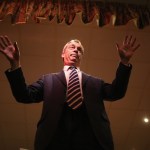
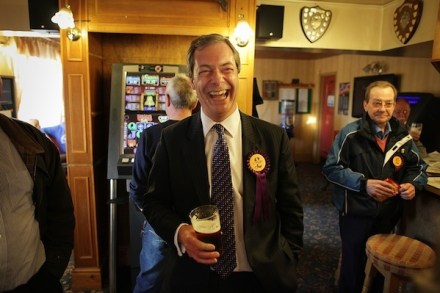
Nigel Farage was in full anti-politics mode this morning on the Today programme. He railed against ‘three frontbenches that look and sound the same’ and ‘haven’t done a proper day’s work in their lives.’ Farage is determined that Ukip be can both a protest party and a party with policies. He wants to offer himself to anyone who is fed up with the established order and wants to stick two fingers up at the main political parties. But he also wants to advance a radical policy prospectus. Interestingly, he said he wasn’t a Tory but he had been a supporter of eighties radicalism. So far, the Farage approach appears to be working; even those in Number 10 expect Ukip to top the poll in the European elections.

Labour hold South Shields with Ukip 2nd and Lib Dems 7th

From our UK edition

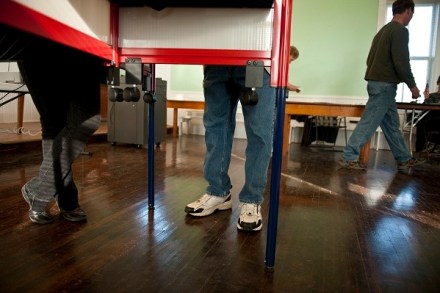
The result is now in from South Shields. As expected, Labour have held the seat. Ukip have come second, with the Tories third and the Liberal Democrats a spectacularly bad seventh. Ukip’s second is more impressive when you consider that they didn’t even stand in the constituency in 2010. It is a sign that they are fast becoming the default protest party across England. Only a handful of county councils are counting overnight, and they are all Tory controlled. But John Curtice, the elections expert, has already told the BBC that Ukip looks like doing as well as the polls suggested. At 12.15am, Ukip is averaging 26% in the BBC’s key wards.

Nigel Farage’s tax flip-flop shows us where he’s trying to take his party

From our UK edition

We might this week have seen some scrutiny of UKIP candidates, but so far we’ve seen little scrutiny of their policies. But the better the party does, the more policy scrutiny it will start to come under. This is what makes UKIP's changing tax policy so interesting. It tells us a lot about where Nigel Farage is trying to take his party. At the last election, UKIP was committed to a flat tax. There is an intellectual purity to this idea - see Allister Heath’s book on the subject - but it is hard to sell to voters as it would result in ‘the rich’ paying a lower rate. After Eastleigh, both the Lib Dems and Labour latched on to it as a way of attacking Farage. They both claimed that the flat tax showed UKIP wasn’t really for the little guy but for the wealthy.

Ukip vs the world

From our UK edition

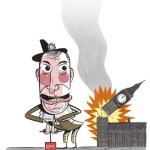
Ukip hope that this week’s county council elections are just the fireworks display before the big bang. In 2014 they think they can blow open British politics by winning a nationwide election. If they can succeed in doing that, they would almost certainly force Labour into matching the Tories’ pledge to hold a referendum on the EU after the next general election. This would guarantee the public its first vote on Britain’s EU membership in 40 years. The success of Ukip at making inroads during this campaign has caused some unease in Tory ranks. But a Ukip victory in the European elections a year before a general election would throw the Tories into a proper panic. Legions of backbenchers would demand that David Cameron brings forward the referendum on EU membership.

Chris Lockwood to join new Number 10 policy unit

From our UK edition

[caption id="attachment_8508921" align="alignright" width="140"] Chris Lockwood[/caption] Downing Street has pulled off a coup with the recruitment of Chris Lockwood, the US editor of The Economist, to the new Downing Street policy unit. Lockwood is one of the brightest and most insightful people in journalism and one imagines that he wouldn’t have left a prime perch at The Economist if he did not think that the new Policy Unit will have real heft. Lockwood is close to Cameron: he was one of the six journalists that the Prime Minister listed as a personal friend in his evidence to Leveson. In 1993, as reported in the Elliott and Hanning biography of Cameron, Lockwood was part of a group that went on a villa holiday to Italy with Cameron and Samantha Sheffield, as she then was.

Local elections: Tory leadership prepares MPs for the worst

From our UK edition

The Tory leadership is getting increasingly nervous that the party isn’t sufficiently braced for bad local election results this Thursday. They’re worried that too many MPs assume the party won’t lose much more than 300 seats. The problem is that, for understandable reasons, MPs are treating all of CCHQ’s dire predictions — one source there is talking about 750 loses if the UKIP wave doesn’t break — merely as expectations management. In an attempt to persuade people of how bad the results could be, senior figures have taken to showing people this bar graph and map which illustrate the Tories’ current dominance. Their argument is that there is only way they can go from here, and that’s down.

Nick Clegg: No one has proposed to me that the UK should leave the European Court of Human Rights

From our UK edition

In a detailed interview on the Sunday Politics, Nick Clegg claimed that neither the Home Secretary nor Downing Street have ever proposed to him that Britain should temporarily leave the European Court of Human Rights so that it can deport Abu Qatada. Clegg was adamant that ‘no one has put a proposal to me.’ Under questioning from Andrew Neil, Clegg defended his decision to block any communications data legislation in the Queen’s Speech. He maintained that the proposals were ‘neither workable nor proportionate.’ Clegg conceded that the UKIP offer was ‘very seductive’ to voters. But he then attacked them for their flat tax proposal.

David Cameron and the married couple’s tax allowance

From our UK edition

The married couple’s tax allowance is back on the agenda. After Conservative Home’s exclusive yesterday, David Cameron has confirmed that he will introduce one before the end of this parliament. This would allow couples to share a proportion of their personal allowance, lowering the tax bill for those household where one person stays home to look after the children. Cynics will suggest that this is a good time to float a policy particularly popular with the party base given that there are county council elections on Thursday. But Cameron is a bigger enthusiast for recognising marriage in the tax system than most of his Cabinet colleagues. In opposition, George Osborne always worried that it looked like a measure designed to encourage mothers to stay at home.

Things are looking up for the Tories

From our UK edition

There’s a distinct sense of optimism in the Tory ranks today. First, there’s relief that a triple dip recession has been avoided. Dire economic news would have ended the rare outbreak of unity in the Tory party. Second, the changes to Number 10 and the newly announced policy board have gone down well with Tory MPs. Even those who have not been offered a role are pleased at this broadening of the Cameron operation; the recall of Peter Lilley to the colours has gone down particularly well. For the first time, there’s a feeling that Cameron is prepared to consult and listen to his party and that is prepared to be led. If this Tory unity can survive next week’s county council elections, then politics could get very interesting.

A rare mood of unity descends on the Conservatives

From our UK edition

The idea that ‘loyalty is the Conservative party’s secret weapon’ was always dubious. Benjamin Disraeli, for instance, made his name attacking a sitting Conservative prime minister. This, though, did not stop him becoming arguably the party’s most celebrated leader. But in recent years, the ‘loyalty’ adage has become a joke — one that has taunted leader after leader as they struggled to deal with an increasingly rebellious party. The party changed leaders four times in the eight years between 1997 and 2005. In these opposition ‘wilderness’ years, changing a leader was the closest to power that Conservative MPs came. Leadership plotting gave an odd sense of purpose to their presence at Westminster.

How David Cameron is improving his relations with Tory backbenchers

From our UK edition

There has been a rare outbreak of unity in the Tory party in recent weeks. It is the product of several factors - the bonding effect of honouring Margaret Thatcher, the influence of Lynton Crosby and a growing sense on the Tory benches that Labour are beatable. Another important element of it is that David Cameron has found a better way to interact with his own MPs. As one senior Number 10 figure told me, ‘Rome wasn’t built in a day. But for the first time, I think, we have a proper systematic way of engaging with the party.’ One element of this is more serious policy discussions with MPs. Indeed, I understand that Number 10 is now trying to systematically involve MPs in policy making.

Today’s PMQs fails to interrupt the mini-Tory revival

From our UK edition

There has been a distinct shortage of PMQs recently and after today, there’s only one more until June. This will add to Ed Miliband’s disappointment that he didn’t shift the political mood today, nothing happened to interrupt the mini-Tory revival. Though, tomorrow’s GDP figures will be crucial in whether it continues. Miliband went on the NHS, one of Labour’s strongest subjects, only for David Cameron to counter that if Labour got in again there would be another Mid-Staffs. This was a distinct change of tone from Cameron’s initial response to the Francis Report, when he went out of his way to avoid trying to blame the previous government. The questions planted by the Tory whips were, tellingly, nearly all about benefits.

How Michael Heseltine won his first showdown with Margaret Thatcher in government

From our UK edition

The extracts in the Telegraph of Charles Moore’s biography of Margaret Thatcher have confirmed that this will be one of the most important political books of recent times. One of the intriguing things about Thatcher’s premiership is how, for the early years of it, she had to deal with a Cabinet that was not convinced of her policy prescription. This meant that, contrary to the latter image, she could not simply proceed as she wished. (Though, it should be noted that events vindicated Thatcher’s judgment.) Charles Moore reveals in his book that in 1979 Michael Heseltine flatly refused the job of energy secretary. He reports that when Thatcher offered it to him, he replied ‘“No… I’ve been rehearsing environment for three years.

What will Ed Miliband do on spending?

From our UK edition

The political mood has shifted these past few weeks. There’s now, as the Sunday papers demonstrate, far more focus on Labour than there was a couple of months back, something which pleases Number 10 which is confident that Labour is ill-equipped to deal with much scrutiny. Ed Miliband is coming under pressure to be far more specific about what he would do in government. Much of this is being driven by the coalition’s spending review for 2015/16, the results of which will be announced on June 26th. If Labour wins the next election, it’ll be in office when these cuts are being implemented. This leads to the question of whether or not Labour will accept these spending plans.

Boston bombing suspect taken into custody

From our UK edition

After a day-long man hunt, Dzhokhar Tsarnaev, the second named suspect in the Boston marathon bombing, has been taken into custody. He was found hiding in a boat that was parked behind a house just outside the search area. He has, we are informed, various gun-shot wounds and is in a critical condition. His capture alive means that there is a chance for the US authorities to establish whether he and his brother were, if they are guilty, working alone or in cooperation with others. The US authorities have already said that he will not be informed of his Miranda rights, essentially his right to remain silent, on public safety grounds.

Ed Miliband needs to talk about 2015, not what he would do now

From our UK edition

Ed Miliband’s speech to the Scottish Labour conference is another illustration that he intends to depict ‘One Nation Labour’ as the answer to so-called Tory divisiveness. Miliband told the conference: ‘As leader of the Labour Party [I] will never seek to divide our country and say to young person in Inverness or the older worker laid off in Ipswich desperately looking for work, that they are scroungers, skivers or somehow cheating the system.’ But in the context of today’s Independent story about Labour planning to go into the next election committed to higher spending than the Tories, a story which Ed Balls crossly contested on the radio this morning, what struck me about the speech was the way Miliband talked about Labour’s policies.

Ed Miliband, Nigel Farage and the age of cynical politics

From our UK edition

Would you rather this country was led by a man who is out of touch, arrogant and smug or someone who is out of his depth, weak and out of touch? That, according to the voters themselves, is the choice they’ll have to make at the next election. It is an illustration of just how cynical and despairing people are about politics and politicians. Margaret Thatcher may have been, as the bien-pensants put it, divisive. But she had her partisans as well as her detractors. It often seems like modern politicians only have the latter. Indeed, when the electorate of 2013 were asked what phrases they associated with Thatcher they replied ‘determined’, ‘ruthless’ and ‘stands up for Britain’.

Margaret Thatcher’s funeral was the right funeral

From our UK edition

Today was a moment in our island story. The longest serving Prime Minister of the 2oth century was laid to rest with due ceremony. Watching the coffin move down to St Paul’s and the service itself, I was struck by how right it was that it was a ceremonial funeral. A private affair would not have done justice to the legacy of our first, and only, female Prime Minister. It was noticeable that the much talked-about protests along the route failed to materialise. But it should be stressed that today’s service was not a political affair. The eulogy was not about her policies but her faith and her understanding of it. Margaret Thatcher now passes into history. I suspect that her name will live on in the way that Gladstone and Disraeli have.

Boston Marathon blasts kill two and injure many more

From our UK edition

Update CBS News in the US are reporting that a Saudi national is being questioned by the FBI. He denies any involvement in the attack In a press conference just now, President Obama has made clear that the Federal Authorities do not know who is responsible for the attack on the Boston Marathon. But it was noticeable that he did not call it a ‘terrorist’ attack. Meanwhile in Boston, the authorities there have denied reports that anyone is in custody—there had been chatter in the US media that a Saudi male was under arrest in Boston. So far, no individual or organisation has claimed responsibility for this attack.