James Forsyth

James Forsyth

James Forsyth is former political editor of The Spectator.

Could Michael Howard be the next EU Commissioner?

From our UK edition

[audioplayer src="http://traffic.libsyn.com/spectator/TheViewFrom22_10_July_2014_v4.mp3" title="James Forsyth and Isabel Hardman discuss the EU Commissioner role" startat=732] Listen [/audioplayer]In recent weeks British government visitors to Berlin have been confronted with a persistent question: when will David Cameron make up his mind about who he’ll send to Brussels? Picking a European commissioner is a big decision: Tony Blair sent Peter Mandelson, who went on to become the EU trade commissioner. Gordon Brown nominated Cathy Ashton, who picked up the foreign affairs post. There is a tradition of Brits landing relatively big jobs — and, ergo, power and influence. But prime ministers need to send someone with enough heft and zest.

Ed Miliband needs to mix things up to avoid Cameron’s PMQs attacks

From our UK edition

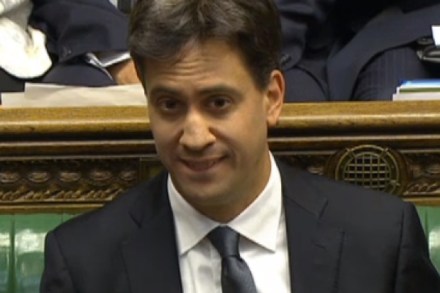
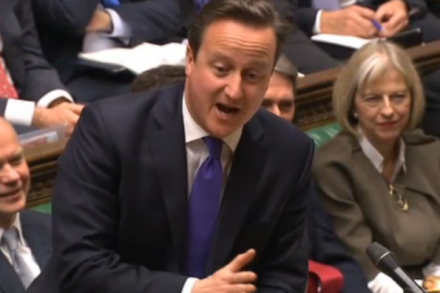
Ed Miliband's first few questions to David Cameron today were about the various inquiries into child abuse. Miliband wasn't interested in creating controversy: he didn't ask about whether Lady Butler-Sloss was the right person to run the inquiry given that her late brother was Attorney General when Geoffrey Dickens handed his file to the Home Secretary. But then Miliband turned to the NHS and the atmosphere in the House flipped. listen to ‘PMQs: Cameron and Miliband’ on Audioboo Cameron defiantly defended his use of statistics from last week. But it was once Miliband had asked his last question that Cameron went into full attack mode.

The traitor Melita Norwood should have been prosecuted

From our UK edition

Today brings a fresh reminder of a national disgrace, the failure to prosecute Melita Norwood for treason. Newly released files from the Mitrokhin archive make clear how vital a KGB source Norwood was; Moscow regarded her as an even more valuable asset than Kim Philby. Norwood's treason was exposed in 1999 when she was still alive. But she was, absurdly, not prosecuted. This was a failure of national nerve. She might have been an old woman by the time her spying was revealed, but she was an agent of one of the most unpleasant authoritarian regimes in history and one which this country was involved in a decades-long struggle against. She should, as a matter of principle and honour, have been subject to the full force of the law.

A disunited kingdom would be a mess – it needs to be kept together

From our UK edition

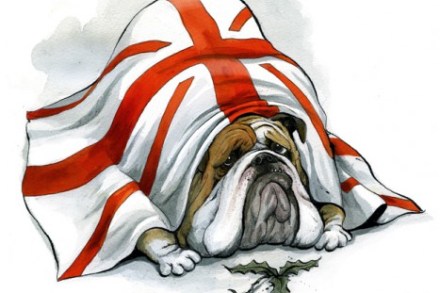
If Scotland did leave, it would be a disaster for the rump UK that would be left behind, I argue in the magazine this week. We would go from Great Britain to little Britain. Every time the Prime Minister of the rUK raised his voice on the world stage, he would be met by a mocking chorus of ‘you couldn't even keep your own country together’. Beyond this, there are the slew of practical problems that Scottish independence would raise. Where would Trident be based? In the best case scenario you would end up with the submarines in Devon while the actual nuclear weapons were stored three hours’ drive away in Berskhire. In the worst case scenario, the successor state would either have to unilaterally disarm or ask the French to store the weapons for it.

What Britain will lose if Scotland goes

From our UK edition

[audioplayer src="http://traffic.libsyn.com/spectator/TheViewFrom22_3_July_2014_v4.mp3" title="James Forsyth, Fraser Nelson and Eddie Bone discuss whether the UK could survive without Scotland" startat=41] Listen [/audioplayer]On 19 September, people over all Britain could wake up in a diminished country, one that doesn’t bestride the world stage but hobbles instead. If Scotland votes to leave the United Kingdom, it would be Britain’s greatest ever defeat: the nation would have voted to abolish itself. The rump that would be left behind after a Scottish yes vote would become a global laughing stock.

PMQs: Cameron and Miliband revisit their youthful indiscretions

From our UK edition

Today's PMQs will not live long in the memory. Ed Miliband led on the NHS and the debate quickly turned into a statistical stalemate. Indeed, at the end Andy Burnham tried via a point of order—with little success—to get Cameron to admit that one of his numbers was wrong. listen to ‘PMQs: ‘Cheer up folks, it's only Wednesday!’’ on Audioboo Miliband was in a confident mood at the despatch box because he knew he was on strong ground on the NHS. But in a week where Labour is trying to burnish its economic credentials, it is telling that Miliband didn't choose to go on the economy.

Without significant change, Britain is heading towards the EU exit door

From our UK edition

Anyone interested in the EU debate should read Dominic Cummings' report on the focus groups he recently conducted for Business for Britain. As well as being a reminder of just how strong the anti-politics mood in the country is, they also sketch out what the challenges for the respective campaigns in any referendum will be. For Out, it'll be showing that exit won't cause economic disaster. The focus groups suggest that if people fear that leaving will cause jobs to be lost in large numbers, then they'll vote to stay despite their dislike of the EU. While In's biggest problem is that voters now spontaneously connect the EU with immigration.

After being Junckered, the Cameron circle now fear for the renegotiation

From our UK edition

Getting Junckered was not an enjoyable experience for Downing Street. Not only has David Cameron lost his battle to stop the former Luxembourg PM becoming Commission President he has also discovered that Angela Merkel’s assurances to him can be trumped by her domestic political concerns. Considering how Merkel is the hinge on which Cameron’s renegotiation strategy turns, this is worrying for him. As I report in the Mail on Sunday, members of Cameron’s circle are now contemplating that the renegotiation might not deliver enough substantive change for the UK to stay in. As one of those who knows Cameron best puts it, ‘They might plump the cushions for us but the train isn’t slowing down and the points are still set the same way.

The speech that revealed what George Osborne believes

From our UK edition

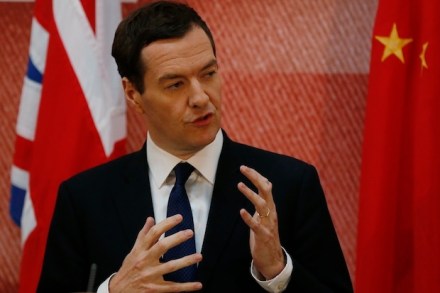
It is a risky business for any serving Cabinet Minister to give a big picture political speech setting out their personal philosophy. It is all too easy for such a gesture to be seen as the start of a leadership bid. This was the fate that befell Theresa May when she made her big speech to the Conservative Home conference 15 months ago. But last week, George Osborne gave his own credo speech to the Centre for Policy Studies’ Thatcher conference last week. The address, delivered after dinner on the final night of the conference, was the fullest explanation yet of the Chancellor’s political philosophy. Osborne is far more of a Thatcherite than he is a Conservative and so he was among friends when he made the speech.

Cameron defeated as Juncker nominated for European Commission President

From our UK edition

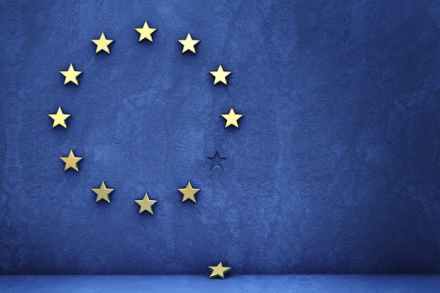
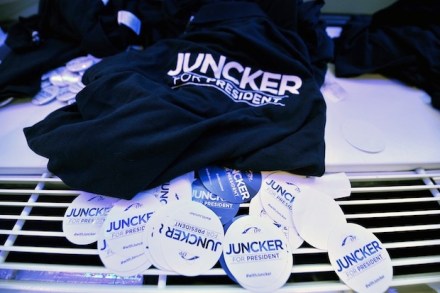
The European Council has nominated Jean-Claude Juncker to be the next president of the European Commission despite David Cameron’s staunch opposition. In the vote that Cameron forced on the appointment, he was defeated 26-2 with only the Hungarians joining the British in opposing the former Luxembourg PM. Junkcer’s appointment casts fresh doubt on whether Cameron will be able to renegotiate a new EU deal for Britain and whether this country will stay in the EU. In the coming weeks, we will have to watch and see whether other EU leaders try and come up with some kind of compensation package for Britain. When Cameron first came out in opposition to Juncker, he was pretty confident of success.

George Osborne’s been playing politics since he was 12. Now, finally, he’s winning

From our UK edition

[audioplayer src="http://traffic.libsyn.com/spectator/TheViewFrom22_26_June_2014_v4.mp3" title="Fraser Nelson and Isabel Hardman discuss Osborne's rising fortunes" startat=934] Listen [/audioplayer]George Osborne’s first taste of political leadership came aged 12. At his prep school, Colet Court, he took charge of a party for school election in 1983. The Chancellor’s chosen party (as the forthcoming schools guide will discuss) was not the Conservatives, but his own Independent Conservatives. Sadly, history does not record what caused this schism — but it does seem to be the first evidence of Osborne’s modernising tendencies. He has always exhibited a very distinct form of Conservatism, and one that has recently moved in an intriguing new direction.

Gus O’Donnell: I was not involved in Coulson’s appointment

From our UK edition

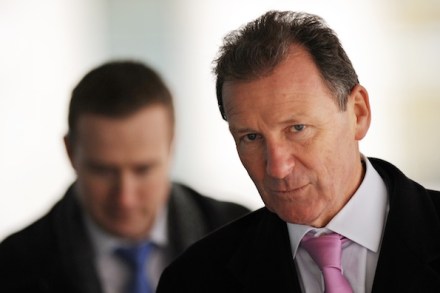
David Cameron’s claim at PMQs that Gus O’Donnell had been asked at Leveson about whether he had offered any warnings on the hiring of Andy Coulson, was met with bafflement. But O’Donnell’s written submission does address this point. Question 30 - Please set out in full for the inquiry details of your role, if any, in relation to the appointment by the Prime Minster of Andy Coulson to a post in No.10. Your account should include a full explanation of the basis on which you were asked to advise. Mr Coulson was brought in as a special adviser to the Prime Minister. I was not involved in the process of appointing Mr Coulson. Mr Coulson was cleared to SC (security clearance) level and was undergoing DV (developed vetting) clearance at the time of his resignation.

David Cameron is determined to fight Jean-Claude Juncker to the end

From our UK edition

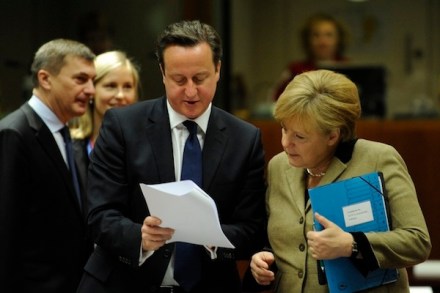
The family photo at this week's EU summit will be a particularly awkward affair. EU leaders will have just come from listening to the last post at the Menin Gate, the memorial to the British and Commonwealth dead of the Ypres campaign, but they will know that they are about to have an unholy row over dinner as David Cameron tries to stop Jean-Claude Juncker from becoming President of the European Commission. Aware of how bad all this looks, the head of the EU Council, Herman Van Rompuy, has been busy trying to prevent a row at Ypres. Cameron and Van Rompuy had a 'full and frank' discussion about the matter today, Downing Street says. But Cameron is still determined to have this fight; he isn't backing down despite only having the Hungarians for allies.

What Ed Balls told the bankers

From our UK edition

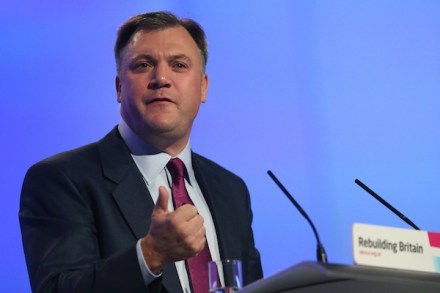
Ed Balls knows how to talk to bankers. Having been Gordon Brown’s right hand man and City Minister under the last government, he is well known in the Square Mile—and far more popular than you might think. Earlier this month, Balls was to be found having lunch at HSBC’s private bank in St James. He was there to address the chairmen of the UK banks. Those present left this private lunch with the distinct impression that Balls was presenting himself as a restraining influence on Ed Miliband, and someone who could protect them from some of the Labour leader's more radical policies. Balls made clear to the group that he was a 'sceptic' of regional banking.

What should really worry Ed Miliband about today’s Guardian story

From our UK edition

David Cameron has not had the best of weeks. At home, he is engaged in a mucky fight with the former government aide Dominic Cummings and abroad he is facing defeat in his attempt to stop Jean-Claude Juncker from becoming president of the European Commission. But in the papers today, it is Ed Miliband who has all the problems. The Guardian splashes on how Labour frontbenchers do not want Miliband to stay on after an election defeat. If this story had appeared in almost any other paper, Miliband’s team could have tried to dismiss it as the price you pay for standing up to Rupert Murdoch or backing Leveson. But with The Guardian, this is much harder to do.

The Security Services have lost track of 1 in 4 of those who’ve gone to fight in Syria

From our UK edition

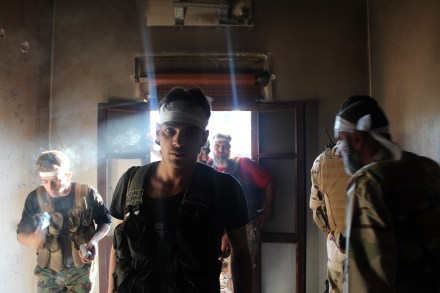
We have just had a second intelligence failure on Iraq. The speed and extent of ISIS's sweep into the country took the UK governnment by surprise. Whitehall was not alone in this. As I reveal in the magazine this week, when representatives of the US Joint Chiefs of Staff came to London recently, Iraq was way down their agenda. What makes this intelligence failure so worrying is that we are relying on the security services to keep track of the 400-odd Britons who have gone to fight with ISIS in Syria and Iraq. Senior government figures believe that of those who have gone to Syria and then returned to the UK, the authorities have lost track of one in four of them. This reveals the sheer scale of the domestic threat that we face.

Obama announces military advisers for Iraq

From our UK edition

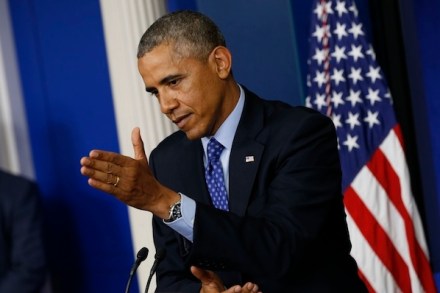
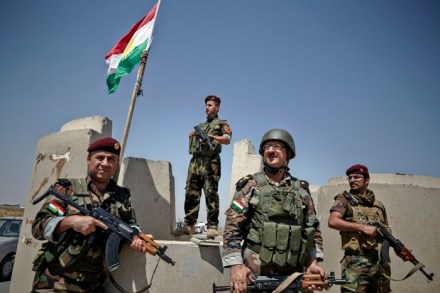
President Obama has just announced that the US is prepared to launch strikes against ISIS in Iraq if the situation on the ground requires it. The US will send up to 300 military advisers to the country. It is understood that they will provide intelligence on what targets US air power should hit. But Obama stressed that they would not be involved in combat roles. In a sign of the US's deep disenchantment with the current Iraqi government, administration officials have told the Washington Post that they are working to see if a new Iraqi government can be put together following this April's parliamentary elections. The US would like to see a broader based, less sectarian government emerge that includes Shi'ites, Sunnis and Kurds.

How the Westminster hawk became an endangered species

From our UK edition

[audioplayer src="http://traffic.libsyn.com/spectator/TheViewFrom22_19_June_2014.mp3" title="James Forsyth and Isabel Hardman discuss the death of Westminster hawks" startat=726] Listen [/audioplayer]There is a slight whiff of the summer of 1914 to Westminster at the moment. The garden party season is in full swing and the chatter is all about who is up and who is down. In the Commons chamber itself, domestic political argument dominates. You would not know that a vicious sectarian war is raging in the Middle East. At the first Prime Minister’s Questions after the fall of Mosul to the terrorist group ISIS, no one asked David Cameron to explain the government’s policy on Iraq. The situation in Iraq is dire on both a humanitarian and a strategic level.

We’ve forgotten about the Battle of Waterloo. Today, let’s remember

From our UK edition

Today is a day to remember the British army's greatest 19th century triumph, the Battle of Waterloo. If the British and Prussian-led coalition had not been victorious at Waterloo, Napoleon's 100 days would have become a French 100 years. The British victory owed much to the bravery and initiative of a member of the ranks of the Royal Wagon Train, Brewster. He saw that the defenders of the farmhouse at Hougoumont were running out of ammunition. So, he slipped out through the French lines and, under heavy fire, brought back to Hougoumont fresh supplies of ammunition. Without Brewster's intervention, the farmhouse would have fallen—as La Haye Sainte did—and the battle would have been lost. But despite these noble tales of heroism, Waterloo has become a rather forgotten battle.