James Forsyth

James Forsyth

James Forsyth is former political editor of The Spectator.

How worried should the West be about Russia?

The most sobering column you’ll read today is the FT’s Gideon Rachman, no doom monger, warning about the risk of a nuclear war. Rachman is concerned about how quick Vladimir Putin’s Russia now is to rattle the nuclear sabre. Now, as Rachman points out, part of the reason that Russia does this is to make the West think that it might just use these weapons. But the worry is that Putin might miscalculate. For instance, if the Russians did in one of the Nato member Baltic states what it has done in Ukraine, the situation could get out of hand very quickly. What makes this more alarming is the possibility of another global economic crisis.
Why Rochester won’t provide much relief for Labour

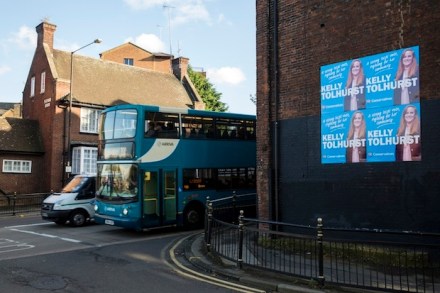
Thursday can’t come soon enough for shadow Cabinet loyalists. They believe that the Rochester by-election will provide Ed Miliband with some ‘breathing space’ and turn the spotlight on David Cameron’s troubles with his own side.   To be sure, losing another seat to Ukip will be bad for Cameron and the Tories. But based on conversations I’ve had in the past few days, I don’t think it will cause the crisis that many expected just a few weeks ago. Equally, Labour won't gain any positive momentum out of a by-election in which it comes third.   There are, I say in the Mail on Sunday, two reasons why the expected Cameron crisis won't materialise. The first is the difficult few weeks Ed Miliband has had and the narrowing in the polls.

Hammond tries to thread the needle on EU immigration

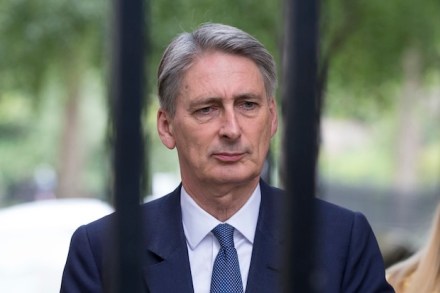
Philip Hammond’s interview in The Telegraph this morning is striking for several reasons. First, Hammond admits that Britain isn’t going to regain full control of its borders in the renegotiation. As he puts it, ‘“If your ambition is that we have total unfettered control of our own borders to do what we like, that isn’t compatible with membership of the European Union, it’s as simple as that. And people who advocate that know jolly well it is not compatible with membership of the European Union. So if that’s what you want, you’re essentially talking about leaving the European Union.”   But he does seem to think that agreement on something that delivers similar results to a quota system is possible.

Labour’s two biggest problems—and neither of them is Ed Miliband

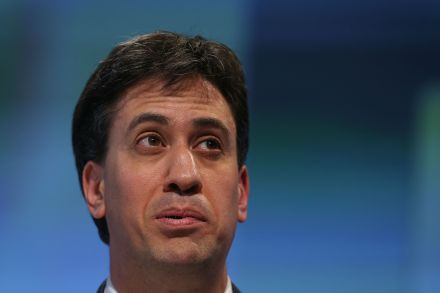
The knives are out again for Ed Miliband this morning. But the Labour leader is the least of his party’s problems. Labour has still not come up with answers to the two existential questions facing it, what’s the point of it when there’s no money left to spend and how should it respond to globalisation. I argue in this week’s magazine that until it does, the party will be in a death spiral. The Labour party has always believed in spending money for the common good. Even Tony Blair’s new Clause IV declared, ‘by the strength of our common endeavour we achieve more than we achieve alone.’ Public spending was the glue that held together the traditional Labour coalition and the New Labour one. Blair himself increased public spending from 40.

It’s not just Ed Miliband. Labour’s on the wrong side of history

[audioplayer src="http://traffic.libsyn.com/spectator/TheViewFrom22_13_Nov_2014_v4.mp3" title="James Forsyth and John Harris discusses the plight of progressives" startat=36] Listen [/audioplayer]Ed Miliband is the least of Labour’s problems. Its troubles go far deeper than any individual. They are structural and, potentially, fatal. It is certainly easier for Labour MPs, and ultimately more comforting, to concentrate on Miliband’s deficiencies as a leader than the existential crisis facing the left. But until somebody comes up with an answer to the question of what the party is for — in an era of austerity and globalisation — it will be stuck in a death spiral. The Labour party has always believed in spending money for the common good.

You can vote against the government and keep your Number 10 job

On Monday night, a member of the Number 10 Policy Board, Peter Lilley, voted against the government. Now, in the past, it has been made clear to the MPs on the board that if they defied the whip they would have to resign or be sacked. But despite this, Lilley is staying in place. Number 10 clearly doesn’t feel in a position to pick a fight over the European Arrest Warrant. Now, you can make a case that Lilley should be treated differently from the rest of the Policy Board. The rest of the Board is made up of new MPs, Lilley—by contrast—is a distinguished former Cabinet Minister. One can argue that on this basis, he should be cut a bit more slack.

The Labour leadership crisis that David Cameron would have scripted

So far, this is the Labour leadership crisis that David Cameron would have scripted. The papers this morning are full of awful poll findings for Ed Miliband, negative briefings and on the record criticism from his own side. But, there is no sign of a challenger yet nor has a frontbencher resigned. So, all this strife is doing is further turning public opinion against Miliband and turning the focus to where the Tories want it to be, is Miliband Prime Ministerial material? Where does all this go from here? Well, if Alan Johnson was at all interested things would get very interesting very quickly. But his denials seem entirely genuine.

The US steps up its involvement in the war for Iraq

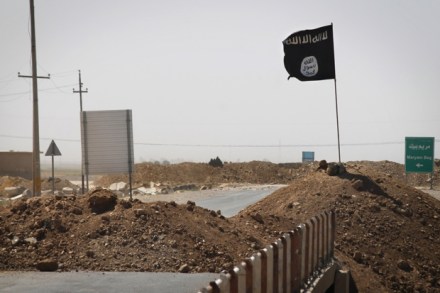
If you want to know how serious the situation in Iraq with Islamic State is, just look at what the Americans are doing. President Obama, who made his political name by opposing the 2003 invasion of Iraq, has now asked Congress to approve sending another 1,500 troops there—taking the total number of US forces in the country to roughly 3,000.   Tellingly, the Washington Post reports that, these troops will now not be based mainly in Baghdad and the Kurdish capital of Irbil as they were previously. Instead, they will have a base in Anbar Province, one of the places where the so-called Islamic State has held territory, and north of Baghdad. They will also be attempting to train nine Iraqi army brigades.

Osborne gets Britain’s £1.7bn bill halved—and no payments before the election

Update: In the last few hours, there has been huge confusion and heated debate over whether the British bill has actually been halved. Click here for the verdict of Open Europe which concludes that ‘ Osborne [is] right on the amount but may be exaggerated the extent of the concession.’ A deal has been reached over the supplementary £1.7 billion bill that Britain was handed by the European Commission a fortnight ago. Britain will now pay no more than £850 million, a halving of the bill. George Osborne insisted that the Commission apply the ‘British advantage’ element of the rebate to the bill which led to this 50% reduction.

Juncker wants more UK money for the EU budget – he could check Luxembourg’s coffers

By rights, Jean-Claude Juncker should be in dire political trouble this morning, not lecturing Britain about paying an extra £1.7 billion to the European Commission. Documents obtained by the International Consortium of Investigative Journalists suggest that while Juncker was Prime Minister of Luxembourg, 548 comfort letters were issued to various international businesses about their tax arrangements. These letters allowed multinational companies to get away with paying minimal amounts of tax anywhere but Luxembourg despite the majority of their business being done elsewhere, the ICIJ alleges. The ICIJ claims that more than 340 companies secured secret tax deals with Luxembourg. The ICIJ alleges that the deal with FedEx left 99.

How Ed Miliband lost his winning hand

Ed Miliband’s internal critics used to complain that he had a 35 per cent strategy. They claimed that his unambitious plan was to eke out a technical victory by adding a chunk of left-wing Liberal Democrats to the 29 per cent of voters who stayed loyal to Labour in 2010. Those close to Miliband were infuriated by this attack, insisting that their election strategy was far more expansive. Today, however, 35 per cent would sound pretty good to Labour, now becalmed in the low thirties in the polls. Miliband might never have had a 35 per cent strategy. But he did have a strategic insight that makes Labour’s current predicament all the more striking: he was determined to keep the left united.

Ukip’s Patrick O’Flynn on the ‘genius’ Nigel Farage and why Douglas Carswell’s votes won’t set party policy

Interviews with Ukip bigwigs used to happen in pubs. But times are changing. When I meet Patrick O’Flynn — the party’s economics spokesman, and until recently chief spin doctor — it’s in a juice bar. O’Flynn, a former political editor of the Daily Express who studied economics at Cambridge, is one of those driving Ukip towards professionalism. Ukip, he says, is the only party he’s ever joined, and it is ‘not part of the Conservative family’. That is why he rates its chances in northern Labour seats: ‘We didn’t close down any coal mines or steelworks and we’re not known as the patrician Home Counties rich people’s party.

Miliband corners Cameron on immigration at listless PMQs

The Commons has a rather listless feel to it at the moment. Today’s PMQs will not live long in the memory. Ed Miliband’s strategy was to get David Cameron to say as often as possible that he wants to stay in the EU, with the hope that this would drive a wedge between Cameron and his backbenchers. This tactic was, as far as it went, quite effective. Cameron repeatedly said that he wanted to stay in a reformed EU, and wasn’t prepared to say explicitly that he would be prepared to campaign for an exit if he didn’t get what he wanted out of the renegotiation.

Norman Baker quits as a Home Office minister

Norman Baker has resigned as a Home Office minister tonight. Baker has quit, blaming the difficulties of working with Theresa May and the squeeze that ministerial office has put on his time for his decision to go. Baker describes working with May as like ‘walking through mud’.   Baker’s departure is not to be lamented. At the Home Office he has been pushing for the decriminalisation of drugs, a thoroughly dangerous policy that would be disastrous for society. Baker claims that this is evidence-based policy making, and cites the Tories failure to follow this evidence as one of his reasons for quitting. Indeed, his resignation is, in a way, the logical extension of the Lib Dems’ differentiation policy.

The bluffing game between Cameron and Merkel begins…

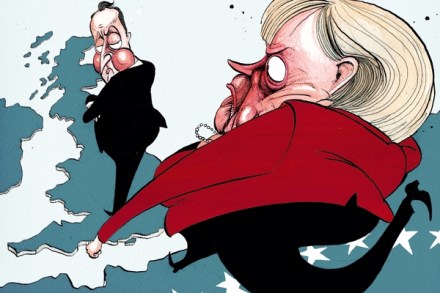
We should all get used to reading stories about how Angela Merkel has warned David Cameron that if he persists with X, Y or Z she’ll no longer be able to support Britain staying in the EU. It is the nature of a negotiation that those involved in it will, at points, suggest that they will walk away if the other party continues to demand something. The skill is, obviously, to know whether the other person is bluffing or not. Now as Mats Persson points out, Merkel’s comments are not as definitive as they are being portrayed as in some places. But there is no getting round the fact that Merkel is determined to protect the principle of free movement while Cameron—ideally—would like to impose limits on it.

What Tory MPs remember from their away day

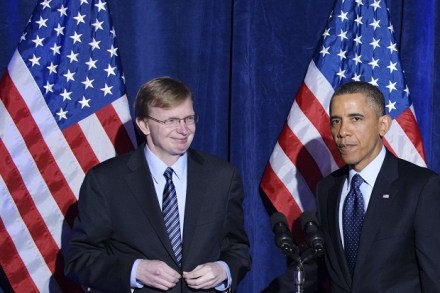
Two things have stuck in Tory MPs’ minds from their away. The first, that painting of George Osborne. The second, Jim Messina’s presentation and his confidence that the Tories would win.   Messina managed Barack Obama’s 2012 re-election effort and last year, the Tories announced that they had signed him up to advise them. At the time, most people—including several senior Cabinet ministers—regarded it as a press release hire, a good way of tweaking Labour but not much more. But Messina has, perhaps prompted by his great rival from the Obama campaign David Axelrod joining up with Ed Miliband, got more involved in recent months. He was over for Tory conference and flew in to the UK specially to address this away day, as I report in the Mail on Sunday.

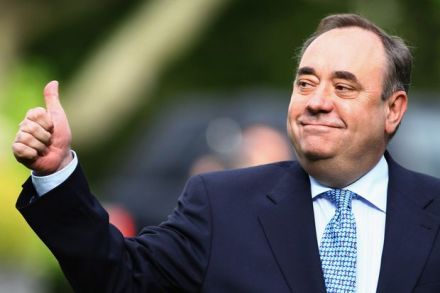
Alex Salmond shows how the SNP will fight Labour in 2015

Talk to senior Labour figures about the polls that show them losing 30 or more seats in Scotland, and they say two things. The first is that these polls have been taken at the worst possible moment for them, just after the bitter resignation of the Scottish Labour leader. The second is that when it comes to a UK general election, Scottish voters will—however reluctantly—accept that it is a choice between Labour and the Tories.   But the aftermath of the referendum means that this second point will not apply as strongly as usual. Having campaigned together against independence, Labour and the Tories do not look as dramatically different as they used to in Scotland.

Scottish Labour is in crisis; is Jim Murphy the solution?

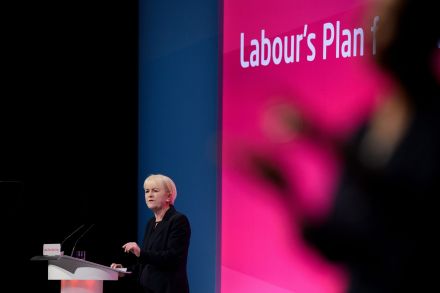
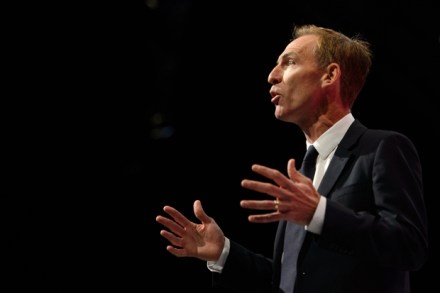
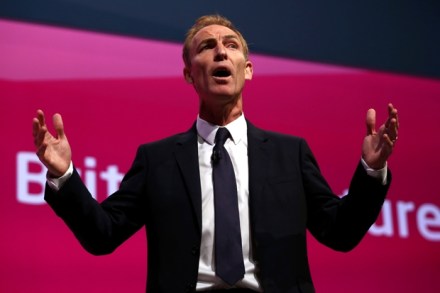
I suspect that the Scottish Labour gala dinner in Glasgow tonight won’t feel like much of a gala. The Scottish Labour party is in crisis: its leader has quit attacking the UK Labour party for treating it like a ‘branch office’ and now an Ipsos-Mori Westminster voting intention poll has the SNP on 52 per cent to Labour’s 23 per cent. This poll is a reminder of the scale of the challenge facing whoever is the new leader of the Scottish Labour party. I argue in the magazine this week  that Jim Murphy is, by a distance, the best candidate for the job. He has what Scottish Labour so desperately needs right now: energy, no fear of the SNP and its agenda and the ability to win elections. But Murphy’s victory is, by no means, a done deal.

Scotland needs Jim Murphy (even if he doesn’t want to go back there)

[audioplayer src="http://traffic.libsyn.com/spectator/TheViewFrom22_30_Oct_2014_v4.mp3" title="James Forsyth and Isabel Hardman discuss Jim Murphy" startat=997] Listen [/audioplayer]There should, by rights, have been a stampede of candidates to replace Johann Lamont as the leader of the Scottish Labour party. With the new powers promised to Holyrood, the Scottish First Minister promises to be a more powerful figure than most of the Cabinet. Only the holders of the great offices of state will be more influential than the occupant of Bute House. Labour might well trail the SNP by a large margin in the Holyrood polls, but their position is by no means hopeless. But since she decided to step down, there was silence.

Jim Murphy has what Scottish Labour needs: energy, fearlessness and the ability to win

[audioplayer src="http://traffic.libsyn.com/spectator/TheViewFrom22_30_Oct_2014_v4.mp3" title="James Forsyth and Isabel Hardman discuss Jim Murphy" startat=1010] Listen [/audioplayer]There should, by rights, have been a stampede of candidates to replace Johann Lamont as the leader of the Scottish Labour party. With the new powers promised to Holyrood, the Scottish First Minister promises to be a more powerful figure than most of the Cabinet. Only the holders of the great offices of state will be more influential than the occupant of Bute House. Labour might well trail the SNP by a large margin in the Holyrood polls, but their position is by no means hopeless. But since she decided to step down, there was silence.