James Forsyth

James Forsyth

James Forsyth is former political editor of The Spectator.

Labour MPs’ minds wander to a post-election contest

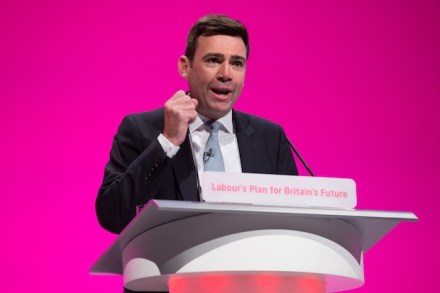
With the opinion polls so tight at the moment, we’re having to look for other ways to try and work out what the general election result will be. One indicator worth watching is which party is spending more time thinking about the leadership contest that would follow an election. Now, there has been plenty of speculation about this on both the Tory and Labour benches in recent times. But in the last few weeks, I’ve picked up more of it from the Labour side. One Labour frontbencher calculates that the focus of ‘half the party is on what happens next’.
Why France so worries European policy makers

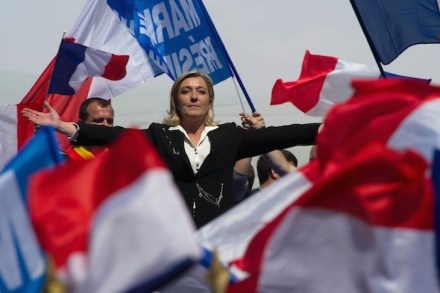
Today’s huge Podemos rally in Madrid is a reminder that Syriza’s victory in Greece has emboldened the anti-austerity left across the Eurozone. What worries Angela Merkel and other northern European leaders is, as I say in the magazine this week, that any concessions to the new government in Athens, will lead to Podemos—a party which was founded less than 12 months ago—wining the Spanish elections later this year. But the country that most worries European policymakers isn’t Greece or Spain but France. Its economy is showing no signs of recovering and its politics are threatening to become very ugly indeed. A new poll published this week shows the Front National’s Marine Le Pen topping the first round of the French presidential election.

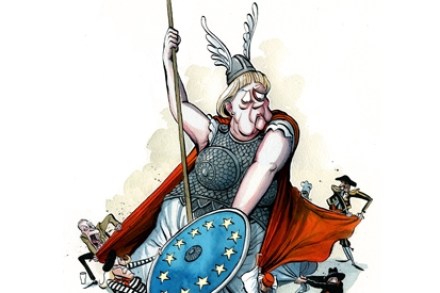
Merkel’s difficulty is Cameron’s opportunity

In the run-up to the Greek election, European figures were adamant that there wasn’t as much to worry about as people thought. They argued that Syriza wouldn’t come close to winning a majority and that it would have to do a coalition deal with Potami who would end up moderating its demands. This complacency was misplaced. Syriza came within a whisker of a majority and then formed a coalition with right wing nationalists, the Greek Independents, who agree with Syriza on very little other than the need to end EU-imposed austerity. Politically, it is very hard to see how the Greek situation can be resolved. Syriza’s entire rationale as a political movement is to renegotiate the terms of the Greek bailout.

Europe’s crisis is Cameron’s opportunity

Napoleon notoriously preferred his generals to be lucky — and on that score at least, he would have approved of David Cameron. The triumph of the Syriza party in Greece presents him with a glorious opportunity to solve the European question that has bedevilled the Tories for so long. Europe’s difficulty is Cameron’s opportunity. The European elite has been shaken by the scale of Syriza’s victory. Just a few weeks ago, Cameron was arguing in private that Greek voters, who remain overwhelmingly pro-EU, would ultimately not back a party that was intent on a confrontation with the eurozone authorities.

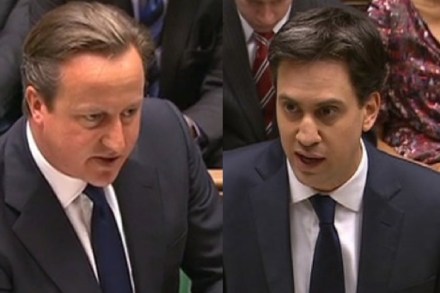
More of the same from Cameron and Miliband at today’s PMQ’s

David Cameron ran down the clock very effectively at PMQs. With only a few sessions left between now and the general election, Cameron blocked Miliband’s questions on the health service by demanding that the Labour leader apologise for apparently saying that he wanted to ‘weaponise’ the NHS in this election campaign. Despite Cameron now using this line at every PMQs, Miliband had no effective response to it. So, Cameron was able to get away with simply not answering Miliband’s questions. The result: at the end of PMQs, politics was in the same place as it was at the start and with the Tories now convinced that events are moving their way that suits Cameron. By contrast, the Labour bench directly behind Miliband looked particularly glum today.

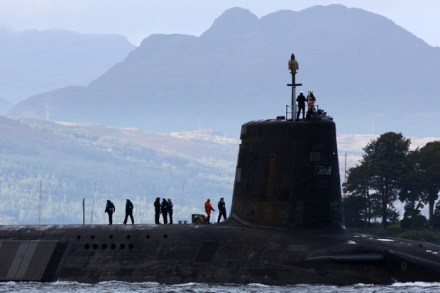
Could Trident be moved to Wales?

There’s a belter of a scoop in today’s Daily Mail. James Chapman, the paper’s political editor, reports that the Ministry of Defence is examining plans to move Trident from Scotland to Wales. I’m particularly confident that this story is correct because I had heard something very similar from Whitehall sources. There is understandable concern that a second independence referendum in Scotland is now likely and so the whole question of where to move Trident in the event of a Yes vote arises again. I also wonder if this work might not come in handy in the event of a hung parliament where the Scottish Nationalists hold the balance of power.

Berlin’s nightmare is coming to pass

In recent weeks, European diplomatic sources have regularly argued that Syriza would have to moderate its demand in office. They argued that Syriza wouldn’t win a majority and that to form a coalition it would have to compromise. But this morning, Syriza has formed a coalition with a party that takes just a robust view as it on the need to renegotiate the terms of the Greek bailout, The Independent Greece party. Independent Greece and Syriza have little in common other than their view on the bailout, Independent Greece sits in the same group as the Tories in the European Parliament. That Alexis Tsipras has chosen to do a deal with them rather than the leftist Potami who favour a less confrontational approach to the troika is telling.

Greece and the Eurozone, what happens next

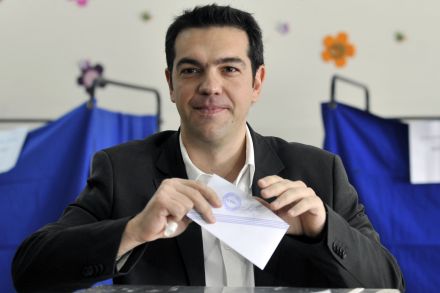
The Greek Prime Minister Antonis Samaras has called Syriza’s leader Alexis Tsipras to concede defeat. But n European Chancelleries, they will be holding their breath and hoping that Syriza do not manage to win an overall majority—the latest official projection has them just one seat short. If Syriza have to form a coalition, the German government, the European Central Bank and the European Commission will be hoping that it is with Potami, who would moderate Syriza’s demands. But if Syrzia wins a majority or forms a coalition with another party that wants to renegotiate the terms of the Greek bailout deal, then the Eurozone crisis will move into a new and particularly dangerous phase.

A Syriza majority will put Athens and Berlin on a collision course

The next set of exit polls are now out from Greece and they, again, show Syriza pulling off a spectacular victory. Their lead might even be just enough to see them win an overall majority; the poll estimates that they will win between 148 and 154 seats in the 300 seat parliament. If Syriza do win outright, they will have no justification to voters for watering down their demands to the rest of the Eurozone. They will have a clear mandate to push for the debt restructuring that they want. But Berlin is not going to be in any mood to grant concessions. Angela Merkel is already deeply unhappy about the European Central Bank’s programme of quantitative easing and the Germans will not agree to any backsliding on structural reforms in Greece or easing of austerity.

Greece votes, Europe waits

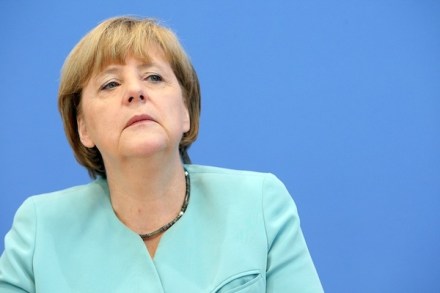
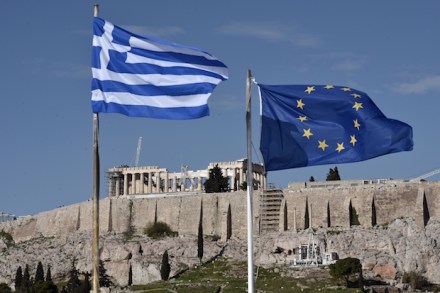
Greek voters are currently going to the polls in an election that will have profound consequences for the Eurozone. If the anti-austerity Syriza party wins, as the polls suggest it will—and its lead has actually been increasing in the past few days, the Eurozone crisis will enter a new and more acute phase. Syriza will demand a softening of the terms of the Greek bailout. But the Merkel government, the European Central Bank and the European Commission are adamant that they’ll be no leeway given. With Merkel already deeply unhappy about the ECB’s quantitative easing programme, she isn’t going to sign off on any concessions to Athens.

The Archbishop shows politicians a more honest way to answer the question

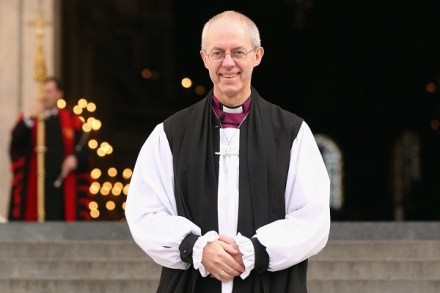
After Islamist terrorist atrocities, political leaders often rush to say that the attacks had nothing to do with Islam. One can understand why they feel the need to do this but the problem is the terrorists clearly do think, however mistakenly, that they are acting in the name of Islam. But if any politician wants to know how to answer the question about the link between terrorism and Islam, they should look at these answers from the Archbishop of Canterbury Justin Welby in an interview with The New York Times: There are aspects of Islamic practice and tradition at the moment that involve them in violence, as there are, incidentally, in Christian practice.

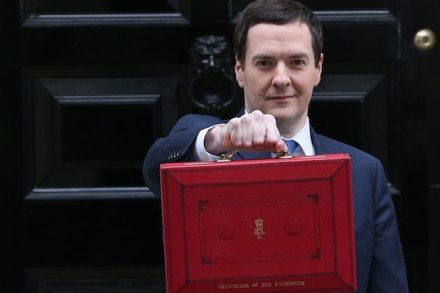
Can George Osborne pass his own 13 tests?

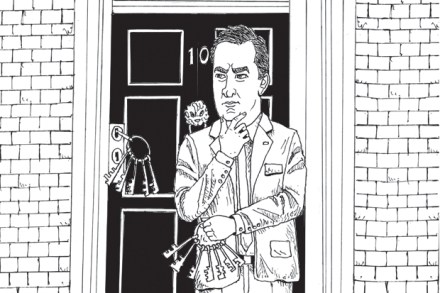
Before George Osborne took to wearing hard hats and hi-vis jackets, he used to revel in his status as a political insider. In 2004, he wrote a piece for The Spectator setting out his model for forecasting the result of UK General Elections. Adapted from an academic model for predicting US Presidential Elections, it set out the ’13 keys to Number 10’ and argued that if a government held six of these it would win re-election. Here are Osborne’s 13 tests and how the government is doing on them: 1. Real per capita economic growth during the parliament equals or exceeds the mean growth during the previous two parliaments. Yes: the coalition will just hit this target if the OBR’s forecasts are correct. 2. The economy is not in recession during the election campaign.

If you’re going to have seven parties in the TV debates, you’ve got to include the DUP

Having seven parties in two of the TV debates, as the broadcasters are reportedly proposing, is an admission that what matters is not whether the party will provide the Prime Minister but whether it might have influence in a hung parliament. On this basis, there is no justification for excluding the DUP. The DUP currently have eight seats in the Commons, more than Plaid Cymru, Ukip and the Greens put together. Even after the next election, the DUP are likely to have more MPs than any of these parties. It is baffling that the broadcasters have ended up concluding that Plaid Cymru, who have fewer MPs than the DUP and also only stand in one part of the United Kingdom, deserve an invitation but the DUP don’t.

George Osborne’s 13 tests for an election victory (and how many he’s passed)

These days George Osborne is rarely seen in public without a hard hat and a hi-vis jacket. But he used to take pride in being recognised as a political insider through and through — a member of the guild of politicians, in his own phrase. He revelled in writing detailed articles about the lessons Westminster could learn from American politics. Several of these were written for The Spectator when Boris Johnson was the editor, which shows how far back the relationship between the Chancellor and the Mayor of London goes. (Osborne was at Oxford as the same time as Johnson’s younger brother Jo, now an MP and the head of the Downing Street policy unit). One of them, written in 2004, set out what Osborne thought were the ‘13 keys to No. 10’.

Tory MPs split over how far to push English votes for English laws

Tory backbenchers have just finished a long meeting about English Votes for English Laws. The 1922 Committee of Tory backbenchers have just spent the last hour and a bit debating the matter with William Hague in attendance. The question at issue was whether the Tories should bar all MPs other than English ones from voting on English-only issues. Or, whether they should limit their plans to only allowing English MPs to vote on English laws at committee stage and giving them a veto before third reading. The leadership is thought to favour the latter option and Malcolm Rifkind and Ken Clarke both spoke up for it. But there was considerable support for option one. Brian Binley argued that this was what Cameron had committed to the morning after the Scottish referendum.

PMQs: Cameron canters home

David Cameron cantered home at PMQs today. Armed with both good employment numbers, praise from Obama and the IMF for the UK economy and the delay in publication to the Chilcot Report, he held off Miliband with ease. The Labour leader, so feisty last week, seemed oddly listless today, getting animated only when he accused Cameron of running scared of TV debates. Cameron, by contrast, seemed to be enjoying himself. He even found time to mock Miliband’s disastrous stint as a house guest in Doncaster, as chronicled in the Mail on Sunday at the weekend. Perhaps, though, the most significant moment of the session came right at the end when Nigel Dodds, the deputy leader of the DUP, asked if Cameron would maintain defence spending at 2% of GDP if re-elected.

Why are the MCB complaining about Pickles’s letter to Mosques?

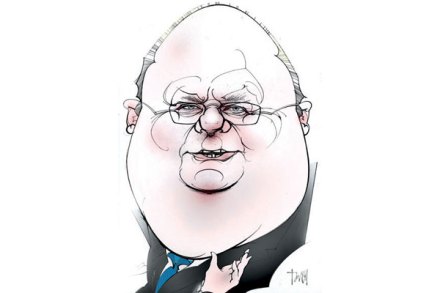
Eric Pickles’s letter to Mosques is pretty anodyne. It is hard to see how it could be objected to. But the Muslim Council of Britain is busy complaining about it. Its deputy secretary general Harun Khan is quoted in The Guardian saying, “Is Mr Pickles seriously suggesting, as do members of the far right, that Muslims and Islam are inherently apart from British society?” Now, if you read the letter it is very hard to argue that this is any way what Pickles is saying. He writes, ‘British values are Muslim values. Like all faiths, Islam and its message of peace and unity makes our country a better and stronger place, and Britain would be diminished without its strong Muslim communities.

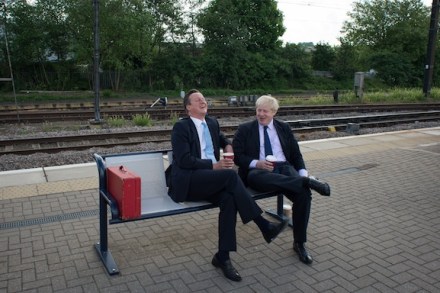
Why Boris and the Tory leadership are playing nicely

For most of this parliament, Downing Street has been thoroughly paranoid about Boris Johnson and his intentions. Any attempt by the Mayor to reach out to Tory MPs was met with deep suspicion. But now, the Tory leadership is actively pushing Boris to see Tory MPs — he was even invited to join the Whips for a Whips Supper at Boisdale last week. This is all evidence of the unspoken deal between Boris and the Tory leadership. He will be loyal and campaign hard for Cameron. In exchange, it will allow him to cultivate Tory MPs; helping him to rectify his biggest weakness ahead of any Tory leadership contest. These arrangements suit everyone involved.

Grey voters snap up Osborne’s pensioner bonds

Downing Street was a happy place after David Cameron and Barack Obama’s joint press conference yesterday. The US President was effusive in his praise for Cameron and his seeming endorsement of Britain’s economic strategy has delighted Number 10. But, I suspect, that in terms of actually influencing how people vote, the success of pensioner bonds might be more important. Osborne announced these pensioner bonds in the last Budget and they pay 2.8 per cent interest on a one year bond and 4 per cent on a 3 year bond. They offer the over 65s a far better deal than anything available on the high street.

How the Greek election will affect our election

In ten days time, Greece goes to the polls in what is, arguably, the most important election that will take place this year. For if — as looks likely — Syriza wins, then the Eurozone crisis will move into an acute and particularly dangerous phase. Syriza are committed to a loosening of the terms of the Greek bailout deal. But, as I write in the magazine this week, Berlin, Frankfurt and Brussels are all adamant that there will be no easing of the fiscal straitjacket. Indeed, Berlin is making it clear that it would rather Greece leave the Euro than allow it to restructure its debts. As always with Greece and the Euro, this isn’t really about this small economy on the EU’s south eastern edge.