James Forsyth

James Forsyth

James Forsyth is former political editor of The Spectator.

How George Osborne got the Liberal Democrats to agree to an ‘interesting Budget’

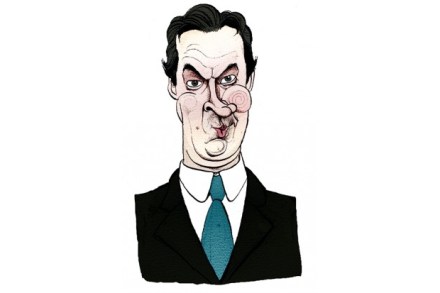
George Osborne and Ed Balls have just done their pre-Budget interviews with Andrew Marr. The show, though, was dominated by talks of post-election deals rather than the contents of the Budget. Ed Balls said that Labour had ‘no need, no plan, no desire’ to do any kind of deal with the SNP. But, as Andrew Marr kept pointing out to him, he wouldn’t rule it out. While when George Osborne was asked about any kind of arrangement with Ukip, he simply took the opportunity to repeat the claim that ‘voting for Nigel Farage makes Ed Miliband the likely Prime Minister’. It was a pity, though, that more time wasn’t spent on the Budget as I suspect it will be more substantive than expected. One Downing Street source described it to me as ‘interesting’.

A Vince intervention that will please the Tories

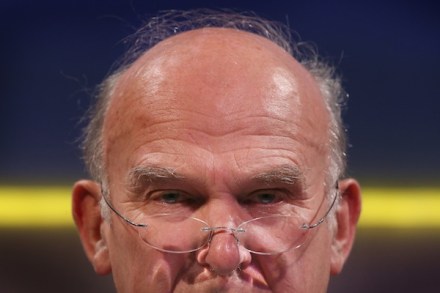
Later today, Vince Cable will launch his traditional conference attack on the Tories. He’ll denounce them for their positions on Europe and immigration. But his pre-conference interview in The Guardian will have, for once, delighted the Tories. For in it, Cable rules out a deal with the SNP. Now, this is a turn-around from Cable. Just last month, he said "We're perfectly happy to work with the SNP. There's no taboo on the SNP.

Ed speaks some human

When Ed Miliband ran for the Labour leadership in 2010, his supporters boasted that he spoke human. Tonight, in a question time session with a group of young people broadcast on BBC3, Miliband showed flashes of his ability to connect with an audience. But, overall, it was a patchy performance. Miliband was very good on some subjects and dealt neatly with some left-field questions. However, he still doesn’t have the right answer to the question of whether he would do a deal with the SNP after the election in the event of a hung parliament. He dismissed the ideas as ‘a piece of nonsense from the Tories’. But, in contrast to a grand coalition with the Tories, he didn’t actually rule it out. Predictably, Miliband got asked about drugs.

The Tories must commit to spending 2 percent of GDP on defence

At a time when Russian fighter jets are forcing civilian flights into UK airports to be diverted, you would expect defence to be one of the big issues of the election campaign. But it is not. It doesn’t fit into the script that the two main parties want to stick to. The Tories’ long-term economic plan doesn’t have space for any foreign entanglements and Labour would rather talk about the National Health Service than national security. But we do need to have a discussion about Britain’s role in the world and how we respond to the Russian threat. It is worth remembering that if Putin tried any funny business in the Baltics we would be obliged—because of Nato Article 5—to come to their aid.

Wanted: a party leader willing to talk about defence

[audioplayer src="http://rss.acast.com/viewfrom22/the-death-of-childhood/media.mp3" title="James Forsyth and John Bew discuss the lack of foreign policy in the election campaign" startat=928] Listen [/audioplayer]In the 1984 US presidential election, Ronald Reagan came up with an effective way of embarrassing his rival Walter Mondale over defence. ‘There’s a bear in the woods,’ ran his television advert, showing a grizzly bear wandering through a forest. ‘For some people, the bear is easy to see. Others don’t see it all.’ During the British general election campaign, the Russian bear isn’t making any attempt to hide — it is standing on its hind legs and pawing at the trees with its claws.

Both leaders had their lines to push at PMQs

Rather predictably, Ed Miliband went on the TV debates again today at PMQs. Labour believe that Cameron’s refusal to do a head to head debate, despite having previously indicated he would, can be turned into an issue of character. Miliband today labelled Cameron a bully who runs away when someone stands up to him. But Cameron had his own line to push, that Miliband wanted to crawl into Downing Street on the SNP’s coattails. Every jibe from Miliband was met with this response. It was not an edifying spectacle and the glee with which the SNP watched proceedings did make one wonder where this tactic could lead.

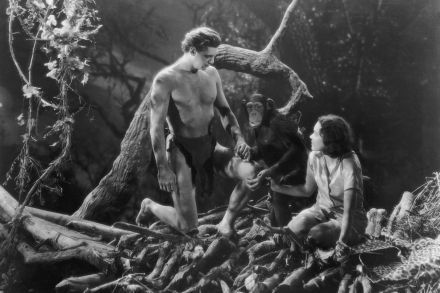
Why George Osborne wants to be the new Tarzan

There is a subtle ideological shift going on in the Tory party. At the top of the party, there is an increasing appetite for a modern form of industrial strategy. As George Osborne argues in an interview in the current Spectator, ‘The Conservative party is at its strongest when it’s not the party that says there is no role for government and the state should just get out of the way… That is not a strand of Conservative thinking that, by itself, is enough. You need to have a bit of the Michael Heseltine: “I’m going to take the Docklands and build a financial centre here and build an airport here.” Or, “I’m going to take the Albert Docks in Liverpool and put the Tate Gallery here.

Cameron orders a re-write of the Tory manifesto

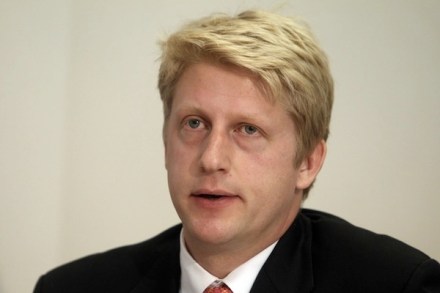
I understand that David Cameron has ordered a re-write of the Tory manifesto. Jo Johnson and the Number 10 policy unit, which he heads, had written and submitted a first draft of the manifesto to Cameron. But word has come back that Cameron feels that the tone is not right. As I say in my Mail on Sunday column, he wants a less wonky document. He thinks the document needs a crisper, more political style. The Tory aide Richard Parr has been charged with re-writing it. Parr learned his political trade under Andrew Mitchell and is regarded as having sharp instincts. Cameron is also a fan of his writing. But it is not just the style of the manifesto that is causing concern. One Cameroon tells me that there 'needs to be a bit of something you wouldn't expect in it'.

Number 10 won’t budge on their TV debate offer

The broadcasters have rejected David Cameron’s offer of one seven-way debate before the start of the short campaign. Instead, they are sticking to their plan for two seven-way debates and one head to head between Cameron and Miliband in the short campaign. This means that the debates, certainly in terms of Cameron’s participation, are pretty much dead. Number 10 and CCHQ were insistent that their offer on Wednesday night was final. The Tories’ reason for not wanting to debate is simple: Cameron polls ahead of Miliband on leadership by such a margin that he would have to win the debate by a knock out for it to be worth his while.

George Osborne interview: smaller government is not enough

[audioplayer src="http://rss.acast.com/viewfrom22/putin-s-empire-building/media.mp3" title="James Forsyth and Fraser Nelson discuss Osborne's election manoeuvres " startat=839] Listen [/audioplayer]Puccini’s doesn’t seem like George Osborne’s sort of restaurant. It is a pizza-and-pasta place in the safely Labour constituency of Salford and Eccles, Greater Manchester, most notable for the fact that Sir Alex Ferguson once took his whole squad there. (‘Penne alla Giggs’ is still on offer to prove it.) In recent years, however, the Chancellor has become something of a regular — he has even taken the Prime Minister along — and is made welcome to the point that when we met there last Thursday diners queued to be photographed with him.

PMQs: The TV debates row rumbles on

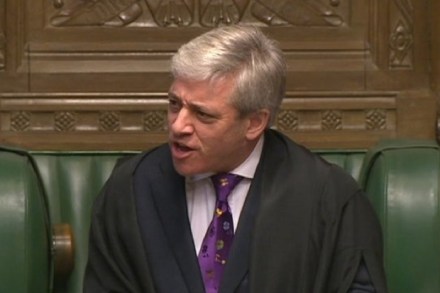
There are only a couple more sessions of PMQs left before the election and there was a slightly end of term feeling to today’s session. Ed Miliband started by mocking Cameron’s failure to meet his immigration pledge. Cameron responded by reading out a list of Tory achievements, almost daring Bercow to cut him off - which he eventually did. Cameron then started to mock Miliband asking those putting him on their leaflets to put their hands up, cue Tory MPs enthusiastically putting their hands up. But Miliband then changed tack and started asking about the TV debates. Cameron, who is determined not to do them, was not as comfortable answering these questions.

The assault on IS-held Tikrit could trigger sectarian war in the region

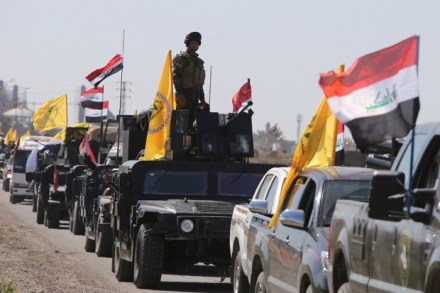
The Iraqi military’s attempt to retake Tikrit from Islamic State tells us several things about the current politics of the region. First, the Iraqi state is heavily reliant on the Iranians for military assistance. The Iranian Fars News Agency has reported that this assault is being backed by the Iranian Revolutionary Guard including the commander of its elite Quds Force, Maj. Gen. Qasem Soleimani. Reuters says that Soleimani can be seen directing operations from a hill and that his presence is crucial in terms of controlling the Iraqi Shi’ite militias, many of whom are Iranian trained. Second, there is a danger that Islamic State might succeed in precipitating the sectarian war within Islam that it so desperately wants.

Who paid for that?

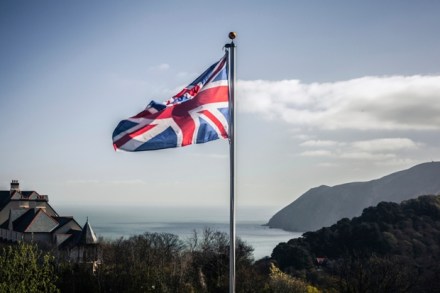
One of the things that even its critics, such as myself, have to concede that the European Union has been good at is making clear what it has funded. By contrast, in this country there’s little to tell you that the taxpayer has paid for something. But this is changing. The government will tomorrow, as I mention in the Mail on Sunday, announce that all publicly funded infrastructure projects will now be branded with a Union flag logo and the message ‘Funded by the UK Government.’ This will apply right across the UK and should provide some clarity as to who is paying for what; using this branding will be a condition of winning government contracts.

National parties no more

All the election forecast models agree, the next election result is going to be remarkably tight. On these models, neither Labour nor the Tories are going to come close to winning a majority. They would both be about 40 seats short. Now, events could intervene to change things. But, as I argue in the magazine this week, one of the reasons Labour and the Tories are finding it so hard to win a majority is that they are not national parties anymore. Compounding this is that no party is aiming for full spectrum dominance in this campaign. Rather, they are trying to talk up the issues that are best for them and worst for their opponents. So, you hear the Tories talking about their long term economic plan and leadership. While Labour want the debate to be focused on the NHS and fairness.

No one wants to fight a national campaign. This will be the least general election in years

[audioplayer src="http://rss.acast.com/viewfrom22/the-snp-threat-to-westminster/media.mp3" title="James Forsyth and Isabel Hardman discuss the not-very-general election" startat=780] Listen [/audioplayer]There’s normally an easy way to tell which party is losing a general election campaign. Whenever one side starts telling you to ignore the national polls and look at what is happening in certain key seats, it is a sure sign that they are in deep trouble. In this election, however, all the parties are arguing that what’s going on in their target seats matters more than the national polls. No one is keener to dispute the relevance of the national polls than the Liberal Democrats.

PMQs: Second jobs, lobbying and ‘obsessive crackpots’

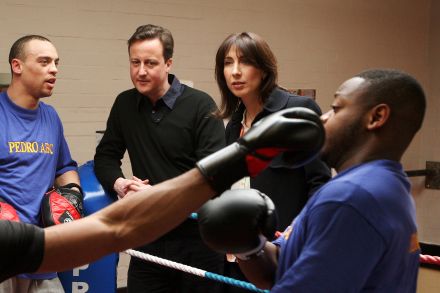
Ed Miliband boxed cleverer than David Cameron at PMQs today and came out with a comprehensive points victory. Miliband went, predictably, on the whole issue of second jobs for MPs. Cameron, equally predictably, responded that the Labour proposal wouldn’t deal with MPs being paid Union officials. Miliband then, nimbly, said that he’d be happy to amend it to make it clear that this was banned too at which point Cameron was pinned back on the ropes. He was left trying to make his way through the session with increasingly strident references to the influence that the unions have on the Labour party. Now, personally, I think Miliband is wrong on the substance.

The latest proposals make the TV debates less likely to happen

TV debates became a little less likely to happen today. The broadcasters have announced that their proposed timetable is for the two seven party debates to come first with the head to head between Cameron and Miliband as the final instalment. This schedule will make the Liberal Democrats even more reluctant to agree to the debates. For one of their main worries has been that in the two way debate, Cameron could say anything about what the Liberal Democrats have blocked in government without them having any chance to respond. With no seven way debate following the Cameron Miliband head-to-head, this problem has been compounded: there is no venue for Clegg to challenge Cameron directly on what he says in that two way debate.

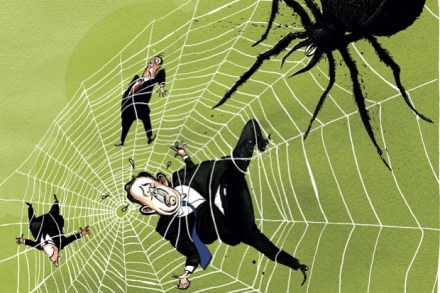
The lobbyist’s web still threatens the reputation of MPs, parliament and politics

Allegations that Jack Straw and Malcolm Rifkind were involved in the latest ‘cash for access’ scandal is a reminder of the threat that lobbying poses to both the reputation of parliament and politics. In 2011, as Liam Fox was caught up in the Adam Werritty scandal, The Spectator examined how the lobbying industry works and how it threatens to skew our democracy: Old hands in Westminster are confident that they know what lies behind the Liam Fox-Adam Werritty relationship. With a knowing glint in their eye, they lean forward and whisper: ‘He’s a lobbyist.’ They’ve seen it all before, they say. It explains why Werritty thought it was worth spending tens of thousands of pounds just to be in the same city as the Defence Secretary.

We are one town away from a proxy war between Russia and the US

We are alarmingly close to the most serious confrontation between Russia and the United States since the end of the Cold War. A proxy war between Moscow and Washington on Europe’s Eastern border now seems more likely than not. The Americans were always sceptical of the Franco-German attempt to broker a ceasefire in Ukraine. Events in the last few days have reinforced that scepticism and I understand from senior British government figures that if pro-Russian forces take the town of Mariupol, Washington will begin to arm the Ukrainian military directly. This will lead to a major escalation in the conflict. Obama is more reluctant to arm the Kiev government than Congress.

The Greek crisis isn’t over

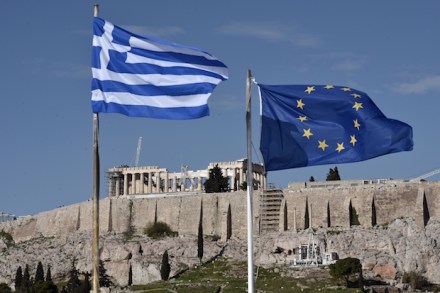
The more you read about the deal between Greece and the Eurozone, the clearer it becomes how temporary a deal it is. First, the Syrzia-led government has to submit on Monday a list of the reforms that it intends to implement over the next four months before the bailout is extended. Then, negotiations will have to start on a third Greek bailout for when this one runs out in the summer. These negotiations will be particularly fraught because of the lack of goodwill on all sides. Last night, Wolfgang Schauble, Germany’s finance minister, declared ‘The Greeks certainly will have a difficult time to explain the deal to their voters.