James Forsyth

James Forsyth

James Forsyth is former political editor of The Spectator.

Why tactical voting is so dangerous for the Tories

From our UK edition

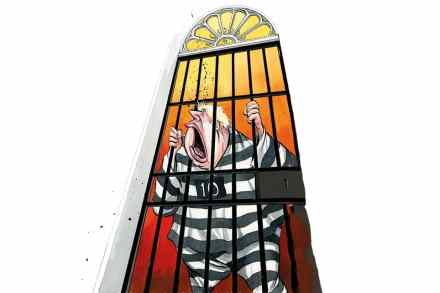
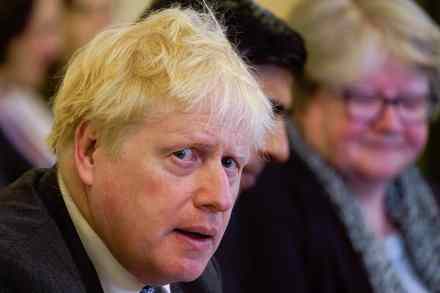
Boris Johnson has always been a celebrity politician. It is one of the reasons why the normal rules of politics have so often not applied to him. This status has given him political reach and put him on first-name terms with the public. It makes it easier for him to command media attention than other politicians: a fact that he turned to his advantage in 2016 and 2019. But this strength is now becoming a weakness. Johnson’s ability to dominate politics means that the country is now polarising into pro- and anti-Boris camps. The worry for him is that he has more opponents than supporters. Last week’s by-elections suggest people are prepared to vote tactically to give him a kicking. ‘His celebrity is working against him,’ laments one secretary of state.
Does Nicola Sturgeon really want an independence referendum?

From our UK edition

14 min listen

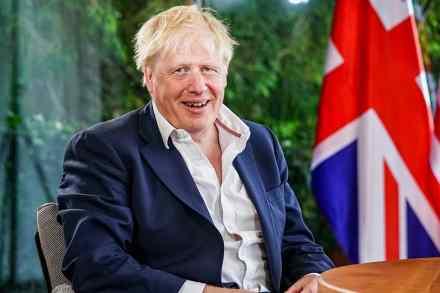
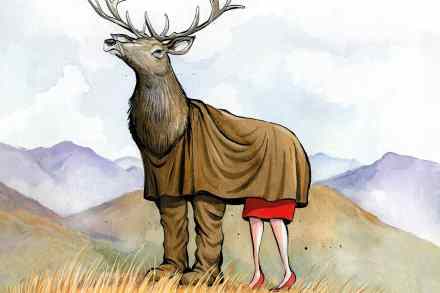
The campaign for a second independence referendum is well and truly on, as Nicola Sturgeon tours the airwaves this week. But can the SNP will Indyref2 into existence, given Boris Johnson is very unlikely to allow it? Natasha Feroze speaks to Katy Balls and James Forsyth on the podcast, in which James suggests that, perhaps, Sturgeon doesn't even want an independence referendum right now.

Nato is no longer ‘brain dead’

From our UK edition

Finland and Sweden will be formally invited to join Nato today. Them joining the alliance will bolster Nato's presence in the Baltic and make it easier to defend Latvia, Lithuania and Estonia. The alliance now has a clear, strategic purpose again Turkey had objected to the two countries joining, regarding them as too soft on Kurdish separatists, whom President Recep Tayyip Erdogan sees as 'terrorists' threatening his country. But having received some concessions on that front, Erdogan has dropped his objections. There’s also speculation that the US will sell F-16 fighter aircraft to Turkey in exchange for its cooperation on this matter.

Why did Tory rebels abstain from the NI Protocol Bill?

From our UK edition

10 min listen

The Northern Ireland Protocol Bill passed its second reading last night with a majority of 74 votes. A number of Tory rebels voiced their opposition to the bill including former Prime Minister, Theresa May, Simon Hoare and Andrew Mitchell. However, despite vocal opposition, not one Tory MP voted against the bill – opting to abstain instead. Did the Whips office play a part in this?Also on the podcast, Nicola Sturgeon unveils her plans to have a second independence referendum, with or without Boris Johnson’s consent. What chance has she got?Katy Balls is joined by Isabel Hardman and James Forysth.

Is Boris being too bullish?

From our UK edition

12 min listen

After a bruising few days, Boris Johnson remains bullish suggesting his intentions to stay in Downing Street for a third term. Is this rattling Tory MPs?Also on the podcast, a Cabinet reshuffle may be approaching. Who is under threat and why? Isabel Hardman is joined by Katy Balls and James Forsyth.Produced by Natasha Feroze.

The most revealing line in Dowden’s resignation letter

From our UK edition

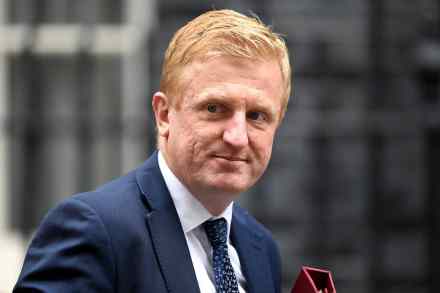
The resignation of the party chairman Oliver Dowden is so damaging for Boris Johnson because the issue in Tiverton was not the campaign that CCHQ ran. You can’t put a 30 point swing down to the choice of candidate or the campaign tactics. Dowden is a party man through and through, a loyalist to the core. He worked at CCHQ, then in David Cameron’s Downing Street before becoming an MP. He has helped prepare the last three Tory leaders for PMQs. He isn’t seen as particularly personally ambitious which makes his resignation all the more telling: no one can accuse him of being on leadership manoeuvres.

Is Boris Johnson heading for a 1997 moment?

From our UK edition

10 min listen

In a major blow, the Conservatives have lost two seats in the Tiverton and Wakefield by-elections. Immediately after, the Conservative party chairman, Oliver Dowden resigned citing 'a deeply personal decision' following a 'run of very poor results for our party'. The Lib Dems overturned a huge Tory majority in Tiverton and Honiton, Devon, their third by-election victory over Boris Johnson's party in a year. What does this suggest about the public mood towards their current government?

What will the anti-Boris rebels do now?

From our UK edition

Looking at these Tory losses, it is hard not to conclude that the rebels would have got the 180 votes they needed to oust Boris Johnson if they had been organised enough to wait until after the by-elections before going for a vote of no confidence. But having had a vote two weeks ago, it is not credible to suggest changing the rules immediately to allow another one. However, judging from the conversations I have had with Tory MPs this morning, more of them would now like the option of having another vote sooner than a year from now. Some talk about the autumn, others about March. In a way, Oliver Dowden’s resignation is so devastating because no one thinks that it was tactical campaigning errors by Conservative Campaign Headquarters that led to these defeats.

Is Boris heading for a 1997 moment?

From our UK edition

Why was the Tory defeat in 1997 so heavy? One of the reasons was that the anti-Tory vote tended to coalesce around the candidate most likely to defeat the Tory in each place. Tactical voting in 1997 cost the Tories 30 seats, turning a bad defeat into a catastrophe. Last night provides evidence that this is happening again, that in British politics there are now two blocs, the Tories and the anti-Tories. Take Tiverton. In the last two elections, Labour came second there. But in this by-election, they lost their deposit as their vote share dropped by 16 per cent.

Can the government prevent a ‘bummer summer’?

From our UK edition

10 min listen

Today, British Airways staff have voted have a strike of their own, adding to the government's woes as rail workers continue to strike throughout this week. On the podcast, James Forsyth adopts a term from the Americans and asks: can the government prevent a 'bummer summer', where nothing quite works? Cindy Yu also talks to Katy Balls, who gives the low down on the risks the Prime Minister is taking on with his eight days foreign trip at a time of two by-elections back home. Produced by Cindy Yu.

British politics is stuck

From our UK edition

One of the favourite phrases of British political commentators is ‘oppositions don’t win elections, governments lose them’. As with all clichés, there is a certain amount of truth to it. But both the Tories and Labour seem intent on testing the maxim to destruction: despite everything the Tories appear to be doing to ensure they lose the next election, Labour is still only ahead by single digits in the opinion polls. No incumbent party in the western world is finding the present set of circumstances easy. The Covid shutdowns, overly loose monetary policies and Russia’s invasion of Ukraine have sent inflation soaring. In France, Emmanuel Macron has no way of putting together a majority in the National Assembly.

Are the latest inflation figures worrying for the government?

From our UK edition

9 min listen

The latest figures suggest that inflation has risen at the highest rate in 40 years. Now at 9.1 per cent, it's not all bad because the rate at which inflation is increasing has in fact slowed down. However, on the podcast, our economics editor, Kate Andrews suggests we are nowhere near the peak yet. How worried should the government be over these figures?Also on the podcast, the strikes took centre stage at PMQs today, how much trouble is Keir Starmer in with Labour over the strikes?

Is Labour in trouble over the rail strikes?

From our UK edition

11 min listen

The first day of strike action has begun with large parts of the country's railways, as well as London's underground lines, shut down. But where workers are trying to put pressure on the government and Network Rail over higher pay, it seems like the Labour party is in more trouble. Disagreement over the party's position on strike action (after all, it was set up to represent the unions in parliament) are playing out publicly, even on the front bench. Katy Balls talks to James Forsyth and Isabel Hardman.Produced by Cindy Yu.

Will the government hold their line on strike action?

From our UK edition

11 min listen

Today begins a chaotic week for commuters who face major travel disruptions as rail staff stage the biggest walkout in 30 years. Union leaders have accused the government of 'inflaming tensions', as Grant Shapps has refused to negotiate with the unions over pay, conditions, job cuts and safety.Also on the podcast, what could be the outcome of Thursday's two by-elections? Isabel Hardman is joined by Katy Balls and James Forsyth.

Biden’s upcoming Saudi Arabia visit has no guarantee of success

From our UK edition

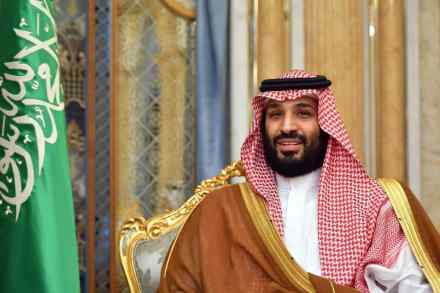
Joe Biden’s trip to Saudi Arabia next month is, arguably, as important as anything that the UK government is doing itself on cost of living. As I say in the magazine this week, only the Saudis deciding to pump substantially more is going to bring down the price of oil and, therefore, petrol. The West’s relationship with Saudi Arabia is deeply, morally problematic. The strains in the US-Saudi relationship - remember how Joe Biden said on the campaign trail that he wanted to turn Saudi Arabia into a pariah because of the murder of Jamal Khashoggi - meant that the Saudis have not stepped in to help in the way they did after Saddam Hussein invaded Kuwait.

Is it time to call Sturgeon’s Bluff?

From our UK edition

8 min listen

The calls for Indyref2 are coming thick and fast from the SNP leader this week with a plan for a monthly speech to express the benefits of Scotland leaving the UK. But would allowing a referendum now be better than resisting one? Newer generations of Scots tend to be more nationalist than their elders. Should unionists push for Indyref2 now before more young people reach voting age?Katy Balls talks to Fraser Nelson and James Forsyth.

What caused Geidt’s flight?

From our UK edition

10 min listen

Lord Geidt became the second ethics advisor to leave Boris Johnson's government last night. It seems like Chinese steel tariffs was the straw that broke the camel's back, but it is clear that he hasn't been happy in the position for sometime. Will the Prime Minister be able to find anyone to pick up this poisoned chalice? Max Jeffery speaks with James Forsyth and Katy Balls.

Boris Johnson’s loss of authority

From our UK edition

There is an uneasy truce in the Tory party. The 148 MPs who voted no confidence in Boris Johnson last week haven’t suddenly changed their minds, but some of them are prepared to give him a year’s grace to try to turn his premiership around. Others are looking for an earlier opportunity to strike, yet they know it is counterproductive to admit that now. They realise that if they are going to persuade the 1922 executive to change the rules to allow another confidence vote within 12 months they will need to argue that the circumstances have substantially changed. While they wait for the moment to attack, it would not be helpful to their cause if they hinted that they are already working out how to change the rules.