James Forsyth

James Forsyth

James Forsyth is former political editor of The Spectator.

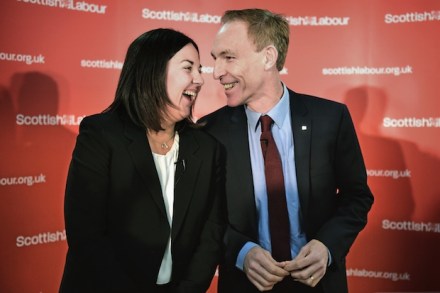
Kezia Dugdale running for leader of Scottish Labour

Kezia Dugdale, the deputy leader of the Scottish Labour party, has announced that she’s running for the leadership of the Scottish party following Jim Murphy’s resignation. With Murphy not being an MSP, it has fallen to Dugdale to take on Nicola Sturgeon at First Minister’s Questions. She is generally thought to have done a good job at it, highlighting the SNP’s poor record on education. But in the current political climate in Scotland, it is highly unlikely that Labour will be able to deny the SNP a majority at next year’s Holyrood elections. So, the risk that Dugdale—who is only 33—is taking in running is relying on the Scottish Labour party not to immediately jettison its leader post-defeat in 2016.
Camilla Cavendish to head Number 10 policy unit

As British politics becomes more presidential, the structure of Number 10 matters more and more. David Cameron values continuity, collegiality and calmness in his senior team and what is striking is how many of his team are staying on post-election. The word coming out of Downing Street today is that Ed Llewellyn will remain as chief of staff in this parliament. But Llewellyn will also be the Prime Minister’s point person on the EU renegotiation, a hugely time consuming task. Number 10 is emphasising that the two deputy chiefs of staff, Craig Oliver and Kate Fall will be taking on more responsibilities to ensure the efficient running of the Cameron operation when Llewellyn is absent. Oliver becomes the Political and Communications director.

A small majority means big challenges

In ancient Rome, when a general rode in triumph through the city, a slave would stand behind him whispering into his ear, ‘Remember you are mortal.’ Today, there is no shortage of people volunteering to make the same point to David Cameron. First, there are Tory backbenchers with long-standing grudges who are already making clear their desire to cause trouble. David Davis, the man Cameron defeated in the leadership contest a decade ago, didn’t even wait to be sworn in again as an MP before he started warning of rows to come over plans set out in the Tory manifesto to limit the powers of the European Court of Human Rights.

Germans propose linking the British renegotiation to Eurozone reform

Wolfgang Schäuble’s decision to link the British renegotiation to changes to the governance of the Eurozone is highly significant. In an interview the German Finance Minister told the Wall Street Journal that he has discussed George Osborne ‘coming to Berlin so that we can think together about how we can combine the British position with the urgent need for a strengthened governance of the eurozone’. Schäuble went on to say that ‘the structure of this currency union will stay fragile as long as its governance isn’t substantially reinforced. Maybe there is a chance to combine both goals’. Schäuble’s comments are the most encouragement that the government has had on the renegotiation front.

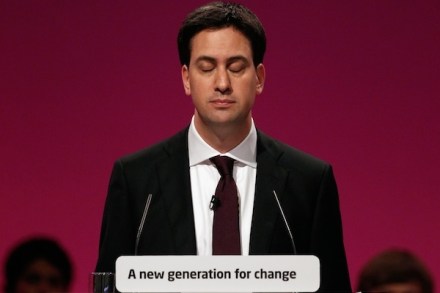
Ed Miliband’s fate shows that how you win a leadership contest matters almost as much as winning it in the first place

Any new party leader needs legitimacy, an acceptance that they won the contest fair and square. Ed Miliband didn’t have this because he lost in two of three sections of Labour’s electoral-college and that meant he couldn’t act decisively in his first 100 days, that crucial period in which the public tend to decide whether a party leader is much cop or not. The worry for Labour is that the next leader might not be seen by some in the party as legitimate either. There are two reasons for this. First of all there is already unease about the tactics that the frontrunners are using to try and keep challengers off the ballot paper, see this story from Patrick Wintour of the Guardian.

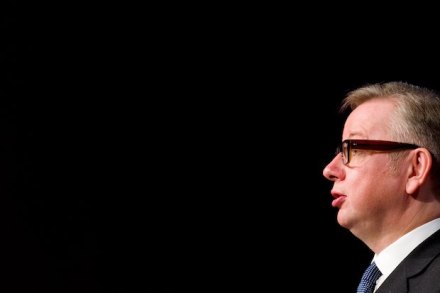
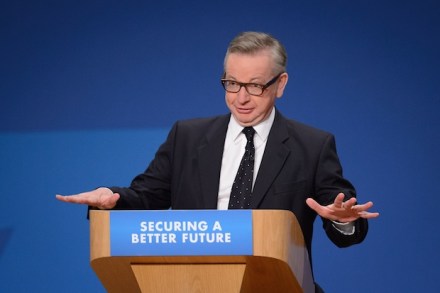
What Michael Gove told his civil servants

Michael Gove has been keeping a relatively low profile since being made Justice Secretary and Lord Chancellor last weekend. I understand that he is keen to master the brief, and particularly the complexities around the creation of a British Bill of Rights, before he starts hitting the TV studios. But an address he gave to staff at the Ministry of Justice on Wednesday gives some clues as to the direction he is heading in. Interestingly Gove didn’t simply declare that the Tories would be scrapping the Human Rights Act. Instead, he said, ‘We’ll be seeking to ensure that human rights are enhanced and preserved by modernising and reforming the framework of rights in this country’.

George Osborne poaches Daily Mail’s political editor

George Osborne has moved to strengthen his personal, political operation by hiring the political editor of the Daily Mail James Chapman as his director of communications. This beefing up of his media team will be seen in Westminster as a statement of political intent by the Chancellor; it gives him a more formidable operation than any of the other likely contenders for the Tory leadership. I am told that Chapman will be handling communications for Osborne in his role as both Chancellor and First Secretary of State.

The final flourishes have been made to the new government

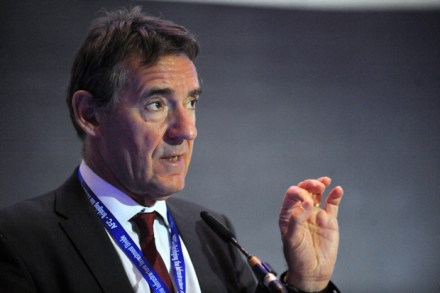
The chaos in Ukip and the Labour leadership race has allowed Number 10 to quietly finish off the task of constructing a new government without too much attention. The distribution of ministerial posts has gone down as well as can be expected. Enough people have been brought back and rebels brought in to give most MPs hope, which is one of the main purposes of reshuffles. Today’s appointments are particularly astute. The economist and former Goldman Sachs banker Jim O’Neill becomes a Lord and the Treasury minister in charge of city deals, which should ensure that George Osborne’s northern powerhouse continues to move forward.

The three groups of voters that Labour needs to win back

Labour is in a more difficult position now than it was after its defeat in 1992. In ’92, the electorate had sent Labour a clear message: move to the centre, don’t say you’ll put up taxes and get a better leader. But this time round, the message Labour has been sent is more complicated. There are three groups of voters that Labour failed with at this election, I argue in the magazine this week. Aspirational voters who went Tory, the left behind working class who went Ukip in England and SNP in Scotland and Nationalist-minded ones north of the border. What the Labour leadership candidates have to explain is how they would win these voters over.

Making Labour work

[audioplayer src="http://rss.acast.com/viewfrom22/thelastdaysofmiliband/media.mp3" title="Dan Hodges and Andrew Harrop discuss the final days of Miliband" startat=34] Listen [/audioplayer]The Labour party is in a worse position today than after its defeat in 1992. Then, the electorate sent Labour a clear and simple message: move to the centre, don’t say you’ll put taxes up and select a more prime ministerial leader. This time, the voters have sent the party a series of messages, several of which are contradictory. The reasons Labour failed to win Swindon South are very different from why it lost Morley and Outwood and the reasons for that defeat are different again in Scotland, where almost all seats fell to the nationalists.

Steve Hilton returns to the British political scene

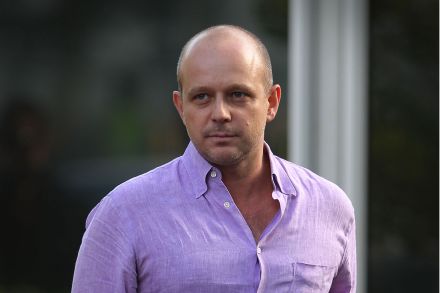
In 2012, Steve Hilton quit his role as David Cameron’s senior adviser in frustration at the compromises of coalition and the slow pace of reform. Since then, he has maintained an almost total vow of silence on British politics. He had no desire to say anything that could be turned into a tricky headline for the Tories. But with the Tories having won the election—and with a majority—Hilton is dipping his toe back in the British political water. As well as doing various events to promote his new book More Human, he is also joining the Cameroon think tank Policy Exchange as a visiting scholar.

Osborne left with two vacancies to fill

One of George Osborne’s political skills is his ability to put together a talented team. Few politicians spend longer thinking about who to have working for them. But post-election, Osborne is going to need to reshuffle his own, personal operation. For Rupert Harrison, his able economic adviser is off and now, I learn, that his press secretary Ramesh Chhabra is leaving too. It is no surprise that they are going now, the Treasury team has been on the political front-line pretty much every day for the past five years. Osborne poached Chhabra seven years ago when his boss David Davis resigned. Since then Chhabra has worked tirelessly on Osborne’s behalf. The good print press that the Chancellor has received in recent years is down, in large part, to Chhabra’s work.

No Cabinet job for Grant Shapps

The party chairman in a general election winning campaign can normally expect a plum job as a reward, especially when that victory was against the odds. Tonight, though, Grant Shapps finds himself not in the Cabinet but a Minister of State at the Department of International Development. Shapps’ treatment is, at first, puzzling. After all, the Team 2015 network that he created appears to have done a decent job in neutralising the supposed advantage that Labour’s ground operation was meant to give it But those around the Tory leader, say that David Cameron simply became fed up with the odd allegations that kept popping up about Shapps. So, the fairness—or otherwise—of his treatment depends on whether these stories are true or not.

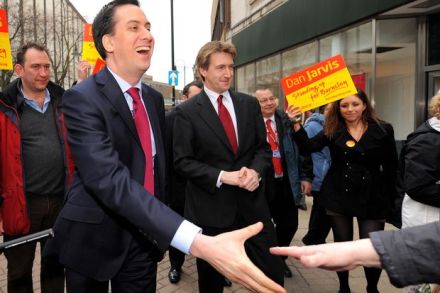
Dan Jarvis rules himself out of Labour leadership contest

Since Labour’s election defeat, there has been a lot of chat about how Dan Jarvis could be the man to revive the party. The argument went that Jarvis, a former officer in the Paras who commanded troops in Afghanistan, was just what the party needed to make voters take a second look at it. But in a piece in The Times today, he rules himself out of the contest on the grounds that he has to put his children first. He writes, ‘My eldest kids had a very tough time when they lost their mum and I don’t want them to lose their dad. I need some space for them, my wife and our youngest child right now, and I wouldn’t have it as leader.’ But Jarvis is clear about what Labour’s problems are.

Iain Duncan Smith to stay at Welfare

News has just broken that Iain Duncan Smith is to remain as Secretary for State for Work and Pensions. Now, normally a Cabinet Minister remaining in post would not be news but there had been repeated rumours that IDS would be shuffled out of this job. The fact that IDS is staying tells us, I think, two things. First, that even with £12 billion more of welfare cuts needed, Cameron wants the policy to be as much about saving lives as money. Second, the decision not to shuffle IDS shows a sensibly cautious approach to party management. Moving IDS, a former leader, from the job he loves doing would have caused upset. By keeping him in place, Cameron ensures the continued loyal presence round the Cabinet table of someone trusted on the Eurosceptic right of the party.

Liz Kendall announces she’s running for Labour leader

In an interview with Andrew Neil, Liz Kendall has confirmed that she’s running for Labour leader. In a polished performance, Kendall set out why she believes education has to be at the centre of Labour’s message, arguing that is what enables people to get good jobs and earn decent wages. She also subtly reminded people of her doubts about the whole Miliband strategy and message by quoting her own warning—delivered back in January—that Labour couldn’t afford to just sound like the moaning man in the pub. Going by her performance today, Kendall is going to be a formidable candidate. She combines good media skills with detailed policy knowledge, she has interesting views on public service reform.

How David Cameron will manage his Tory coalition

Up until Thursday night, everything that David Cameron and George Osborne had done in government had had to be agreed by the Liberal Democrats. Every policy had to go through the ‘Quad’, the coalition government’s decision making body made up of Cameron, Osborne, Clegg and Alexander. That doesn’t have to happen anymore. As one Downing Street figure says: ‘It is all completely different now, we can power forward with what we want to do. There’s no need for everything to be watered down. It’s invigorating’. Not having to manage a coalition, also frees up huge amounts of time for both Cameron and the Number 10 operation. It would be well advised to spend a good chunk of this time, say half, on managing the party.

Justice for Michael Gove

Michael Gove is the new Justice Secretary and Lord Chancellor, Downing Street has just announced. Chris Grayling will move to become Leader of the House. Number 10 is also confirming that, as David Cameron promised during the election campaign, Nicky Morgan will continue as Education Secretary. Becoming Justice Secretary marks a return to Gove running a big department after his service as chief whip in the run up to the general election. I suspect that there will be two things that Gove concentrates on. First, sorting out Britain’s relationship with the ECHR. Grayling had already committed the Tories to withdrawing from the Convention if parliament and courts here could not veto a judgement from the European Court of Human Rights applying in this country.

The reshuffle has begun – but the real excitement will happen on Monday

David Cameron has reappointed several of the most senior members of the government. George Osborne stays as Chancellor, Theresa May remains Home Secretary, Philip Hammond Foreign Secretary and Michael Fallon Defence Secretary. Indeed, the only change is Osborne taking over William Hague’s old First Secretary of State title. This is formal recognition that Osborne will, in effect, be the deputy Prime Minister of this Tory majority government. We are told to expect the rest of the reshuffle on Monday. There’ll be particular interest in who Cameron chooses to be his chief whip, a role that takes on particular importance with this small majority.

A voting system that’s past it

The defence of the Westminster first-past-the-post voting system is that while it’s certainly unfair, it delivers decisive results. A relatively small swing in support from one party to another can deliver the kind of parliamentary majority that ensures fully functioning government. This worked well when British politics was a two-party business, and pretty well when it became a three-party affair. But in this new era of multi-party politics, the Westminster voting system is no longer fit for purpose — as the past few months have demonstrated. When Britain was asked about changing electoral systems in the referendum for the alternative vote, we stuck with the devil we knew.