James Forsyth

James Forsyth

James Forsyth is former political editor of The Spectator.

PMQs: David Cameron gives the impression he isn’t sold on a third runway at Heathrow

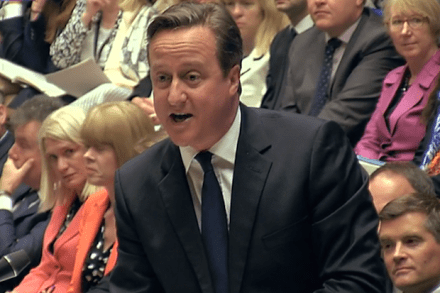
Harriet Harman began at PMQs by asking about the situation in Tunisia. The mood of the House was appropriately sombre as this issue was discussed and there was much agreement between her and Cameron. But then she turned to the Davies’s report and its recommendation that a third runway should be built at Heathrow, and party politics was resumed. Harman announced that Labour was now backing a third runway, and challenged Cameron to do the same. He dodged, hiding behind the threat of judicial review. Harman then cracked a series of good jokes at his expense, chastising him for ‘being bullied by Boris’ out of doing the right thing for the country.

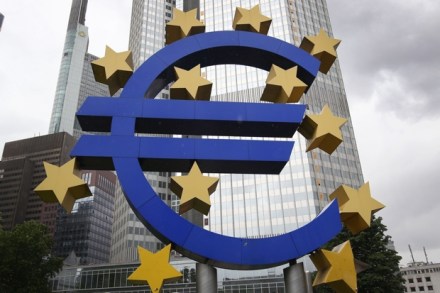
The Eurozone’s new strategy: hope for a Yes vote in Greece

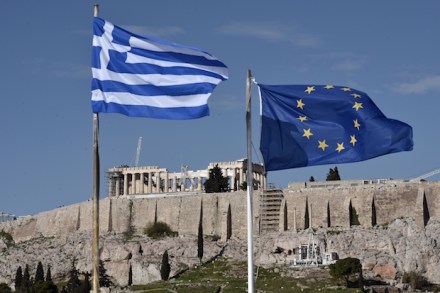
The question that will be on the ballot paper in Greece on Sunday is rather wordy, so European leaders have been trying to simplify it for Greek voters today. Their message has been vote Yes to the bailout deal to stay in the Euro and No for a return to the Drachma. Their logic is that however much Greeks may dislike imposed austerity, they don’t actually want to leave the Euro. It has become clear today that the Eurozone’s strategy now is not to try and put together a last minute agreement but to instead rely on a Yes vote on Sunday. This would lead to the fall of the Syriza-led government and the Eurozone’s hope is that a deal could then be done with a new, more emollient Greek government. Indeed, there seems to be little hope of a last gasp compromise by either side.

Cameron wants the UK to be more ‘intolerant of intolerance’

The minute’s silence before David Cameron’s statement to the House gave proceedings in the Commons this afternoon a particularly sombre air. When Cameron spoke at the despatch box, he announced a national minute’s silence at noon on Friday to remember those killed in Tunisia. He also said that there was, as yet, no evidence that Friday’s attacks in Tunisia, France and Kuwait were coordinated. He did, however, confirm that an emergency exercise drill on how to deal with a terrorist attack will take place in London in the next few days.

Jean-Claude Juncker raises the stakes for the Greeks

Jean-Claude Juncker, the president of the European Commission, has suggested that if Greece votes No in the referendum on whether to accept the terms of a bailout, it will be voting not just to leave the Euro but the EU too. Juncker has clearly decided that the best thing to do is to put the pressure on for a Yes vote in the referendum on Sunday. A Yes vote would force the Syriza-led government to resign. At that point, a deal could—potentially—be done with the new Greek government. However, it is worth noting that any new deal would have to get through various Northern European parliaments which could be tricky.

If Greece leaves the Euro, Cameron should start the British renegotiation all over again

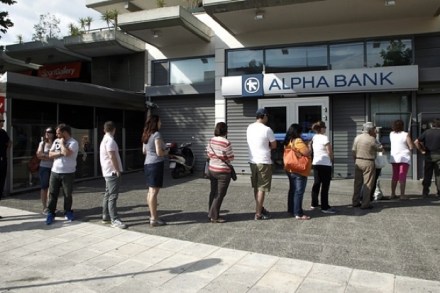
Tonight, it is still not clear how the Greek situation will be resolved. The European Central Bank--which is desperate to avoid being dragged into the politics of this situation--has chosen a middle way on its emergency assistance to Greek banks. It has neither ended it—which would have crashed the whole Greek banking system—nor extended it, which would have enabled the banks to stay open and eased the pressure on the Syriza-led government. Greek banks will definitely be closed tomorrow and probably until the referendum on Sunday. The next big question is what happens on Tuesday when the bailout programme ends and a payment comes due to the IMF which Athens will not be able to make.

Greece: ‘The crisis has commenced’

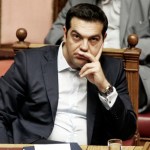
Alexis Tsipras’ gamble in calling a referendum on the bailout deal has failed in two respects. First, it has not prompted Greece’s creditors to offer the country a better deal. Second, they are not going to extend the bailout until the referendum—so, it will end on Tuesday. This means that without capital controls, the Greek banks will not be able to open on Monday morning. As the Irish Finance Minister put it, ‘The crisis has commenced’. We are now waiting for two things. First, will the Greek parliament and president approve the referendum. Second, will the European Central Bank continue to prop up the Greek banks. But, at the moment, it looks as if Greece is heading out of the Eurozone.

Greece to hold referendum on bailout deal

The Greek Prime Minister Alexis Tsipras has just announced that there will be a referendum on the proposed bailout deal next Sunday, July 5th. He will ask for the current bailout to be continued until then to allow the Greek people to have their say. The signs from Athens are that Tsipras will campaign for a No vote unless the creditors offer Greece a radically better deal at tomorrow’s meeting. This move from Tsipras will infuriate Greece’s creditors.  It will also, almost certainly lead to the introduction of capital controls for Greek banks until the referendum. If the creditors don’t blink tomorrow and improve the terms they are offering Athens, then it is hard to see how the current deal can win a referendum in Greece.

Islamic State marks ‘caliphate anniversary’ with multiple attacks

Today’s attacks in France, Tunisia and Kuwait appear to be Islamic State inspired and designed to mark the first anniversary of its declaration of a new caliphate. I suspect, though, that it is the news from France that will most alarm Western intelligence services. This does not appear to have been some mega-plot involving dozens of people but a small, self-starting operation. The latter kind of attack is far harder to stop. Although, it does appear that one of the suspects in this case was known to the security services. The attack in Tunisia on a hotel will hit that country’s tourism industry hard. It is also a reminder of the dire situation in North Africa which is contributing to the migrant crisis in the Mediterranean.

There’s no need for Cameron to rush the renegotiation process

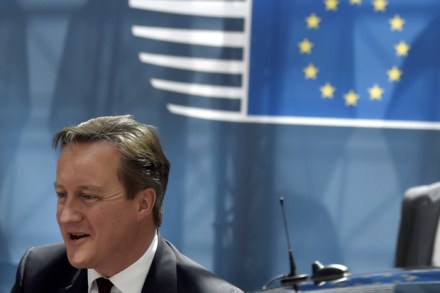
This EU Council has long been marked in Downing Street’s diary as the moment when David Cameron would tell other EU leaders what his renegotiation demands are. But tonight Cameron’s remarks will be a relatively minor part of proceeding as Greece and the situation in the Mediterranean dominate discussion. I understand that the Council President Donald Tusk is not even expected to go round the table asking other EU leaders what they thought after Cameron’s contribution. In some quarters, the fact that the British renegotiation is being treated as a third order issue at this summit is being seen as a snub to Cameron. But those involved in the renegotiation are actually quietly pleased that it won’t be the centre of attention at this summit.

Europe’s great game

[audioplayer src="http://rss.acast.com/viewfrom22/angelamerkel-sburden/media.mp3" title="Fredrik Erixon and James Forsyth discuss the challenges facing Angela Merkel" startat=36] Listen [/audioplayer]For generations, ambitious politicians have dreamed about having the power to run Europe — but as Angela Merkel can attest, it’s a horrible job. She didn’t want to end up with the continent’s problems on her shoulders, but things have ended up that way. The Greek economic implosion, the seemingly unstoppable wave of immigrants from north Africa, the menace of Russian aggression, the euro crisis — all the multiple, interconnected, crises battering Europe have ended up as Merkel’s problem.

PMQs: some revealing exchanges from Cameron on tax credits, broadband and ‘the vow’

In PMQs today, there was no sense of the drama going on outside in Central Lobby as disability campaigners attempted to enter the Chamber. But the exchanges were far more revealing than usual. Harriet Harman asked Cameron about his plans to cut tax credits. Revealingly, Cameron didn’t deny that tax credits were going to be cut or tell Harman to wait until the Budget on July the 8. I think we can take that as something close to confirmation that tax credits will be cut as part of the government’s effort to make £12 billion of savings from the welfare Budget. Indeed, Cameron even endorsed the idea that tax credits have actually kept wages down when he said that he wanted a ‘high pay, low tax, and lower welfare’.

‘No’ campaign coordinator pushes idea of two referendums

Dominic Cummings is the man drafted in to put together the putative No campaign for the EU referendum. Cummings has a tendency to surprise and he has done that today with a piece that pushes the idea that the No campaign should say that there would be a second referendum if Britain votes Out. This second vote would be on the terms of Britain’s exit from the EU. Cummings’ thinking is that this would de-risk voting No. People would be simply rejecting the deal that David Cameron had negotiated rather than voting to leave outright. Cummings sums up the advantages of a second referendum for No thus: This approach might allow NO to dodge its biggest problem – the idea that a NO vote is a vote to leave in one jump and is therefore a leap in the dark.

Greece: The devil will be in the detail

The Greek economy minister Giorgos Stathakis has told Robert Peston in an interview that the deadlock between Athens and its creditors has been broken, that $7.2 billion of funds should soon be released enabling the IMF to be paid at the end of the month. But this judgement seems distinctly premature. First of all, the technical negotiations have yet to take place — and it is all too easy to see how a deal could fall apart then. While the IMF tends to take a tougher line than the European Commission and so might not sign off on this deal. It is also worth remembering that there have been times when the Greek view of what has been agreed has differed distinctly from that of the rest of the Eurozone.

Greece may soon face a humanitarian crisis of its own

Normally, the phrase ‘continent in crisis’ is hyperbole. But it seems appropriate today as we contemplate the situation Europe, and more specifically the EU, finds itself in. In the next few days, Greece could default, triggering its exit from the single currency and financial disruption across the Eurozone. Meanwhile, Rome is on the verge of unilaterally issuing Mediterranean migrants travel documents enabling them to travel anywhere in the Schengen area because—as Nicholas Farrell reports in the magazine this week—Italy simply cannot cope with many more arrivals. Those involved in the British government’s preparations for a Greek exit put the chances of it at 50:50.

Labour’s Blair problem

Ed Miliband believed that after the financial crisis, Britain had moved to the left. He argued that there was no need to adopt all the Blairite positions to win. The election result appears to have disproved that thesis. But, as Andy Grice argues in his column today, Blairite is still being chucked around as the insult of choice in this Labour leadership contest. As Grice points out, Labour particularly need the Blair agenda’s ability to connect with English swing voters now given what has happened in Scotland. In a world in which the swing required for Labour to win Midlothian is larger than to take Kensington, Labour will have to take most of the seats south of the border to gain a working majority. Now, Blair has not helped himself since leaving office.

The missing candidates in the Labour leadership contest

This Labour leadership contest is almost as notable for who isn’t standing as for who is. First, there is the former paratrooper turned MP Dan Jarvis who declined to stand despite many on the Labour side’s belief that he is the answer to the party’s problems. Then, there is Chuka Umunna who initially did enter the race but then pulled out almost immediately, depriving the contest of the one current Labour politician with undoubted star power. But, perhaps, even more telling by their absence are those Labour figures who aren’t even in parliament now. The most discussed of these is David Miliband, who quit the Commons after losing to his brother in 2010.

Does Labour still not get it?

You wait ages for a Labour leadership contest, then five come along at once. In the past few days, nominations have closed for the contests to be leader and deputy leader of the UK and Scottish Labour parties respectively as well as on the party’s pick for London mayor. Who wins these races will determine how Labour defines itself in opposition and how quickly it can regain power. Labour is in the dire position of being out of office at UK level, at national level in Scotland and at city level in the capital. Labour should be taking a long, hard look at itself before deciding what to do next. Instead, it has a leadership contest in which sloganeering seems to be taking precedence over thought.

Why Boris’s four letter word exchange with a Cabbie won’t do him much harm

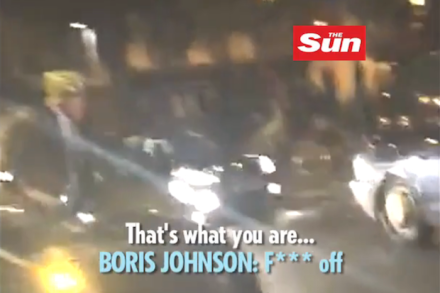
The Sun has video footage of Boris Johnson telling a Cab driver to ‘f--- off and die’. Normally, this would sound pretty dire for a politician. But having watched the video, which The Sun has put online here, I don’t think this exchange will do Boris that much harm. The Mayor and the Cabbie are both going at it and there’s no sense that Johnson think he’s superior: it is a democratic slagging match. It also rather helps Boris that he is on his bike while it is the Cab driver who is shouting abuse out of a car window. Now, they’ll be those who don’t like people, let alone the Mayor of London, swearing in public and won’t be impressed by Boris using such language.

Osborne’s slick PMQs performance

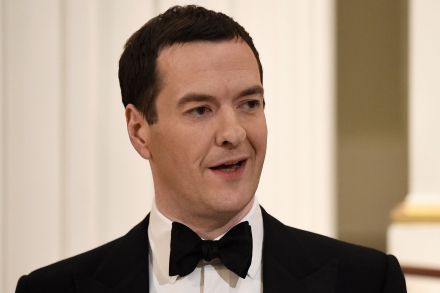
PMQs was not the normal, partisan slug-fest today. Instead, there were a slew of serious questions on the challenge of Islamic extremism at home and abroad and the migrant crisis. George Osborne, standing in for David Cameron, turned in a solid performance. He seemed unfazed by the occasion. His only misstep was persisting with a pre-scripted joke in response to Hilary Benn’s sombre opening question. But other than that, Osborne’s answers were crisp and politically confident. The themes he chose to emphasise were very Osborne. In response to a Labour question on welfare, he had a British version of Angela Merkel’s warning about how Europe can’t afford not to reform its welfare state.