James Forsyth

James Forsyth

James Forsyth is former political editor of The Spectator.

Will this Jeremy Corbyn poll break the Labour fever?

From our UK edition

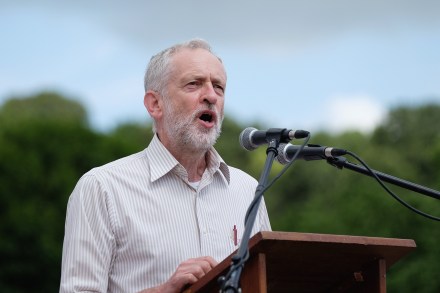
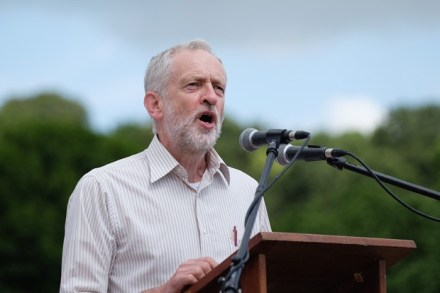
It is hard to overstate the level of shock in moderate Labour circles at last night’s YouGov poll showing Jeremy Corbyn heading for victory in the Labour leadership race. Regardless of whether the poll is accurate, they fear that it will damage Labour in two ways. First, it will skew the contest further to the left as Burnham and Cooper both seek to halt the Corbyn advance and to position themselves to pick up second preferences. Secondly, the idea that Corbyn could win is hardly going to reassure those voters who worry about Labour’s economic competence. https://twitter.com/LadPolitics/status/623619130680320001 Another worry is that the hard left could, seeing how close Corbyn is to victory, sign up en masse to vote in the contest.
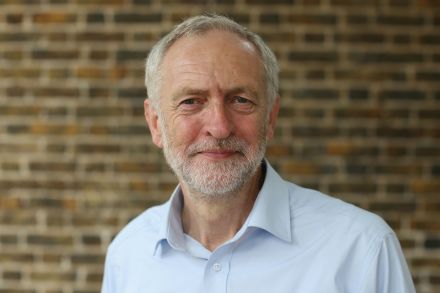
Jeremy Corbyn’s extraordinary success is a coup for the Tories

From our UK edition

[audioplayer src="http://rss.acast.com/viewfrom22/workingwithal-qa-eda/media.mp3" title="James Forsyth and George Eaton discuss the rise of Jeremy Corbyn" startat=754] Listen [/audioplayer]It wasn’t meant to work out this way. A month ago, Westminster watched to see if Jeremy Corbyn could get the support of the 35 MPs he needed to enter the Labour leadership race. At the time, it seemed a sort of joke. After all, the people who were lending him their backing weren’t doing so for any great love of Corbyn. As a rule, they either wanted a ‘broad debate’ or thought that the ritual slaughter of the left-wing candidate would make it easier for the new leader to move the party to the centre. A month on, things look very different.

Jeremy Corbyn’s extraordinary success is a coup for the Tories | 15 July 2015

From our UK edition

It wasn’t meant to work out this way. A month ago, Westminster watched to see if Jeremy Corbyn could get the support of the 35 MPs he needed to enter the Labour leadership race. At the time, it seemed a sort of joke. After all, the people who were lending him their backing weren’t doing so for any great love of Corbyn. As a rule, they either wanted a ‘broad debate’ or thought that the ritual slaughter of the left-wing candidate would make it easier for the new leader to move the party to the centre. A month on, things look very different. Corbyn now has the endorsement of Unite, the most powerful union in the country, and several others.

PMQs: the Tories are set for a happy summer holiday

From our UK edition

This was the last PMQs before the recess, and the Tory side of the House was in an end of term mood. When Harriet Harman stood up, the Tory benches enthusiastically beckoned her over — a reference to the anger in Labour circles at her openness to Tory plans to limit child tax credits to two children for new claimants. But Harman turned in a decent performance in her penultimate PMQs outing. She asked Cameron about the Greek crisis and drew some rather loose-lipped talk from him about how if Greece left the Euro, the UK would be prepared to assist with humanitarian aid.

Tomorrow’s vote on the hunting ban has been pulled

From our UK edition

The government has confirmed that it is pulling tomorrow’s vote on the relaxation of the hunting ban. A Downing Street source is frank about why they are doing this, the vote would be lost with the SNP voting against and so there’s not much point in having it. Indeed, even the Countryside Alliance accepts that no good would come from pressing on. This brings to an end David Cameron’s attempt to allow a full pack of hounds to be used to flush out a fox, first revealed by Melissa Kite in The Spectator. What has done for it is the SNP’s opportunism in saying that it will vote against a measure that simply brings the law in England and Wales into line with that in Scotland.

The Germans have just changed the whole dynamic of the Euro

From our UK edition

The ancient Greeks used to drop iron bars into the sea to demonstrate the permanence of the agreement they were signing. The point was that the deal would last until the iron floated to the surface - that it was irreversible. The Euro was meant to be the same: once a country had joined it could —and would — never leave. It was for all time. But last night’s discussions have put paid to that notion. We now know from the German’s proposals for a ‘temporary’ Greek exit that a country can leave the single currency. This changes the whole dynamic of the currency union, weakening the position of countries with fiscal problems.

Have the Greeks just blinked?

From our UK edition

The Syriza-led Greek government has just submitted a new set of proposals to their creditors. It appears to shift Greece closer to the creditors on VAT and pensions reform. It is also, as many have been quick to point out, really quite similar to the proposal that the Greeks voted against in last Sunday’s referendum. Indeed, it doesn’t even appear to contain any demand for debt relief for Greece. The Greek proposal has been drawn up with French assistance, the New York Times is reporting, which suggests that Paris should be sympathetic to the proposals. The question then is how the Northern European countries, led by Germany, react to it? But before the Eurozone finance ministers examine the proposals on Saturday, they will have to get through the Greek parliament.

The New Labour influences on Osborne’s Budget

From our UK edition

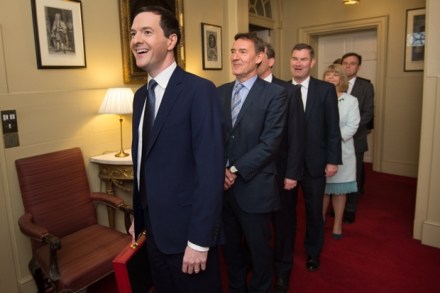
George Osborne had a ringside seat for New Labour’s dominance of British politics and you could see the influence that this has had on him in the Budget. First, there was Osborne’s determination to unpick the structural changes that Gordon Brown had made to move British politics to the left. So, Osborne took the axe to tax credits not only limiting the numbers who’ll receive them in future, down from nine out of ten families with children in 2010 to five in ten by 2020, but he also attacked the intellectual rationale for them, arguing that they have actually kept wages down. But the Budget also owed something to Tony Blair.

Osborne’s mission: erase every trace of Brown

From our UK edition

To understand George Osborne, it is important to realise that he cut his political teeth at the height of the New Labour ascendancy. He remembers the humiliations that were visited on his party as Tony Blair carried all before him. But there is one moment from that period that Tories can look back on with satisfaction: their opposition to Britain joining the European single currency. In 1998, William Hague warned, in a speech drafted by Osborne, that the euro would become a ‘burning building with no exits’. When this speech was written, Osborne couldn’t have imagined that those flames would be the backdrop to the first Budget of his second term as Chancellor 17 years later. But events in Greece have overshadowed this, the first Tory Budget for 18 years.

A Budget that refused to sweat the small stuff

From our UK edition

What makes this Budget so politically astute is how it all fits together. The four-year freeze on working age benefits and the cuts to tax credits are made palatable by the introduction of a national living wage. Meanwhile businesses’ potential objections to this wage hike will be muted by the cut in corporation tax to 18p and the hypothecation of vehicle excise duty to road improvements. It is hard to define this Budget politically. There were plenty of things in there to please the Tory right, the commitment to spend 2% of GDP on defence in particular. But it was also one that made several raids on Labour territory in areas such as non-dom taxation and skills and a big land grab on the national living wage.

Eurozone meeting breaks up with no agreement, full EU summit Sunday

From our UK edition

The meeting of Eurozone leaders in Brussels has just broken up. There is still no agreement on a new deal for Greece. In these circumstances, the European Central Bank will not lend more to the Greek banks, so they will remain closed. What has been announced is a full summit of all 28 EU members for Sunday. Now, the significance of this is that Greece stops being an issue just for the Eurozone and becomes one for the whole of the EU when it leaves the Euro. The presence of all the EU leaders on Sunday will mean that the issue of a Greek exit from the single currency can be discussed. The Eurozone leaders struck different notes on how likely a deal was as they left.

Merkel strikes an uncompromising tone as the ECB tightens the squeeze on the Greek banks

From our UK edition

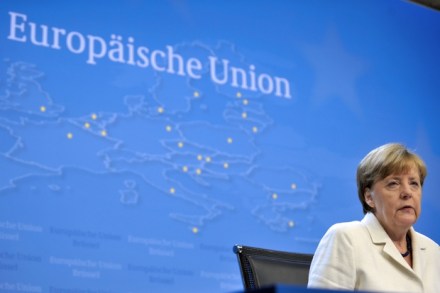
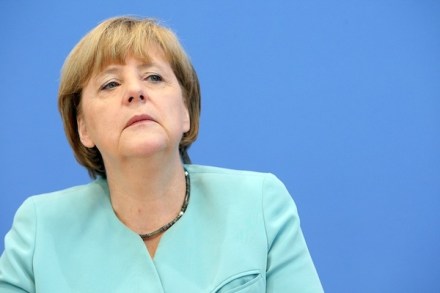
François Hollande and Angela Merkel have both given brief statements to the media ahead of their dinner this evening. Hollande was keen to stress that the door remained open to Greece for negotiations and struck a generally more emollient tone. Merkel, though, did not sound so emollient. She claimed that the deal that the Greeks rejected was ‘quite a generous one’. Meanwhile, the European Central Bank—the key actors in this drama—have kept the emergency lending assistance they are offering the Greek banks at the same level. This means that the Greek banks will not be able to re-open. The ECB has also said that it will ‘adjust the haircuts on collateral accepted by the Bank of Greece for ELA.

Time running out for a Greek deal warns Osborne

From our UK edition

Right now, Britain is sitting on the side-lines waiting to see if there is, to use George Osborne’s phrase, an ‘11th hour’ deal between Greece and the rest of the Eurozone. Britain isn’t part of the Greek bailout or the Eurozone so is peripheral to this process; David Cameron isn’t invited to the emergency Eurozone meeting on Tuesday. But Osborne has just told the House of Commons that the UK government expects the Eurogroup to discuss a new proposal from the Greek government at tomorrow’s meeting. As Osborne pointed out, the problem is that the political timetable for a deal isn’t moving as fast as the financial timetable in Greece. A deal between Athens and its creditors will take weeks not days.

Greece says No, will Germany now try and kick it out of the Euro?

From our UK edition

Greece has voted No in the referendum and resoundingly so. With more than 90 percent of the votes counted, No is leading 61% to 39%. The result is a massive humiliation for Eurozone leaders who have spent the last few days telling the Greeks to vote Yes and warning them that this was really a referendum on whether the country should stay in the single currency or not. Tonight, Syriza have been making clear that the Greek government intends to remain within the Euro. However, the German government is making clear that it is not interested in further negotiations with Athens or a new bailout deal.

German rhetoric suggests that they are preparing to try and kick Greece out of the Euro

From our UK edition

Greece has voted No, and resoundingly so. But the reaction from Berlin tonight does not suggest that Germany is prepared to have any further negotiations with the Syriza government. The vice chancellor, and head of the SPD, Sigmar Gabriel has declared that "With the rejection of the eurozone's rules of the game, which has been expressed in this majority 'no' vote, negotiations on further multibillion euro programs are scarcely conceivable." Given that the SDP is more doveish than the CDU and the CSU on the Greek question, this sounds like Germany has given up on trying to strike a deal and now wants Greece to leave the Euro. Indeed, one influential CSU politician has already publicly suggested that Greece might be better off outside the Euro.

Greek voters say Oxi, what will the Eurozone do now?

From our UK edition

With half the votes counted, the No side in the Greek referendum is leading by 61% to 39%. With this lead for No at this stage in the count, it seems certain that it has won. The question now is how the Eurozone will react to this result. Before the vote, the Eurozone powers made clear that they wanted Greece to vote Yes. The Germans, French and Italians all repeatedly warned the Greeks that this was effectively a vote on whether to stay in the Euro or Not. Jean-Claude Juncker even hinted that this was a referendum on whether Greece should stay in the EU or not. So, what will they do now that the Greek electorate has so spectacularly rejected their advice? Well, the person everyone will be watching now is Mario Draghi, the president of the European Central Bank.

Which way will Greece vote?

From our UK edition

This time tomorrow, we’ll have had the first projections from the Greek referendum. We will have an idea as to whether the country has said Oxi or Nai. At the moment, the polls make the referendum too close to call. Whatever the result, there’ll be no quick deal between Greece and its creditors. But if the Greeks vote Oxi, then the country could be forced out of the Euro by the ECB cutting off assistance to its banks. If that were to happen, then the Eurozone would have to move to integrate very quickly to prevent Portugal, Italy, Spain and even France being pushed towards the Euro exit the next time there’s a fiscal crisis. This would almost certainly require a new EU treaty, which would provide Cameron with quite an opportunity.

Cameron must not let this crisis go to waste

From our UK edition

Few European leaders have been luckier than David Cameron. First he was sent Ed Miliband. Now events in Greece may be about to present him with a solution to the thorniest problem of his second term: how to negotiate a new form of EU membership for Britain that the Tory party can rally behind come the referendum. The Prime Minister’s critics delight in claiming that his European problem is of his own making. Two years ago, he promised a referendum on EU membership before the end of 2017. But he couldn’t have survived without making such a pledge. It was his way of stopping his party arguing about Europe; without it, he could not have gone into the election claiming that he led a united party.

Rachel Wolf to Number 10

From our UK edition

Good news for those who value the Michael Gove education agenda, Rachel Wolf — the founder of the New Schools Network — is joining the Number 10 policy unit. Wolf, who has spent the last few years in the States working on education technology, will be covering tech, innovation and education. As her work at the New Schools Network demonstrated, where she helped get the first wave of free schools up and running, Wolf gets things done. The fact that Camilla Cavendish, the former Sunday Times columnist who is now in Number 10, has hired her, suggests that Cavendish wants a series of practical ideas from the Policy Unit rather than just blue sky thinking.

Greek referendum going ahead as Tsipras again urges No vote

From our UK edition

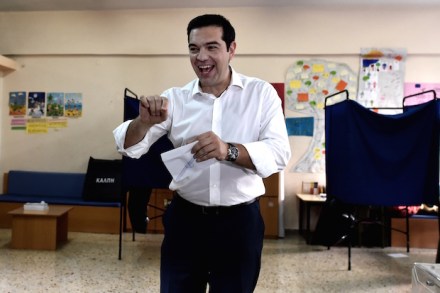
After much speculation that the Greek referendum was about to be cancelled, Alexis Tsipras has just appeared on Greek television to confirm that it is going ahead and to urge people to vote No. He said that those saying a No vote would mean Greece leaving the Euro were telling lies. He argued instead, that a No would strengthen his negotiating hand and allow him to achieve a ‘social deal’ which would be easier on the poor and pensioners. Everything now turns on the result of the referendum. If it is a Yes vote, the Syriza-led government will almost certainly resign and one can see how the country’s creditors could do a deal with a new government. But if it is a No, then it is not clear what will happen.