James Forsyth

James Forsyth

James Forsyth is former political editor of The Spectator.

Jeremy Corbyn offers a twist to the EU renegotiation

From our UK edition

Jeremy Corbyn has taken to the Financial Times, the newspaper of big business, to say that Labour will support Britain staying in the EU whatever happens in the renegotiation. This is a reversal of Corbyn’s previous view that such a position was equivalent to giving David Cameron a blank cheque to negotiate away social and environmental ‘protections’. But there is a twist. Corbyn says that if Cameron does win changes in these areas, Labour will commit to reversing them if it wins the next election. Now, I think this could pose a problem for the In campaign because it confirms that the settlement that is being put to the electorate is not permanent, that there could be more integration in the near future.

Corbyn puts the EU referendum on a knife edge

From our UK edition

[audioplayer src="http://rss.acast.com/viewfrom22/thedeathoftheleft/media.mp3" title="James Forsyth and Isabel Hardman discuss Corbyn's first few days as Labour leader" startat=1015] Listen [/audioplayer]No one watching Jeremy Corbyn walk around the Palace of Westminster would imagine that he had just won the Labour leadership by a landslide. He seems to spend his time practising the blank stare he gives to television cameras, his eyes fixed firmly on the middle distance. He doesn’t seem too keen on his colleagues either. There is none of the back-slapping bonhomie that normally surrounds a new leader. When he first addressed Labour MPs, there was no cheer when he entered the room which is, for a new leader, unprecedented. Corbyn is the accidental leader.

What Cameron said to Osborne at the end of PMQs

From our UK edition

At the end of PMQs today, David Cameron turned to George Osborne and said, ‘Well, that was a lot less stressful.’ I think this conclusively answers the question of whether or not Cameron is worried by Jeremy Corbyn’s PMQs technique of reading out questions that the public have sent in. Although, to be fair, I hear that Cameron was impressed by how calm Corbyn was today, especially considering that it was not only his PMQs debut but his  first ever appearance at the despatch box. The Prime Minister remarked afterwards that the Labour leader’s hands weren’t even shaking as he asked his questions.

PMQs: Corbyn’s defensive performance gets him through unscathed

From our UK edition

After the 72 hours that he has had, I suspect that Jeremy Corbyn is quite relieved to have got through his exchanges with David Cameron unscathed. The evening news tonight will be far better for Corbyn than it was yesterday. Corbyn, who was making his debut at the dispatch box, began by announcing that he wanted to change the style of PMQs and that he had got members of the public to email in questions. He proceeded to ask Cameron half a dozen of them. Cameron, who could hardly attack the question in these circumstances, answered respectfully and with only the odd jab at Corbyn which will have been a relief to many on the Labour benches.

No enthusiasm for Corbyn as he addresses Labour MPs

From our UK edition

Labour MPs are in no mood to fake it. At Jeremy Corbyn’s first meeting with the Parliamentary Labour Party, there was no cheer as he entered the room, no raucous applause when he stood up to speak. Instead, all that could be heard outside in the corridor was a few rounds of mild, polite applause. For a new leader, this is quite unprecedented. Corbyn’s message was that he had three priorities as leader: housing, the elections in Scotland and Wales next year and a Labour government in 2020. He also tried to stress that he wanted to be an inclusive leader, emphasising that he didn’t want any change to party selection rules. In an attempt to reassure MPs, he said that Labour under him would not be against individual achievement and aspiration.

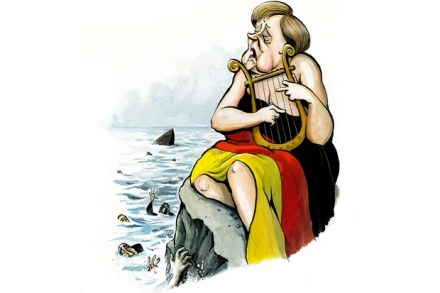
Merkel’s response to the refugee crisis has made the situation worse

From our UK edition

Having, effectively, unilaterally ripped up the EU agreement on how to handle refugees, Germany is now desperately trying to re-impose the rules. At the start of this month, Angela Merkel’s government declared that any Syrian who could reach the country could claim asylum in Germany. This was contrary to the Dublin Convention of 1990 which set out that refugees should seek asylum in the first EU member state that they arrive in. Predictably, Germany’s actions led to a huge surge in the number of refugees trying to reach the country. The volume of people coming is now so great that Berlin has had to put in place controls on the Austrian border. It is also saying that it won’t accept refugees who have been fingerprinted or admitted in another EU state.

Jeremy Corbyn’s boiler plate victory speech was no move to the centre

From our UK edition

No one in the hall was in any doubt about the result, the only thing in question was the scale of Jeremy Corbyn’s victory. In the end it was overwhelming, 59.5 per cent on the first round. Corbyn led in every single section and the scale of his triumph will make it very hard for the Parliamentary Labour Party to move against him even in the medium term. Though, large numbers of the Labour figures here today are making no effort to hide their dismay at the result. Corbyn’s victory speech, delivered without a tie, was no move to the centre. It did contain some unifying themes, his tribute to Liz Kendall for standing up for what she believes in, but it was largely left-wing boiler plate.

Jeremy Corbyn has arrived — here’s what happens next

From our UK edition

It has happened. Labour has elected Jeremy Corbyn as its leader. The party hasn’t just lurched to the left, but dived headlong in that direction. Never, in the history of the universal franchise, has a leader of one of the two main parties been so far from the political centre. Just because something is absurd doesn’t mean it can’t happen. This is the lesson of Jeremy Corbyn’s victory in the Labour leadership contest. At first, the prospect of Corbyn leading Her Majesty’s Loyal Opposition was seen to be so ridiculous that bookmakers put the chances of it at 200 to 1. Labour MPs were prepared to nominate him to broaden the ‘debate’. The temptation now is to declare that a Corbyn leadership can’t possibly last.

Peter Robinson’s departure intensifies Northern Ireland’s political crisis

From our UK edition

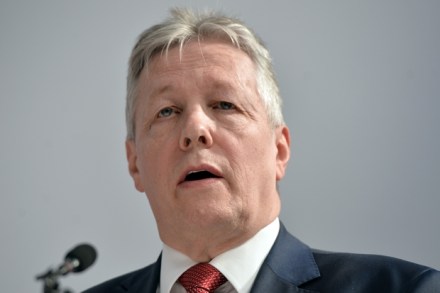
The political crisis in Northern Ireland has just become much more serious. Peter Robinson has stepped down as first minister and pulled all but one DUP Minister out of the executive. This means that there is now just one Unionist as part of the government there. Robinson’s aim is to make the UK government suspend Stormont. This crisis has been caused by the IRA’s continuing activities. Last month, the Police Service of Northern Ireland declared that the Provisional IRA was involved in the murder of Kevin McGuigan. This week, Sinn Fein’s northern chairman Bobby Storey was one of three republicans arrested for questioning in connection with the matter. Now, Sinn Fein denies that the IRA exists anymore.

Angela Merkel is making the refugee crisis worse

From our UK edition

There have been plenty of bad decisions taken by European politicians in the last few years. But few will cause as much misery as Angela Merkel’s refugee policy. Her decision to rip up the Dublin Convention and announce that any Syrian can claim asylum in Germany will lead to more people putting their hands in the lives of unscrupulous human traffickers as they try desperately to make it to Germany. This will, tragically, lead to more deaths. In the magazine this week, I argue that Merkel’s policy is flawed on several levels. First, she has chosen to prioritise those Syrians who have already made it to Europe. These people are not in imminent fear of their lives unlike the millions of internally displaced people within Syria.

Merkel’s folly

From our UK edition

[audioplayer src="http://rss.acast.com/viewfrom22/merkelstragicmistake/media.mp3" title="James Forsyth and Holly Baxter debate Merkel's offer to Syrian refugees" startat=38] Listen [/audioplayer]Of all the irresponsible decisions taken in recent years by European politicians, few will cause as much human misery as Angela Merkel’s plan to welcome Syrian refugees to Germany. Hailed as enlightened moral leadership, it is in fact the result of panic and muddled thinking. Her pronouncements will lure thousands more into the hands of unscrupulous people-traffickers. Her insistence that the rest of the continent should share the burden will add political instability to the mix. Merkel has made a dire situation worse.

PMQs returns with drones and a serious question from the DUP

From our UK edition

PMQs today was not the usual Punch and Judy show. Rather it was dominated by a serious exchange between Harman and Cameron about what to do about the refugee crisis. Cameron, having paid generous tribute to Harman, set out the thinking behind the government’s position far more clearly than he had on Monday. Now, I suspect that PMQs will be very much back to its old self with the debut of the new Labour leader next week. But what was refreshing about today’s session was that Harman and Cameron were disagreeing with each other and arguing, but just without the raised voices or insults. The SNP’s Angus Robertson used his two questions to raise the issue of drone strikes.

Cameron’s refugee announcement overshadowed by drone strike in Syria

From our UK edition

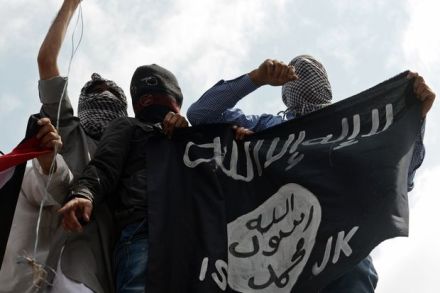
David Cameron’s statement that Britain will take 20,000 Syrian refugees over the course of this parliament was overshadowed by his announcement that an RAF drone had killed two British ISIL fighters in Syria in August. Cameron said that that Reyaad Khan and Ruhul Amin had been killed in a lawful act of ‘self-defence’ as they were planning and encouraging terrorist attacks in Britain. He stressed that this was a targeted action and that he would come back to the House of Commons to seek permission for more generalised action in Syria; the Commons voted against military action there in 2013. Now, it is hard to think of many more serious matters than the killing of a British citizens by the British state.

David Cameron: British ISIL fighter killed by drone strike in ‘self-defence’

From our UK edition

David Cameron has just informed the House of Commons that an RAF drone killed several ISIL fighters in Syria in a targeted strike in Syria. Two of those killed were British citizens who Cameron said were planning terrorist strikes against this country. He called this a lawful act of 'self defence' and stressed that it was targeted and that he would return to the Commons to seek permission for more generalised bombing of ISIL in Syria. It will be interesting to see whether Jeremy Corbyn chooses to intervene in the Commons debate that is following this revelation. More to follow...

Corbyn and the austerity argument

From our UK edition

Until recently, the Tory leadership has been reluctant to plan how they would respond to a Corbyn-led Labour party. They just couldn’t believe that Labour were actually going to elect him. At the Cabinet’s pre-holiday get together at Chequers, the conversation about how to take on the new Labour leader was premised on the idea that either Andy Burnham or Yvette Cooper would win. But now the Tories are working out how they would tackle Corbyn. (Though, two Cabinet Ministers have told me this week that they expect Cooper to pip Corbyn at the post). The Tory leadership is keen to avoid sounding triumphalist about the prospect of facing the MP for Islington North.

What a Corbyn victory will mean for the Tories

From our UK edition

A Jeremy Corbyn victory in the Labour leadership race now seems like a racing certainty. The consequences of this for Labour have been much discussed but in the magazine this week, I look at what it would mean for the Tories. The first, and most obvious, thing to say is that it would make 2020 the Tories’ election to lose — and they would have to make an epoch defining mistake to do so. But some Tories are worried about the prospect of a Corbyn victory. This isn’t just because they fear that bad opposition leads to bad government. But because they fret that Cameron and Osborne’s response to it will be to tack hard to the centre to try and pick up those voters disillusioned by Labour’s lurch to the left.

The Corbyn enigma

From our UK edition

[audioplayer src="http://rss.acast.com/viewfrom22/jeremycorbynsbritain/media.mp3" title="Dan Hodges, James Forsyth and Ellie Mae O'Hagan discuss the impact of a Corbyn victory" startat=40] Listen [/audioplayer]Just because something is absurd doesn’t mean it can’t happen. This is the lesson of Jeremy Corbyn’s seemingly inevitable victory in the Labour leadership contest. At first, the prospect of Corbyn leading Her Majesty’s Loyal Opposition was seen to be so ridiculous that bookmakers put the chances of it at 200 to 1. Labour MPs were prepared to nominate him to broaden the ‘debate’. Now, almost everyone in the Labour party thinks we are days away from Corbyn’s coronation, and some bookies are already paying out.

The SNP is forcing Cameron to think of Scotland. They may come to regret that

From our UK edition

No one can deny that the SNP has made Westminster pay more attention to Scotland. Five years ago, it was surprising—and, in many ways, shocking—how uninformed most MPs were of what was happening in Scottish politics. That is one of the reasons why the independence referendum was treated as a second-order issue - until people realised quite how close it was going to be. But that has all changed now with the 56 SNP MPs making their presence felt in the Chamber. This is particularly true of Downing Street because with Angus Robertson having two questions at PMQs each week, David Cameron—who prepares assiduously for these sessions—needs to know what is making news in Scotland and what the record of the SNP government up there is on various issues.

Who in Labour will fight to bring back sanity and honesty and dignity? Not John Prescott

From our UK edition

When I heard John Prescott was going on the Today programme, I must admit that I expected him to urge Labour members to be sensible — and stop this damaging flirtation with Jeremy Corbyn and his hard-left views. But he didn’t. Instead, Prescott attacked those attacking Corbyn — including his old boss Tony Blair — and said it wouldn’t be a disaster if Labour did elect Corbyn. It was a bizarre performance and a missed opportunity. For there is an urgent, and increasingly desperate, need for someone who is trusted by Labour grassroots to explain to them just how damaging it would be for the party and its prospects to elect Corbyn. Yet at the moment, no one seems to want to step forward to fulfil this role.

Why MPs can’t switch off this summer

From our UK edition

There are few quicker ways to annoy an MP than to suggest that they are on holiday when the House of Commons isn’t sitting. Such a suggestion will be met with a tetchy and immediate list of the constituency work they are doing in recess. This week, however, marks the start of the first summer break since the election, so the honourable members should perhaps feel entitled to a rest. Indeed, most MPs who aren’t engaged in a leadership contest will be taking one. As they sink into their deckchairs, they will have plenty to think about. The election might only have been two and a half months ago, but the dynamics of this parliament have changed, utterly. Elections will return soon enough. There will be a Scottish Parliament vote and a London mayoral contest next spring.