James Forsyth

James Forsyth

James Forsyth is former political editor of The Spectator.

Labour MPs tear strips off each other at party meeting

From our UK edition

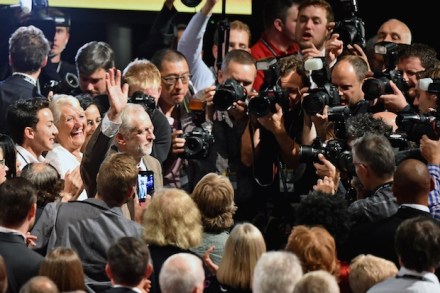
Whenever the Parliamentary Labour Party meets, journalists gather outside the room in the hope that those leaving the meeting will reveal what went or that the argument will get so heated that they will be able to hear what is going on behind closed doors. Those of my colleagues who turned up to tonight’s PLP meeting were very much in luck. George Eaton reports that Ben Bradshaw, the former culture secretary, left declaring the meeting ‘a total f*** shambles’ and that Emily Thornberry could be heard loudly upbraiding MPs for texting journalists about what was going on inside this supposedly private meeting. So, why was his meeting so rowdy? Well, many MPs are still furious about having had a Jeremy Corbyn leadership imposed on them by the party membership.
Tory harmony is threatened by the EU referendum

From our UK edition

For all the leadership positioning, one of the striking things about Tory conference in Manchester was the level of agreement about what the party’s strategy should be. There was almost no one calling for the party to move right. Instead, the emphasis was on how the party could expand its electoral coalition. Boris Johnson and George Osborne may have very different styles, but the argument of their speeches was essentially the same: the Tories have to show that they are the party for low paid workers. This determination to look for new converts, which was the defining feature of David Cameron’s speech too, is a product of the election campaign.

BoJo gets his mojo back

From our UK edition

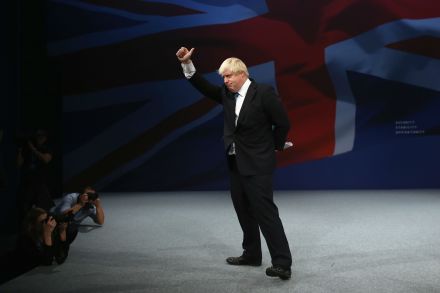
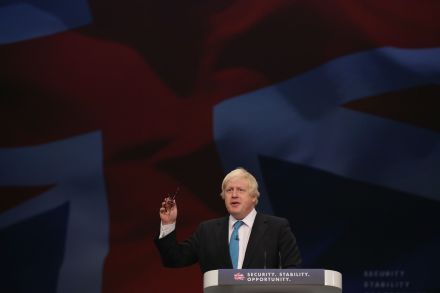
The Tories had a good few days in Manchester. But one Tory had a particularly good week, Boris Johnson. A week ago, Boris looked becalmed. As we said in the Spectator, he was struggling to make the transition from being Mayor of London to being both the Mayor and an MP. But this week, he has delivered the best speech of his political life, shown new Tory MPs his talents, and renewed his relationship with Tory activists. It was telling that when Cameron paid tribute to Boris during the leader’s speech, the hall gave him a standing ovation. Now, the tricky thing for Boris will be coming up with a follow up to this and he still has several months where he has to be in two places at once, City Hall and the Commons. But he finds himself in a far better position than he did a week ago.

The Tories are still anxious to reach out. And that’s a very good sign

From our UK edition

Post-election party conferences usually follow a standard pattern. The winning party slaps itself on the back while the losers fret about how to put together an election-winning coalition. But this year, there’s been no talk of compromise or coalition from Labour. They seem happy to be a protest party, unbothered that voters disagree with them on the economy, welfare and immigration. And the Tories, instead of relaxing or moving to the right, have obsessed anxiously about how to broaden their appeal, to make their majority permanent. This determination to look for new converts is a product of the election campaign. Weeks of looking at polls that indicated they were on course for defeat served as a near- death experience for the Tories.

Cameron repositions the Tories as the party of ‘true equality’

From our UK edition

This speech was authentic Cameron. It was the most modernising speech that he has given since becoming Prime Minister and an attempt to reposition the Tories as the party of ‘true equality’. It was a return to the approach that characterised his leadership before the financial crash of 2008. Traditional Tory thinking has always been that if you work hard you get on, that you can pull yourselves up by your bootstraps. But this speech argued that for some people in society this simply isn’t true, that they find their opportunities blocked at every turn. Cameron cited the example of a black girl who had to change her name to Elizabeth before she got any job interviews.

Has Boris just set an impossible bar for Cameron’s EU renegotiation?

From our UK edition

Boris Johnson’s speech today was the best that I have ever heard him give. It was a potent cocktail of political vision, humour and optimism. But the most significant line it was about Europe. He declared that: ‘It should be up to this parliament and this country – not to Jean-Claude Juncker – to decide if too many people are coming here’ It is impossible to read this as anything other than a demand that freedom of movement rules are fundamentally altered as part of the UK’s renegotiation with the EU.

Jeremy Hunt says new junior doctors’ contracts are ‘essential’ for seven day NHS

From our UK edition

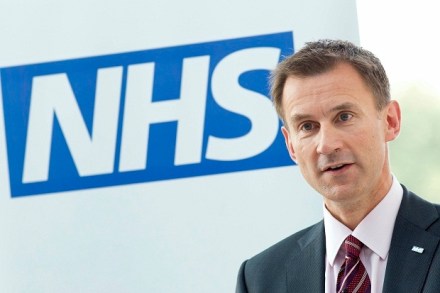
Jeremy Hunt isn’t going to back down on the changes to junior doctors’ contracts despite a growing row over the issue. When asked by Danny Finkelstein at a Times fringe about whether he might change his mind on the matter, he replied that the changes to the contract were essential to the introduction of the seven day NHS and so there would be no backing down. Hunt, who normally prides himself on his reasonable manner, was particularly critical of what the British Medical Association has been saying about these changes; claiming that they were systematically misleading people. There was no danger of triumphalism on Hunt’s part when he talked about Jeremy Corbyn’s election as Labour leader.

How the Tories are trying to make their majority permanent

From our UK edition

This is the first conference since the election where the Tories won a majority and the first since Labour chose an unelectable leader. But, strikingly, George Osborne chose to use his speech to emphasise how the Tories must show the millions of working people who voted Labour in May that they ‘are on their side’. Osborne is a man seized of the opportunity presented to the Tories by Labour’s lurch to the left. He has spent the last few days picking off several of Labour’s best ideas. His aim to make sure that when—or, should I say if—the Labour party attempts to return to the centre ground of British politics, it will find the Tories already camped there.

Sajid Javid positions himself as a Thatcherite and Eurosceptic

From our UK edition

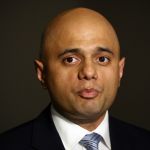
Sajid Javid might be downplaying it at this conference - when asked by Andrew Neil yesterday if he would throw his hat into the leadership ring, he said ‘of course not’ - but he is seen by many as a future Tory leadership candidate. Javid’s life-story has marked him out. He is the son of a bus driver who came to this country from Pakistan, had a successful business career and rapid rise up the greasy pole - he was the first member of the 2010 intake to make Cabinet. His speech to conference this morning wasn’t a tub-thumper. But it was striking how he positioned himself as both a Thatcherite, pointing out that he has a picture of her on the wall in his office, and as a member of what he repeatedly called this ‘one nation government.

Two issues will dominate Tory conference: who’ll succeed David Cameron and the EU referendum

From our UK edition

As the Tory tribe prepares to gather in Manchester, the chatter is about two things: who will succeed David Cameron and what will happen in the EU referendum. These two issues are, obviously, inextricably linked. If Britain votes Out in the EU referendum, a prospect which while still unlikely has become more likely in recent weeks, Cameron is unlikely to be succeeded by someone who campaigned for In—as Fraser points out in the Telegraph today. But, so far, none of the expected leadership candidates have indicated that they will campaign for Out. George Osborne is one of the lead figures in the renegotiation and has always been clear that he thinks that there is a deal to be done.

Will Nicky Morgan be the next Prime Minister?

From our UK edition

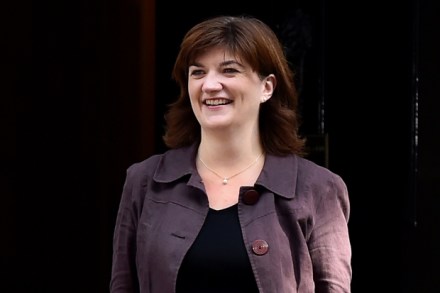
When David Cameron announced that he wouldn’t serve a third term, he made it inevitable that Westminster would spend much of his second term wondering about who would succeed him. Well, in the new Spectator, Nicky Morgan becomes the first Cabinet Minister to make clear that she is interested in standing when Cameron steps down. She says that ‘A lot of it will depend on family’ but makes clear that she believes there needs to be a female candidate in the race and hopes ‘that, in the not too distant future, there will be another female leader of a main Westminster political party’. What I was most struck about when interviewing Morgan was how, when I asked her what her pitch for the top would be, she didn’t shy away from the question.

Is it all over for Boris?

From our UK edition

[audioplayer src="http://rss.acast.com/viewfrom22/boris-nickyandthetoryleadership/media.mp3" title="Fraser Nelson and James Forsyth discuss who could be the next Tory leader" startat=38] Listen [/audioplayer]Five months ago, allies of Boris Johnson were ready to launch his bid to become leader of the Conservative party. The election was imminent and even David Cameron was fretting that the Tories were going to lose. A sympathetic pollster had prepared the numbers that made the post-defeat case for Boris: he extended the Tories’ reach, and a party that had failed to gain a majority for 23 years desperately needed a greater reach. There was a policy agenda ready to magnify this appeal, too: compassionate conservatism, based around adopting the Living Wage.

She could be a contender

From our UK edition

[audioplayer src="http://rss.acast.com/viewfrom22/boris-nickyandthetoryleadership/media.mp3" title="Fraser Nelson and James Forsyth discuss whether Nicky Morgan could be the next Tory leader" startat=38] Listen [/audioplayer]Nicky Morgan has been Education Secretary for 15 months now. Yet her office looks like she has just moved in. She has some family photos on the desk, a small collection of drinks bottles by the window and a rugby ball in her in-tray. But, unlike other cabinet ministers, she has made no attempt to make her office look like her study. This is not someone who sees their office as a home away from home. When Morgan was made Michael Gove’s successor last year, it seemed an unusual appointment. She’d only been an MP for four years.

Tom Watson has no intention of practising Corbyn’s ‘kinder, gentler’ politics

From our UK edition

If Jeremy Corbyn’s speech yesterday was the musings of a left-wing activist, Tom Watson’s today was that of someone who is interested in winning elections. Watson made clear to the conference delegates that what matters is getting back into office and set about explaining how he thought Labour could do that. He told the hall, that if they weren’t interested in representing small business owners, then they wouldn’t be in government again. He said that after its ‘summer of introspection’, it was time for Labour to get back to making its case to the country again. It was a strikingly different tone to Corbyn’s yesterday. Watson clearly has no intention of practising the ‘kinder, gentler’ politics that Corbyn has called for this week.

Next year’s Labour conference will be even more Corbynite

From our UK edition

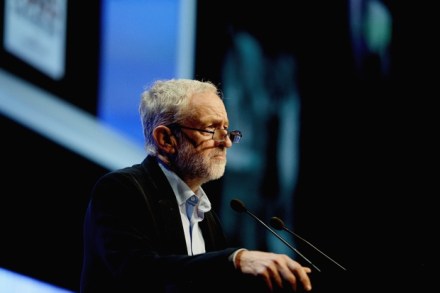
Sitting in the hall during Jeremy Corbyn’s speech, one couldn’t help but be struck by how much the audience agreed with what he is saying. Corbyn was speaking to them, and they loved it. Now, as long as the Labour activists represented in that hall think Corbyn is their man then it will be almost impossible for the Parliamentary Labour Party to remove him. This week, Corbyn has done little to reach out to the country. But he has consolidated his position in the party. In casual conversations, the date at which people think a coup could be launched against him keeps slipping back. Next year, I suspect that Labour’s position in the polls will be no better, or even worse, than it is today but that conference will be even more Corbynite.

Can the Blairites rescue the Labour party?

From our UK edition

The first conference of the Corbyn era has got MPs and journalists scrambling around for a copy of the Labour party’s rule book. Everyone is trying to work out whether or not scrapping Trident will be debated or not. This is the first skirmish in what promises to be a series of procedural fights between Corbyn and his supporters and what is left of the old party establishment. It would be tempting for Labour moderates to end up expending all their energies in these fights, doing what they can to stop the Corbynites seizing control of the commanding heights of the Labour party. But, as I argue in the magazine this week, a better use of their time would be working out why Corbyn, a fairly mediocre candidate, beat them so easily.

Exclusive: Steve Hilton jetting in to help with Cameron’s conference speech

From our UK edition

Steve Hilton is, I understand, returning to help with David Cameron’s conference speech. Cameron’s one time political guru is now based in California, where he has launched the US political fundraising website Crowdpac. But he has made a point of returning each year to work on Cameron’s conference speech before heading back to the US. The decision to invite him to help out this year is particularly interesting given his view that Jeremy Corbyn is being underestimated. Hilton tweeted a few days ago that ‘cynical, pompous Westminster bubble trashes #Corbyn first week because he can't play their game. not a pretty sight’.

Will anyone fight, fight and fight again to save what’s left of New Labour?

From our UK edition

[audioplayer src="http://rss.acast.com/viewfrom22/thegreatbritishkowtow/media.mp3" title="James Forsyth and Stephen Bush discuss the upcoming Labour party conference" startat=1650] Listen [/audioplayer]Five years ago this Saturday, Ed Miliband was crowned Labour leader. Three days later, he had to deliver his first conference speech in that role. It was a distinctly underwhelming address. Miliband was overshadowed by his brother, who ticked Harriet Harman off for clapping. To try to give its new leader a better start this time round, Labour decided to announce the result of its leadership contest a fortnight before the party conference. But two weeks has been nowhere near enough time for Labour to come to terms with what has happened.

How will Tim Farron make sure the Lib Dems are heard?

From our UK edition

When the Liberal Democrats voted for Tim Farron as their next leader, they didn’t know that the Labour party was going to elect Jeremy Corbyn. If they had known that, they might have been more tempted to go for Norman Lamb, the more centrist candidate in the race and the one with ministerial experience. But Farron has adapted pretty well to the new, post-Corbyn landscape. His speech today contained plenty of pops at Labour for ‘abandoning serious politics, serious economics’ and choosing instead the ‘glory of self-indulgent opposition’. Farron, by contrast, tried to cast the Liberal Democrats as the party that is both competent and caring.

Is Boris preparing to take a big political risk?

From our UK edition

One Boris supporter asked me this week, 'How bad do you think things are?’ The thing under discussion, it quickly turned out, was Boris’s leadership prospects. Among his camp followers, there is growing concern that Boris is being left behind in the leadership race. The Mayor’s chances have certainly taken a knock in recent months. First, the Tories winning a majority exploded the argument that they needed someone with Boris’s 'beyond politics' appeal to win outright. Then, Jeremy Corbyn’s election as Labour leader changed the calculation about the 2020 election for the Tories. Suddenly, a safety first approach - eg a non-Boris one - seems much more appealing. But there are signs that Boris is preparing to strike some distinctive positions.