James Forsyth

James Forsyth

James Forsyth is former political editor of The Spectator.

As Crabb drops out, can Gove pass Leadsom?

Theresa May is, without a doubt, going to the membership round—and with the support of vastly more MPs than her opponent. In the first round, she won the support of 165 MPs—exactly half the eligible electorate. The question now is who will be her opponent? Andrea Leadsom finished second with 66 votes, Michael Gove was third on 48, Stephen Crabb got 34 and Liam Fox was eliminated after receiving 16 votes. Crabb has chosen to drop out of the race of his own accord after finishing fourth. If Gove is to overtake Leadsom, he is going to have to pick up a lot of votes from the Crabb pool. The Gove team hope they can do this by appealing on social reform grounds to Crabb’s supporters.

The question for Stephen Crabb, can you go toe to toe with Vladimir Putin?

The Tory leadership hopefuls all appeared before a packed out 1922 hustings tonight. First up was Michael Gove. His pitch was that he had the conviction, the experience and the vision to lead the party and the country. He argued that the Tories’ aim should be to help those on £24,000 a year. Surprisingly, Gove wasn’t asked any questions about what had happened between him and Boris Johnson last week. However, he was asked twice about his former adviser Dominic Cummings. Gove said that Cummings would have no formal role in his Number 10. Gove was typically fluent, answering nine questions in the fifteen minutes allotted to him. He was listened to respectfully, which was by no means certain given the events of Thursday morning.

The Brexit test

Stephen Crabb made a passionate plea this morning for Tories to stop thinking in terms of Remain and Leave when it comes to picking a leader. He warned that if people carry on doing this, it will lead to the party splitting. But all things being equal, I do think it would be best for the next Prime Minister to be a Leaver. After all, David Cameron resigned because he had campaigned for Remain and the country had voted to leave and he thought that made it impossible for him to chart the country on the new course it must now follow. There are two main reasons for thinking a Leave PM preferable. First of all, this would provide some accountability for what Vote Leave promised in the referendum.

Senior Tories plotting to bring a quick end to the leadership contest

Officially, we will not have a new leader of the Tory party—and thus a new Prime Minister—until the 9th of September. But there are plans afoot to install a new PM far quicker than that, as I say in The Sun this morning. This scheme would see huge pressure put on whoever is second at the end of the parliamentary rounds to pull out before the election moves to the members’ ballot. This would mean that the leading candidate, most likely to be Theresa May, would have won and could move to Number 10 immediately. There is a view that it would be easier for a Remainer to drop out, than an Outer: if there was an Outer on the ballot, the membership would be more likely to want a say.

Why did Michael Gove suddenly withdraw his support from Boris Johnson?

So, what happened? As late as yesterday afternoon, Michael Gove was trying to persuade fellow Cabinet Ministers to back Boris Johnson. This morning, he announced that not only that he was running but that ‘Boris cannot provide the leadership or build the team for the task ahead’. Hours later, Boris – reeling from this blow – announced that he would not be running. Well, one aspect of all this appears to be Gove's frustration with the way Boris operated. The referendum campaign had led Gove to revise his opinion of Boris, to see him as someone who could be a good Prime Minister. But Gove backers say that, when removed from the discipline of the Vote Leave operation, the old Boris returned.

Gove goes for it

In the most dramatic development yet in the Tory leadership race, Michael Gove has announced that he is running. As late as last night, Gove was working with Boris Johnson and everyone in the Tory party assumed that the pair were running as a joint ticket. But Gove has now decided to run himself, saying that he ‘wanted to help build a team behind Boris Johnson so that a politician who argued for leaving the European Union could lead us to a better future. But I have come, reluctantly, to the conclusion that Boris cannot provide the leadership or build the team for the task ahead.’ One prominent Boris backer has already moved over to Gove, Nick Boles—who will now be chairing Gove’s campaign. We wait to see whether others follow.

Gove running for the Tory leadership

Michael Gove has just released a statement saying that he's running for the Tory leadership, and not supporting Boris Johnson. Here's the statement: STATEMENT BY MICHAEL GOVE MP Immediate Release The British people voted for change last Thursday. They sent us a clear instruction that they want Britain to leave the European Union and end the supremacy of EU law. They told us to restore democratic control of immigration policy and to spend their money on national priorities such as health, education and science instead of giving it to Brussels. They rejected politics as usual and government as usual. They want and need a new approach to running this country. There are huge challenges ahead for this country but also huge opportunities. We can make this country stronger and fairer.

So will it be Boris?

The Tory party is in a deeply emotional state. Remain-supporting MPs cry tears of rage when they discuss the referendum. Bitter emails and text messages have been exchanged. Leave-supporting MPs have been accused of unleashing dark forces that they cannot control, of putting immigrants in Britain at risk. Yet the leadership candidates who have so far emerged seem strangely united in their vision for post-Brexit Britain. All want to heal the divide between rich and poor that the referendum has exposed. It is tempting to concentrate only on the division in the party, the fear that David Cameron’s resignation has injected even more poison into the Tory system than either the downfall of Margaret Thatcher or the Maastricht debate.

MPs gave a pantomime response to Ukip at today’s PMQs

PMQs was always going to be an odd event today. David Cameron is going as Prime Minister and Jeremy Corbyn is trying to survive wave after wave of resignations from his front bench. When Corbyn rose to his feet, there was almost complete silence from the Labour benches—there was the odd chuckle from the Tory one. The first few exchanges were relatively flat. But then Cameron was clearly riled by Corbyn suggesting that the referendum had been lost because voters didn’t think the status quo was working for them. Cameron swiped back that if the EU referendum was Corbyn putting his back into something, as the Labour leader had claimed, then he ‘would hate to see him when he’s not trying.’ But this was just the warm up.

Jo Johnson backs Boris

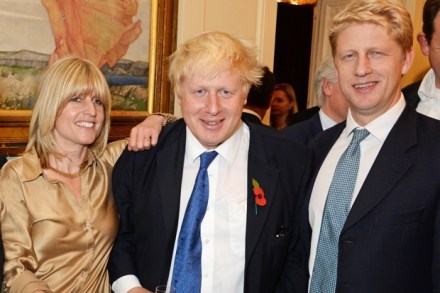
Jo Johnson has declared his support for his brother’s leadership bid. In a statement to The Spectator, the minister for universities and science says: ‘Boris and I were on different side of a hard fought referendum campaign. But it is time to move on, time to unite and time to deliver. I have known my brother for longer than anyone in parliament. He is the great communicator—and I have no doubt at all that he is the person best placed not just to secure a new settlement for Britain in Europe but also to provide the optimistic, confident and outward-looking leadership we will need in months and years to come.’ Now, on the one hand Jo backing his brother is not that surprising.

Cameron indicates that he wants the UK to stay in the single market

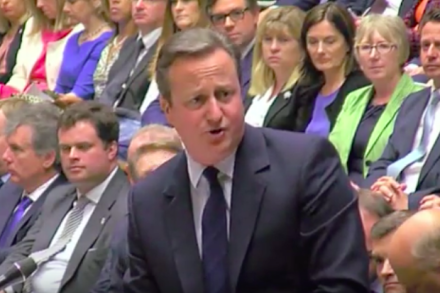
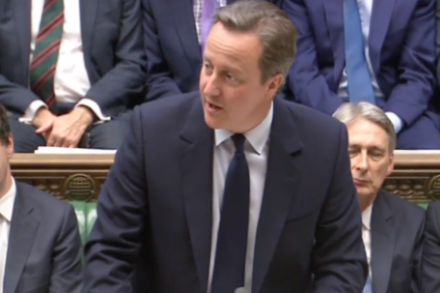
David Cameron came to the House of Commons this afternoon to update the House on Brexit. Cameron was greeted by the loudest Tory cheer that I’ve heard of seven years of sitting in the press gallery. He was in remarkably good spirits, considering what has just happened. Jeremy Corbyn’s predicament appear to have cheered Cameron up. He joked that the new Labour MP for Tooting should keep her phone on as she might be offered a job at any moment. He also joked at Corbyn’s expense that he thought he was having a bad day until he saw what was happening to Corbyn. When it came to the process of leaving, Cameron was emphatic that it was up to the UK to choose when to invoke Article 50—and that he would leave that up to the new Prime Minister.

Set out your Brexit model, Foreign Secretary tells Tory leadership contenders

This morning, Philip Hammond has insisted that those running for the Tory leadership explicitly set out how they intend to leave the EU. The Foreign Secretary told Robert Peston that he wanted to know how they would manage the trade-off between single market access and free movement. Hammond himself appears to favour a version of the Norwegian model; in the single market and accepting free movement. Now, I think we can take this as meaning that Hammond won’t back Boris Johnson. Hammond accused Boris and other Leavers of making ‘contradictory promises’ in the referendum campaign.

Jonathan Hill’s resignation is an act of gross irresponsibility

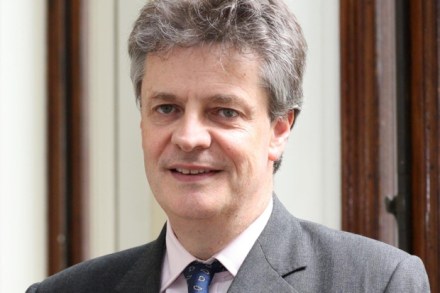
The UK’s EU Commissioner, Jonathan Hill, has resigned today saying that he couldn’t carry on as ‘though nothing had happened.’ This strikes me as an act of gross irresponsibility. Britain has not yet invoked Article 50, the two-year process for leaving the EU, and Hill staying on would have provided some continuity at a time of uncertainty. Supporters of his argue that his resignation was the honourable thing to do as Britain is no longer part of the team in Europe. It might have been right that Hill should have volunteered to move to another portfolio. But an outright resignation seems excessive and an over-reaction. Even Jean-Claude Juncker tried to persuade Hill to stay on.

Will Boris, Gove and the Brexit band of brothers run for No 10 together?

Westminster is still digesting what happened on Thursday night. But before Britain can turn itself to the big question of how to leave the EU, a new Prime Minister has to be chosen by the Tory party. Nearly every Tory MP I’ve spoken to since Friday morning is of the view that the new PM will have to be an Outer. They argue that the public would find it find odd to vote for Britain to leave, and then have a new PM chosen who was on the losing side in the referendum. There are, as I report in The Sun this morning, Cabinet Ministers who want Michael Gove to run. They think he would be the best PM of the Outers and that he would find it easier to reunite the party than Boris. But, I understand, Gove is not planning to put himself forward.

David Cameron resigns, but not immediately

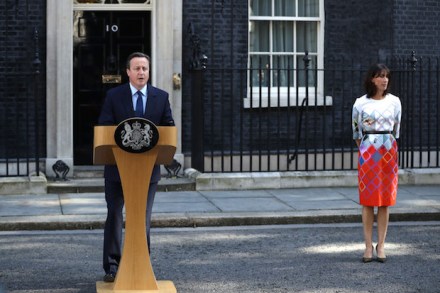
In an emotional but dignified statement, David Cameron has announced his resignation as Prime Minister. However, he will not resign immediately. Instead, he will stay to, in his phrase, ‘steady the ship’. But he wants a new Prime Minister in place by the Tory party conference this autumn.  Sensibly, Cameron said that he himself would not trigger Article 50, the two year process for leaving the EU. He said that it should be up to the new Prime Minister to make that decision. Cameron will, one suspects, go down in history for this referendum. But it should be remembered that there is more to his premiership than that.

Britain votes to leave the European Union

In the greatest political upset of recent time, Britain has voted to leave the European Union. We are now in uncharted waters in both UK and EU politics. The first question is what does David Cameron do? We can expect a statement from him later this morning. But the bigger question is how does the exit process work? We know that Vote Leave oppose triggering Article  50 immediately, beacuse they want to thrash out the outlines of a deal before doing that. I suspect that the initial reaction in Brussels and other EU capitals will be shock and anger at the result. How long that takes to calm is key to whether this exit negotiation can be concluded successfully.

Why all the certainty about the referendum result?

Right at the start of this campaign, a senior figure at Vote Leave told me that if they were level in the opinion polls on referendum day, they would win. Their view was that differential turnout, with their voters being more enthusiastic, would overcome any status-quo bias. Well, the last Opinium poll has Leave on 45%, Remain on 44% with 9% as don’t knows. Now, we should remember that polls aren’t all knowing and that one earlier today had Remain ahead. Opinium polls are conducted online, and online ones tend to be more favourable to Leave. There are still some more polls to come—and they may be better for Remain than Opinium. Personally, I still think the Remain vote is marginally more likely than a Leave one.

Corbyn’s immigration honesty creates a problem for Remain

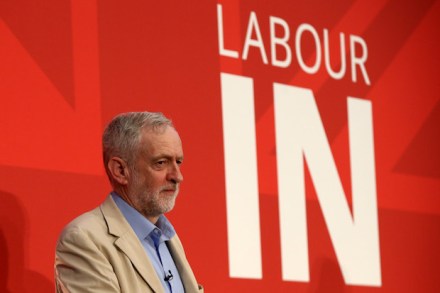
Jeremy Corbyn went on The Marr Show this morning to talk about Jo Cox’s tragic death and the EU referendum. Corbyn talked movingly about Cox and how MPs don’t want to be cut off from the communities that they serve. The conversation then moved on to the EU referendum. Andrew Marr asked Corbyn if he thought there should be an upper limit on immigration. Corbyn replied, rightly, 'I don't think you can have one while you have free movement of labour'. https://www.youtube.com/watch?v=E6joUzXHwE8 Now, this is true. But it very much isn’t the Remain campaign script; David Cameron has even refused to admit that his ambition to reduce immigration to the tens of thousands is undeliverable while Britain is in the EU.

Boris makes it clear he isn’t interested in a coup against David Cameron

The murder of Jo Cox was a moment that leaves you numb; an MP paying the ultimate price for the open society we live in. For the fact that our representatives live and work among us. Despite this tragedy, democracy must go on. By this time next week, the EU referendum will be over. The country will have made up its mind. Whether it is Leave or Remain, the UK will need a period of stability. This means David Cameron staying on as Prime Minister and, as I reveal in The Sun today, plans are already well advanced to ensure that this happens. Boris Johnson has signed a letter saying that Cameron must carry on as Prime Minister regardless of the result; making clear that he isn’t interested in any coup attempt.

Leave six points ahead in latest phone poll

Fraser Nelson and Nick Cohen discuss The Spectator's decision to back Brexit: The Ipsos MORI phone poll released this morning shows a dramatic turnaround since its last poll which had a double digit advantage for Remain. Leave is now six points ahead amongst those likely to vote. This means that Leave has been ahead in 7 out of the last 10 polls and 2 of the last 4 phone polls. Almost as worrying for the Remain campaign as the headline number is what the internals of the Ipsos MORI poll show. In a change from last month, immigration is now the top issue for people in this referendum, overtaking the economy. Alarmingly for IN, 70% percent of people don’t believe the Treasury’s claim that households wold be £4,300 worse off after Brexit.