James Forsyth

James Forsyth

James Forsyth is former political editor of The Spectator.

Will Theresa May ever resist a backlash?

From our UK edition

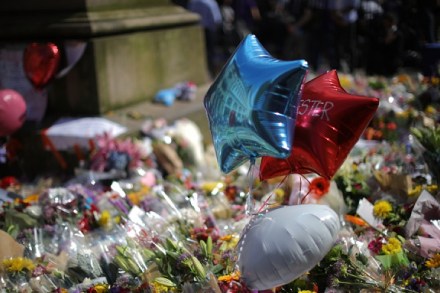
Elections matter. They are fundamental to our way of life. So, while it is appropriate that the campaigns stopped on Tuesday to mourn the victims of the heinous terrorist attack in Manchester, democracy demands that they resume as quickly as possible. The terrorists must know that they will never change how our society functions. This is an odd election. Everyone assumes they know what the result will be and the real psephological debate is over just how big the Tory majority will be. On Monday, even the most panicked Tory was only concerned about what Theresa May’s U-turn would mean for the party’s margin of victory, not the actual result. But her retreat on social care will have ramifications far beyond 8 June.
The election campaign resumes on Friday – in defiance of those who seek to destroy democracy

From our UK edition

The election campaign will resume on Friday, with both Labour and the Tory national campaigns re-staring. This is welcome news. The decision to pause the campaign in the light of this horrific terrorist attack was understandable. But the danger, with only 15 days to go until polling day, was that a prolonged pause would have had a profound effect on the election—allowing the terrorists to boast that they had forced us to change our way of life. When campaigning does resume, we should all remember something: that one of our great civilisational achievements is that we argue about our differences in public and then casts our ballots in private to resolve these differences.

Theresa May offers a defiant message after Manchester terror attack

From our UK edition

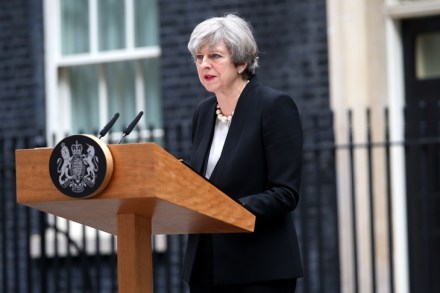
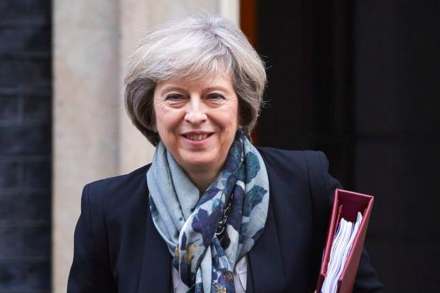
Theresa May has just spoken from Downing Street about the terrorist attack in Manchester. She said that the police and the security services believed they know the identity of the suicide bomber, but do not wish to reveal it for now. She said that the bomber had blown themselves up by one of the exits from the arena at the end of the concert, which would mean that the attacker did not have to go through security. The police and the security services are, she said, currently trying to establish whether the attacker was operating alone or not.  This is the second statement responding to a terrorist attack that Theresa May has had to do in the last three months.

Theresa May forced to defend U-turn in her most difficult interview yet

From our UK edition

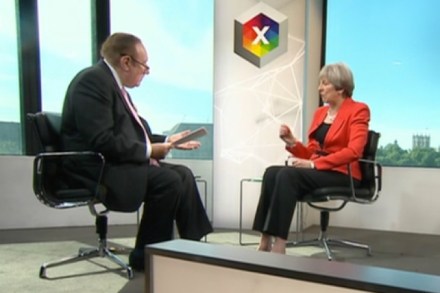
Today was not a day that Theresa May will want to repeat anytime soon. In the morning, she had to U-turn on one of the centrepieces of her election manifesto and in the afternoon, she faced the most difficult interview she has had as Prime Minister. Theresa May never really got onto the front foot in her half-hour interview with Andrew Neil. She spent the first ten minutes of the interview claiming that the principles behind the Tories’ social care policy hadn’t changed, while Andrew Neil hammered the point that something has: there is now a cap whereas the manifesto had explicitly rejected one. May was also uncomfortable on the question of whether the £8 billion extra the Tories are proposing for the NHS is all new money or not.

Why the ‘dementia tax’ U-turn is such a blow to Theresa May

From our UK edition

U-turning on a manifesto commitment just days after it was announced would be embarrassing for any politician. But it is particularly humiliating when your whole campaign is based around the idea that you offer competent, ‘strong and stable’ leadership. But even leaving aside the immediate political repercussions, this U-turn is a deep blow to Theresa May and her team. For the social care policy was totemic of the way she is trying to change the party. She and her team want to make the Tories more concerned about the just managing than the better off and less deferential to property wealth.

Why Theresa May can transform the Tory party

From our UK edition

When he was asked what kind of generals he wanted, Napoleon replied ‘lucky ones’. Theresa May certainly fits into that category, as I say in The Sun this morning. In the Tory leadership race her two main rivals, Boris Johnson and Michael Gove, destroyed each other leaving her facing Andrea Leadsom who promptly blew herself up. In this election, she is facing a Labour leader who has abandoned both the centre ground and patriotism. Now, May has skilfully exploited these openings—just look at how she is pitching to those abandoned Labour voters. But, perhaps, most relevant for the next five years is how there is no Tory alternative to her. For May is trying to change the Tory party, to move it towards the centre.

Theresa May’s new Conservative philosophy

From our UK edition

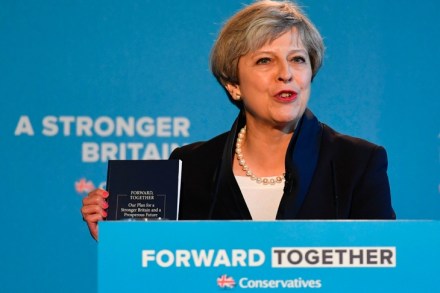
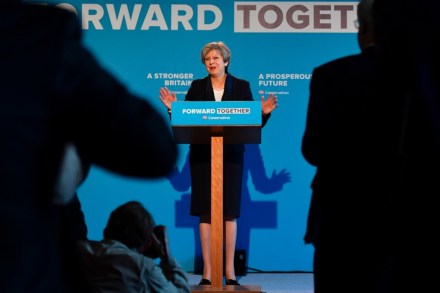
When you go to the polling station, Tory campaign chiefs want you to be thinking about Brexit and who you want as Prime Minister negotiating for Britain. This point was underlined at today’s Tory manifesto launch.  Theresa May was introduced by the Brexit Secretary David Davis and she herself concentrated on why Brexit makes the next few years so ‘defining’ for the UK and concluded by declaring that ‘every vote for me and my team’ will ‘strengthen my hand as I fight for Britain’. On the EU, the manifesto largely repeats the points made in May’s Lancaster House speech. But by making clear that the UK is leaving both the single market and the customs union, it means that the Lords can’t try and block either of these things.

Twelve months of May

From our UK edition

Normally, the first anniversary of a prime minister taking office is the occasion for a lot of opinion polls and assessments. But by going to the country early, Theresa May has pre-empted that. By the time she has been in No. 10 a year, the voters will already have delivered their verdict via the ballot box. Still, it is worth assessing what May has done so far. When she arrived in No. 10, her team had three main priorities. They wanted to complete the modernisation process by making the Tories more appealing to the so-called ‘just about managing’ classes, and to those outside the party’s heartlands. They were determined to shore up the Union — to see off Nicola Sturgeon’s renewed drive for Scottish independence.

Tories claim May needs a Macron-style mandate for the Brexit talks

From our UK edition

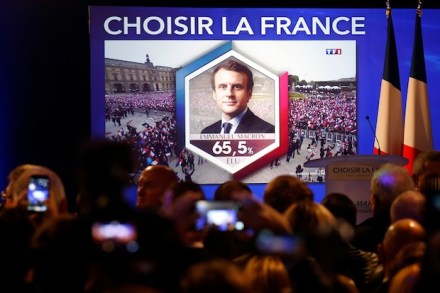
It hasn’t taken long for the Tories to try to turn Emmanuel Macron’s victory in France to their advantage in this election. At first glance, the triumph of the pro-EU Macron—the warm up music for his victory address was the Ode to Joy, not the Marseillaise—who has talked about luring British business and research to France post-Brexit doesn’t seem like a great result for Theresa May. Indeed, at very senior levels, the UK government wanted the more pragmatic Francois Fillon to win the French presidency. But when life gives you lemons, claim that Macron’s election shows that Britain needs a leader with just as strong a mandate and someone who can stand up to powerful EU leaders.

Government considering publishing its ‘no deal’, Brexit contingency plan

From our UK edition

It was tempting to view Theresa May’s Downing Street broadside against the European Commission as purely a piece of domestic political theatre. After all, Jean-Claude Juncker is a more convincing bogeyman than Jeremy Corbyn. Yet having made further enquiries, I think that May was also keen to send a message to EU capitals with her statement: rein Juncker and his henchman in. As I say in The Sun this morning, one of the UK government’s big worries is that the rest of the EU still thinks that May won’t walk away from the negotiating table, no matter how bad the deal on offer is. This is why the EU feels emboldened to ramp up the amount Britain supposedly owes, using accounting techniques that would make Enron blush.

These election results show the coming realignment of British politics

From our UK edition

The local elections have given us the clearest demonstration yet of how UK politics is being realigned. The Ukip vote has collapsed and is moving in large numbers to the Tories. Combine this with the erosion of the Labour vote under Jeremy Corbyn, and places where you never thought the Tories would win are turning blue putting the Tories on course for a general election landslide. Who’d have predicted that the first winner of the Tees Valley mayoralty would be a Tory? Almost as jaw-dropping was Andy Street’s victory for the Tories in the West Midlands, where Labour have 21 out of 28 parliamentary seats. What so excites the Tories about Street’s win is that they think that in office, he’ll be able to show what the Tories can do for the region.

Donald Tusk steps in to relieve Brexit tensions

From our UK edition

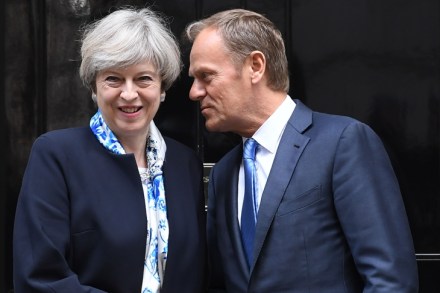
After the Brexit rows of the last few days, Donald Tusk—the President of the European Council—has intervened and urged everyone to calm down. 'These negotiations are difficult enough as they are. If we start arguing before they even begin, they will become impossible. The stakes are too high to let our emotions get out of hand. Because at stake are the daily lives and interests of millions of people on both sides of the Channel. We must keep in mind that in order to succeed, today we need discretion, moderation, mutual respect and a maximum of good will.'  Diplomatically, Tusk has chastised both sides of this dispute.

The West Midlands will tell us how big May will win in June

From our UK edition

The most intriguing aspect of today’s local elections is the contest for the new West Midlands Mayoralty. In normal times, you’d have this marked down as a shoe-in for Labour—they have 21 of the region’s 28 MPs and control six of its seven local authorities. But these aren’t normal political times and the Tories have run a vigorous campaign with a strong candidate, the former John Lewis boss Andy Street. Labour, by contrast, have an underwhelming candidate, the MP turned MEP Sion Simon—whose greatest distinction is his time as a restaurant reviewer for this magazine.

Never mind the election – Corbynism isn’t going away

From our UK edition

General elections are meant to produce a government and an opposition — ideally, a decent version of both. It is obvious what government this election will deliver: a Tory one with an increased majority. That, after all, is one of the reasons why Theresa May has decided to go to the country three years early. But it is not clear what opposition there will be. What passes for optimism in moderate Labour circles these days is the belief that a shellacking in this election will lead to Jeremy Corbyn’s departure, as the party’s membership sobers up and elects a new and sensible leader. But it is far from certain that this will happen.

Theresa May pulls no punches in her attack on the European Commission

From our UK edition

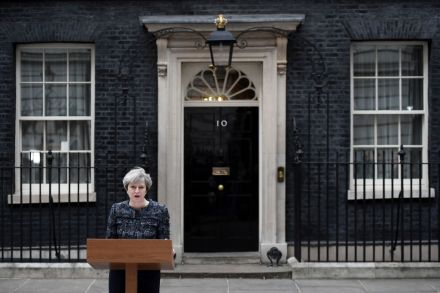
Theresa May has kicked off the Tory general election campaign with a remarkably punchy statement in Downing Street. She accused the European Commission of trying to interfere in the UK general election. She said that the hardening of the Commission’s negotiating stance and the leaks of recent days ‘had been deliberately timed to affect the result of the general election that will take place on 8 June.’ She added that there were those in Brussels who did not want to see the UK prosper. May’s charge takes us into new territory. I can’t recall a British Prime Minister accusing an allied power, let alone a group the UK is still a member of, of trying to interfere in our elections before.

Why the Tories are talking up Labour

From our UK edition

Considering that their party is expected to win by a landslide, the Tory spin doctors sound unusually panicked. They are keen to point out that the polls aren’t always right, and the pollsters are still trying to correct what they got wrong at the last general election. They insist that national voting tells you little about what will happen in the key marginal seats. These are normally the pleas of a party that is failing, and trying to persuade voters that it is still in the race. But Labour isn’t doing a good job of spinning its own prospects — so the Tories are doing it for them. This is not as odd as it first sounds. The Tories are worried about complacency, about their vote not turning out.

Why some Tories aren’t thrilled about the prospect of a May landslide

From our UK edition

If the polls are anywhere near right, then Theresa May will be queen of all she surveys on June the 9th. As I say in The Sun today, not since Margaret Thatcher in her pomp will a Prime Minister have been so dominant over her Cabinet. She’ll have her own, sizable majority, her own mandate and the right to implement the policies in her manifesto. This prospect, though, isn’t thrilling everyone in the Tory party. Some ministers worry about the fact that May will have such a free hand, and the direction she might take the government in. Concern has been heightened by the fact that the manifesto is being written without much consultation with ministers.

Man arrested in Whitehall on suspicion of terrorism offences

From our UK edition

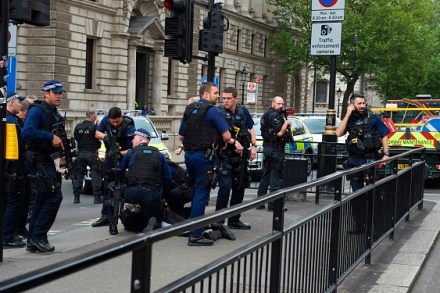
A man in his late twenties has been arrested on Whitehall today and is being detained under the terrorism act. The BBC are reporting that the man was known to the police. Photos from the scene appear to show a knife on the ground. The police are saying that following this arrest there is no immediate known threat. There doesn’t seem to be any particular concern inside the Palace of Westminster; everything here seems pretty calm right now. But, obviously, following the appalling murder of PC Palmer and four others just over a month ago there is a heightened sense of the risk of a low-tech terrorist attack. It is important, though, that life continues as normally as possible. After all, one of the aims of terrorism is to disrupt our way of life.

Why Tories are talking up Labour

From our UK edition

Considering that their party is expected to win by a landslide, the Tory spin doctors sound unusually panicked. They are keen to point out that the polls aren’t always right, and the pollsters are still trying to correct what they got wrong at the last general election. They insist that national voting tells you little about what will happen in the key marginal seats. These are normally the pleas of a party that is failing, and trying to persuade voters that it is still in the race. But Labour isn’t doing a good job of spinning its own prospects — so the Tories are doing it for them. This is not as odd as it first sounds. The Tories are worried about complacency, about their vote not turning out.

Ditching the triple-lock pensions bung is a risk May can afford

From our UK edition

PMQs went on for an almost an hour today as John Bercow attempted to get in as many valedictories from retiring MPs as possible. But there were two significant pieces of news made in today’s session. First, in answer to Angus Robertson, Theresa May refused to say that the triple lock would continue if the Tories win this election. This is the clearest indication we have had yet that it won’t be in the manifesto and will, sensibly, be jettisoned after the next election. The Tories are 20-odd points clear and have an even bigger lead among the over 65s, jettisoning this expensive electoral bung is a risk that May can afford to take.  The second piece of news was Theresa May not repeating the line that ‘no deal is better than a bad deal’ with the EU.