James Delingpole

James Delingpole

James Delingpole reviews television for The Spectator.

Style, wit and pace: Netflix’s Dept. Q reviewed

From our UK edition

Can you imagine how dull a TV detective series set in a realistic Scottish police station would be? Inspector Salma Rasheed would have her work cut out that’s for sure: the wicked gamekeeper on the grisly toff’s estate who murdered a hen harrier and then blamed its decapitation on an innocent wind turbine; the haggis butcher who misgendered his vegetarian assistant; the Englishman who made a joke on Twitter about a Scotsman going to the chippy and ordering a deep-fried can of Coke… It would get lots of awards, obviously, but I doubt it would do that well in the ratings. As with Slow Horses, this is about enjoying the company of loveable misfits But you needn’t worry about Dept. Q (Netflix).

Excruciating: Sirens reviewed

From our UK edition

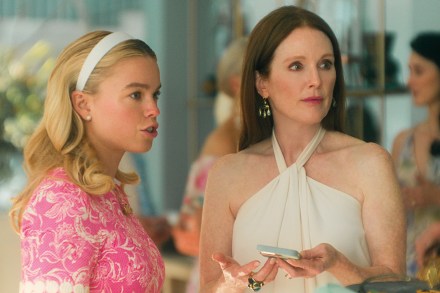
You had a narrow escape this week. I was about to urge you to watch Sirens, the latest iteration of that fashionable genre Ultra-Rich Lifestyle Porn, currently trending on Netflix. But luckily for you I watched it right to the end and got to witness the whole edifice collapsing like a speeded up version of Miss Havisham’s wedding cake. Normally, this doesn’t happen. Like most critics I have neither the time nor the work ethic to view a TV series in its entirety before putting in my tuppenny-ha’penny’s worth. I just assume that if something starts well or badly it’s going to continue that way. Not Sirens, though.

If you are of a certain age, you’ll really enjoy Tina Fey’s The Four Seasons

From our UK edition

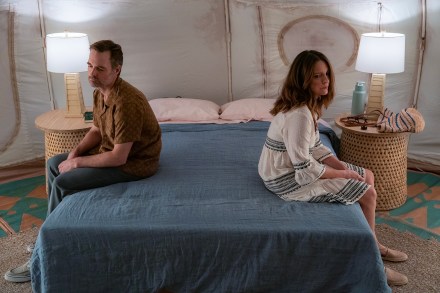
The Four Seasons is one of those shows you notice in the ‘Top TV Programmes on Netflix’ section, see it’s some kind of glossy romantic comedy starring American actors you’ve vaguely heard of, and skip past quickly in search of something with zombies or subtitles. This would be a mistake though because, at least if you are of a certain age, you’re really going to enjoy it. I think the litmus test is whether you’re old enough to remember the 1981 Alan Alda film on which it is based, which I do, just about, vaguely. It’s that kind of movie where a bunch of old friends who have been holidaying together regularly since university – does anyone actually do this? – are discombobulated by and rebond over a traumatic event.

Better than Hollywood: Netflix’s The Eternaut reviewed

From our UK edition

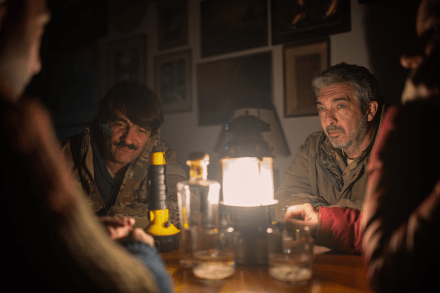
‘Next time you do a review, you’ve got to find something you like. You’ve been far too negative,’ said the Fawn. ‘Well, it’s hardly my fault if everything on TV is crap at the moment. I can’t just call up good stuff to order,’ I said. ‘Try,’ said the Fawn. Luckily – and unwontedly – Netflix has come to my rescue with a dystopian sci-fi series called The Eternaut. Though I’m not totally convinced by the name – a conflation of ‘eternity’ and ‘astronaut’ – it’s a very enjoyable watch, which confirms, yet again, Delingpole’s Iron Law of Television: always go for the shows with subtitles. This one is from Argentina, based on a graphic novel written by Hector German Oesterheld with artwork by Francisco Solano-Lopez.

Olenka Hamilton, Melanie McDonagh, Hannah Moore, James Delingpole and William Atkinson

From our UK edition

31 min listen

On this week’s Spectator Out Loud: Olenka Hamilton ponders whether Poland’s revival is a mirage (1:24); Melanie McDonagh asks who killed the postal service (9:52); Hannah Moore argues that family cars aren’t built for families any more (14:35); James Delingpole reviews Careme from Apple TV and Chef’s Table from Netflix (21:15); and, William Atkinson provides his notes on Thomas the Tank Engine (26:48).  Presented by Patrick Gibbons. Produced by Oscar Edmondson and Patrick Gibbons.

Confection of sex, bad history and nonsense: Apple TV+’s Carême reviewed

From our UK edition

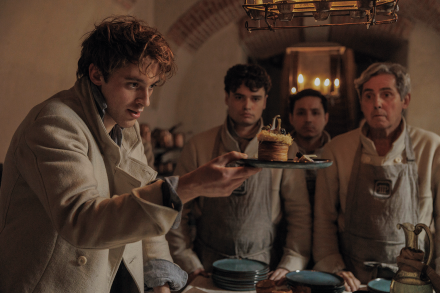
Antonin Carême was known as the ‘chef of kings and the king of chefs’. His patrons and employers included Talleyrand, Napoleon, the Prince Regent, Tsar Alexander and the then richest man in France, James Rothschild. He popularised the tall ‘toque’ hat worn by chefs; he either invented or perfected culinary classics including the vol-au-vent, the profiterole and the mille-feuille, as well as sauces including velouté and béchamel. All this he managed to achieve despite having come from a desperately poor background, raised in a shack in revolutionary France and sent off as a young lad to help make ends meet as a kitchen boy and later as apprentice to Paris’s best patissier. A fascinating rags to riches story, you might think.

It should be illegal for TV baddies to profit from their psychopathic acts

From our UK edition

I’m about to give away the opening scene of the latest gangsters-are-cool drama MobLand. Don’t worry. It won’t spoil anything. By the end of this review you won’t want to watch even a moment of this dog’s breakfast of an atrocity of charmless, witless, misbegotten, amoral tripe anyway. So we’re in a basement with Tom Hardy, playing his usual amiably ruthless hard-man character. This time he’s called Harry Da Souza and he’s the chief fixer for a London-based Irish crime family called the Harrigans. On this occasion, Da Souza is mediating between two lower-tier rival gangs, whom he has orders to make apologise to one another. After much tense negotiation, the gang leaders agree to shake hands but refuse to apologise.

Surprisingly good: Amazon Prime’s Last One Laughing reviewed

From our UK edition

‘What will it take to make Richard Ayoade laugh?’ If you find this question about as enticing as ‘Whose turn is it to deworm the cat?’ or ‘What is Keir Starmer’s favourite plant-based ready meal?’ I really don’t blame you. But still if you watch Last One Laughing (Amazon Prime), I think you might change your mind. The idea of this reality series is to confine ten comedians for six hours in a Big Brother-style enclosure and ban them, on pain of expulsion, from being amused by one another’s jokes. One misplaced smirk gets you a yellow card; the next ill-judged titter and you’re out on your ear. The winner, as per the title, is the last one laughing.

Dope Thief is a cut above your usual inner-city crime-drama porn

From our UK edition

I really had no interest in watching Dope Thief. It’s another of those crime dramas set in a bleak-looking city – possibly there are some pretty parts of Philadelphia but we only get to see the bad bits – where everyone seems to be on welfare or a drug dealer, or both, everything looks washed out, grimy and grey, and where you could die horribly any second. And I get quite enough of all this on my increasingly rare trips to London. But I was desperate. I’ve finished the second season of Severance (very good; definitely worth the effort); White Lotus will only see you through one night a week; season three of Reacher is so dismal it doesn’t even qualify as ‘so bad it’s good’. So I needed something else and the online reviews for Dope Thief looked decent.

The downfall of climate change poster boy Michael Mann

From our UK edition

Even if you’ve never heard of Michael Mann, you will have felt his baleful influence on your energy bills. He is the inventor of the hockey stick chart, which shows a sharp increase in late 20th century global temperatures, like the blade of an ice hockey stick. It put rocket boosters on the climate change scare and was used as an excuse by policymakers to send green taxes, tariffs and regulations soaring. Mann was an obscure academic who had just been given his PhD at the University of Massachusetts when his graph was published in the journal Nature in 1998. Within months – fêted everywhere from the New York Times to the Intergovernmental Panel on Climate Change (IPCC) – he’d become the poster boy for the alleged global warming apocalypse.

I’m warming to Meghan Markle – only joking

From our UK edition

You know that urge when you’ve got friends coming for the weekend and you just have to spend the previous week putting together all the essentials for a successful stay: personalised bags of truffle-flavoured popcorn and pretzel nibbles for their bedside; hand-blended, sensually curated bath salts; layer cake flavoured with honey from your private hives; etc? Well, if you’ve never had that urge, I’ve got some disappointing news: With Love, Meghan may not be the programme for you. Wait, no, actually, it might yet. But not for pleasurable reasons. Only for car crash-TV reasons. It’s like the lifestyle-TV equivalent of one of those rare public appearances by Mark Zuckerberg where he pretends he is not a robot.

I think I’ve found the perfect TV series

From our UK edition

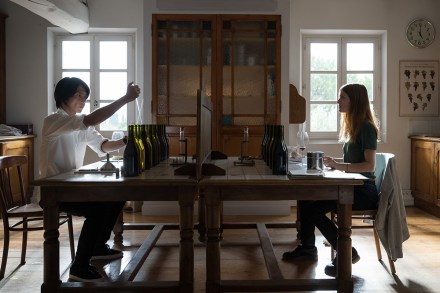
Drops of God is one of those gems of purest ray serene that cable TV prefers to keep hidden in its deep unfathomed caves because it thinks you want something more lowbrow. Try finding it by accident: you won’t. When I looked for it on Apple – which doesn’t have all that many shows – I had laboriously to type in its name. It wasn’t offered to me in the recommendations. If I hadn’t been tipped off by my friends Candy and Diarmuid, I would never have seen it. I had been lamenting, as I often do, the dearth of stuff to watch on TV that doesn’t put you through the emotional wringer.

Is work really more fun than fun?

From our UK edition

Wouldn’t it be marvellous if instead of going to work every day we could contract out the tedium to avatars of whose daytime activities we could remain blissfully unaware? This, in essence, is the premise of the dystopian drama Severance, but I’m not sure it’s a fantasy many of us actually nurture. Noël Coward once said: ‘Work is more fun than fun.’ And though I wouldn’t push it quite that far – it would be true only if you were a huntsman or a Master of Fox Hounds – I think most of us would be pretty bereft without the adrenaline buzz of deadlines, the thrill of office flirtations, the rapier play of banter, the juice of gossip and the creativity of fiddling your expenses and getting one over on your fatuous, irritating, know-nothing superiors.

Not a complete waste of time: Netflix’s La Palma reviewed 

From our UK edition

Netflix is the television equivalent of pasta and ready-made pesto: a slightly desperate but acceptable enough stand-by when you’ve got home late, you haven’t time to prepare anything more nutritious and at least it fills the gap without too much pain or fuss. It is an adamantine rule of television that foreign-language dramas are always superior La Palma is classic Netflix. You wouldn’t necessarily rave about it to your friends. But if, as I do, you have one of those wives who gets really pissed off if there’s not a programme ready and waiting to be viewed while supper’s still hot and, in a panic, you click on La Palma, you won’t feel at the end of the final episode like your time has been totally wasted. This is due, in part, to the location.

Irritating but watchable: American Primeval reviewed

From our UK edition

American Primeval should really be called Two Incredibly Annoying Women In The Wild West. Yes, the first title is more clickbaity, whetting the prurient viewer’s appetite for the savage, primitive violence that splatters over every other scene. But the second is more accurate. Not since Lily Dale in Trollope’s Chronicles of Barsetshire have I rooted so fervently for the protagonist to meet a sticky end as I have with this series’ two feisty heroines. The Wild West depicted in American Primeval is grotesquely, mindlessly violent One, Sara Rowell (Betty Gilpin), is a mother on the run from the law.

The day I was heckled for speaking about the rape gangs

From our UK edition

It’s odd being lionised for something you did so long ago you’d almost forgotten you were there. But this is what has been happening to me on social media these last few days, as a result of clips of me on a 2014 BBC3 political debate programme called Free Speech going viral. Free Speech was one of those slightly cringey ‘let’s make politics relevant to da yoof’ programmes once satirised on Not The Nine O’Clock News in a sketch called ‘Hey Wow’. Hardly anybody watched it at the time and I never expected it to resurface again.

No one will convince me that Keira Knightley can fight: Black Doves reviewed

From our UK edition

If your heart sinks at the prospect of a thriller series starring Keira Knightley as a highly trained undercover agent with unfeasible martial skills, join the club. The reason I was drawn to Black Doves was when I realised it had been written by that master of tongue-in-cheek, ultraviolent, popcorn TV, Joe Barton (Giri/Haji). However disappointing Knightley might be, I thought, Barton’s mordant humour, surreal imagination and sassy dialogue would more than ease the pain.

Most-read 2024: How did Wolf Hall escape the attentions of the BBC’s diversity commissars?

From our UK edition

We’re closing 2024 by republishing our five most-read articles of the year. Here’s No. 3: James Delingpole’s article from November on the new BBC Wolf Hall. Wolf Hall is one of the few remaining jewels in the BBC’s tarnished crown. Presumably that’s why it was allowed to get off relatively lightly from the attentions of the Beeb’s resident diversity commissars. It seemed to strike an acceptable balance between verifiable historical incident and dramatic licence Yes, I recognise that I may be a terrible reactionary, completely out of tune with the times.

Dune: Prophecy is much worse than you will believe possible

From our UK edition

Do you remember that nagging sense of mild disappointment as you sat through Dune 2? You’d been impressed by Dune: bit of a recondite plot if you hadn’t read the book but great to look at, with an austere art-house aesthetic, like Star Wars for people with an IQ. But then the sequel sold out. It turned a minor character from the book into the heroine of a stereotypical Hollywood romance, which not even the excitement of the sandworm-riding scenes could quite redeem. No disrespect to Brian Aldiss,but I think of ‘Brian’as a sort of joke name Anyway its latest screen incarnation, Dune: Prophecy, is worse, much worse.

How did Wolf Hall escape the attentions of the BBC’s diversity commissars?

From our UK edition

Wolf Hall is one of the few remaining jewels in the BBC’s tarnished crown. Presumably that’s why it was allowed to get off relatively lightly from the attentions of the Beeb’s resident diversity commissars. Yes, I recognise that I may be a terrible reactionary, completely out of tune with the times. But I think I speak for quite a few of us when I say that I was grateful in the first episode to notice only two discreet gestures towards anachronistic casting: one lady in waiting and one member of the king’s council. It seemed to strike an acceptable balance between verifiable historical incident and dramatic licence As I keep saying, whatever you think about ‘representation’, what matters far more in period drama is authenticity.