James Delingpole

James Delingpole

James Delingpole reviews television for The Spectator.

Missing the point | 26 April 2018

From our UK edition

Because I’m a miserable old reactionary determined to see a sinister Guardianista plot in every BBC programme I watch, I sat stony-faced through much of Cunk On Britain (BBC2, Tuesdays). Philomena Cunk (played by Diane Morgan) is a spoof comedy character who used to appear on Charlie Brooker’s Weekly Wipe and has now been given a full series. Though the character is amiable enough — a heroically thick Northern woman in a smart jacket who goes around Britain making stupid observations and asking celebrity historians dumb questions — I can’t quite work out what the point of the joke is. Is it a send-up of dumbed-down Britain? Is it designed to make TV history experts look pompous?

Help! I’ve joined the cult of the sourdough breadmakers

From our UK edition

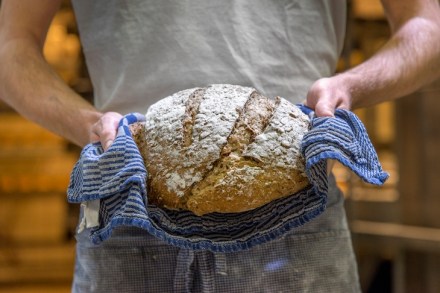
This ought to be the perfect time for a rant about how we’ve reached peak sourdough. It’s been all the rage for three or four years now and, really, someone needs to take a stand. As annoyingly overrated foodstuffs go, it’s up there with kimchi and goji berries and organic chia seeds: obsessively prepared by people with far too much beard, raved about in the Guardian and especially big in that epicentre of global communism, San Francisco. And it doesn’t even taste like bread — more like Mongolian yak’s yoghurt. Problem is, I can’t. Because, like Donald Sutherland at the end of Invasion of the Body Snatchers, I’ve been got.

It’s hard to believe the car insurance industry gets away with being so dodgy

From our UK edition

The car insurance industry is a racket: I think we all suspected that. But unless you’ve had personal experience of its devious workings you probably have no idea just how much of a racket. I didn’t myself until just recently when I had to make a claim for a tiny bump on the door of my car. Soon, I found myself sucked into a system that taints almost everyone it touches — insurers, garages, solicitors, car hire firms and claimants alike — with corruption so flagrant it’s hard to believe such a thing could be possible in hyperregulated modern Britain. It all began when Mark, a nice, decent chap who does odd jobs for us round the house and garden, accidentally reversed his van at low speed into the side of our car in front of our house.

It’s a cult thing

From our UK edition

I have decided to set up a cult, which you are all welcome to join, especially those of you who are young and very attractive or stupendously rich. The former will get exclusive membership of my JiggyJiggy Fun Club™, while the latter will be essential in financing all the cool shit I need on my 500-square-mile estate, viz: hunt stables and kennels, helipad, private games room with huge comfy chair, water slides, grouse moor, airstrip, barracks for my cuirassiers, volcano with battery of rockets inside, and so on. What gave me the idea was this new Netflix documentary series everyone is talking about called Wild Wild Country.

Why it’s time to stop fetishising experts

From our UK edition

Something extraordinary and largely unreported has just happened in a court in San Francisco. A federal judge has said that there is no Big Oil conspiracy to conceal the truth about climate change. In fact, Judge William Alsup — a Clinton appointment, so he can hardly be accused of right-wing bias — was really quite snarky with the plaintiffs who claimed there was such a conspiracy. The case was brought by the cities of San Francisco and Oakland, which have taken it upon themselves to sue the five big western oil majors — Chevron, ExxonMobil, Conoco-Phillips, BP and Royal Dutch Shell — for allegedly engaging in a Big Tobacco-style cover-up to conceal the harm of their products.

Can Scott Pruitt win his battle against the Green Blob?

Scott Pruitt is the greatest-ever Administrator of the Environmental Protection Agency. To be fair, though, the competition was never exactly stiff. The bar was set low right from the start, under the Nixon-era administrator William Ruckelshaus.Ruckelshaus is best known for his decision to ban the use of the insecticide DDT in the US. This, in turn, led to a near-global ban which deprived the world of its most effective prophylactic against the malarial mosquito, arguably causing millions of unnecessary deaths.But what was perhaps most shocking about Ruckelshaus's decision was that it ran roughshod over science and due process.

Village voice

From our UK edition

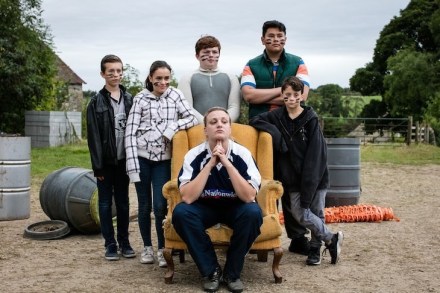
Sometimes — really not often but sometimes — a programme that’s good and honest and true slips under the wire of the BBC’s jealously guarded PC agenda and makes a home run. The latest to do so is a deadpan comedy series called This Country (BBC3). It’s so deadpan that it’s easy to see why an earlier pilot episode for ITV crashed and burned. If you were channel-hopping and lingered on it for five minutes, you might easily mistake it for an earnest, worthy, achingly tedious fly-on-the-wall documentary series about the poverty and despair of left-behind rural England. This impression is enhanced by screeds that occasionally appear on screen giving you, say, statistics illustrative of the funding crisis in healthcare outside the big cities.

I wish I had kept my Brummie accent. I’d be taken more seriously

From our UK edition

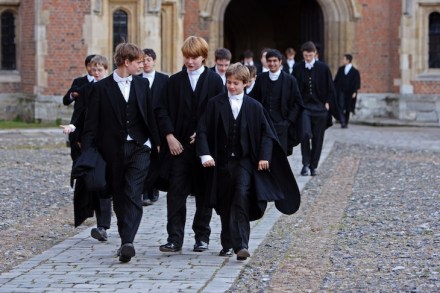
‘No one wants to send their son to Eton any more,’ I learned from last week’s Spectator Schools supplement. It explained how parents who’d been privately educated themselves were increasingly reluctant to extend the privilege to their offspring; some because they can’t bear for their darling babies to board, others because the fees are way out of their reach, or because class prejudice is so entrenched these days it means their kids probably won’t get into Oxbridge.

The beautiful and the damned

From our UK edition

Babylon Berlin (Sky Atlantic), the epic German-made Euro noir detective drama set during Weimar, is so addictively brilliant that I’d almost advise you not to start watching it. After the two seasons to date you’ll be left feeling like the morphine-addicted hero Gereon Rath (Volker Bruch) when deprived of his fix.

What I learned about women from a burst water pipe

From our UK edition

‘It’s always me who gets the worst of it,’ said the Fawn, surveying the wreckage caused by the burst water pipe. I did not disagree a) because I would have had my head bitten off and b) because it’s true. Though I wouldn’t say I was completely useless: who was the first to spot the water gushing through the ceiling of the guest bedroom, eh? And who was the first to find the stopcock using the time-honoured method of running up and down the stairs for ten minutes screaming: ‘Where the hell is the stopcock?’ But it’s probably fair to say that the Fawn bore — and continues to bear — the brunt of the crisis. In theory a burst water pipe ought to be largely in the male domain.

O tempora! O mores!

From our UK edition

Most of the history I know and remember comes from my inspirational prep school teacher Mr Bradshaw. History was taught so much better in those days. It was all kings and queens, battles and dates, with no room for any of that nonsense like,‘Imagine you are a suffragette going to protest the oppressive male hegemony at the races. Describe how it feels to be crushed by the king’s horse.’ Nor was there any question that you were participating in some kind of collaborative learning experience. Your ‘master’ taught; you listened and learned — and occasionally made distracting jokes and got bits of chalk chucked at you. That was the deal and it worked very well.

Will Remainers ever learn to forgive?

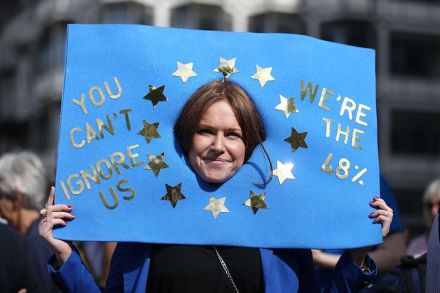
When I mentioned on social media recently that I’d lost friends because of Brexit, I was quite surprised by the vehemence of the response. Lots of fellow Leavers had stories to tell about friends who now cut them dead or former clients who would no longer work with them. Many said they prefer to keep secret how they voted in the referendum for fear of the repercussions. This intolerance is especially bad if you’re a student. One undergraduate described to me how his politics professor had opened a lecture with a slide reading ‘Brexit is shit’ — apparently ‘to the cheers and adulation of the entire lecture theatre’.

Hare-brained

From our UK edition

Shortly after my rave review of McMafia eight weeks ago, I got a long message from an old friend chastising me for being so horribly wrong. Could I not see that the series was boring, convoluted and badly acted? Was I aware of how many better series there had been on Amazon and Netflix recently because, if I wasn’t, she could give me a few recommendations… Several other people wrote to me in a similar vein and I felt terrible. Life is short and TV production is so voluminous these days that now more than ever we need critics to sift the bullion from the dross. Sure, reviews are a snap judgment, usually based on just one episode and written under pressure. Even so, if you can’t be trusted to get it right, say, 90 per cent of the time, that makes you a critical fail.

Extreme pain, of the purest intensity, changes everything

From our UK edition

Since my pulmonary embolism a couple of years ago, I have become something of a connoisseur of pain. The agony — a deep ache of the purest intensity — is caused by the pressure of a blood clot on the highly sensitive membrane of the lungs. It’s so exquisite it’s almost a religious experience. Your world is pain; all you want to do is to curl into a foetal ball and allow the earth to swallow you up: anything to make it stop. Mothers who’ve experienced it tell me it’s worse than giving birth. I never wanted to go through such pain again but this week I nearly did: completely out of the blue and for no reason I could think of.

Friends reunited | 1 February 2018

From our UK edition

Perhaps you missed the fuss because there has been so little publicity about it. But last week, at Davos, the President of the United States was granted the extraordinary privilege of an audience with Britain’s leading interviewer, media communicator and cultural icon, the David Frost de nos jours Piers Morgan. On Sunday night we finally saw the result and what an unbelievable masterpiece of a scoop it was. We knew this because every few minutes the show’s star kept popping up in voiceover form to tell us. ‘I knew the first international televised interview with President Trump was going to be special. But I hadn’t expected the commander-in-chief to be quite so candid,’ Piers congratulated himself at one point.

How the Rat sniffed out £15,000 down the back of my virtual sofa

From our UK edition

It must be about 25 years since the Rat first made an appearance in The Spectator. He started out as my girlfriend’s six-year-old boy, then became my stepson and featured here quite often over the years because, being a scaly-tailed creature of evil, he was always good for some copy. This new year, with his agreement, I upgraded him to full son status. Let me explain why in a way that I hope you’ll find charming, rather than one that makes you want to throw up. The first reason is purely mercenary. During Christmas, while over with his wife Chloe from Hong Kong, the Rat managed to find about £10,000 down the back of my virtual sofa, in the form of seven Bitcoin Cash that I thought I’d lost forever.

Mash-up of all mash-ups

From our UK edition

It’s a terrible thing for a TV critic to admit but I just don’t know what to make of Britannia, the new Sky Atlantic drama set during the Roman invasion of Britain, scripted by Jez Butterworth, starring a top-notch cast including David Morrissey, Zoë Wanamaker and Mackenzie Crook, and heavily touted as the next Game of Thrones. Is it really in the Thrones’s league? I’d say not. You remember how Thrones started, all those seasons ago: the scouting party in the creepy frozen wood; the dead child with milky-blue glowing eyes; the shockingly draconian punishment meted out by Ned Stark to the party’s sole survivor. Within the first ten minutes it was all there: the gnawing tension, the ‘anyone can die’ cruelty and horror.

Nine reasons to be cheerful this year

From our UK edition

Since it’s the first week of the New Year I’m going to pretend the bad stuff isn’t happening and focus on the lovely, life--affirming things I learned (or relearned) last year. Here are some of them.   1. There is hope for the youth. Yes, I know we think they’re all grisly little Marxist snowflakes who are going to vote in Jeremy Corbyn, but this is largely a product of brainwashing and poor governance, rather than fundamental malignity. In fact, some of the kids I encountered last year have given me great hope: check out, for example, the two teenagers I interviewed for my podcast, Sebastian Shemirani and Steven Edginton.

Licensed to thrill

From our UK edition

My third most fervent New Year wish — just after Litecoin goes to £20,000 and Jacob Rees-Mogg becomes PM — is for the BBC to retire to its study with its service pistol and a bottle of whisky and finally do the decent thing. After all, as lots of people are beginning to notice, when you spend 40 per cent of your viewing time watching your £79-a-year Amazon Prime, and another 40 per cent on £96-a-year Netflix, your compulsory £145.50 licence fee starts to look like a lot of money to pay for the remaining 20 per cent’s worth of diversity outreach, anti-Brexit whining and green propaganda. That’s why I was so very disappointed by the BBC’s first big New Year offering. McMafia (Tuesdays) is so brilliant that it almost disproves my point.

Women on top | 7 December 2017

From our UK edition

Boy came to me the other night in a state of dismay. ‘Dad, I just turned on Match of the Day to watch England vs Kazakhstan and guess what: they never mentioned this, but it’s the women’s game.’ What bothered him was not so much being forced to watch a slower, less athletic, duller version of real football — though obviously that too — as that the BBC was being so utterly disingenuous about it. This policy of pretending there’s absolutely no difference between men’s and women’s international sporting fixtures has, I know, been operational for some time. But for those of us living outside the PC metropolitan bubble — i.e. most of the BBC’s actual audience — it still feels insulting, hectoring and dishonest.