Jake Wallis Simons

Jake Wallis Simons

Jake Wallis Simons is a columnist, broadcaster and foreign correspondent. His latest book, Never Again? How the West Betrayed the Jews and Itself, is out now

The problem with the New York Times’ Gaza coverage

From our UK edition

While war raged between Israel and Gaza, the New York Times published a powerful montage of 64 minors said to have been killed in the conflict so far. Under its famous motto ‘All the news that’s fit to print’, and with the headline ‘They Were Just Children’, America’s paper of record informed us that ‘they had wanted to be doctors, artists and leaders’, and invited us to read their stories. It was impossible to look at those innocent faces without feeling deeply distressed.

How London became a hub for Hamas

From our UK edition

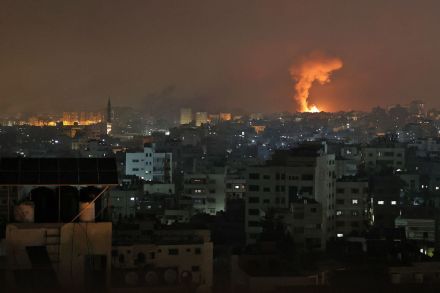
As the dust settles over Gaza, and Israel’s Iron Dome sensors cool, minds inevitably turn to the lessons that can be learned from the 11-day conflict that cost hundreds of lives. Foreign Secretary Dominic Raab, the American secretary of state Antony Blinken, and other international dignitaries have visited the region and offered their carefully calibrated support for ‘both sides’ delivering high-handed lectures on the ethics of asymmetric warfare in densely populated urban sprawl. Sadly, however, the British government has become part of the problem. It may have deep military and security ties to the Jewish state, but there lurks an elephant in the room. London itself has been allowed to become one of the world’s most important Hamas hubs.

How Israel won the war

From our UK edition

Golda Meir, Israel’s first female Prime Minister, once said that when forced to choose between being ‘dead and pitied’ or ‘alive with a bad image’, her country would opt for the latter. Now that Israel and the Gaza militants have agreed a ceasefire after 11 days of fighting, these words ring truer than ever. Both sides will now strive to present a ‘victory picture’ to their peoples and to the world. But while Jerusalem may have lost the propaganda war – anti-Israel feeling and antisemitism is surging both in Europe and the United States – it emerges from this conflict the strongest, its security boosted by a hugely degraded enemy.

British cops shouldn’t support Palestine – or Israel

From our UK edition

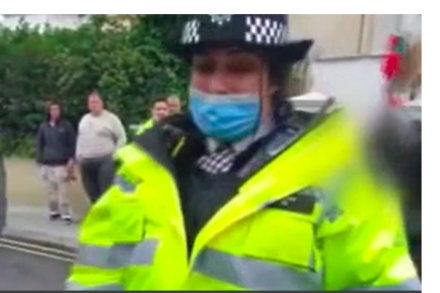
Picture the scene. A female police officer — hi-viz police jacket, regulation black hat, facemask slipping from her nose — punches the air, proclaiming: ‘free, free Palestine!’ Her words are met with cheers from the crowd at the anti-Israel rally in central London that she was supposed to be policing. Actually, you don’t have to bother picturing the scene. Just watch the video clip below to see a perfect symbol of the toxic blend of state authoritarianism and hard-left politics that is creeping across British institutions today. After I posted the video on Twitter, the Metropolitan Police said it was ‘reviewing the footage’ and would provide an update ‘shortly’. One wonders how long the investigation will take.

Revealed: How Israel tricked Hamas

From our UK edition

I received a message from a trusted contact in Israel yesterday telling me that no ground offensive was planned in Gaza. This was despite the fact that heavy armour and infantry reservists were massing on the border. I decided to hold the story and break it in the morning. Within hours, however, the official Israeli army Twitter account had suggested to the world that ground troops had gone into action. ‘IDF (Israel Defence Force) air and ground troops are currently attacking in the Gaza Strip,’ it said. Nobody noted the careful ambiguity. Within minutes, the news had spread across the world. ‘Israel goes in,’ screamed the MailOnline, the world’s biggest newspaper website.

Israel is not to blame for shelved Palestinian elections

From our UK edition

Last week, the irony that stalks the Middle East found a new expression: while Israel has been playing out an almost comical surfeit of democracy, staging four elections in two years, the Palestinian Authority, which has refused to give voters a say since 2006, has shelved another election. Mahmoud Abbas, 85, is currently enjoying the 16th year of his supposedly four-year term as Palestinian president. (Would it be too cheap a shot to wonder how the world would react if Netanyahu behaved like that?) When he announced that a poll would finally be held this month, seasoned observers laid bets that it would never happen.

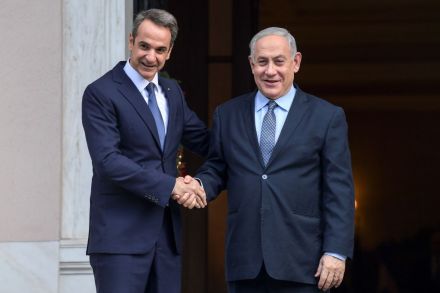
What Europe can learn from Greece’s alliance with Israel

From our UK edition

In the 21st chapter of his magisterial 1948 history of the Second World War, Winston Churchill began with an arresting statement: ‘The Greeks rival the Jews in being the most politically-minded race in the world.’ In his distinctive tongue-in-cheek yet insightful style, he explained:  ‘Wherever there are three Jews there will be found two Prime Ministers and one leader of the Opposition. The same is true of this other famous ancient race, whose stormy and endless struggle for life stretches back to the fountain springs of human thought.’ Seventy-three years after they were written, these racial generalisations may ring dissonant in certain 21st century ears.

The West’s shameful Iranian capitulation

From our UK edition

On a sweltering day in July 2018, German police pulled over a scarlet Ford S-Max hire car that was travelling at speed towards Austria. The driver, Assadollah Assadi, the third secretary to the Iranian embassy in Vienna, was arrested at gunpoint and taken into custody. Although unusual, there was a good reason for detaining the diplomat: Assadi had used his immunity to smuggle a bomb on a commercial airliner from Tehran to Austria, intending to carry out what would have been one of Europe’s worst atrocities in recent years.

Winchester University’s Greta Thunberg statue is a shameless PR stunt

From our UK edition

Winchester University’s decision to splash £24,000 on a life-sized statue of Greta Thunberg – who needless to say, has zero connection to the city – was met with both outrage and hilarity. Outrage because since the effigy was commissioned in 2019, the university has enacted swingeing library cuts and two rounds of staff redundancies (despite the vice chancellor’s salary of £233,207). And hilarity because the statue looks rather more like an extra from the Hunger Games than the 18-year-old climate campaigner. Which might be part of the messaging, I suppose. Locals were less than impressed, mounting a brief campaign to replace it with a statue of the local Big Issue salesman.

Corruption affects everything in Palestine – even vaccines

From our UK edition

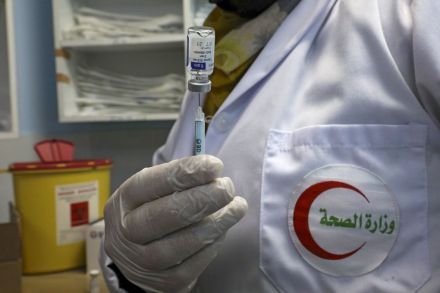
Visit certain parts of the West Bank and you’ll encounter mansions owned by senior officials in the Palestinian Authority (PA). By any standards – let alone those to which ordinary citizens are accustomed – they are impressive, with arches, colonnades and tall windows. If you’d been watching them in recent weeks, you might have seen vaccines being quietly delivered to these residences in unmarked cars, having been skimmed off the supply intended for medical workers. Those, at least, were the allegations made by a number of Palestinian human rights and civil society groups. Last week, the Palestinian health ministry was forced to come clean.

Iran doesn’t hate Israel

From our UK edition

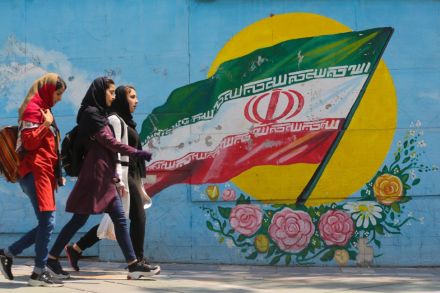
The decades since the Islamic revolution have weighed heavy on the people of Iran. Living in fear, under extreme levels of surveillance and oppression, ordinary citizens have seen their quality of life plummet and their horizons shrink, as their country became an international pariah. Those who dared to protest have been brutally repressed by regime goons with knives, axes and heavy weaponry. And while forced to suffer the deprivation of draconian sanctions, hardworking families could only look on as their despotic leaders splurged billions of dollars on military meddling overseas. When the senior Hamas leader Mahmoud al-Zahar boasted in December that the regime had given him £15.8 million of government money, Farsi social media lit up in rage.

When black lives don’t seem to matter

From our UK edition

A man is filmed dying under a policeman’s knee in Minneapolis. Riots break out, statues are toppled and the Western world erupts with civil unrest. More than 50,000 people are massacred, tortured and raped, leaving orphaned children to forage for food and find their drinking water in puddles. Some of it is caught on camera. Nobody turns a hair. In this social media age, activists tend to focus with great intensity on a narrow, politically-approved range of issues. Israel-Palestine, food banks, structural racism, unconscious bias, trans rights. You know the list. But fewer people seem to care about people being killed, mutilated and starved in Ethiopia.

Revealed: how Mossad eliminated Mohsen Fakhrizadeh

From our UK edition

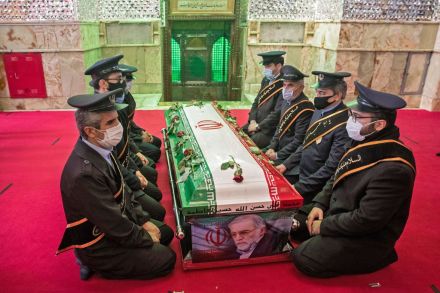
The Mossad is not known for its touchy-feely approach. Whether it was the kidnap of Adolf Eichmann in the sixties, hunting down and executing the Black September terrorists in the seventies and eighties, or dispatching a Hamas chief while disguised as tennis players in a Dubai hotel in 2010, the agency has built a reputation as the most feared secret service in the world. Yet its underlying moral imperative in this most morally difficult of professions must not be overlooked. Former Mossad chief Meir Dagan used to show spies about to embark on a mission a photograph of his grandfather kneeling in front of Nazi soldiers before they shot him. This sense of ethical purpose has always been at the heart of the agency, even when it has been driven to play dirty.

What’s the problem with BBC Arabic?

From our UK edition

It’s easy to forget that your BBC licence fee does not only fund content that you and your family consumes. In addition to the output aimed at domestic audiences, your annual payment of £157.50 funds a host of foreign language services aimed at projecting British impartiality and soft power overseas. The largest of these is BBC Arabic. Launched as a radio station in 1938, it was the first of the BBC’s non-English experiments, and the most successful. Today encompassing television, radio and online, the channel reaches more than 40 million people every week. That’s both an influential audience and a shedload of British money.

Could an Israeli-Saudi peace deal be imminent?

From our UK edition

The Israeli-Saudi peace deal is, to coin a phrase, oven-ready, a source close to the negotiations told me this week. After many months of covert meetings, the detail has been agreed and the Israelis are ready to commit. All that’s needed is for the Saudis to sign on the dotted line. This means that an alliance could be sealed within six months. Of all the Arab-Israeli peace agreements, a Saudi deal would be the most significant. The Gulf kingdom is a huge country that comes close to bordering Israel, and, as such, is of great strategic weight. It is the largest economy in the Middle East. And as the custodian of Islam’s two holiest sites – Mecca and Medina – it is a serious contender for the title of leader of the Muslim world, and the main counterweight to Iran.

The uncomfortable truth about BLM, Malcolm X and anti-Semitism

From our UK edition

Fifty-five years ago, Martin Luther King delivered a speech to 50,000 Americans in which he demanded justice for persecuted Jews behind the Iron Curtain. ‘The absence of opportunity to associate as Jews in the enjoyment of Jewish culture and religious experience becomes a severe limitation upon the individual,’ he said. ‘Negros can well understand and sympathise with this problem.’ He then stated, in typically uncompromising style, that Jewish history and culture were ‘part of everyone’s heritage, whether he be Jewish, Christian or Moslem.’ He concluded:  ‘We cannot sit complacently by the wayside while our Jewish brothers in the Soviet Union face the possible extinction of their cultural and spiritual life.

Al Qaeda and Iran’s chilling new alliance

From our UK edition

What does the world’s foremost Shia power and the most notorious Sunni terror group have in common? Given that the two great branches of Islam rarely see eye to eye, the layman would be forgiven for thinking that the answer is ‘not much’.  It isn’t just the layman who has concluded that Iran and Al Qaeda are oil and water either. When reporting on the assassination of an Al Qaeda chief in Tehran last year, the New York Times remarked: ‘That he had been living in Iran was surprising, given that Iran and al-Qaeda are bitter enemies.’ Surprising to the New York Times, perhaps. But not surprising to the intelligence community, which has been tracking the development of this dangerous collaboration for 30 years.

What Amnesty International gets wrong about Israel’s vaccine programme

From our UK edition

Israel's remarkable vaccine rollout has been deservedly praised. But not everyone is full of goodwill. Depressingly and inevitably, commentators and human rights groups have queued up to find a reason to condemn the Jewish state.  Israel, which is leading the world in the speed of the rollout, has been accused of ‘excluding’ the Palestinians from getting the jab and giving it to ‘settlers’ instead. 'Denying Covid-19 vaccines to Palestinians exposes Israel’s institutionalised discrimination,' Amnesty International has claimed. To people familiar with stories about bogeyman Israel, this is an easy narrative to get behind. But it fails to account for a simple fact: the Palestinian leaders themselves haven’t complained.

The Arab-Israeli conflict may finally be over

From our UK edition

The dawn of the new year is rising on a world that would have been unrecognisable 12 months ago. The scourge of Covid, the fall of Trump, the resolution of Brexit; all have carved history in unpredictable ways. But nowhere has seen greater changes than the Middle East, where, for the first time, people are daring to believe that the Arab-Israeli conflict is over. In January 2020, Israel was as isolated as ever in the region. Its ‘cold peace’ agreements with Egypt and Jordan, which were not matched by affection on the street, were as good as it got. The Arab League’s notorious threefold rejectionism — no to peace, no to recognition, no to negotiation — seemed unmovable.

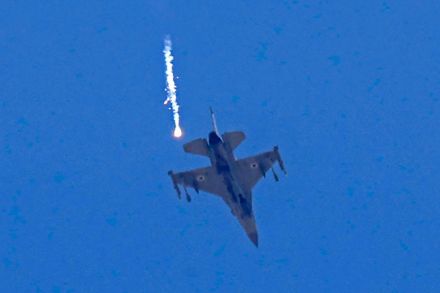
Britain is right to pursue closer military ties to Israel

From our UK edition

There’s a group called Palestine Action whose raison d’être is to throw red paint over the British offices of Elbit, an Israeli high-tech arms company, in an orchestrated attempt to hound it out of the country. Five members of the ‘direct-action network’, which has links to Extinction Rebellion, armed themselves with paint pots and climbed onto the roof of the Elbit offices in Staffordshire in September. Activists also targeted sites in London, where they not only hurled paint over buildings, but also over several Jewish people, who had gathered to stage a peaceful counter-demonstration.