Isabel Hardman

Isabel Hardman

Isabel Hardman is assistant editor of The Spectator and author of Why We Get the Wrong Politicians. She also presents Radio 4’s Week in Westminster.

What Jeremy Hunt got right – and wrong – as Health Secretary

From our UK edition

You couldn’t get a stronger contrast between the new Foreign Secretary and his predecessor. Jeremy Hunt is a minister who has earned the absolute trust of two Prime Ministers in an extremely politically charged job. He was brought in by David Cameron to clear up the mess after Andrew Lansley’s Health and Social Care Act disaster, and Theresa May kept him in place, quickly learning that he was one of the few ministers she really could leave to their own devices. This was a huge accolade from May, given her propensity to micromanage. Hunt earned that trust because he is a very loyal Cabinet minister. He does not style himself as an operator, unlike many of those he has served alongside.

Theresa May’s troublemakers resign. What now for the PM?

From our UK edition

In the past 24 hours, Theresa May has lost two of the Cabinet ministers who have caused her the most trouble. Boris Johnson and David Davis were widely considered to be immovable, despite a number of crises entirely of their own making. The only way for them to go was by resignation, which lends them an appearance of strength. This strength has little to do with the achievements of either minister, though. David Davis had been increasingly sidelined from the negotiation process, which does appear to have been a key factor in his decision to go, given no-one likes to be treated as though they don’t matter. But it isn’t impossible to understand why Number 10 didn’t fully trust the Brexit Secretary.

Keep off the grass

From our UK edition

The autumn squill, Scilla autumnalis, has bright bluebell-coloured starry flowers. It is rare in the British Isles. It is also tiny, so small that most people could easily clodhop straight over it without noticing how lovely it is. I nearly did just that when I went looking for it in Surrey last summer until a kindly local botanist helped me find it flowering away on a grass verge. I went home pleased to have met such a minutely pretty wild flower. But a few days later, the kindly local botanist got in touch again, distraught. The local council had strimmed the verge where the autumn squills grew, and they were no more.

Government to hold emergency talks after second Novichok poisoning

From our UK edition

After counter-terror police confirmed that two people who had collapsed in Amesbury, Wiltshire over the weekend had been poisoned with the nerve agent Novichok, Home Secretary Sajid Javid has announced that he will chair a meeting of the government's emergency committee, Cobr. In a statement released a few minutes ago, Javid said: 'The Amesbury investigation is ongoing and the police must be given the space they need to continue establishing the full facts. 'My thoughts at this time are with the two individuals affected. The Government’s first priority is for the safety of the residents in the local area but as Public Health England has made clear, the risk to the general public is low.

Number 10’s new customs plan doesn’t fully exist, sources insist

From our UK edition

Has Theresa May finally cracked the customs arrangements problem? The Prime Minister needs to get sign-off from her Cabinet on Britain's future relationship with Europe at this week's Chequers summit, and it was briefed overnight that there was now a third option on the table, separate to the customs partnership or the maximum facilitation plan. But this option turned out not to be on the Cabinet table yet, with David Davis and other key ministers finding themselves as in the dark as the rest of us on the matter this morning. I understand that they still haven't been told what this new model is, but this is largely because the model hasn't yet been firmed up.

Why Whitehall is failing to solve the social care crisis

From our UK edition

The government's cash boost for the NHS isn't going to solve its problems. That's the verdict of pretty much every independent spending scrutiniser, including the National Audit Office's Comptroller, Amyas Morse. He's said today that the £20bn founding increase announced by Theresa May and Jeremy Hunt will maintain current standards, but won't enable the health service to grow as the population needs it to. There is also no way that the cash set out recently will solve one of the biggest drains on the health service: the crisis in social care. The Treasury only agreed money for the NHS, not the services that many patients need to be able to go home, and ministers are clear that spending on social care now needs to be discussed separately.

Exclusive: MPs advised to stay off Twitter accounts

From our UK edition

Remember when, as a child, you were astonished to discover that not only did your teacher not retreat to the resources cupboard to charge overnight, but that they had a life outside work and even a family? Some adults still seem not to have grasped this about MPs. Last night, Labour MP Luciana Berger posted a thread on Twitter in which she justified not attending a rally for the NHS's 70th birthday in London at the weekend. It was quite a lengthy thread, in which Berger set out all the NHS-related work she had done that week, and rather plaintively said that while also knocking on doors over the weekend in Liverpool, 'I also spent some precious time catching up with my partner and 1 year old daughter'.

Erdogan, Trump and other fragile egos: Theresa May’s unenviable foreign policy dilemmas

From our UK edition

Given the way her Cabinet ministers are behaving at the moment, Theresa May is really rather used to dealing with fragile egos. This will come in handy over the next month when the Prime Minister has to go from what promises to be an extremely tricky Nato summit straight into Donald Trump's visit to the UK. As James says in his politics column this week, the challenges of these events, along with the ongoing problems both in the Cabinet and Parliament over Brexit, will make July one of the hardest months of May's premiership to date. But trying to tell her warring ministers to shut up seems easy compared to the foreign policy challenges that the Prime Minister is facing. They would not be easy for any leader.

Hands off, Hollingberry in: does anyone notice ministerial resignations any more?

From our UK edition

Are ministerial resignations even interesting any more? There are more of them in Theresa May's government than there are solid policy announcements or indeed any sort of decision at all. Today it was the turn of Greg Hands, who announced that he was stepping down as a junior trade minister in order to vote against Heathrow expansion. The vote on building one more runway at the airport finally comes on Monday, and Tory MPs will be whipped to support it. Hands, always a loyalist, was very polite when he announced he was off, describing it as an 'honour' to serve Theresa May and previously David Cameron, but he needed to honour his 2017 election pledge to oppose the new runway.

Rebels climb down on ‘crunch’ Brexit vote – again

From our UK edition

One of the laws of Brexit is that every Commons division and Cabinet meeting billed as being a 'crunch vote' or 'crunch talks' ends up postponing the crunching again, and again and again. This afternoon, Dominic Grieve announced that he would 'accept the government's difficulty' on the matter of a meaningful vote and 'support it'. He was speaking in the Commons shortly before a division was supposed to be called on this matter, and not long after the government had offered a compromise. That compromise involved David Davis issuing a Written Ministerial Statement which clarifies that the Speaker can decide whether or not a motion issued by the government using the EU Withdrawal Bill is amendable. Last week, the government had said that it would not be, but now it will.

Theresa May’s ministers make the decisions while the Prime Minister prevaricates

From our UK edition

Who is taking all the big, difficult decisions in government at the moment? Not Theresa May, who seems to be caught up in a particularly bad bout of prevarication. Sajid Javid's announcement today that there will be a review into the use of medicinal cannabis came just 24 hours after his boss said there was a 'very good reason' for the current rules being in place. Yesterday May had also tried to block Javid from raising the matter at Cabinet, arguing that it hadn't been on the agenda. It's just one example of Cabinet ministers mounting very public campaigns for a policy change which they then get all the credit for.

Commons defeat looms as peers back ‘meaningful vote’ amendment

From our UK edition

This time a week ago, Theresa May and her whips were trying to avert a looming Commons defeat on Brexit. As if the lengthy farce of the government trying to negotiate its way out of the European Union wasn't surreal enough, the Prime Minister now seems trapped in one of those repetitive Hades-style punishments in which she is forced to go through the same miserable exercise over and over again. Except this time, after peers sent back the issue of a meaningful vote to the Commons again, it's going to be even harder. The Upper Chamber backed Viscount Hailsham's amendment which roughly reflects what Dominic Grieve had been calling for by a significant majority of 119.

The ‘Brexit dividend’ for the NHS is Theresa May’s new Magic Money Tree

From our UK edition

So the Tories have, as The Spectator predicted last month, announced an extra £384 million a week for the National Health Service - something Theresa May was perfectly happy to sell this morning as being the 'Brexit dividend' that Boris Johnson had been pressuring her for. This is an odd choice, given it is impossible to know what the real 'Brexit dividend' will be when we haven't yet left the European Union. Indeed, May couldn't say very much at all about how this extra NHS money will be funded: that's presumably because no Prime Minister wants to tell voters how much more tax they'll be paying, regardless of whether that tax is funding something as salient as the health service.

The Tories only have themselves to blame for the ‘upskirting’ row

From our UK edition

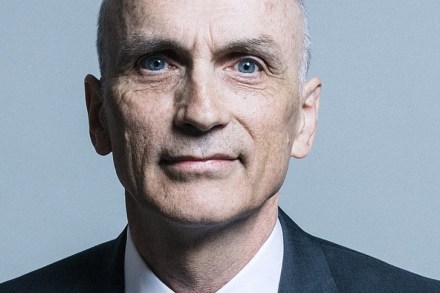
How embarrassing for Tory MPs: one of their own has managed to block the unblockable: a bill creating a new criminal offence of 'upskirting'. Plenty of Conservatives have turned on the culprit, Christopher Chope, both in WhatsApp groups and in public, to show that they do not have the same views as him. To be fair to Chope (and it is hard, especially for a magazine that prefers its motto of 'firm but unfair'), he wasn't suggesting that upskirting was in some way OK. He is part of a group of MPs with the odd hobby of objecting to Private Members' Bills on principle because they don't think that MPs from opposition parties should be able to write laws which could cost the government money or could be very bad policy. Oddly, though, this doesn't stop them introducing their own bills.

Brexit row: Remainers point the finger at David Davis

From our UK edition

How did the government manage to engineer a 'compromise' amendment to the EU Withdrawal Bill that's left it in greater danger of a defeat? On Tuesday, Theresa May gave the pro-Remain rebels assurances that there would be an amendment that they could support in order to avoid defeat on that day, but the amendment published by the government clearly hasn't met those assurances. It also initially seems bafflingly clumsy that the key figure on the Remain side, Dominic Grieve, was not consulted about the final wording of the government's amendment. Why drop something on the chief rebel when you want to avoid a rebellion?

Change to visa rules shows May has learned from her recent immigration messes

From our UK edition

The government has finally climbed down on visa restrictions for foreign doctors and nurses, scrapping the cap on numbers who can be employed using the tier 2 visa route. This was costing NHS trusts shocking amounts of money in processing applications from overseas medical professionals which were in large part turned down by the Home Office. It is striking that the government decided this week to relax these restrictions, given they are part of the tough immigration policy introduced by Theresa May. Time was when the then Home Secretary would repeatedly upbraid David Cameron for handing her a net migration target to deliver which her Cabinet colleagues were frequently trying to flout.

Government avoids defeat on ‘meaningful vote’ – but is this a win?

From our UK edition

Given this morning's ministerial resignation, all looked set fair for an afternoon of high drama in the Commons over the EU Withdrawal Bill. In the end, though, the drama was rather quieter, with the government managing to persuade the Remainer rebels to stand down - temporarily - on the matter of a 'meaningful vote'. Chief Whip Julian Smith spent the majority of the debate buzzing about the Chamber, consulting with ministers and backbenchers and also beckoning MPs out of the room in little groups. It is since clear that Smith was negotiating the compromise that Solicitor General Robert Buckland started offering during the debate. Initially, Buckland offered the rebels 'structured discussions' on the matter.

Phillip Lee explains why he resigned over Brexit

From our UK edition

Phillip Lee struck a sorrowful tone when he spoke in the Commons this afternoon, explaining why he had felt it was necessary to resign over Brexit. The Bracknell MP was congratulated for his “courage” as he spoke by his two vocally pro-Remain colleagues, Anna Soubry and Sarah Wollaston. He also received some applause as he sat down. Lee took care as he spoke to argue that this resignation was not about a plan to destabilise the government or Theresa May, but because he could not abide by collective responsibility given his disquiet about the direction in which Brexit is heading. “I fully support Theresa May,” he insisted, but said that the current proposals from the government would represent a “breach of human rights and parliamentary sovereignty”.

How long before Tory backbenchers turn off Theresa May’s life support machine?

From our UK edition

Tomorrow marks a year since Theresa May sat her dejected parliamentary party down and promised that 'I got us into this mess and I'll get us out of it'. She was speaking amid the chaos of the snap election that she'd called, and it wasn't clear whether the Prime Minister was going to be able to form a government, let alone survive as leader for very long. Tonight, she's still here but still appealing to Conservative MPs for unity as the 'crunch stage' of the EU withdrawal bill arrives in the Commons. The briefing over the weekend did suggest that the Prime Minister was probably going to be ok, though in reality there are still a couple of votes that are going to be, at the very least, rather tight.

The greenhouse effect

From our UK edition

The glasshouses at Kew Gardens are so popular that they can be quite unbearably busy at weekends. And why shouldn’t they be? They’re beautiful structures and the plants they shelter are so marvellous that they deserve the attention they get, whether from botany nerds, schoolchildren, or millennials dressed for Instagram and posing for selfies in the steamy leafy heat. But for the past five years, the biggest member of the Kew family has been closed to the public. Hidden under an enormous awning that the botanic gardens boasts could have covered three Boeing 747s (one of those area-the-size-of-Wales facts that mean very little), the Temperate House has been undergoing a lengthy restoration.