Isabel Hardman

Isabel Hardman

Isabel Hardman is assistant editor of The Spectator and author of Why We Get the Wrong Politicians. She also presents Radio 4’s Week in Westminster.

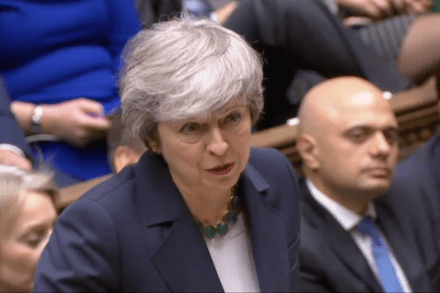
Tory MPs give May an easy ride at Prime Minister’s Questions

From our UK edition

Given relations with her own party, Theresa May will have been far more worried about the second half of Prime Minister's Questions than the first. On the basis of the backbench questions that were asked, the session went pretty well. Only one Tory MP raised Brexit at all, and that was Jacob Rees-Mogg, who asked for assurances that the European Court of Justice would not get the final say on cases arising from the Brexit withdrawal agreement. May was able to tell the Chamber that this wasn't true - though the Sun's report this morning on the matter was pretty strong - and that was all for Brexit. Instead, her MPs asked a range of constituency-based questions and didn't cause trouble, which bodes well for tonight's 1922 Committee meeting.

Will Theresa May clash with backbenchers at the 1922 committee tonight?

From our UK edition

Will tonight's 1922 Committee meeting be a firework display of Tory anger? Theresa May has decided to face her MPs after days of feverish speculation that some of them might be about to force a vote of no confidence in the Prime Minister. There are plenty who have much to complain about on many different subjects. But chances are that this won't be the forum where those complaints are really aired, or the Prime Minister's authority improved. For one thing, it's much easier to give an angry anonymous quote to a Sunday newspaper than it is to shout directly at the Prime Minister in front of your colleagues. For another, the meeting will be chaired by Graham Brady, who is unlikely to encourage a show trial atmosphere.

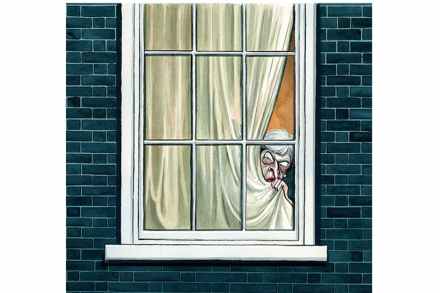
May to face 1922 Committee as rumours of rebel letters swirl

From our UK edition

Theresa May is to face her MPs at the 1922 Committee tomorrow, it has been confirmed. There had been calls for the Prime Minister to do so, after feverish speculation that Tory MPs were plotting to remove her because of her disappointing Brexit performance. She has clearly decided to take on those critics and face her party, rather than hide and hope that this is all going to go away. One of the reasons MPs are increasingly dissatisfied with the Prime Minister is that she isn't offering any sense of progress towards a deal, and there will again be demands for her to show that she will win a concession from Brussels and secure a deal.

Chuka Umunna’s £451-an-hour new job will help his opponents no end

From our UK edition

The news that Chuka Umunna is getting paid £451 an hour to chair a new centrist think tank will go down very well indeed with some of his Labour colleagues. It's not so much that those MPs are just delighted for Umunna, as it is that they can use his £65,000 salary to undermine the chances of the new centrist party that this think tank might be working for. The Labour leadership is naturally worried about the idea of a breakaway centrist party, as it could rob Jeremy Corbyn of his chance to become Prime Minister at the next general election. But the Corbynite attack line against such a party being merely an establishment stitch-up is pretty good. And Umunna's new job plays perfectly into that attack line.

Do ministers understand how financial abuse works?

From our UK edition

Another question to the Prime Minister today that's worth noting came from Labour MP Danielle Rowley on Universal Credit. She was asking not about the well-known problems with the roll-out of the benefit, but about a flaw with its very design: 'The Work and Pensions Committee heard evidence that the lack of automatic split payments for universal credit means that women are being trapped in abusive relationships. That absolutely disgusts me, but how does it make the Prime Minister feel?' Currently, Universal Credit is paid to the household as a whole. The problem with this is when one member of a couple is abusing the other, and controlling all their finances.

Focusing on Bercow won’t change the ‘toxic culture’ of bullying in the Commons

From our UK edition

Today's Prime Minister's Questions was a little shorter than usual. This was partly because, as James says, John Bercow spoke rather less. Normally, the Speaker likes to lecture MPs about how their behaviour will appear to the public, even sometimes using the word 'bullying'. Such lectures will have considerably less force now, given Bercow is one of those criticised by the Dame Laura Cox report for failing to tackle the 'toxic culture' of bullying and sexual harassment in the House of Commons. There has, though, been undue focus on Bercow as a result of the way some on both sides have been approaching this matter.

John Bercow is avoiding taking responsibility with his ‘resignation’ plan

From our UK edition

John Bercow has told friends he is to step down as Speaker, according to the BBC. This follows Dame Laura Cox’s report into bullying and sexual harassment of House of Commons staff which says the existing senior leadership team in the Commons - including the Speaker - are probably incapable of changing the current ‘toxic culture’. But this is not Bercow taking responsibility. In fact, he isn’t even announcing anything new. He will retire next June, which has been the plan since May of this year. James reported this in the Sun at the time, and it seems similar ‘friends of the Speaker’ have been speaking to the BBC again.

Labour chooses party political interest over tackling Commons bullying

From our UK edition

Why has Labour decided to give John Bercow at least a stay of execution as Speaker? Emily Thornberry was asked about whether Bercow should go following Dame Laura Cox's damning report on bullying and harassment in the House of Commons, and argued that she shouldn't go. She told Sky News: 'I think this is absolutely not the time to be changing Speaker. We don't know for example with regard to Brexit as to what is going to happen, whether there's going to be technically an amendable motion or not, whether it'll be the Speaker's discretion as to whether it is. We do need to have all hands to the deck at the moment.' You have to give Thornberry some credit for being totally honest about Labour's motivation here.

Delays to Universal Credit won’t fix its fundamental flaw

From our UK edition

It's rare that a government pauses the implementation of a flagship policy. There's so much ego involved in these matters that to do so is to admit a failing, rather than merely being sensible. But the government has had little choice but to further delay the roll-out of Universal Credit while it sorts out some of the problems with it. The plan had originally been that a further roll-out to four million people would start in January, with more claimants moving in July. But today the Work and Pensions department confirmed that the July deadline has moved to November as a result of fears across Parliament that those who are already receiving the benefit are severely struggling.

Can Parliament really end its toxic culture of bullying and harassment?

From our UK edition

How could the sort of bullying and sexual harassment detailed in Dame Laura Cox's report on the treatment of House of Commons staff really have gone on for so long? There were policies in place for dealing with complaints, and on paper everything looked as though it was working well to prevent the rise of the 'serial offenders' that Cox refers to. This was the very defence initially mounted by the parliamentary authorities themselves when the allegations first came to light in the press earlier this year, but Cox's report shows how structures and cultures can be very different indeed.

Is World Mental Health Day just tokenist rubbish?

From our UK edition

What is the point of a Minister for Suicide Prevention? That Jackie Doyle-Price is taking on the role as part of her portfolio as a health minister is one of the big government announcements on World Mental Health Day, but it's tempting to ask why on earth Theresa May is making such appointments. Some might wonder whether government can really stop suicides, while others might question the difference that giving a minister an additional job title will really make. It's the sort of question that you might reasonably ask about World Mental Health Day itself, as it happens.

Corbyn makes May pay the price for her austerity pledge

From our UK edition

Jeremy Corbyn had the easiest lead into Prime Minister’s Questions today, and he didn’t squander it. He’d had a week to prepare, too, as Theresa May had offered him the lead last Wednesday when she told the Tory conference that austerity is over. So Corbyn took her line and applied it to mental health, policing, schools, local government and the treatment of disabled people.  His questions were long but good: they started with a retort to May’s answer on the previous topic before moving onto a new area and asking: ‘when will austerity end for’ this service. It was effective, not just because it highlighted the number of areas where the government is struggling to deliver, but also because it teased out the lack of sincerity in the claim itself.

Why Chris Williamson really is happy about facing deselection

From our UK edition

Oh, what a delicious twist in the internal bickering of the Labour party. Chris Williamson, an MP who has spent the past few months touring the country campaigning for the mandatory reselection of his colleagues - or, as he prefers to brand it, a 'democracy roadshow' campaigning for all MPs to go through an 'open selection' from their local party every electoral cycle - is being threatened with deselection himself. Williamson finds himself a target after launching into a row with the trade unions at last month's Labour conference. The unions blocked plans for open selections, and instead went for a change in the party's rules that makes trigger ballots against sitting MPs easier.

Who can Philip Hammond blame for a tight Budget?

From our UK edition

Cabinet ministers toddled up Downing Street this morning in a largely good mood. Most of them were relieved that last week's Conservative conference hadn't been the catastrophe that everyone had expected, and many were even happier that the conference had closed with Theresa May declaring that austerity is over. Of course, one of their number will be feeling rather less comfortable with that: Philip Hammond will now have to sift through even more bids from his ministerial colleagues for more funding, now that they believe they could be in line for the dividends of the end of austerity. The Chancellor now needs to work out a way of fobbing off those colleagues - and then justifying this to the Commons when he makes his Budget statement at the end of this month.

Exclusive: Why the Tories feel so spooked by Jeremy Corbyn

From our UK edition

One of the things that the Tory conference taught us was quite how worried the party is about Labour. There was almost a Mean Girls-style obsession with talking about Jeremy Corbyn in speeches on the stage, including Theresa May’s own address at the end of conference, where she returned to the problems with the Labour Party a number of times. The Tories are right to be worried, and not just as a result of last year’s snap election. I understand that the reason Labour has decided to talk so much about the way capitalism has left certain voters behind is that recent polling carried out by the party found it had strong resonance with groups of voters who feel pessimistic about the future of the country.

Theresa May exorcises her Tory conference speech demons

From our UK edition

Theresa May appeared comfortable on the conference stage today for the first time. It wasn’t just her Dancing Queen entrance or her references to the various nightmares that beset last year’s address. It was also that she was able to defend what she was doing with real passion and conviction.  She also offered a good dissection of the Opposition, claiming that it wasn’t Labour but “the Jeremy Corbyn party”, and contrasting the approach of today’s frontbench with that of Labour’s greatest figures such as Attlee and Callaghan.

What Theresa May plans to say in her speech

From our UK edition

How does Theresa May plan to reinvigorate her party and send it out, united and happy, after this week's conference? If the extracts of her speech that have been trailed tonight are anything to go by, it's not clear that the Prime Minister knows how to answer that question, either. It's either the case that May is holding back a series of announcements for the speech itself or for individual newspapers, or that she is planning to make motherhood and apple pie look controversial in comparison to the epithets she is going to deliver. The Prime Minister will tell the country that 'our best days lie ahead of us and that our future is full of promise'.

Why Theresa May will care more about what Brady, not Boris, thinks

From our UK edition

If Theresa May's sole goal for the Tory conference is to survive it, then she'll likely be less interested in what Boris Johnson was up to at his big ticket rally this afternoon, and more concerned about any comments made by the chairman of the 1922 Committee, Graham Brady. Brady is famously the man who keeps the letters calling for a vote of no confidence in the Prime Minister, and was introduced at a drinks event earlier in the conference as 'the man who knows where the bodies are buried'. He is effectively the general secretary of the Tory backbenchers' trade union, which makes him extraordinarily powerful.

Hancock’s holding line sums up the Tory party’s policy problem

From our UK edition

So much of this Conservative conference has felt like a holding line from the party leadership, as though having the event in Birmingham has been inconvenient timing and something to survive, rather than enjoy. Mind you, this is the theme of Theresa May's leadership generally: not only has the Prime Minister survived against the odds over the past year and a half, she has also given the impression that this survival is more important than, say, making decisions on Britain's future trading relationship with the EU, or pushing ahead with domestic reform. If you want a domestic example of how cautious the Tories are being at this conference, you need look no further than Matt Hancock's speech in the hall today.

Why Tory members are deserting the conference hall

From our UK edition

One of the stories of this Conservative conference is the contrast between the crowd and atmosphere in the main conference hall, and the popularity of the fringes elsewhere. In previous years, the party has suffered stories about how corporate the whole event is, with members deciding not to bother with the expense of the whole thing. But this year, while there are more members turning up, they're finding very little to keep them in the hall. Yesterday, a speaker in the hall inadvertently offered an explanation for this. The party has been doing more to increase contributions 'from the floor', she told the audience, saying it was important to involve members more than in the past. She then invited the next group of speakers 'from the floor' up to speak.