Isabel Hardman

Isabel Hardman

Isabel Hardman is assistant editor of The Spectator and author of Why We Get the Wrong Politicians. She also presents Radio 4’s Week in Westminster.

Corbyn gives May an easy ride at Prime Minister’s Questions

Jeremy Corbyn decided to re-release his greatest hits at Prime Minister's Questions today, starting with Brexit but then moving on to poverty, education, police cuts and 'burning i justices'. We've heard these questions many times before, and often in the same sequence, but today the Labour leader was using them once again to try to underline that Theresa May's government is failing not just on Brexit but on everything else too. This didn't work, though, because Corbyn only tried to tie the topics together in his very last question, and that question was particularly rambling. Last night the Labour leader's spokesman delivered a crisp line about the government being unable to govern because it couldn't get its main business through.

Has Theresa May just revealed her Brexit plan B?

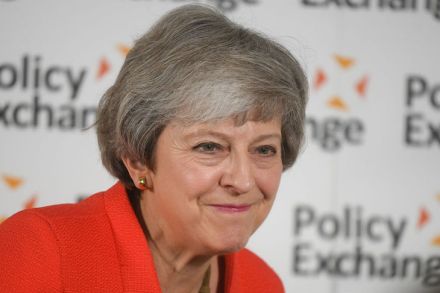
Theresa May has just finished a speech in which she made clear – without using those words – that the Government is going to lose tonight’s meaningful vote and that she is now planning for the next Commons confrontation on Brexit.  She managed to get one MP, Sir Edward Leigh, to withdraw his amendment on the basis that she was happy to work with him on ‘creative solutions’ to the backstop. She also promised that ‘the government will work harder at taking Parliament with us’ on Brexit.  But this harder work doesn’t seem to include any moves towards working with Labour on some kind of national unity movement to stop a no-deal Brexit.

Labour MPs threaten to push Corbyn into supporting a second referendum

Labour MPs who want a second referendum are threatening to table their own motion calling for one next week if their frontbench fails to do so. Jeremy Corbyn is expected to call for a vote of no confidence in the government once Theresa May's deal is defeated in the Commons this evening. The Labour leadership has refused to do this until now because it doesn't want to hold a vote it is certain to lose, but the pressure has now grown so great for a vote that it will be extremely difficult for Corbyn to dodge it, even though the DUP have said they will stop the government from falling so long as there is a chance that the backstop will not pass.

Conservative MPs are running out of patience with Theresa May

Westminster has been a febrile place for months, but today, as the meaningful vote on Theresa May's Brexit vote approaches, it has tipped into something quite different. The streets around the House of Commons are lined with protesters from all sides, clutching placards, ringing bells and chanting. Flags are swirling, balloons are bobbling in the air, and drivers are honking their horns - though having cycled through the crowd earlier, I'm not sure whether the horns are necessarily ones of support for one group or another, or actually just drivers trying to stop people wandering out in front of them in the road. Inside the parliamentary estate, though, the mood is rather more studied.

May’s new Brexit pitch: my bad deal is better than no deal

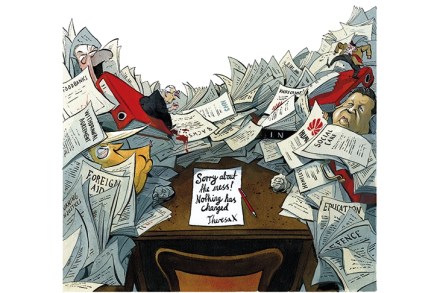
If you're a not particularly impressive leader of a political party preparing a response to any statement given by Theresa May, the easiest phrase that you can lazily reach for is 'nothing has changed'. You know it will apply to anything the Prime Minister says about how she has improved her Brexit deal.  All three main party leaders appeared to conform to those easy predictions this afternoon. Theresa May stood up and tried to convince MPs that she had secured important changes to the deal that meant they should support it tomorrow. Jeremy Corbyn replied that nothing had changed and that there should be a general election, while Ian Blackford argued that the voices of the people were being ignored and that May should extend Article 50.

John Bercow steps up his battle with ministers

John Bercow clearly isn't backing down in his stand-off with ministers. Today he opened a new front in the House of Commons, taking aim at the government for refusing to allow MPs who are pregnant or on maternity leave to have a proxy vote. The issue came up when Harriet Harman made a point of order about her colleague Tulip Siddiq, who has had to postpone the caesarean section for her baby so that she can vote tomorrow. Harman asked the Speaker whether he could give the Hampstead and Kilburn MP a proxy vote, but Bercow replied that this was not something he was able to do himself. He continued by arguing that it was 'essential' for the Commons to maintain its reputation as it is 'starting to take an interest in the modern world' that the matter of proxy votes be resolved.

Has Speaker Bercow outstayed his welcome?

John Bercow has been an excellent, reforming Speaker of the House of Commons. He has supercharged backbenchers with greater use of urgent questions, for instance, and has also made Parliament more family-friendly. His pomposity while chairing Prime Minister's Questions - the endless chiding about what the public might think of MPs' behaviour, often accompanied with tedious jokes about certain members needing to take 'a soothing medicament' - was something even the MPs in question could forgive, given they had a Speaker who was making the legislature bolder. But in the past few months, there has been a shift in the Parliamentary mood.

John Bercow’s disregard of precedent is a serious constitutional issue

It would be tempting to dismiss the past hour and a half of points of order in the House of Commons as MPs making fools of themselves by complaining about things not going their way. Indeed, there was some evidence to support that theory, such as the final exchange of the session between the Speaker and Tory MP Adam Holloway in which the backbencher complained about a 'bollocks to Brexit' sticker in the window of a car driven by the Speaker's wife and shouted, in the manner of a lawyer in a lowbrow television drama: 'Have you driven that car?' Bercow made this seem even more ludicrous by assuring the House that 'that sticker is not mine'.

The NHS 10-year plan is a metaphor for Theresa May’s government

Today's NHS 10-year plan is the health service's response to the £20.5 billion funding boost announced by ministers last year. The Prime Minister is unveiling further details of the plan this morning, with NHS England chief executive Simon Stevens doing his own broadcast tour to sell it. He argues that the plan 'tackles head-on the pressures our staff face' and also 'sets a practical, costed, phased route map for the NHS's priorities for care quality and outcomes improvement for the decade ahead'.

Theresa May kicks can down the road on key domestic reforms

Parliament rises for Christmas recess tomorrow - unless the various grinches arguing it should carry on sitting so it can loudly fail to make any decisions on Brexit have their way. MPs are so busy accusing Theresa May of kicking the can down the road on Britain leaving the European Union that few have noticed how many other cans are also bouncing along the tarmac. We had been expecting big announcements on social care reform, domestic abuse legislation and the NHS by the end of this term in Parliament, but all appear to have been delayed. The social care green paper had been delayed repeatedly anyway, but was expected this autumn. A few leaves do still linger on the December trees, but ministers are now saying there won't be any green shoots on this matter this year.

Tory whips had already planned to reinstate Charlie Elphicke before confidence vote

MPs have been expressing their fury today that the vote of no confidence in Theresa May allowed two suspended Tories to rejoin the party. Andrew Griffiths and Charlie Elphicke had both had the Conservative whip removed over claims of inappropriate sexual behaviour, but were reinstated yesterday so that they could vote. Labour's Shadow Women and Equalities Minister Dawn Butler described it as a 'betrayal of women', adding 'how can Theresa May call herself a feminist when she lets an MP who was suspended back into the Conservative party to vote for her in the leadership challenge?

After a day of high drama, nothing has changed

Even before the result of the Tory no confidence vote was announced, the mood in Committee Room 14 was rather jovial. Chief Whip Julian Smith appeared minutes before the result, looking both exhausted and happy. Nerves were sufficiently calm for someone to crack a joke in the pause between Sir Graham Brady arriving and him starting to speak. 'Let us pray!' they quipped, sending the room into fits of giggles. In fact, the mood was almost eerily cheery, a bit like someone who has spent all night awake drinking coffee. When Brady announced that the Conservative party does indeed have confidence in Theresa May, the Tory MPs present broke into loud and pointed cheers.

Number 10: Confidence vote is not about who leads the Tories into the next election

Theresa May doesn't see today's vote of no confidence as being about who will lead the Conservative party into the next election, her spokesman has just said. This is significant as it removes the possibility that the Prime Minister sees today's result as being a mandate for her continuing as leader, when many Tory MPs do not want her to. This therefore makes it much easier for those MPs to support the Prime Minister this evening. Speaking to journalists after Prime Minister's Questions, her spokesman said: 'She does not believe that this vote today is about who leads the party into the next election. It is about whether it is sensible to change leader now.

How the Tory vote of no confidence in Theresa May will work

Two Tory MPs who are currently suspended from the party whip could be brought back in order to take part in today's vote of no confidence against Theresa May, 1922 Committee Chair Graham Brady revealed this morning. Briefing journalists on the vote, Brady said he was waiting for confirmation from the Chief Whip of the size of the Tory party electoral roll, and that it depended on whether Charlie Ephicke or Andrew Griffiths had the whip restored. Both men were suspended following allegations of sexual harassment, though the Conservative party concluded in November that no further action would be taken against Griffiths. Brady also said that any MPs who were unable to return to Westminster for the vote would be able to apply for a proxy vote by 4pm today, with the result announced at 9pm.

How No. 10’s shredded credibility could make today’s vote much closer

One of the factors that led to the triggering of a no confidence vote and that will play a huge part in the result of that vote is the way in which Number 10 has shredded its credibility in the past few days. It isn't just the way in which Theresa May's press operation pushed back against rumours over the weekend that the meaningful vote on Brexit would be delayed, or the way in which ministers such as Michael Gove were still claiming that there wouldn't be a delay just hours before the announcement to the contrary. It's also that last night Downing Street was trying to dampen speculation that the 48 letters calling for the vote had been received.

Can May really win back MPs’ trust?

How can MPs trust what ministers say after the Brexit fiasco of the past few days? That’s been the theme of the Commons emergency debate on the meaningful vote so far, with phrases like ‘shredded her credibility’ being bandied about. Initially, the most stinging criticism came from opposition MPs, but those MPs are not the usual suspects who chant blandly about how you can ‘never trust the Tories’. They’re senior backbenchers like Hilary Benn and Angela Eagle. And they speak for a large number of Tory MPs, too, who feel that there is little reason to trust what a minister or indeed a whip tells them.

Speaker Bercow says MPs should get a say in delaying Brexit vote

Speaker Bercow has told MPs that they do deserve a vote on the government’s plan to delay its Brexit deal vote. He told the Commons this afternoon that ‘any courteous, respectful and mature environment, allowing the House to have its say on the matter would be the right and obvious course to take’. We will find out more details on the procedural aspects of the government’s plan later when Andrea Leadsom gives a statement. Bercow’s statement shows why Labour were so keen to protect him as Speaker when his job was in peril over the bullying and harassment scandal. He was always likely to be an interventionist speaker over Brexit, and in this instance, he is making life as uncomfortable for the government as he possibly can.

Eurosceptics threaten to block Government delay to Brexit vote 

Could we end up with Parliament voting on the Brexit deal tomorrow anyway? Eurosceptic Tory MPs have reacted with fury to the announcement that the government will delay the vote, with a number threatening to vote against the delay.  I understand that the European Research Group is currently discussing whether this is actually possible as an official position, but in the meantime MPs such as James Duddridge and Andrea Jenkyns have already made their threats public.  However, sources tell me that the advice given to the ERG has been that the Government might not even have to call a vote on delaying the vote, as it can merely avoid moving the continuation of the debate.

Could Labour drop its plan for a no confidence vote?

The working assumption in Westminster at the moment is that Theresa May will lose Tuesday’s meaningful vote on her Brexit deal, and then the Labour Party will table a motion of no confidence in the government. The Tory whips certainly seem as concerned about that no confidence vote as they are about the Brexit vote, given they are resigned to losing one but have a good chance of winning the other. But I’m not sure that this is the case any more. The public language from the Opposition has changed in recent days to suggest that there will not be a separate vote after all - or at least not one tabled by the Labour Party.