Isabel Hardman

Isabel Hardman

Isabel Hardman is assistant editor of The Spectator and author of Why We Get the Wrong Politicians. She also presents Radio 4’s Week in Westminster.

Will the Beirut blast change Britain’s foreign policy?

From our UK edition

What should the British government do to help Lebanon recover from the Beirut explosion? Ministers say they are working to provide the Lebanese government with technical support and financial assistance, but they are coming under pressure from senior Conservative colleagues to use the disaster as a turning point in the way Britain approaches the Middle East generally. Tobias Ellwood, chair of the Defence Select Committee, and Tom Tugendhat, chair of the Foreign Affairs Committee, have both called for Britain to take a more active role in the region, or risk seeing hostile states such as Iran and terrorist groups filling a 'vacuum'. These two MPs have been instrumental in pushing Boris Johnson to toughen his approach to China in recent months.

Party whips are ill-suited to deal with serious allegations like rape

From our UK edition

The Tories are still coming under fire for failing to suspend the unnamed MP who was arrested at the weekend on suspicion of rape, sexual assault and coercive control. A group of charities and trade unions are the latest to criticise the decision, saying in a statement released yesterday that 'we are still not confident that [Parliament] is a safe and equal place for women to work'. The group wants Parliament to suspend the MP, and for the whip to be removed while the police investigate the allegations. But while the Tories insist they take all such allegations extremely seriously, they also say the matter is currently in the hands of the police and they will make a decision about the whip once the police decide whether or not to charge the suspect.

The end of lockdown is just the start of the domestic abuse crisis

From our UK edition

The number of people – particularly women – seeking help for domestic violence soared during the coronavirus lockdown. We’ve known that for a while. But there has been an assumption that as lockdown eases, so will the pressure for abuse victims. New figures from the charity Refuge suggest that this assumption is wrong.  There has been an assumption that as lockdown eases, so will the pressure for abuse victims In June, the National Domestic Violence Helpline saw a 77 per cent increase in calls, while there was a 54 per cent rise in the number of women needing a place in a refuge from the last week in June to the first week in July.

Stripping Julian Lewis of the Tory whip could backfire on Boris

From our UK edition

Boris Johnson hasn’t had as much authority over his MPs as he might have expected over the past few months. Tonight, after Number 10 failed to install Chris Grayling as its preferred, loyal, candidate as chair of the Intelligence and Security Committee, it has tried to offer a show of strength by removing the Tory whip from Julian Lewis, who led a successful coup with the help of Labour MPs. This is a high stakes move. Firstly, Lewis is one of the most instinctively Tory members of the parliamentary party and has dedicated his career to a series of very Conservative causes, particularly defence, the nuclear deterrent, and Brexit. He also campaigned against the infiltration of the Labour party by the Militant tendency in the 1970s.

The rise of Brand Rishi

From our UK edition

Long before he even ran for Mayor of London, Boris Johnson had developed an unusually strong political brand, to the extent that few bothered referring to him using his surname. Brand Boris inspires and infuriates in equal measure: his supporters have long argued he is able to reach parts of the electorate others can’t, while his critics find his first name alone to be a hair-trigger for impressive amounts of anger. At the bottom of this anger is often a great deal of envy that Johnson seems able to use his brand to get through scrapes and avoid scrutiny in a way other politicians wouldn’t. Both sides know, whether they would admit it or not, that Brand Boris is one of the most potent in modern politics.

The importance of the Natural Health Service

From our UK edition

Most people consider going for a walk or a run as a sort of optional leisure activity, something you get round to once you’ve been to the shops. But when the government announced its coronavirus restrictions, there it was in its own category of ‘essential activities’: daily exercise. Yes, there have been rows about whether sunbathing or sitting on a bench to eat a snack are acceptable, but by and large the message has been clear: we need to get outside to stay well. But it’s not just exercise that’s essential to our lives, it’s nature too. We have become used to thinking of nature as something we need to travel to see, a middle-class luxury along the lines of buying expensive cheese or owning a labradoodle: nice, but not the stuff of staying alive.

How the lockdown is making domestic abuse worse

From our UK edition

For years, ministers from successive governments have conducted drills for all kinds of pandemic scenarios. But they never imagined a lockdown. It’s a new tool, and its implications — and side effects — have never been properly tested. So no one really thought about the effect it would have on something like domestic abuse. Before the lockdown, it was estimated that two women a week were killed by their current or former partners. But that was when they could move freely. On Friday, the Metropolitan Police announced they had made 4,000 domestic abuse arrests in the last six weeks, with calls about abuse rising by around a third over that time. The number of charges and cautions has risen by about 24 per cent on this time last year. And this is just in London.

Hancock struggles to answer questions on testing and quarantine

From our UK edition

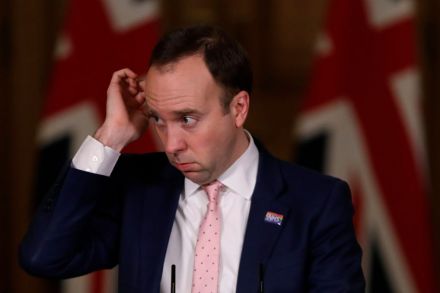
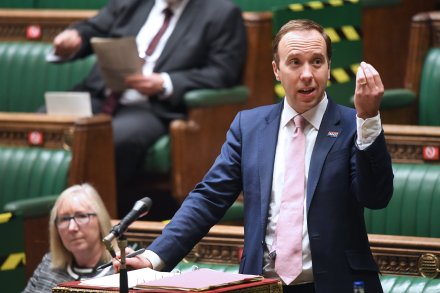
Matt Hancock has the air of a student who, having boasted about how great their final dissertation will be, has just realised that they have days to research and write the whole thing. When asked if he is going to meet his target of 100,000 daily tests for coronavirus by the end of the month, the Health Secretary continues to insist that he will, while struggling to explain how.  He gave a statement in the new hybrid Commons this afternoon in which he was repeatedly questioned both by MPs who were in the Chamber and those on video link about what was going wrong with the testing target. He struggled to give any answer beyond that the government was steadily increasing capacity and that the UK was one of the first countries in the world to develop a test.

Who is in charge of the government?

From our UK edition

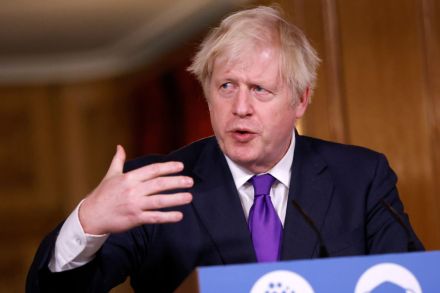
Boris Johnson is still officially recuperating from coronavirus at Chequers and is ‘not doing government work’, according to No. 10. But he is starting to do some activities that sound distinctly work-related.  He will be having an audience with the Queen over the phone this week, and will also be phoning President Trump on Tuesday to thank him for his wishes when he was in the hospital and to get an update on the G7 response to the crisis. But the Downing Street line remains that ‘he isn’t doing government work but he is getting updates on the situation’.

Domestic abuse sufferers are the hidden victims of lockdown

From our UK edition

For years, ministers from successive governments have conducted drills for all kinds of pandemic scenarios. But they never imagined a lockdown. It’s a new tool, and its implications — and side effects — have never been properly tested. So no one really thought about the effect it would have on something like domestic abuse. Before the lockdown, it was estimated that two women a week were killed by their current or former partners. But that was when they could move freely. Now, opportunities for escape are scarce. The only time a victim is alone is when their abuser goes to the shop, or if they’re allowed out for exercise.

Domestic abuse support needs more than tick-box politics

From our UK edition

One of the problems with the political news cycle, whether in normal times or now, is that politicians believe that making an announcement about a policy problem is all they need to do to tick it off their to-do list. The more complex the problem, the more tempting it is to make an announcement that sounds as though you are taking it seriously, but which doesn't do anything to address even one aspect of what's really going on. One of the classic long-term examples of this is social care, which no political party in the past two decades has done enough to address, beyond making announcements about what they might do. Another is 'skills', which few politicians really understand, but which they know is in some vague sense important to those who haven't been to university.

Priti Patel’s domestic abuse campaign is better than nothing, but there’s a lot missing

From our UK edition

In the past few minutes, Priti Patel has launched a public awareness campaign called #YouAreNotAlone on domestic abuse in the lockdown, along with an extra £2 million for domestic abuse helplines and online support. Charities helping domestic abuse victims say the number of calls to their hotlines has risen by around 25 per cent - 120 per cent in 24 hours in the case of the National Domestic Abuse Hotline - and their website traffic has soared even more since the public was told to stay at home. Police forces are also reporting an increase in calls about domestic violence.

Matt Hancock’s PPE problem

From our UK edition

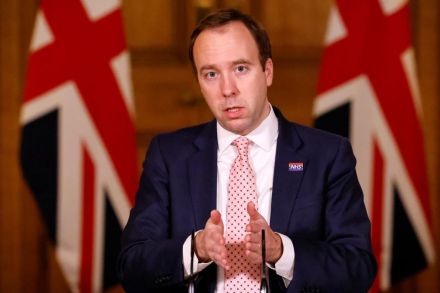
After weeks of criticism that personal protection equipment isn't reaching front line health and care workers, Matt Hancock today launched a 'PPE plan' to ensure that gloves, face masks and so on reach hospitals and care homes as quickly as possible. But alongside it, he also issued a curious warning: don't use equipment you don't need. Hosting the Downing Street coronavirus briefing this evening, the Health Secretary said:  'There's enough PPE to go around, but only if it's used in line with our guidance. We need everyone to treat PPE like the precious resource that it is. That means only using it when there's a clinical need, and not using more than is needed.

No, MPs have not ‘given themselves’ £10,000 to work from home

From our UK edition

In times of crisis, we all need someone to direct our anger at. There are some new candidates during this coronavirus epidemic: people who sit down in parks, people who panic bought toilet roll, and police officers threatening to check shopping baskets. But the old staples remain, and top of that list are the selfish, venal MPs who have just handed themselves £10,000 to work from home. This sort of story proves the point of all those who believe that MPs are out of touch and in it for themselves. It does such a good job of proving that point that it's too good a story to check. Which is just as well, because anyone bothering to check what's actually going on will find the facts rather less convenient. Here is what has really happened.

Why isn’t No. 10 cracking down on overzealous police?

From our UK edition

There are now daily examples of police forces either overstepping the regulations and guidance on social distancing to tell people off who are, for instance, in their own front gardens, or threatening to do so in the near future (see Northamptonshire police desperately trying to blame the media for writing up verbatim what its chief constable said about his force potentially checking shopping trolleys for non-essential items). While most police forces are doing a very difficult job in adjusting to new legislation while also putting their officers at risk of catching coronavirus in order to enforce it, these extreme examples do risk making it look as though some members of the thin blue line are enjoying a power trip, or have too much time on their hands.

Lockdown confusion isn’t helping

From our UK edition

The government is still refusing to give any details of whether, when and how the current coronavirus lockdown might lift. At this afternoon's lobby briefing with journalists, the Prime Minister's official spokesman repeated the line we have heard over the past few days that the government needs to be 'focused relentlessly' on ensuring that people abide by the current restrictions, saying: 'We need to focus in our public message in order to save lives.’ There is clearly anxiety that people will relax their approach to social distancing and staying at home over the Easter weekend, with the weather forecast promising warm temperatures and sunshine. No. 10 is accordingly rebuffing the endless questions from journalists about the lockdown.

Boris Johnson ‘stable’ and not on a ventilator, No. 10 says

From our UK edition

Boris Johnson has been stable overnight and is breathing without mechanical assistance, his official spokesman said this afternoon. He has received standard oxygen treatment and 'remains in good spirits'. He does not have pneumonia. There have been questions over whether Downing Street had been overly reticent about quite how unwell the Prime Minister has been, and whether it was right that the full picture wasn't on offer. The spokesman insisted that No. 10 has been 'fully frank' about the Prime Minister's condition throughout and that the change yesterday from 'in hospital as a precaution' to Johnson being moved to intensive care was because his symptoms worsened yesterday afternoon.

Prime Minister taken into intensive care

From our UK edition

Last night, Downing Street announced that Boris Johnson is now in intensive care at St Thomas’ Hospital after his condition deteriorated. He is not on a ventilator currently but has been moved there in case he needs one.  This is the statement from No. 10: Since Sunday evening, the Prime Minister has been under the care of doctors at St Thomas’ Hospital, in London, after being admitted with persistent symptoms of coronavirus. Over the course of this afternoon, the condition of the Prime Minister has worsened and, on the advice of his medical team, he has been moved to the Intensive Care Unit at the hospital. The PM has asked Foreign Secretary Dominic Raab, who is the First Secretary of State, to deputise for him where necessary.

Is Keir Starmer’s shadow cabinet really a rejection of Corbynism?

From our UK edition

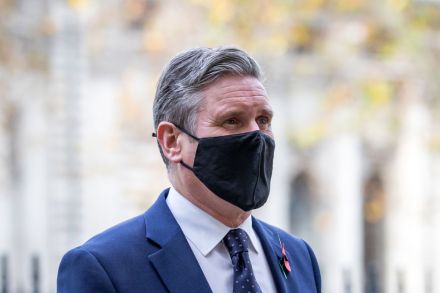
On the surface, Keir Starmer's new shadow cabinet looks like a rejection of Corbynism. Over the past 24 hours, the new Labour leader has sacked most of his predecessor's allies such as Ian Lavery, Richard Burgon, Shami Chakrabarti and Dawn Butler. But if you run through the list of appointments, and the names of those who remain, this is still a reshuffle designed not to upset Jeremy Corbyn's allies. There hasn't been a full clear out, but the faces remaining are largely figures who were never really associated with Corbynism to begin with. Emily Thornberry is still in, but despite being very loyal to the leader, she was never a true Corbynite. She had taken care to stay quiet during the 2019 election campaign before vocally criticising Corbyn's leadership after the result.