Isabel Hardman

Isabel Hardman

Isabel Hardman is assistant editor of The Spectator and author of Why We Get the Wrong Politicians. She also presents Radio 4’s Week in Westminster.

Would Labour really tackle the strikes better than the Tories?

From our UK edition

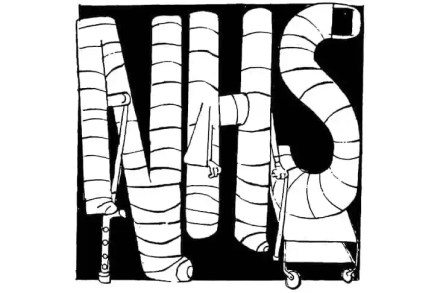
The debate about NHS strikes is turning into one of those 'am I being unreasonable?' threads on Reddit and Mumsnet, where posters jump all over each other to point out the way someone has messed up in a relationship. Health Secretary Steve Barclay is still hoping to win the war of attrition between the government and healthcare workers by appealing to the unions to be reasonable and constructive. Barclay made that argument again today when taking departmental questions in the Commons, but his announcement last night that he would be taking the Royal College of Nursing (RCN) to court in a bid to stop that union's strikes showed that it is becoming harder, not easier, to stick to this line of attack.

Can the Foreign Office avoid the mistakes of Kabul in Sudan?

From our UK edition

A British evacuation of Sudan began last night after a 72-hour ceasefire was agreed. Ministers, however, are anxious about the possibility that the fighting will start up sooner. Foreign Secretary James Cleverly said it was 'impossible for us to predict how long this opportunity will last'. Britons will need to travel to an airfield outside Khartoum themselves, as no escorts are available, and are being told only to travel when contacted. It is a precarious situation. It is also easy to see superficial parallels with the chaotic evacuation of Kabul in 2021. Cleverly, though, said 'this situation is fundamentally different to the situation in Afghanistan', adding 'we have established contact with a number of British nationals and we are talking where we can directly with them'.

Could Diane Abbott return to Labour?

From our UK edition

17 min listen

Katy Balls, Fraser Nelson and Isabel Hardman discuss Diane Abbott's suspension from the Labour party. Given her hasty apology, could Keir Starmer allow such a key figure to Labour's left back into the party? Also on the podcast, what has been the fallout from Dominic Raab's resignation? And how is Rishi Sunak trying to woo business leaders? Produced by Natasha Feroze.

Isabel Hardman’s Sunday Round-up – 23/04/23

From our UK edition

11 min listen

Isabel Hardman hosts highlights from Sunday morning's political shows. Today's shows focussed heavily on Dominic Raab's resignation from Rishi Sunak's government. Whilst new deputy PM Oliver Dowden described Raab as a 'man of his word', Labour's Jonathan Ashworth was less flattering, calling him: 'Not just a bullying minister, a failing minister'. Education was also a hot topic. In the aftermath of the tragic death of headteacher Ruth Perry, questions have arisen over whether Ofsted is a positive influence on the sector.  Produced Joe Bedell-Brill.

Rishi Sunak distances himself from Raab’s resignation

From our UK edition

Rishi Sunak seems keen to stand back from the row about Dominic Raab, offering more of a commentary on it being ‘right’ that the deputy prime minister and Justice Secretary has quit government, rather than accepting that Raab was a bully. His reply to Raab’s resignation letter suggests this, and this afternoon his official spokesman said the Prime Minister thought it was ‘right’ to make the commitment to resign if there was a finding of bullying and that the former Secretary of State had ‘kept his word’. ‘He thanks him for his work and it has allowed him to form a judgement and he will now be focused on the work of government,’ the spokesman said.

Dominic Raab resigns over bullying report

From our UK edition

10 min listen

This morning Dominic Raab has resigned from Rishi Sunak's government following the findings of an investigation into bullying claims against him. Raab has been one of Sunak's closest allies, serving as deputy PM and justice secretary. Where does this leave the prime minister?  Natasha Feroze speaks to Katy Balls and Isabel Hardman.  Produced by Natasha Feroze and Oscar Edmondson.

Humza Yousaf’s track record remains the focus of FMQs

From our UK edition

Does Humza Yousaf really want to be 'focusing relentlessly on the day job', as he claimed at First Minister's Questions today? It's not a fun day job to focus on. The First Minister naturally had to face questions on the crisis in his own party when he faced MSPs today, with both Douglas Ross and Anas Sarwar majoring on it. The Scottish Tory leader tried to suggest the investigation into the SNP's finances was distracting Yousaf from his day job, and moved onto one of the 'matters of substance' he felt needed more attention, which was sentencing policy. Yousaf, of course, previously served as justice secretary, and had to answer questions on prison sentences for under-25s after the shocking case of a convicted rapist who avoided jail because of his age.

Sunak’s ‘Sir Softy’ attack on Starmer flopped at PMQs

From our UK edition

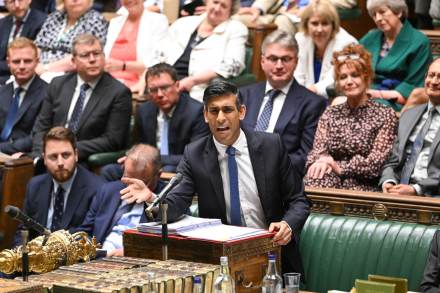
Keir Starmer had a much better Prime Minister's Questions than Rishi Sunak today. The main reason for this was that the Labour leader had come with a clear thesis about the Tories breaking public services and Sunak not noticing. Meanwhile, the Prime Minister had brought along a bizarre insult for his opponent. While Starmer ridiculed the claim by Conservative party chair Greg Hands that public services are in 'good shape', Sunak derided the opposition leader as 'Sir Softy'. At one point he claimed 'that's why they call him Sir Softy' – even though 'they' could only possibly refer to the aides he had been preparing for the session with, and even though Sir Softy sounds more like the name for an ice cream van than someone voters might reject at the ballot box.

Humza Yousaf has a difficult road ahead of him

From our UK edition

It was, by his own admission, a 'not ideal' set of circumstances for Humza Yousaf's speech setting out his priorities as First Minister, with the arrest of the party treasurer just hours before he was due in the Scottish parliament chamber amid the ongoing investigation into the party's finances. Then again, there were a lot of 'not ideal' policies that Yousaf had to deal with. Despite previously boasting that he would have Sturgeon on 'speed dial', Yousaf spent today's speech distancing himself from her policies.

The NHS crisis won’t end soon

From our UK edition

How long are the NHS strikes going to go on for? The collapse in agreement on nurses’ pay over the Easter recess has made it much harder for ministers to push the British Medical Association towards a deal on junior doctors’ pay, as well as undermining Rishi Sunak's positioning as someone who gets things done. The Royal College of Nursing is now balloting its members on further strike action after they narrowly rejected the pay offer made by the government. Today, Health Secretary Steve Barclay was summoned to the Commons to answer an urgent question from Labour’s shadow health secretary Wes Streeting on how the government planned to stop further strikes.

Does Sunak’s maths plan add up?

From our UK edition

11 min listen

Parliament is back from the Easter break and Rishi Sunak has taken the opportunity to reiterate his commitment to improving maths literacy in the country. Listeners will remember that the plan to make maths compulsory until 18 was first announced in Rishi's new year's speech along with his five priorities. Why is maths provision so important to him? Also on the podcast, with local elections on the horizon, how does Tory campaigning shape up against Labour's new tactics?  Cindy Yu speaks to Katy Balls and Isabel Hardman.  Produced by Cindy Yu and Oscar Edmondson.

Isabel Hardman’s Sunday Roundup – 16/04/23

From our UK edition

11 min listen

Isabel Hardman hosts the highlights from Sunday morning’s political shows. This morning’s shows heavily focussed on the crisis in the NHS, after the Royal College of Nursing voted against the government’s pay deal, meaning further strike action. Pat Cullen says the strikes could last as long as Christmas. Conservative Party Chair, Greg Hands disagrees and says the deal is a 'very reasonable offer'. In an interview with Wes Streeting, the Shadow Health Secretary says he is deeply worried about patient safety.

Will Kate Forbes’s attacks come back to bite Humza Yousaf?

From our UK edition

Humza Yousaf is now officially the First Minister of Scotland, after Holyrood voted in favour of him taking over from Nicola Sturgeon. Yousaf secured the votes of all his 71 SNP colleagues and Scottish Greens.  The process in Holyrood allows other candidates to nominate themselves for the role too, so the party leaders of the Scottish Conservatives, Labour and the Liberal Democrats each put themselves forward and gave short speeches in favour of their candidacy. In practice, this was largely an opportunity for those three MSPs to set out their attack key lines on a new First Minister. All of them declared the SNP as being past it. Liberal Democrat Alex Cole-Hamilton said there was ‘more water behind this government’ than lay ahead of it.

What does today’s SNP leadership election mean for Scottish Labour?

From our UK edition

Unionist politicians are warming up for what they hope will be one of the biggest opportunities of the past two decades to undermine the independence cause. Whoever wins the SNP leadership contest today is taking over a party that doesn't know its own kind any more - and a government that's struggling to blame its record entirely on Westminster.  That's one of the reasons Anas Sarwar has called for a snap Holyrood election. The Scottish Labour leader today argued that the new First Minister would have to seek their own mandate, saying: This is an SNP that screams about mandates: let's be honest, the next SNP First Minister will not have the mandate.

Starmer wants to steal crime from the Tories

From our UK edition

It's tempting to see Keir Starmer as a political wind-up merchant given the number of times he likes to quote people who annoy his own activists. Recently he adopted the ‘take back control’ slogan and today he approvingly quoted Margaret Thatcher. Hell, the man has even praised Tony Blair.  Labour sees an opportunity in the rising salience of crime among voters The Thatcher quote today was in a speech about crime. The Labour leader told his audience in Stoke that: ‘The rule of law is the foundation for everything. Margaret Thatcher called it the “first duty of government” – and she was right.’ He later accused the Tories of having ‘thrown in the towel’ as he promised, like Blair in the 1990s, to make Labour tough on crime.

It’s easy to become numb to the madness of Boris Johnson

From our UK edition

What was Boris Johnson up to at the Privileges Committee? The former prime minister has just finished more than three hours of evidence on whether he deliberately misled the Commons over partygate. In his opening statement, he said ‘hand on heart, I did not lie to the House’. One of his repeated insistences was that he was just doing the ‘right thing’ when he was thanking staff who were leaving, despite MPs on the committee also repeatedly insisting that the guidance at the time clearly did not allow this. He also appeared to lose his cool at times. ‘People who say that we are partying in lockdown simply do not know what they are talking about!’ he snapped at one point. This appearance of emotion was probably calculated rather than genuine.

Keir Starmer (Credit: Parliamentlive.tv)

PMQs: Starmer’s attacks on crime flop

From our UK edition

Rishi Sunak isn't giving evidence to the Privileges Committee's inquiry today. Nevertheless, he got his defence on partygate in anyway when he took Prime Minister's Questions. In one of his answers to Keir Starmer, Sunak told the chamber that the fine he received was investigated by a 'senior civil servant'. He added: 'The findings of which confirmed that I had no advance knowledge about what had been planned, having arrived early for a meeting.' Then he joked that the Labour leader 'doesn't need me to tell him that: he's probably spoken to the report's author much more frequently than I have'. This, of course, was a reference to Sue Gray, whose name is likely to crop up a lot later today.

No new cash for NHS pay deal

From our UK edition

The money for the NHS pay agreement isn’t new cash, I’m told. This is going to cause a real ruckus with the trade unions, who came away from today’s talks believing that the £2.5 billion deal was extra money from the Treasury. But talking to my sources in government, I now understand that while there won’t be cuts to frontline services, the money could come from efficiencies elsewhere in the NHS, or possible underspend in Department of Health and Social Care budgets.   I'’ve also been pointed to the fact that there was no new money for pay announced in yesterday’s Budget, even though there might be some forthcoming in future fiscal events.

Ministers agree pay deal with healthcare unions

From our UK edition

The nursing and ambulance strikes may soon be over. Ministers have this afternoon agreed a pay deal with trade unions representing nurses and ambulance workers that consists of a one-off payment covering 2022/23, and a pay deal for the 2023/24 year.  Members of these unions will get 2 per cent of their salary for 2022/23, on top of the 4 per cent raise for this year, along with a one-off ‘NHS backlog bonus’ worth at least £1,250 per worker. Then for 2023/24, there will be a 5 per cent consolidated increase in pay.  A statement from the government said: 'Both sides believe it represents a fair and reasonable settlement that acknowledges the dedication of NHS staff, while acknowledging the wider economic pressures currently facing the UK.

Will Hunt’s Budget social reforms backfire?

From our UK edition

How big a deal are the social reforms announced in yesterday's Budget? They are designed to remove the reasons people have for leaving the workplace and not returning. The two biggest policies are the extension of childcare subsidies and the disability benefit reforms. Both are potent, though not necessarily in the way ministers suggest. Work and Pensions Secretary Mel Stride has been making a fanfare this lunchtime about the 'back to work' measures, which include a white paper on disability benefit reform and £2 billion for supporting disabled people and those with long-term health problems. That white paper has been very long in gestation.