Isabel Hardman

Isabel Hardman

Isabel Hardman is assistant editor of The Spectator and author of Why We Get the Wrong Politicians. She also presents Radio 4’s Week in Westminster.

Cameron to meet Mitt

From our UK edition

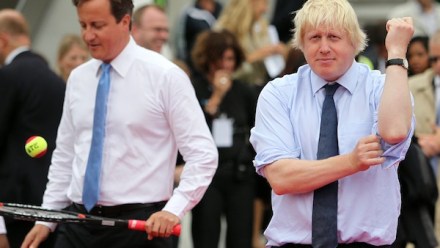
Downing Street confirmed today that the Prime Minister will meet US Republican presidential candidate Mitt Romney in Downing Street this week. It sounds like a sensible plan, given Romney is so close to Obama in the polls at present. But there's just one tiny little problem. I have, in my shorthand notes from a lobby briefing on 5 March 2012, a quote from the Prime Minister's official spokesman, which says the following: 'As a general rule we do not meet candidates in foreign elections.' Then the spokesman was talking about David Cameron's failure to meet François Hollande, who was in Britain while campaigning against Nicolas Sarkozy for the French presidency. So why the difference?

The new rebel PPS

From our UK edition

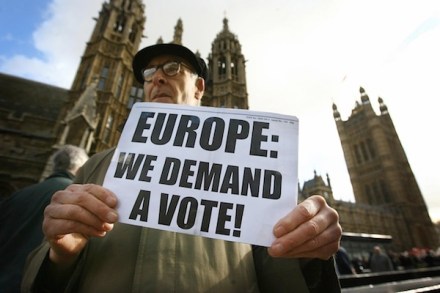
Tim Montgomerie has some excellent intelligence on ConHome this morning that Francis Maude is about to gain a new PPS. The Cabinet Office Minister's former aide was Angie Bray, who was sacked after voting against the government at the second reading of the House of Lords Reform Bill. But Maude's replacement PPS, Stuart Andrew, is also a rebel. He was one of the 81 who defied the three-line whip in the autumn to vote for a backbench motion calling for a referendum on Britain's relationship with the European Union. As Tim points out on his blog, this is a sign that rebels might still have a hope of a job in the forthcoming reshuffle.

The UK Border Agency’s Bermuda Triangle

From our UK edition

Bringing the UK Border Agency to heel has been one of the mammoth tasks facing ministers since the coalition formed. Ministers have recently been rather keen to suggest that backlogs in claims and migrants disappearing without a trace were coming under control - Immigration Minister Damian Green said at the start of this month that 'we have gripped it and dealt with' the problem of people overstaying their visa, for instance.

Fears grow over Spanish bailout

From our UK edition

The market data on Spain this afternoon suggests that the bailout sticking plaster agreed earlier by eurozone finance ministers wasn't big enough to cover the wound even for a few hours. Ministers have signed off on the deal to lend Spain €100 billion to recapitalise the country's banks, but the IBEX is down 5.8 per cent - its biggest one day drop for two years - and Spanish 10-year bond yields have crept further into the danger zone, and are now at 7.28 per cent. Markets were unsettled by Valencia's announcement that it would need to apply for financial help from the Spanish government. The region is heavily indebted, and needs to repay €2.85 billion of debt by the close of this year.

More smoke from the Libor fire

From our UK edition

A new cache of emails released today by the Bank of England reveal its deputy governor Paul Tucker was warned that it was 'plausible' that Libor rates were being 'influenced by commercial incentives'. Tucker insisted in his appearance before the Treasury Select Committee that he and colleagues 'thought it was a malfunctioning market, not a dishonest one'. But an email sent by an unnamed official to Mr Tucker on 22 May 2008 points to a possible manipulation of Libor.

Hunt praises G4S

From our UK edition

Jeremy Hunt has given an interview to House magazine this week which is well worth a read, not least because he deals rather graciously with the failure of his Liberal Democrat colleagues to support him when his back was against the wall over Murdoch. Even though Lib Dem ministers and MPs abstained on a vote calling for him to be referred to the independent adviser on ministers' interests over his contact with News Corp during its takeover bid of BSkyB, the Culture Secretary says: 'I never interpreted it as a personal thing.

When should George Osborne switch to Plan B?

From our UK edition

Announcements from the International Monetary Fund are worded in such a way that everyone reading them comes away with something slightly different. So shortly after today's report on the UK economy was released, Ed Balls put out a statement saying the report was a 'very serious warning to the Chancellor that urgent action to boost jobs and growth is needed'. He concluded his press release by asking 'how much worse do things have to get before the Chancellor finally changes course?'. Now, today's report from the IMF is not cheery reading for George Osborne. It passes this bleak judgement on the economy: 'Recovery has stalled. Post-crisis repair and rebalancing of the UK economy is likely to be more prolonged than initially envisaged. Confidence is weak and uncertainty is high.

Miliband and monopolies

From our UK edition

Ed Miliband used his speech this morning on policing to attack the shambles on Olympic security staffing created by G4S. That was a sensible thing for an opposition leader to do, and he managed to give quite a sensible speech, all in all. He did not fall into the trap of saying that all outsourcing is bad - which would have been a strange thing for the Labour leader to say, anyway, given it was under his party in government that firms like G4S flourished. But he did point to what many across the political spectrum agree is a problem: that G4S effectively holds a monopoly on security and policing functions.

Cameron shows his hand on Europe

From our UK edition

David Cameron's interview with the Telegraph today reveals that the Prime Minister would not campaign for an 'out' vote in a referendum on Britain's membership of the European Union. This will confuse some Conservatives, who had hoped that the 'fresh deal and a fresh settlement' that the Prime Minister described in the chamber earlier this month would either lead to a successful renegotiation followed by a referendum in which the government pushed for a 'yes' vote, or a failed attempt at renegotiation followed by a referendum in which the government pushed for a 'no' vote. But Cameron told Robert Winnett that he would never campaign for an 'out' vote. He adds: 'It comes back to this, who are going to be the winning nations for the 21st century?

Cameron intervenes on disabled troops

From our UK edition

David Cameron made a surprise visit to Camp Bastion this afternoon. After a lunch of German sausage and potato with the troops, the Prime Minister made one announcement that may rile military chiefs, and another designed to keep them on side. The possibly irritating statement was that Cameron is 'confident' he could meet his promise to bring British troops back from Afghanistan by the end of 2014. He said an announcement about the number of soldiers to be brought back in 2013 will be made at the end of this year. But senior military sources have warned the Press Association that 'we need to maintain a strong presence' in Afghanistan if the government is to meet its aims in the state.

What the Casey report teaches us about problem families

From our UK edition

Louise Casey's report on troubled families has come in for a few knocks today. The 'troubled families tsar' interviewed 16 families to draw up a picture of the challenges that those within the 120,000-strong group that the Prime Minister identified after last summer's rioting as in need of focused work. Peter Mullen in the Telegraph says the research spells out 'the blinking obvious', which in many ways it does: the lives of the families on this list are messy beyond most people's normal experience. Casey has simply conducted a very small-scale exercise in qualitative research and then published it. Like many CoffeeHousers, I'm more of a quantitative data person myself.

All eyes on the Work Programme

From our UK edition

Today's headline figures on unemployment are good news: a 65,000 fall in the number of unemployed people to 2.58 million in the three months to May and a 0.2 per cent fall in the unemployment rate to 8.1 per cent of the economically active population. The focus is now growing on the Work Programme to deliver on its promises. Liam Byrne's response to the figures was that they were 'fresh evidence that the beleaguered Work Programme isn't working'. But as Fraser blogged last week, it's rather too early to tell either way, actually. The CBI says that a 6,100 rise in the number of people claiming Jobseekers Allowance, and 441,000 people who have been unemployed for over two years is evidence that the Work Programme must deliver.

Restoring the coalition’s credibility

From our UK edition

The coalition's infrastructure shopping spree to cheer itself up after a miserable few weeks continues today. George Osborne and Danny Alexander are offering guarantees on up to £40 billion of 'ready or nearly ready' projects such as transport, communications and energy. They are also announcing a £6 billion temporary lending programme and a £5 billion export guarantee facility, which will give long-term support for British exporters. Today's announcements are clever because they don't commit any extra money, using the government's balance sheet purely to guarantee the projects and get them off the ground.

Buckling under the strain

From our UK edition

During the Home Affairs Select Committee's evidence session with Nick Buckles it was difficult not to fall into the trap of feeling rather sorry for the G4S chief. He was softly spoken and anxious-looking. His haircut made him look rather boyish. Next to the garishly pinstriped Ian Horseman-Sewell, he appeared more muted. Buckles even seemed a little confused by the hearing. Was the committee speaking in fluent English, Keith Vaz asked him, slightly jovially, at one point. Buckles confounded him rather by saying he didn't know. When asked by David Winnick whether this was a 'humiliating shambles for your company', Buckles gave a sheepish reply. 'I cannot disagree with you,' he said quietly.

Making an independent adviser truly independent

From our UK edition

The row over Jeremy Hunt's dealings with the Murdoch empire during its takeover bid for BSkyB seems rather a long time ago, even though only a month has passed since it peaked. But even though other rows have eclipsed this one, MPs are debating a very interesting backbench motion in the Commons this afternoon which criticises some of the decisions that the Prime Minister took around the Hunt affair. The motion is being led by Bernard Jenkin, chair of the Public Administration Select Committee, and runs as follows: 'That this House calls on the Government to implement the recommendation made by the Public Administration Select Committee in paragraph 44 of its Twenty Second Report of Session 2010-12, The Prime Minister's Adviser on Minister's Interests: independent or not?

Five questions for Nick Buckles

From our UK edition

G4S chief Nick Buckles will face MPs on the Home Affairs Select Committee today. Here are some key questions they will want to ask him about the security firm's handling of staffing for the Olympics: 1. When did you start processing applications from potential staff? G4S launched its recruitment drive at the end of January, and just days later told the press it had been swamped by 20,000 applications. Ministers say they were repeatedly assured that the firm would overshoot its targets. So why did it take so long to realise that those 20,000 applications were not going to translate into 10,000 staff? 2. When did you realise that you were not going to meet your targets?

Railing against government policy | 16 July 2012

From our UK edition

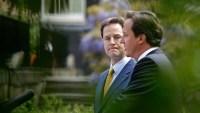
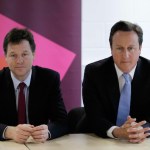
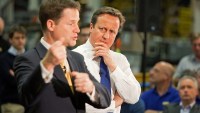
The cabinet is out and about today, trying to smooth feathers ruffled by last week's Lords reform row by splashing out on £9 billion worth of investment for railways. Today's announcement by David Cameron and Nick Clegg is, as much as anything else, an attempt to put into practice the Prime Minister's claim yesterday that the coalition is still capable of making real progress on big issues, despite differences on constitutional reform. Handily for Nick Clegg, today's announcement may also encourage some friendly feelings from his own constituents, as it includes electrifying the line between Bedford to Sheffield. But the work isn't starting tomorrow, which means this announcement could be quickly forgotten once the next row flares up back in Westminster.

The benefit cap is a key test of compassionate Conservatism

From our UK edition

David Cameron and Nick Clegg's railways announcement wasn't the only attempt today by the coalition to bounce back from the strife of the past few weeks. Iain Duncan Smith also chose to point to another area where the Government is delivering on voters' demands: welfare. In an op-ed in the Daily Mail, the Work and Pensions Secretary said the £26,000 benefit cap for workless families, which is one of the government's most popular policies, is already effecting the behavioural change ministers hoped it would, with a third of claimants saying they are going to look for a job in order to avoid the cap, which comes into effect in 2013.

The danger for Labour in the G4S shambles

From our UK edition

The row over G4S' failure to provide sufficient security cover for the Olympics is starting to feel a little awkward for Labour. This afternoon in the Commons, Yvette Cooper managed to rouse a sardonic chuckle from not just the benches opposite but also the hacks perched in the press gallery when she said that everyone wanted the Olympics to be a success. Why the laughs? Well, the danger for Labour is that in slamming the government's handling of G4S, the party gets too carried away and appears to be branding the Olympics a shambles too.