Isabel Hardman

Isabel Hardman

Isabel Hardman is assistant editor of The Spectator and author of Why We Get the Wrong Politicians. She also presents Radio 4’s Week in Westminster.

Theresa May upsets the Lib Dems and David Davis in one fell swoop

From our UK edition

Theresa May has upset quite a few people from across the political spectrum with her comments in the Sun today about the Communications Data Bill. The Home Secretary told the newspaper: 'The people who say they're against this bill need to look victims of serious crime, terrorism and child sex offences in the eye and tell them why they're not prepared to give police the powers they need to protect the public. Anybody who is against this bill is putting politics before people's lives.' This irritated David Davis sufficiently for the Tory backbencher to raise May's comments as a point of order in the House of Commons this afternoon.

Aide to Europe minister calls for Parliament to beef up its engagement with EU

From our UK edition

Another day, another paper by a Tory MP about Britain's relationship with Europe. Except the latest paper, by Tobias Ellwood for think tank Open Europe, is actually not so much about what's wrong with Europe, but about what's wrong with how our Parliament in Westminster deals with the whole issue. Ellwood, who is PPS to Europe Minister David Lidington, doesn't believe Westminster politicians are actually very good at engaging with European Union policymaking, preferring instead a 'complain-but-don't-change' approach. He paints a discomfiting picture of the way MPs relate to Brussels, describing an alienation which leads to 'little appetite amongst MPs to understand fully how the EU actually works - and how to use Parliamentary power to change it or its policies'.

Pressure on the editors as Labour threatens own Leveson bill

From our UK edition

One of the foundations on which David Cameron based his decision to reject statutory underpinning of press regulation was that editors would set up a new system based on Lord Justice Leveson's recommendations which would prove far tougher than the Press Complaints Commission. The failure of the industry to reach consensus on a new body - and this is a real risk given the refusal of some publications to join the PCC - would pull the rug from under the Prime Minister's feet as he fights critics pushing for statute. Cameron is also facing claims that he is bowing to bullies in the press, and it is for these two reasons that the Prime Minister will be applying great pressure on editors as they meet Culture Secretary Maria Miller this week.

MPs criticise ‘voluntary’ tax arrangements for Starbucks and other big companies

From our UK edition

Danny Alexander might be glad that a PR panic before the Public Accounts Committee published its report into HMRC and the ability of multinational companies to avoid paying their share of corporation tax means he could be able to visit a Starbucks again in the near future. But his remarks on Radio 4 this morning show what a mess our tax system has got into. As PAC chair Margaret Hodge observed on Radio 5Live, there is now 'a danger that corporation tax is becoming a voluntary tax', and the Chief Secretary to the Treasury's remarks did little to diminish that impression.

Nick Clegg is changing the way the government works

From our UK edition

Say what you will about Nick Clegg's decision to take a different stance from the Prime Minister on Leveson, but the Deputy Prime Minister has this week effected another big change to the way Westminster government works. He has sent party members an email today explaining why he felt it was necessary to make a separate statement to David Cameron in the Commons on Thursday. The Lib Dem leader writes: As you may have picked up, the Prime Minister and I disagreed; there is not yet an agreed 'government line'. That's in part why we had to make separate statements - a major departure from Parliamentary protocol, apparently. I'm often non-plussed by the arcane rules of the House of Commons, most of which make no sense to ordinary human beings.

Tory MP attacks Cameron for allowing party to become ’emaciated’

From our UK edition

Brian Binley is fond of giving journalists new ideas for illustrations featuring David Cameron's head superimposed onto a new and unusual get-up: his 'chambermaid' allusion caused quite a stir back in August. Today he's written another one of his angry blog posts, which takes his criticism of the Prime Minister on a little further. Today the Prime Minister is a caretaker, apparently, and one who isn't taking great care of his party. Binley describes the Conservative party as being 'in a very sorry state', and launches an attack on Cameron for setting his face against his own party.

Labour source tells Coffee House: govt could deliberately overcomplicate Leveson bill

From our UK edition

Labour sources are not happy with the Prime Minister's decision to draft legislation for statutory underpinning of press regulation. I've just spoken to one party source, who told me the worry is not that the legislation is being put together quickly, but that the government will draw up a bill that deliberately complicates the issue and undermines Lord Justice Leveson's call for regulation backed by statute. The source says: 'The issue with the draft bill is not the speed: we want speed. The issue is that there is a possibility that what they are going to do is overcomplicate and deliberately overload this draft in a bid to stop them doing the right thing. They have betrayed the victims, they should be looking at how to go forward on this.

Government to draft legislation on Leveson recommendations

From our UK edition

The first of many cross-party discussions on the response to the Leveson Inquiry lasted 30 minutes last night. The 'frank' meeting resulted in David Cameron agreeing to draft bill to see if the proposals in Lord Justice Leveson's report were workable. The idea is that the legislation will prove that the statutory underpinning of the new independent press regulator is unworkable, while Number 10 sources are briefing that the Prime Minister has 'not shifted one inch' on his position on the report. But agreeing to draft legislation, if only to prove those deep misgivings that Cameron retains, is a canny way of approaching the divide in Parliament over the response to the report.

Leveson report: Nick Clegg backs statutory underpinning

From our UK edition

As trailed on Coffee House over the past few days, Nick Clegg used his own separate Commons statement to declare his support for the statutory underpinning of the new independent press regulator. He said that nothing in the debate that he had heard so far suggested to him that there was a better system of regulation than the one before MPs today. 'The long grass is the last place that this problem should end up in,' he said, adding: 'I am convinced that he has made a case for legislation.' The Deputy Prime Minister said he acknowledged that 'we now need to show how that can be done in a workable way'. But he argued that it was a 'straw man' to suggest that law is always a threat to the freedom of the press.

Leveson report: what the judge said about Jeremy Hunt

From our UK edition

Jeremy Hunt was one of the most controversial figures caught up in the Leveson Inquiry, with Labour calling for the then Culture Secretary to resign over contact between his office and NewsCorp lobbyist Fred Michel. But today Lord Justice Leveson's report finds 'no credible evidence of actual bias on the part of Mr Hunt', but the exchanges between the lobbyist and Mr Hunt's adviser Adam Smith gave rise to the perception of bias.

Leveson praises the media, then slaps it with ‘not statutory’ regulation underpinned by statute

From our UK edition

Lord Justice Leveson has just finished giving his statement to the Inquiry press conference, and told journalists that he would be 'making no further comment' about the report's contents. 'The ball is back in the politicians' court,' he said. We have 40 minutes until we find out how the politicians plan to play that ball. The judge took great pains to praise the media, saying: 'I remain firmly of the belief that the British press, I repeat, all of it, serves the country very well for the vast majority of the time. There are truly countless examples of great journalism, great investigations and great campaigns.' He was so fulsome in his praise that it sounded almost valedictory, and as the judge continued, it seemed that it was: 'But none of that means that the press is beyond challenge.

Nick Clegg to give separate Leveson statement

From our UK edition

Nick Clegg will make his own statement on Leveson in the Commons today after the Prime Minister has spoken. Party sources were saying yesterday that this would only happen if the two men disagreed on the government's response to the report. The Lib Dems want to back the rapid creation of a statutory backstop for newspaper regulation, while David Cameron does not want to back any press law, at least for now. This is probably the biggest clue we'll get as to the content of the Leveson report before the embargo lifts at 1.30pm. But it doesn't necessarily mean a big split over the outcome: the coalition cabinet committee will meet at noon to discuss the full response, and there may well be greater unity over this than initially appears.

The big flashpoints over Leveson

From our UK edition

Nick Clegg and David Cameron will return, with their officials, to their speed reading exercise of the hefty Leveson report this morning. The Deputy Prime Minister wasn't giving much away unsurprisingly, when he spoke to journalists a short while ago as he left his home. He said: 'In this whole process, everybody wants two things: firstly a strong, independent, raucous press who can hold people in positions of power to account. And secondly to protect ordinary people, the vulnerable, the innocent when the press overstep the mark. That's the balance we're trying to strike, and I'm sure we will.' There is still the possibility that Clegg may give a second statement in the House of Commons later today if he and the Prime Minister fail to agree on the government's response to Leveson.

Bold Boles’ planning push is a key example of ‘spreading privilege’

From our UK edition

Nick Boles has just put in a fierce performance on Newsnight over his controversial remarks on planning. Amusingly, the minister's remarks aren't a million miles away from Nick Clegg's slightly less well-reported speech on housing last week, but Boles has a knack of going where other ministers fear to tread when he speaks about difficult issues. He was extremely impressive on why making development a priority does not mean England is going to turn into an enormous concrete jungle, saying: 'Under 10% of Britain, currently, 10% of England, is covered by urban development in any way. A very small amount. Over 85%, 88%, would still be rural, undeveloped countryside, and we would have completely solved our housing need for the next 20 years.

Grayling defends stand-off with ECHR on prisoner votes

From our UK edition

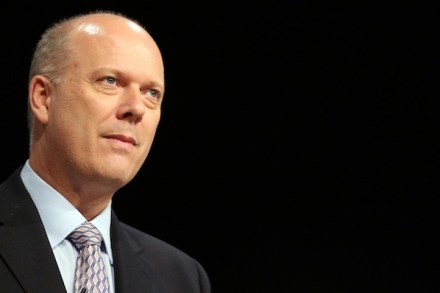
Chris Grayling today defended the Government's decision to square up to the European Court of Human Rights on prisoner votes. The Justice Secretary seemed to enjoy his hour and a half before the Justice Select Committee, and used it to make a number of typically forthright assertions about the criminal justice system. Labour MP Jeremy Corbyn attacked the minister for the government's decision to refuse to give prisoners the vote, saying: 'What message does this give to other countries if you are inviting the British parliament and judiciary to pick and choose which ECHR judgements it enacts or doesn't enact? In any event, you could easily agree with the ECHR by a very minimal level of prisoner voting.

Lib Dems seek alternative Leveson statement slot

From our UK edition

As teams in secure rooms in Downing Street pore over the half dozen copies of the Leveson report, which arrived this morning, the Liberal Democrats are already starting to work out what they'll need to do if David Cameron and Nick Clegg find they cannot agree on the government's response. The Lib Dems have approached the Speaker to find out whether there is a possibility that Nick Clegg could give his own separate statement following Cameron's own response in the Commons tomorrow afternoon. Sources say they hope that this is an unlikely scenario, but add that 'he would like to be able to make his position clear in Parliament' if he does take a different stance.

Cameron to receive Leveson report as Tory party splits on press regulation

From our UK edition

David Cameron will receive his copy of the Leveson report later today, and will meet twice with Nick Clegg to discuss its contents: once this evening, and again as part of a coalition committee tomorrow. There will be a Commons statement tomorrow at about 2.30 from the Prime Minister, but Nick Robinson reports this morning that the Deputy Prime Minister is considering speaking after his colleague if the pair fail to agree on the government's response to the Leveson report. Those won't be the only tensions over the recommendations from the Inquiry, though. Scores of Tories are among the 86 MPs,who have signed a letter which today pleads with the government to not introduce state-backed regulation of newspapers.

Work programme figures disappoint

From our UK edition

Today's headline figures on the Work Programme are not good news for the government: in its first 12 months, only 2.3 per cent of participants actually landed sustainable employment against the department's target of 5.5 per cent. This sounds even worse when you contrast it with the government's own figures suggesting that 5 per cent of people who have been unemployed for a long time can find sustainable jobs without any intervention at all, suggesting the programme is actually worse than doing nothing. At Coffee House, we are keen to see the Work Programme succeed, not just because it will vindicate the ministers co-ordinating it, but also because a successful programme would bring those furthest from the labour market back into employment.