Isabel Hardman

Isabel Hardman

Isabel Hardman is assistant editor of The Spectator and author of Why We Get the Wrong Politicians. She also presents Radio 4’s Week in Westminster.

The gumming up of Whitehall

From our UK edition

Tony Blair is paying a visit to journalists in the Commons this week for a festive lunch. Last week, David Cameron complained to lunching hacks about the 'gumming up' of government; perhaps the former Prime Minister will wish to add his own thoughts today on the ingredients of that sticky gum that makes the progress of the Whitehall machine so glutinous. One of the gummy bits in Whitehall at the moment is the way permanent secretaries are appointed. Last week the Civil Service Commission blocked plans by Francis Maude to allow ministers to pick the most senior civil servants in their departments from a list of approved candidates, opting instead for an independent panel to recommend candidates.

Nick Clegg wants gory government: so should the Tories

From our UK edition

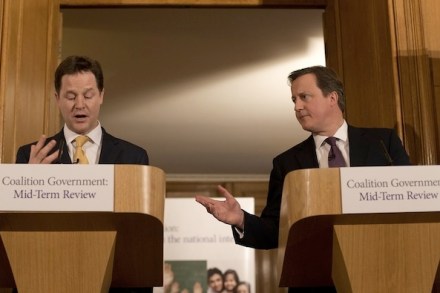
There's nothing wrong with Nick Clegg putting some distance between his party and the Conservatives. Today the Liberal Democrat leader is going to open up about the gory details of government, explaining where his party has held the Tories back, and heralding a new era where he and colleagues are honest about what they actually think of policies. On Friday, I argued that this sort of honesty about the workings of coalition government was a good thing. But there is one caveat to this. Conservative MPs are pretty unhappy at present, and it's not just that they are overtired before the Christmas break.

Tensions in the tearoom on gay marriage

From our UK edition

This week's developments over gay marriage have left a febrile atmosphere in the Conservative party. As Fraser wrote yesterday, David Cameron seems to have driven his party 'quite mad' by pursuing the policy, and the mood in the tearoom after Maria Miller's statement on Tuesday certainly seems to have underlined that. I understand from a number of MPs that there was an 'excitable' confrontation between a member of the 2010 intake and one of the members of the Freedom to Marry group. The new MP was irritated by the position that his colleague had taken and was jabbing his finger angrily as he spoke.

Why Ed Balls is so confident about benefit wars

From our UK edition

The debate over benefit uprating will run and run because both sides think they are winning. George Osborne thinks the public resent generous benefits rises. Liam Byrne and Ed Balls want to call this a 'strivers tax' and think blue collar workers will fall into their arms. Byrne told Coffee House yesterday that Labour will be hurt opposing to the Welfare Uprating Bill. I understand that the Shadow Cabinet reached its decision after YouGov's polling showing C2DE  voters  - the three lowest socio-economic groups - saying benefits should have been increased in line with inflation. Osborne's Bill would increase welfare by 1pc, behind expected inflation.

How a properly ‘proalition’ coalition should work

From our UK edition

Have you noticed, recently, that the Coalition has changed the way it behaves in public? Two years ago, had Nick Clegg dropped his support for major Home Office legislation, spoken out about his own opinion on drugs policy and taken such a different position on a proposed dramatic change to the way newspapers are regulated within the space of a month, journalists would have gone into meltdown. Remember that in the early days of the Coalition, Simon Hughes saying he wasn't sure about something the Prime Minister had announced was enough to hold the front page. Now we're seeing differentiation on policies every day.

One Nation Labour can’t just be about reassuring voters

From our UK edition

Ed Miliband is giving another one of his repositioning speeches today: this time about immigration and integration. We're going back to the Labour leader's school and his family again, as well as reminiscing about Olympics: none of which are exactly groundbreaking territory, given Ed explored the first two at length in his conference speech, has explored his family history at length in many speeches since becoming leader, and that all three party leaders used the Olympics for their own purposes in their autumn conference speeches. Mo Farah and Jessica Ennis should start charging politicians royalties for using their names in speeches about culture: they appear, alongside Zara Philips, in Miliband's speech today.

George Osborne isn’t clashing with Vince Cable: he’s starting to agree with him

From our UK edition

By this stage in the Coalition, everyone would have expected at least one major bust-up between George Osborne and Vince Cable. But his evidence to today's Treasury Select Committee suggested that the Chancellor isn't so much involved in a stand-off with the Business Secretary as he is taking on his point of view. It was significant how many times Osborne had to explain a softening in what were previously hard-and-fast economic rules, and hard-and-fast policies. His refusal to rule out replacing the Bank of England's inflation target with a growth target is the most significant sign of a coalescing between the two men.

Liam Byrne interview: The welfare system is ‘completely out of whack’

From our UK edition

Liam Byrne is a modernising, Blairite Labour MP, and in case you were in any doubt about that, he conducts his interview with Coffee House sitting next to a framed photograph of him with Tony Blair. The party's Shadow Work and Pensions Secretary is well known for his modernising zeal, which has sometimes led him onto a collision course with his party grassroots and other MPs on the left. This week, though, he's on a collision course with the Conservatives, who hope they've managed to corner Labour into admitting it hasn't quite modernised its welfare policy enough to win voters back. The Welfare Uprating Bill, launched in last week's Autumn Statement, will see benefits rise by 1 per cent, rather than in line with inflation.

Michael Gove tells heads to dock the pay of ‘militant’ staff

From our UK edition

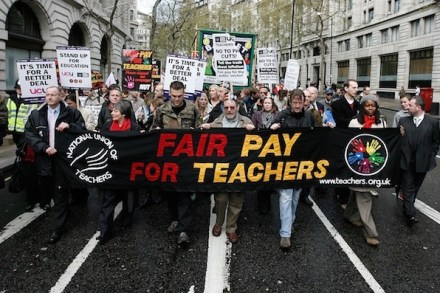
Michael Gove has written to schools across the country telling them that they can deduct a day's pay from staff who try to disrupt school time by carrying out 'work to rule' industrial action. This form of action involves teachers fulfilling their job description to the very letter, with the NUT and NASUWT issuing list of activities their members should refuse to undertake. These include refusing to submit lesson plans, refusing to agree to timetable changes, refusing to undertake clerical tasks or covering for colleagues' absences. Gove's letter, seen by Coffee House, says: 'I respect the right of teachers to take industrial action, but this action short of a strike lacks a clear purpose or even a set of coherent aims.

Downing Street defends Maria Miller’s special adviser

From our UK edition

Downing Street has defended Maria Miller's special adviser over the way she warned the Telegraph about the Culture Secretary's connection to Leveson as it prepared a story on her expenses. The Prime Minister's official spokesman has just told the lobby: 'My understanding is that the special advice was raising legitimate concerns about the way in which the investigation had been handled. It was perfectly reasonable for her to do that. 'The Secretary of State raised these concerns directly with the editor. It is reasonable for someone in the government to raise these kinds of concerns about the way a newspaper is conducting an investigation.' Asked whether the Prime Minister still had confidence in Miller, the spokesman said: 'Yes.

Maria Miller’s Leveson threat

From our UK edition

Journalists don't normally reveal their conversations with special advisers to ministers, no matter how grumpy they are about a forthcoming story. So it is significant that the Telegraph has chosen to disclose a warning from Maria Miller's adviser Joanna Hindley about the minister's connection to press regulation when reporters were preparing a story on her expenses claims. This is the key passage: When a reporter approached Mrs Miller’s office last Thursday, her special adviser, Joanna Hindley, pointed out that the Editor of The Telegraph was involved in meetings with the Prime Minister and the Culture Secretary over implementing the recommendations made by Lord Justice Leveson.

Maria Miller holds gay marriage briefing to reassure nervous Tory MPs

From our UK edition

After giving her statement to the House of Commons on the government's plans for gay marriage, Maria Miller held a meeting with Tory MPs. I understand that the meeting was a question-and-answer session designed to help reassure Tories about the 'quadruple lock'. It was well-attended, although apparently the Secretary of State was around 25 minutes late, which meant Peter Bone left early to make another appointment. This was immediately interpreted as a walkout in protest from Bone, who is one of the more vocal opponents of the legislation. I spoke to Bone this evening, who said 'I wasn't storming out: it was a private Q&A meeting with Maria Miller who was 25 minutes late'. But even though he didn't storm out, Bone is still not happy or reassured by today's announcements.

Maria Miller unveils ‘quadruple lock’ to protect churches from gay marriage court actions

From our UK edition

Maria Miller sought to assuage the fears of her backbench colleagues about the government's plans for gay marriage today by announcing a 'quadruple lock' to prevent any religious leader being forced into conducting a same-sex wedding against their will. Her statement to the House of Commons was particularly focused on concerns about the effect on the Church of England, which has said it does not want to marry gay couples. The quadruple lock consists of the following measures: 1. The legislation states that neither religious organisations as a whole nor individual ministers will be forced to hold same-sex weddings on their premises. 2. Miller will amend the Equalities Act so that no discrimination claims can be brought against religious organisations who refuse to conduct gay marriages.

Ed Balls says Labour will oppose the Welfare Uprating Bill

From our UK edition

Ed Balls gave the clearest indication yet today that his party would vote against the government's plans to cap benefit rises to 1 per cent rather than in line with inflation. Speaking at Treasury Questions, the Shadow Chancellor said: 'It's important for members on both sides of the House know the answers to the questions I asked the Chancellor. First of all, 60 per cent of families hit by his tax and benefit changes are in work. And according to the IFS, as a result of the Autumn Statement measures, a working family, the average one earner couple will be £534 a year worse off by 2015, a working family worse off.

Home Office minister: We can change snooping bill quickly

From our UK edition

After Nick Clegg and Labour rejected the draft Communications Data Bill, Home Office minister James Brokenshire appeared on the Today programme to explain that while the Home Office accepts the 'substance' of the joint committee's report, he believes it won't take too long to redraft it. He said: 'We believe that the changes that meet the substance of these recommendations can be met in a reasonably short order, but in saying that what I am clear is that we know that we need to work this through with the coalition.' He pointed out, rightly, that the committee was clear that there was a need for the legislation, but that there were concerns about the balance between collecting data and individual privacy.

Communication problems: Back to drawing board for controversial snooping bill

From our UK edition

The joint committee examining the controversial draft Communications Data Bill has reported back, and it's not good news. The report's damning findings about the draft legislation from the Home Office has led Deputy Prime Minister Nick Clegg to call for it to be redrafted, and a hostile Tory MP to describe the plans to monitor internet users' activities as 'on life support'. The committee said: 'Our overall conclusion is that there is a case for legislation which will provide the law enforcement authorities with some further access to communications data, but that the current draft Bill is too sweeping, and goes further than it need or should.

David Cameron: It’s our fault voters don’t understand why austerity is necessary

From our UK edition

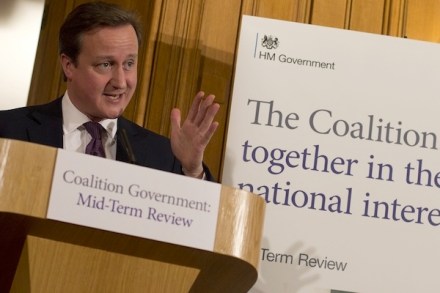
David Cameron paid a rare visit to those hacks that lurk in the Commons press gallery for lunch today. In between cracking jokes about how 'as you know, I have very little control over what Boris does', and tantalising us with references to his EU speech, which is coming 'soon', the Prime Minister made an interesting admission about the way his government is communicating with voters about the difficulties in the economy: 'They are not expecting miracles. I think what people hear is a rather hard, technocratic message. They are not hearing - in fact, this is our fault - they are not hearing enough about why this matters and who this is for.' He did say that the Autumn Statement did demonstrate that the government was on voters' side, with its measures on fuel and personal tax allowances.

Labour could force vote on draft Leveson bill

From our UK edition

Labour will discuss its draft Leveson Bill with the Conservatives and Liberal Democrats at the next tranche of cross-party talks on Thursday. The Bill (which you can read here) is short and sweet, replacing Ofcom as the regulatory backstop recommended by Leveson with a panel headed by the Lord Chief Justice, and a press regulator called the Press Standards Trust. The party hopes to use the Bill as the basis of discussion for Thursday's talks, and has sent it to Culture Secretary Maria Miller, as well as Tory MPs who are spearheading calls within their party for statutory underpinning of press regulation including George Eustice, and Lord Wallace, who has been attending the cross-party talks on behalf of the Liberal Democrats.

No 10 insists churches are protected under gay marriage plans

From our UK edition

The government may be forced to explain its plans for gay marriage in the House of Commons today if an urgent question is granted. Chief among the questions from backbenchers will be the consequences for religious institutions that continue to oppose the idea and do not want to conduct such ceremonies. There are some Tory MPs who are viscerally opposed to the idea of gay marriage in any form, but others are wavering and need reassurance that they will not vote for something which leads to the situation where a vicar is forced as a result of a European Court judgement to conduct a same sex marriage against their will.