Isabel Hardman

Isabel Hardman

Isabel Hardman is assistant editor of The Spectator and author of Why We Get the Wrong Politicians. She also presents Radio 4’s Week in Westminster.

Michael Gove’s plans for profit-making schools

From our UK edition

Coffee House readers won't be surprised by the Independent's report that Michael Gove has been telling friends he has no objections to profit-making schools: he explained his position on the matter at length to Fraser in December. Then, the Education Secretary said he was keen for the one profit-seeking school in this country, IES in Suffolk, to make the case to the public for more profit-seeking schools: 'What I said to them [IES] is the same argument that Andrew Adonis has made: we’ve created the opportunity for you to demonstrate what you can do and win the argument in the public square. You have an organisation that has been criticised, in some cases demonised, now running a state school.

PMQs blows underline importance of Tory NHS rehabilitation mission

From our UK edition

While Ed Miliband wasn't exactly Mr Pugnacious today at PMQs, one of his better blows was when he read out the promise in the Coalition Agreement to 'stop the top-down reorganisations of the NHS' and asked whether that would be on a list of broken promises in the audit of government achievements. Labour always sees the NHS as an easy way to score points now that the government's hard-won credibility has been scuppered by the Health and Social Care Act, and naturally Miliband roused some cheers from his MPs. James argued back in December that it is now impossible to have a mature conversation about the NHS. Indeed, the Tories are now to the health service what Tesco is to nice-looking coffee shops: a combination that arouses suspicion, whether or not it is warranted.

Secret audit of Coalition pledges offers few clues on progress

From our UK edition

Finally, the copper-bottomed, unvarnished Programme for Government Update, aka the Secret Audit, has landed. You can read the full document here, but in summary, it's not immediately very helpful. It is laid out as a point-by-point 'analysis' of how the government is meeting its pledges in the Coalition Agreement, but the wording is such that you can't actually tell whether there are any areas on which it has failed. Reading this document, you'd think everything was pretty hunky-dory with the government as there is no assessment of whether each pledge is completed, underway, or forgotten. This is the assessment of the House of Lords reform pledge: We published a draft Bill and White Paper on House of Lords reform in May 2011.

Copper-bottoming the Coalition

From our UK edition

Number 10 officials have been working on the mid-term review since the autumn, with what the Prime Minister's spokesman described today as a 'long-term intention' to publish the awkward annex. But even though the review itself was delayed from the real mid-term point of the Coalition to this Monday, it doesn't seem to have given those working on it sufficient time to get the annex ready for publication at the same time. The PM's spokesman said: 'It has been a long standing intention to publish the annex. What we needed to do was to copper-bottom it.' The implication was that there was a great deal of copper to put on the bottom of this point-by-point analysis of the government's progress against the pledges in the Coalition agreement.

Unpublished Mid-Term Review annex acknowledges Coalition failures

From our UK edition

The Coalition's decision to publish a Mid-Term review reminded some of Tony Blair's ill-fated annual reports, which strangely stopped appearing after 2000. Blair's last report embarrassed him because it contained mistakes: the danger of this document was that while lauding the government's progress to date, it might also have to accept a number of failures. That wasn't the case on Monday: in fact, the report itself was largely a paraphrase of every government policy announced so far, which was quite Blairite in itself as it sought to dress up old announcements as new plans. There was no admission of failures, or at least not until David Cameron's adviser Patrick Rock was snapped carrying a memo warning that the annex assessing those targets could lead to 'unfavourable copy'.

David Miliband is out of exile: but what happens next?

From our UK edition

Reports of his return to frontline politics certainly seem to have woken up David Miliband. He has given a very energetic speech in the Commons this afternoon in the Welfare Uprating Bill: so energetic, in fact, that he managed to steal poor Sarah Teather's rebellious thunder, speaking directly after the former Lib Dem minister. Shortly afterwards, he was spotted at the top of the Portcullis House escalators shaking the hand of admiring Labour MPs who passed by. As Dan Hodges points out on his blog, the Blairite MP was perfectly happy to attack the Welfare Uprating Bill from the Left, calling it 'rancid', and arguing that it undermined the Tories' confidence in their welfare reforms so far.

Is the boundary Black Swan dead?

From our UK edition

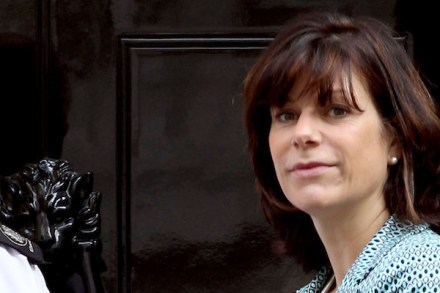
One of the amusing inclusions in yesterday's otherwise anodyne Mid-Term review document was the promise that the government 'will provide for a vote in the House of Commons on the Boundary Commission's proposals for changes to constituencies'. If yesterday was a renewing of vows, some of them have been rather watered down since the Coalition Agreement, as its pledge for legislation for providing for fewer and more equal-sized constituencies has now simply become a 'vote'. Today at Deputy Prime Minister's Questions, Chloe Smith was quizzed by opposition MPs on whether the government might just drop the boundary changes. She said: 'The boundary commissions are continuing with the boundary review in accordance with the legislation which requires them to report in October 2013.

Tories make hay with Labour’s welfare stance

From our UK edition

The Welfare Uprating Bill won't fall into difficulty when it has its second reading in the Commons today, but with around five Lib Dem MPs expected to vote against or abstain on the 1 per cent rise in benefit payments, it's going to be a lively debate. The Conservatives are focused on making the debate less about Sarah Teather and other angry colleagues in her party and more about Labour's welfare stance. Grant Shapps has a new, bald poster campaign today on six sites in London. Shapps' new posters simply read: 'Today Labour are voting to increase benefits by more than workers' wages. Conservatives: standing up for hardworking people.' Iain Duncan Smith has taken the same line on his morning tour of the television and radio studios.

Briefing: What does the Mid-Term Review say the Government is going to do?

From our UK edition

The coalition has worked very hard, taken tough decisions, worked in the long-term interest of the country for short-term political gain. That, if you can't summon the energy to read all 46 pages of the Mid-Term Review, is its surprising verdict on the Coalition so far. But the document also sets out plans for the rest of this Parliament, although many have already been announced in previous speeches and launches. Here's the bluffer's guide to what the Government has got in store up to 2015: Deficit - The Government will stick to its deficit reduction plan 'while protecting vulnerable groups and key long-term investments'. Business, enterprise and growth - Sector-specific industrial strategies, including plans to boost high-tech industry.

Sarah Teather dents the Coalition’s unity message by announcing her benefits rebellion

From our UK edition

Coupled with Lord Strathclyde's resignation over the way the Coalition worked in the House of Lords, Sarah Teather's announcement that she will rebel against the government tomorrow is extremely poor timing. Today was supposed to be about unity, the Coalition working well together in the national interest. Now there are suggestions that this unity isn't visible in the Upper Chamber, and that senior Lib Dems aren't quite as ecstatic about key policies as Nick Clegg might try to argue. Ever since she went AWOL on the day of a vote on the benefit cap, Teather was a rebellion waiting to happen.

Hacked Off produces its own ‘clean’ Leveson legislation

From our UK edition

It is no great surprise that Hacked Off director Brian Cathcart believes the government can't be trusted to implement Leveson: the Prime Minister made very clear on the day of the report's publication that he didn't believe governments could be trusted to regulate the press via statute. But what is interesting about the draft bill that the media reform pressure group has published this morning is that it claims to be the most faithful implementation of the Leveson recommendations: more faithful, even, than that proposed by the Labour party.

While the Coalition celebrates proalition, the two parties are still making their differences public

From our UK edition

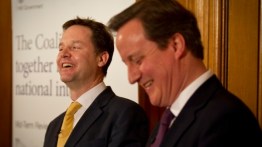
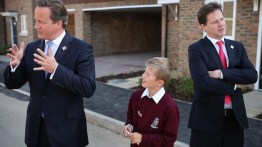
The Coalition reaches its proalition peak today with the publication of the mid-term review, but Downing Street strategists are keen to spin out the good feeling for as long as possible. David Cameron and Nick Clegg will launch the review in their first joint appearance in Downing Street since December 2010, but the details of many of the measures on childcare, transport, housing and pensions won't come today. Instead, we'll see a trickle of announcements over the next couple of months. The leaders have already published a foreword to the review document, which starts by restating the Coalition's central mission: deficit reduction.

Don’t ban Frosties: teach children the life skills they need to make choices

From our UK edition

What a very sensible idea from a group of more than 200 MPs in today's FT: teach children about personal finance. The All-Party Parliamentary Group on Financial Education for Young People wants financial education to become a compulsory part of the curriculum, with banks visiting classrooms. The idea that Natwest and Barclays could send their representatives into classrooms is obviously not enormously palatable to everyone, with critics arguing that this is just another route for big business to indoctrinate innocent minds. But consider this: research from the Centre for Economics and Business Research found a lack of financial education costs the taxpayer £3.

The next Labour welfare policy?

From our UK edition

As he was selling his party's plan for a jobs guarantee on the airwaves today, Liam Byrne made a passing reference to something that could form another part of Labour's welfare policy offer. The Shadow Work and Pensions Secretary was talking about myths and misconceptions about the benefits system, and said: 'I think a lot of people are surprised when they find out that jobseeker’s allowance is a little bit above £70 a week, and I’ve had constituents who’ve been frankly shocked when they’ve lost their job, they’ve gone down the jobcentre and they’ve discovered what the true rate of JSA is.

David Cameron denies bickering with Nick Clegg

From our UK edition

Nick Clegg made clear before Christmas that he wants gory, open and honest government; today the Prime Minister was equally clear that he doesn't. Asked this morning on Radio 5Live about whether he was happy with the Lib Dem desire for greater differentiation between the parties, the Prime Minister replied: 'I think that both parties will succeed if the Coalition succeeds, Nick Clegg and I work well together, and actually there are huge challenges facing this country. We have got to pay down the deficit, re-balance the economy and we have got to improve standards in our schools.

Labour revisits old welfare ghosts with its jobs guarantee

From our UK edition

Dig out the bunting, fly the red flags in celebration, for finally we have a policy from the Labour party. Ed Miliband promised that 2013 would be the year he'd set out some 'concrete steps' on key policy areas, and to that end he's announced a jobs guarantee for the long-term unemployed. Coffee House readers will already be familiar with this scheme, as Shadow Work and Pensions Secretary Liam Byrne discussed it in his interview on this site in December.

The horror of the ‘fake’ independent coffee shop

From our UK edition

It's official: this country is going to the dogs. The proof? Tesco has been insidiously infiltrating the coffee shop market with a chain of shops that look independent. The Guardian reports outrage in Crouch End, where customers were 'duped' by 'independent-looking, stripped back coffee shops'. The greatest crime of Harris + Hoole - which has its majority stake owned by the family that founded it - is that Tesco has a 49 per cent stake in the business, but doesn't plaster its own logo above the shops, preferring instead to fill them with nice furniture and pretty decor. Here's one quote from the piece: "I avoid Starbucks because it's a big chain and it avoids tax," said Carol Levine, 50, a Crouch End physiotherapist enjoying her lunch break in Harris + Hoole.

Cristina Kirchner forgets the most important people in the Falklands row: the Islanders

From our UK edition

The British government has been gently rattling the bars in its stand-off with Argentina over the Falklands of late: giving the Queen a stretch of land in Antarctica which Cristina Kirchner's government disputes the ownership of is one example. But today, ahead of a referendum in March for Islanders to decide whether they want the Falklands to remain under British sovereignty, Kirchner has upped the tension. In a letter published as an advert in today's papers, the Argentine President demands that the UK 'abide by the resolutions of the United Nations' to end colonialism and negotiate a solution to the sovereignty dispute over the Islands.

Teachers are demoralised, but parents are protesting

From our UK edition

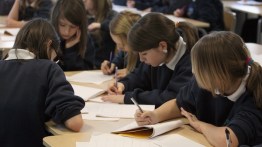
The school holidays are nearly over, so here's a cheery tale for those returning to the classroom next week. Teachers are demoralised, says a poll [PDF] for the NUT which found 55 per cent of those in the profession described themselves as having low or very low morale. Out of the 804 surveyed by YouGov, 71 per cent said they didn't think the government trusted them to get on with their jobs. Michael Gove has made it pretty clear that there is indeed one group of teachers that he doesn't trust to get on with their jobs: 'militant' trade union members who initiate industrial action such as 'work-to-rule' measures. But there's another group that's feeling rather demoralised, too: parents. Just before Christmas, a group of people waving placards appeared outside a school in Chesterfield.

Are Christians being persecuted in Britain?

From our UK edition

Douglas Murray makes a striking point on his Spectator blog about the violent persecution that many Christians face across the globe, while the Church of England fights over gay marriage and women bishops. Christians in this country do fear that they are being persecuted, too, with a case making the headlines at the weekend about a Baptist who had unsuccessfully sued her employers for forcing her to work Sundays. Actually, in Celestina Mba's case, it does sound rather unfair that she came under pressure to work on Sundays when she had asked at the start of her employment to be exempted from doing so on the grounds of her religious belief. The judge rejected her case, observing that Sunday as a holy day isn't a fundamental requirement of the Christian faith.