Isabel Hardman

Isabel Hardman

Isabel Hardman is assistant editor of The Spectator and author of Why We Get the Wrong Politicians. She also presents Radio 4’s Week in Westminster.

Andy Burnham: I am mainstream Labour

From our UK edition

Has Andy Burnham really reinvented himself to prepare for a future leadership bid? In this week’s Spectator, I interviewed the Shadow Health Secretary about his rather forthright views on the NHS: views that some suspect have conveniently changed in order to appeal to Labour’s base. You can read the interview here, but for Coffee House readers, here are some extended quotes from our discussion. Burnham was insistent that his views on the health service today are the ones he put into practice when he was Health Secretary under the last Labour government. When I asked whether he’d changed politically, he said: ‘Well, there are a couple of ways to answer that.

Labour aims fire at Grant Shapps over second job allegations

From our UK edition

How damaging for the Tories is the row about Grant Shapps’ second job? While it is quite easy to write up the Conservative chairman’s business past in a way that makes him sound like a slightly murky character teaching people how to make a ‘ton of cash’, does the latest story, that Shapps was still running his web marketing business when in Parliament, despite his claims to the contrary, really cut through to voters? The details are as follows: Shapps told LBC three weeks ago that ‘I’ve never had a second job while being an MP, end of story’. But a tape from the summer of 2006 has Michael Green (Shapps) talking about people making a ‘ton of cash’ from his business techniques.

Paddy Ashdown slaps down Tim Farron: ‘Judgement is not his strong suit’

From our UK edition

It seems Tim Farron has rather annoyed his senior Lib Dem colleagues with his quite naked desire to become party leader. After the ambitious MP said that the Lib Dems got 2/10 for the way they'd handled the Coalition, he received a pretty hefty slap down from Lord Ashdown on this morning's Pienaar's Politics on Radio 5Live. The Lib Dem General Election campaign chair didn't bother sending veiled messages to Farron about criticising the party leadership and saying that the Lib Dems are 'dead'. Instead, he just verbally roughed up Farron in the way Farron has been roughing up his own party leadership. 'His well-known ambition would be better served with a little more patience and a little more judgement,' said Ashdown, adding later that 'judgement is not his strong suit'.

Can the Greens win in Bristol West?

From our UK edition

If general elections were won on how swanky a campaign office is, the Greens would beat the Lib Dems hands down in Bristol West. Their candidate Darren Hall works out of a smart, airy office overlooking the harbour in one of the most expensive commercial parts of the city. It’s all thanks to Vivienne Westwood, who has funded the office as part of her support for the Greens, and given Hall was until recently keeping most of his campaign materials in a garage, it’s quite a step up. Indeed, it puts him in far more glamorous quarters than the Lib Dems, who are working in a garage, albeit a converted one with windows and heaters, in much cheaper Bishopston.

Is Margaret Hodge the ‘tarantula’ good for politics?

From our UK edition

It’s not just on the Health Select Committee that election fever is starting to take hold. The Public Accounts Committee had a party-political row this week too, with accusations that Tory members had blocked plans to question Lord Green over HSBC. There is now a leak inquiry underway about who from the committee told the Guardian that Tory MPs blocked a bid for Green, while those Conservatives insist that they are happy for him to give evidence if he is needed for the inquiry. This sort of jostling on a committee isn’t particularly surprising given the proximity of an election, but while the PAC by tradition doesn’t have the sorts of stormy votes that other select committees have, it has seen some political tensions.

Labour edges towards firmer line on SNP coalition

From our UK edition

If mainstream politicians are a bit confused and downbeat at the moment, Scottish Labour MPs are the most miserable of the lot, facing a savaging in constituencies they never thought would slip out of their party’s hands. But last night Ed Miliband gave them reason to be a bit less miserable, just for a little while anyway. On Free Speech, the Labour leader came much closer to ruling out a Labour-SNP coalition than he has before, saying ‘I am saying it’s nonsense. I absolutely am saying it’s nonsense. It’ not gonna… you know… you just said it’. He also pointed out that the SNP had ruled out a coalition with Labour. Of course, the real chances of a coalition were pretty low, given it would seriously damage both parties involved.

Tiny revolt in Commons over defence doesn’t mean the trouble’s gone away

From our UK edition

MPs this afternoon backed the motion calling for the government to set defence spending at 2 per cent of GDP - though not in huge numbers. There were 37 votes in favour to 3 votes against, which is hardly a furious uprising. This vote is a backbench vote, and so it is not binding on the government. Nevertheless, there are many good reasons why ministers should obey the demands of those MPs who did turn up - and listen to the concerns of many who did not. James sets out those reasons, as well as ministers’ reluctance to address them, in this week’s magazine. Ministers might think they can ignore the issue based on the poor turnout at today’s vote.

Nigel Farage’s race discrimination comments are a strategic error

From our UK edition

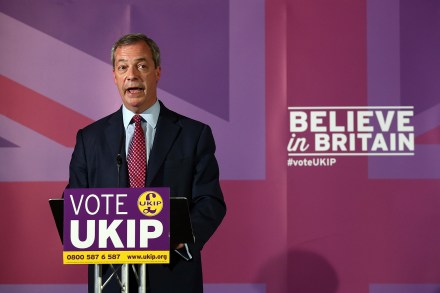
Aside from whether he’s right to argue that we don’t need many racial discrimination laws, why does Nigel Farage think it’s politically a good idea to mull about relaxing them so that firms can take on British staff? The Ukip leader has spent most of today getting rather annoyed at what he says has been misreporting of his remarks to Trevor Phillips, and explaining what it was he said. Here are his original quotes: ‘I think the employer should be much freer to make decisions on who she or he employs. ‘I think the situation that we now have, where an employer is not allowed to choose between a British-born person and somebody from Poland, is a ludicrous state of affairs.

Andy Burnham interview: ‘I wanted a different approach, because I’m mainstream Labour’

From our UK edition

Time was when Andy Burnham passed for a middle-of-the-road Labourite: he was deemed insufficiently dramatic and impressive to secure much support when he stood for leader five years ago. But these days, his colleagues — and the bookmakers — consider the shadow health secretary the frontrunner in any new contest. At an otherwise funereal Labour conference last year, his speech received standing ovations. In three months’ time, Burnham will either be health secretary or a serious contender for Labour leader. He has already survived calls from within his party to remove him from the health brief, though he claims Miliband has never raised the prospect.

Exclusive: the NHS report that Labour tried to block

From our UK edition

It emerged this morning that Labour MPs took the extraordinary step of blocking the publication of the Health Select Committee report into the NHS – because the conclusions backed up government reforms. I have just been handed details of this report, and it’s clear why Labour wanted it suppressed: it contradicts the party’s attack message. Here are the main points: No sweeping privatisations: there has been little increase in private sector providers since 2010. Nor has there been an extension of charges or top-ups during the current parliament, and that these are not planned. Less red tape: a general trend of declining administration costs in the NHS. No evidence that the Transatlantic Trade and Investment Partnership poses a threat to the NHS.

Speaker Bercow apologises for comparing a minister to a washing machine

From our UK edition

If ever you needed evidence that politics at the moment is a bit, well, weird, John Bercow has just apologised in the House of Commons for comparing Esther McVey to a washing machine. At Work and Pensions Questions in the Commons on Monday, the Speaker cut the minister off during an answer by saying ‘I am reminded of the feeling when one thinks the washing machine will stop—but it does not!’ Today, in response to a point of order from Tory Heather Wheeler, Bercow said: ‘I hope I ordinarily treat members with great courtesy, it was an off-the-cuff remark, it may have been a foolish one, and I apologise for it.

Do we really need more physics teachers?

From our UK edition

The government has today announced a drive to get more physics and maths graduates into teaching. It’s a good idea, given the struggle that many headteachers report in recruiting teachers with those backgrounds. The package includes £15,000 for students to help with their university costs in return for them teaching for three years post-graduation; fast-track retraining for professionals already working in medicine and engineering; and one-to-one support for those who have already trained as teachers and are considering returning to the job. The reason it is becoming even more important to encourage more numerate people to become teachers is that by 2030, the science-based industries are expected to employ more than 7 million people in the UK. 5.

How to make a row about defence worse

From our UK edition

There are many quite understandable reasons for not promising to protect the defence budget. Some are pragmatic: there's not much room in Whitehall for more budgets to be protected once you take into account those that already are. Some are theoretical, including the argument Clare Short advanced on Newsnight yesterday, which is that if your economy grows, you have to spend more on defence in order to keep meeting the target of 2 per cent of GDP set by NATO, and that has nothing to do with whether you need to increase spending but with statistical releases from the ONS. But whatever the good arguments, they aren't being made nearly as often by ministers as the blunders and insults are flowing towards those who argue in favour of a 2 per cent target.

Justine Miliband rushes to her husband’s defence

From our UK edition

Justine Miliband has given an interview to the BBC, a sort of ‘back my husband, my hero’ contribution to the Labour election campaign. She starts by talking about the pressures on the family and how ‘being a working mother’, she hasn’t really had a chance to think about what it would be like for the family with Ed in Downing Street.

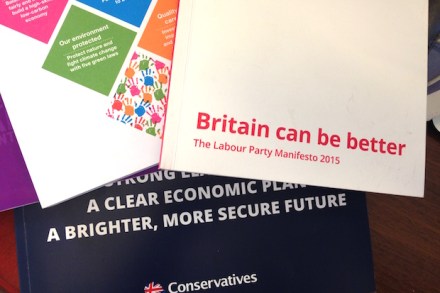
The Tory manifesto causes more trouble

From our UK edition

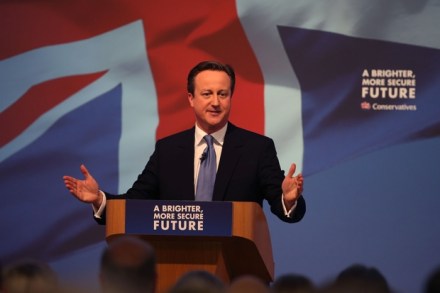
It’s not just David Cameron who is unhappy with the way the Tory manifesto is looking at the moment. James reported at the weekend that the Prime Minister had demanded a re-write, and I have picked up some considerable dissatisfaction in the party at the way the document is being put together. Some departments feel as though they and their advisers have been shut out by the team working on the manifesto. Other lower-ranking ministers with extremely good, detailed ideas for their own policy areas have submitted ideas that have been rejected out of hand, which has left them rather grumpy. This is partly a result of the desire to keep a multitude of cooks away from the broth.

The issue of the defence budget could force more Tory MPs to become rebels

From our UK edition

One of the really striking claims that Ed Balls made in his speech today was that the Tories would end up cutting more from the defence budget than Labour. This is not the sort of thing that you’d expect to hear: Labour saying it would end up spending more on defence than the traditional party of the armed forces. The Shadow Chancellor said: ‘First of all, our cuts, in any part of public spending, are not going to go nowhere near the huge scale of defence cuts you are going to see under the Conservatives on the basis of these plans.’ Balls also said that it was ‘absolutely impossible on the Conservative trajectory’ to meet the target for defence spending to remain at 2 per cent of GDP.

Tories and Labour warn of risks of voting for their opponents

From our UK edition

The three main parties are in an aggressive mood today. TheTories have a new attack poster warning voters about the dangers of a Labour-SNP deal, while Labour is warning voters of the danger of '1930s' Tory spending plans, and the Lib Dems are launching their own plans to grow the economy.  For Labour, today's speech by Ed Balls is an attempt to give the party a foothold in the economic debate as the Budget approaches. Balls and colleagues saw an opportunity in the row last autumn over whether the Tories plan to take Britain back to the 1930s, with polling showing that voters were less enthusiastic about  George Osborne's future spending plans than they had been previously.

A masterclass in dodging questions from Philip Hammond and Caroline Flint

From our UK edition

Two politicians put in very assured and impressive performances on Marr this morning - if you can include nimbly dodging questions that you don’t want to answer ‘impressive’. of course, within the parameters of the way politicians are expected to behave, Caroline Flint and Philip Hammond did very well because they didn’t give anything away that they didn’t want to, and they’d clearly practised rather a lot in order to stop themselves giving away that information. Flint was asked to rule out a pact between Labour and the SNP.

Exclusive: Government to introduce gender pay gap legislation after Coalition row

From our UK edition

This story was first published in tonight's Evening Blend email, a free round-up and analysis of the day's political events. Sign up here. Over the past few weeks, Coalition ministers have been fighting over plans favoured by the Lib Dems to force companies with more than 250 workers to publish details of their gender pay gap. Now Coffee House understands that the government will activate this legislation on Monday. The row came to an end when the Conservatives realised that they would not be able to stop the plans getting through the House of Lords, and so they caved in. Whether this will make a great difference to the gender pay gap - currently at 9.4 per cent overall - isn't clear.