Isabel Hardman

Isabel Hardman

Isabel Hardman is assistant editor of The Spectator and author of Why We Get the Wrong Politicians. She also presents Radio 4’s Week in Westminster.

‘Careless talk costs lives’: Cameron angers MPs as he insists he was ‘misinterpreted’ on EU vote

From our UK edition

It’s not clear who David Cameron is trying to annoy more: his party or the press pack following him at the G7 summit in Bavaria. But what is clear, at least in the Prime Minister’s mind, is that he has been misinterpreted on the issue of a free vote in the EU referendum. Not over-interpreted, as Number 10 said this morning. ‘It’s clear to me that what I said yesterday was misinterpreted,’ he said, explaining that he was referring to the renegotiation: ‘I was clearly referring to the process of renegotiation. But the point is this. I have always said what I want is an outcome for Britain that keeps us in a reformed EU. But I have also said we don’t know the outcome of these negotiations, which is why I have always said I rule nothing out.

Liam Fox interview: Tories have to get a free vote on the EU ‘in the end’

From our UK edition

Liam Fox started his political life under a majority Conservative government, and finally he's back under one. He was elected in 1992 after John Major’s surprise election victory, and is enjoying the surprise of his colleagues once again after David Cameron’s surprise win last month. But the former Defence Secretary is not personally enjoying the spoils of majority government: he has not been promoted to a ministerial post, even though there are more spaces free following the exit of the Lib Dems. He was rather stung to have only been offered a lowly minister of state job in the last reshuffle, and turned it down.

Number 10 rows back on EU vote threat

From our UK edition

So after a few hours of outrage in the Tory party, David Cameron's aides have announced that he didn’t say ministers would have to support his stance during the EU referendum or leave government. Number 10 has clarified the Prime Minister’s remarks, saying they only apply to ministers’ stances during the renegotiation, not the period of campaigning leading up to the referendum.

How David Cameron could still avoid a bitter Tory row on Europe without a free vote

From our UK edition

David Cameron’s indication that his ministers will have to follow the position of the government on the EU referendum or leave the government has caused some consternation in his party. David Davis has just warned on the Today programme that the Prime Minister risks ‘turning a decent debate into a bitter argument’, while the newspapers write this up as a very risky move indeed. Cameron told reporters covering the G7 summit in Bavaria that ‘I’ve been very clear. If you want to be part of the government, you have to take the view that we are engaged in an exercise of renegotiation, to have a referendum and that will lead to a successful outcome.

Lord Saatchi’s Medical Innovation Bill is coming back – but it won’t help cancer patients

From our UK edition

What makes for bad legislation? Sometimes it is a lack of scrutiny from a weak opposition and bored backbenchers. Sometimes it’s an attempt by ministers to make a political point and to hell with any real life damage. And sometimes it’s wishful thinking: an assumption that because a bill has identified an awful problem, it is automatically also presenting the perfect solution. Lord Saatchi’s Medical Innovation Bill is heading back to Parliament again, after the Lib Dems managed to block it in the last session. Saatchi was naturally furious that Nick Clegg’s party had refused to sign off on his legislation, and now that the Lib Dems are out of government, he’s trying again.

Eurosceptics fear the ‘In’ campaign will get off to a head start

From our UK edition

As David Cameron predicted, we are hearing all sorts of ‘noises’ on whether or not his European renegotiation will succeed or fail. But under the noise, as James explains in the magazine this week, the ‘Yes’ campaign to stay in the European Union has already begun. The ‘Yes’ side has many advantages, not least because it has the positive word and is defending the status quo, both of which appeal a little more to voters. It can also enjoy the support of both the Whitehall and EU machines, which is not unimportant. Meanwhile, the frustrations in the ‘No’ or ‘Out’ camp largely focus on timing.

Why not settle the issue of MPs’ pay on the floor of the House of Commons?

From our UK edition

Now that the fashionable thing for all MPs to do is to announce that they won’t be ‘taking’ the 10 per cent pay rise planned by IPSA, the government has decided to write a letter opposing the extra £7,000, just in case anyone might accuse any MPs of having their snouts in the trough. Chris Grayling argues in his letter (below) that ‘we continue to believe that despite the welcome signs of progress, the continuing structural deficit shows the job is far from done'. This is quite a compelling argument, particularly given the ongoing public sector pay restraint.

Jeremy Corbyn to stand for Labour leadership

From our UK edition

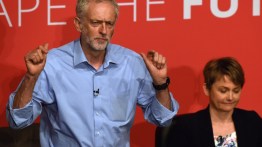
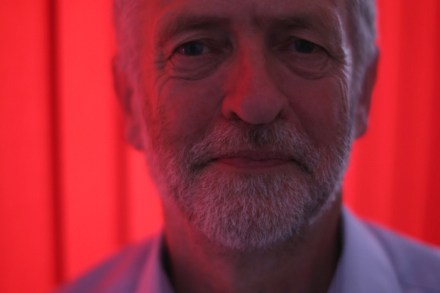
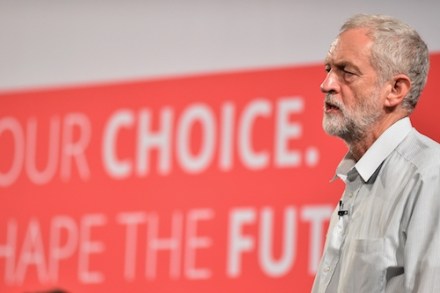
Jeremy Corbyn is to stand for Labour leader. Those scoffing at the idea of the very rebellious backbencher entering the contest to lead a party he often disagrees with have rather missed the point. Corbyn doesn't think he can win. He doesn't even want to win (he is one of the few MPs who I've interviewed who I really believed when they said they really didn't want to be promoted). What Corbyn wants is to make a point that so far none of the candidates represent the faction of the party from which he hails: that is, the ones who identify strongly with the editorial line of the Morning Star and feel Andy Burnham is still a Blairite. If you are on Labour's left, you must feel painfully lonely at present as the main candidates join a linguistic arms race over benefit cuts and so on.

Tory rebels are already starting to cause trouble

From our UK edition

David Cameron might have had an enjoyable session teasing Labour at Prime Minister’s Questions, but as soon as he’d finished doing so in his head-to-head with Harriet Harman, he was reminded that winning an election with a majority that is so small means he can’t have fun all the time. Andrew Mitchell stood up to press the Prime Minister on human rights reform, expressing concern about any moves to leave the European Convention on human rights: ‘My right hon. Friend will be well aware that there is considerable concern on both sides of the House at the proposition that Britain might withdraw from the European convention on human rights. Will he take the opportunity today to make it clear that he has no plans for us to do so?

Can MPs really refuse a pay rise anyway?

From our UK edition

If you’re a Labour leadership contender, or keen for other reasons to look in touch with people - or perhaps you really do disagree with MPs getting a 10 per cent pay rise, then the fashionable thing to say is that you’ll be turning down the pay rise. This morning Andy Burnham has said he will refuse the extra £7,000 that Ipsa plans to pay MPs per year, tweeting that he ‘will turn down at source or give to local groups’. Stella Creasy, campaigning to be elected Labour’s deputy leader, has said similar. https://twitter.com/andyburnhammp/status/606007088339415040 Both MPs will have to donate to local groups because Ipsa says there is no way of refusing a pay rise.

No, MPs are not ‘giving themselves a pay rise’

From our UK edition

So MPs are now set for a 10 per cent pay rise, taking their basic salaries to £74,000. Cue fury about MPs shoving their snouts in the trough as they award themselves a pay rise. Social media is bristling with fury that MPs could be so out of touch. The reality is, of course, that MPs are not awarding themselves anything. They have no power over their pay. They have not voted on their pay and they will not vote on their pay. This is because they contracted decisions on pay out to an independent body, IPSA, to make these decisions. One of the reasons for setting up IPSA was so that MPs could not vote on their pay and be accused of being selfish, or be too frightened of being accused of being selfish to vote on a pay rise, even if they believed that to be the right thing to do.

Labour leadership contenders make their case at health questions

From our UK edition

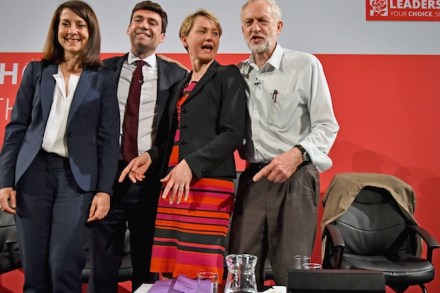
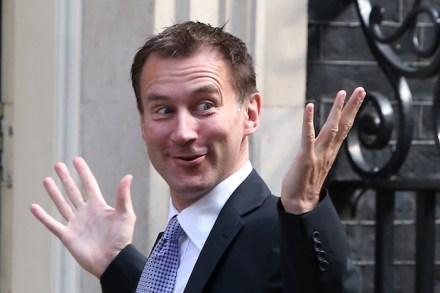
The odd thing about the Labour leadership contest is that while it runs, two of the most different candidates, Liz Kendall and Andy Burnham, must work together in the Shadow Health team. Today they had a chance to show how well they perform in the Commons, speaking within minutes of one another at the first questions of the new Parliament. Kendall asked about access to GPs, asking Jeremy Hunt why he had failed to meet his promises in this area. Her delivery was not particularly confident: she read her question and was nowhere near as forceful as Burnham, who came later. Hunt congratulated the Shadow Health Minister on her return to the frontbench, adding that ‘I know she hopes it will only be for a brief time’.

David Cameron is putting himself in the firing line on immigration

From our UK edition

One of the important but unglamorous adjustments that the Conservatives have had to make in majority government is the structure of government itself. It’s the sort of thing that was particularly important under the Coalition, as Nick Clegg had managed, rather cannily, to gather a great deal of power for himself on powerful but unheard of Cabinet committees. Now there is no Nick Clegg, and Oliver Letwin has taken the former Deputy Prime Minister’s place on the Cabinet Committees where he wielded unseen power by blocking Tory policies.

Former Lib Dem leader Charles Kennedy dies aged 55

From our UK edition

Charles Kennedy, former leader of the Liberal Democrats, has died at his home in Fort William aged 55. His family released this statement this morning: ‘It is with great sadness, and an enormous sense of shock, that we announce the death of Charles Kennedy. Charles died at home in Fort William yesterday. He was 55. We are obviously devastated at the loss. ‘Charles was a fine man, a talented politician, and a loving father to his young son. We ask therefore that the privacy of his family is respected in the coming days. ‘There will be a post-mortem and we will issue a further statement when funeral arrangements are made.’ Nick Clegg said his colleague was 'one of the most gifted politicians of his generation'.

Team Yvette: We are setting the agenda in the leadership contest

From our UK edition

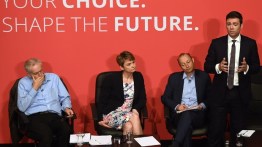
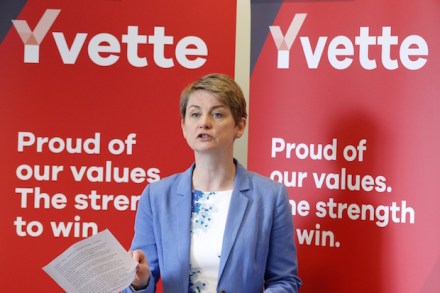
Now that the three main candidates in the Labour leadership contest have established themselves, they are vying to be the ones who set the agenda and the terms of debate. This suggests, they hope, that others, including rival candidates, respect them so much that they cannot help but following their lead. So Yvette Cooper’s campaign believe that Liz Kendall and Andy Burnham have been following in the Shadow Home Secretary’s wake, pointing to interventions she has made on business, tax, the benefit cap, the party’s response to the election and the possibility of a break clause for the party to dump or renew its support for a leader. All of these, they claim, have been followed by one or both of the other two candidates agreeing.

The SNP packs the House of Commons Chamber to send a powerful message

From our UK edition

As the new SNP MPs settle in to their new life in the House of Commons, a picture is doing the rounds on social media showing a Commons Chamber that is near-deserted, save the SNP benches, which are packed. The caption from the BBC Parliament channel is ‘MPs are debating safety at HM Naval Base Clyde where the UK’s Trident nuclear deterrent is stationed’. The point that SNP supporters and some of the party’s MPs are making is that this shows that the party turns up to debates while other parties can’t be bothered. It’s a powerful image, and it is not a fake.

Human rights reform: will the Tories end up with the same bill but under a new name?

From our UK edition

Number 10 has not given an official denial that David Cameron has ruled out pulling out of the European Convention on human rights, with the Prime Minister’s official spokeswoman today saying that the manifesto was ‘absolutely’ the best guide to the Prime Minister’s position on human rights reform. This is what the manifesto says on human rights: We will reform human rights law and our legal system We have stopped prisoners from having the vote, and have deported suspected terrorists such as Abu Qatada, despite all the problems created by Labour’s human rights laws. The next Conservative Government will scrap the Human Rights Act, and introduce a British Bill of Rights.

Legal high ban could cause row with gay voters

From our UK edition

The Home Office has today published a bill banning a number of ‘legal highs’ such as laughing gas, poppers, and so on. There is a big debate about whether this sort of legislation is worth it, and so on, but one particular substance may cause a rather different row. ‘Poppers’, which can apparently be bought at petrol stations, are alkyl nitrates which give users a head rush when inhaled. But poppers have another use, which is to enable or enhance sex, particularly for gay men.

Why the Tories will probably get away with defence cuts

From our UK edition

On election night, between the exit poll suggesting the Conservatives would be back in a coalition government and the slow realisation that they were heading for a majority, Defence Secretary Michael Fallon was heard remarking to colleagues that the UK might just end up maintaining defence spending at 2 per cent of GDP after all. He was banking, for a few hours anyway, on the DUP playing enough of a role in the formation of the next government that the Tories would have to commit to maintaining spending at that level - the target set by Nato and endorsed by David Cameron - in order to bring Nigel Dodds and co on board. But as today’s Times reminds us, that hasn’t happened and so now Fallon is having to find £1 billion of savings from the defence budget.

David Cameron’s contradictory EU stance

From our UK edition

Of all the talks he will have with European leaders about his plans to renegotiate Britain’s relationship with Europe, David Cameron was always likely to enjoy his meeting with Angela Merkel the most. And she doesn’t seem to have disappointed him, saying treaty change was not ‘impossible’ and that ‘we would like to be a part of the process that is going on in Great Britain at the moment and we would like to be a constructive partner in this process’. This is very encouraging for Cameron, though the feeling in Europe generally is still that treaty change is too hard or inconvenient.