Isabel Hardman

Isabel Hardman

Isabel Hardman is assistant editor of The Spectator and author of Why We Get the Wrong Politicians. She also presents Radio 4’s Week in Westminster.

What should be done about welfare? Don’t ask the Shadow Cabinet

From our UK edition

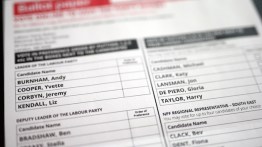
The Shadow Cabinet has split all ways on what to do about welfare. Andy Burnham says he wants a reasoned amendment to the second reading of the welfare reform and work bill that protests some of the policies, but I understand he indicated in Shadow Cabinet that he would go along with the official party line anyway when the vote comes. There is, though, quite a lot of confidence that Harman will capitulate and allow a reasoned amendment, which would make things much easier. If she does not, then not opposing the legislation will be ‘difficult’ for Yvette Cooper, sources on her campaign team say, given rebelling against the party would have huge consequences for her current position as Shadow Home Secretary.

What next for the pro-hunting lobby?

From our UK edition

Supporters of relaxing the hunting ban are relieved that the government has pulled tomorrow’s vote after it became clear that it would fail. They feel that there is little point in expending political capital on something they will lose. But they are now trying to work out what to do next that will ensure they can get their way eventually. One of the ideas that is circulating is that the government launch an Animal Welfare Bill at some point, which could address fox hunting as part of a number of issues, including animals in circuses and one of the most popular items in many MPs’ inboxes: chicken welfare (just ask Penny Mordaunt).

Andy Burnham may end up supporting Harman’s line on welfare bill anyway

From our UK edition

Andy Burnham has been vociferous in his opposition to the Welfare Reform and Work Bill, and made his views clear at a stormy meeting of the Shadow Cabinet this morning. He followed that meeting with a speech to the press gallery about his candidacy to become Labour leader in which he repeated his opposition to that legislation. He even went so far as to lump Harriet Harman in with George Osborne in one of his jokes, which won’t stop sniping from some sections of the party that Harman is behaving in a ‘Tory’ manner (this comes as a great surprise to anyone who has paid even the slightest attention to Harman’s legislative victories and personal projects).

SNP to vote against relaxing the hunting ban

From our UK edition

The SNP's 56 MPs will vote against relaxing the hunting ban on Wednesday, the party has announced. The party's stance was decided at a meeting of the party this evening, with the SNP saying it is 'right' that the party 'assert the Scottish interest on fox hunting by voting against the Tories' proposals to relax the ban'. There are only 90 minutes to debate the measure on Wednesday, but inevitably some of that precious time will be taken up with MPs asking what the 'Scottish interest' on this matter is. What this means now, as I explained earlier, is that the measure is likely to fail. It is one thing to get 285 MPs in favour, but the SNP's numbers added to the 260 or so MPs who will vote against the measure make it very difficult for the pro-hunting camp.

Pro-hunting MPs hopeful of victory – if the SNP stay away

From our UK edition

A very organised unofficial whipping operation is underway for Wednesday’s free vote on hunting (first revealed by Melissa Kite in the Spectator last week). I understand that the Tories who are in favour of changing legislation so that hounds can be used to flush out foxes think they will win the vote if the SNP decide to take the unusual step of voting on the issue, which does not affect Scotland. The pro-hunting camp believe they have around 285 MPs - mostly not exclusively Tory - on their side, and there are around 260 MPs across the Commons who will vote against the change. The most prominent among them is Tracey Crouch, who has been unusually vociferous in her opposition, given she is a minister.

Labour tries to calm row on welfare reform

From our UK edition

Labour is trying to clarify its position on welfare reform ahead of tonight’s PLP meeting. Sources say that the party will abstain on the ‘broad brush’ of the Welfare Reform Bill, though it is not yet clear whether the abstention will be on a three-line whip, given a good number of MPs do want to turn up and vote against the legislation. The abstention will be at the Second Reading of the Bill, but as Harman has already pointed out, the Committee stages come once the new leader has been elected, and so the party may take stronger positions on more issues. ‘Is that a matter for the new leader? Of course it is,’ said a Labour source on the party’s position on individual votes at Committee stage and later.

Number 10 ‘can square’ boundary reform losers

From our UK edition

Number 10 believes it will be able to ‘square’ all Tory MPs whose constituencies will be abolished or merged as part of the boundary changes, Coffee House understands. I hear from a very well-informed source that Downing Street, which is leading the work on the changes to constituency boundaries, believes that the number of Tories affected by the reduction in the number of seats from 650 to 600 is so small that they can either be accommodated with another seat where the sitting MP is likely to retire at the next election, or moved into the House of Lords. The Times reported at the weekend that Tory MPs are being summoned into meetings to find out whether their constituency is likely disappear in the reforms.

Labour fights over Harman’s leadership

From our UK edition

Judging by the uproar that greeted Harriet Harman’s decision to support limiting future tax credit claims to just two children, Labour almost looks as though it is in a worse position as a party than it was in 2010. Labour’s interim leader has plenty of good reasons for picking this policy: she spoke to voters who talked about being unable to afford to have another child and who were aggrieved by the way benefits made this possible for others, she thinks her party lost because it didn’t seem to be listening to such voters, she’s the current leader and there are a lot of welfare cuts going through at present which the party needs to adopt some sort of position on if it is to work as a strong opposition.

Harriet Harman: Labour will not do ‘blanket opposition’

From our UK edition

Ever since Labour started having to respond to Tory policy announcements, there have been little fissures in the party over what sort of stance it should take on welfare. When Harriet Harman announced that the party was ‘sympathetic’ to lowering the £26,000 welfare cap for workless households, one leadership campaign told me it was no consulted before that policy changed and that ‘nothing Harriet does now is set (or written) in stone’.

Is this the sign the government has cracked planning reform?

From our UK edition

It’s not often good form for a journalist to cut and paste a press release, but the below is, to my mind, so significant that it’s worth reproducing in full. It is the response of the Campaign to Protect Rural England to today’s planning reforms. The Government is today announcing plans to increase housebuilding as part of a productivity drive. Paul Miner, planning campaign manager at the Campaign to Protect Rural England (CPRE), reflects on the announcements: On Government intention to intervene when local plans are not coming forward   “With so few councils having post-2012 local plans in place, the Government’s move is understandable.

George Osborne’s Macmillan mission starts today

From our UK edition

Those in favour of more housebuilding in this country like to tell the story of Winston Churchill’s deal with Harold Macmillan in which the Prime Minister told his housing minister to meet the Tory target of building 300,000 new homes. ‘It is a gamble - it will make or mar your political career,’ Churchill told Macmillan. Well, Macmillan hit the target a year early, and we all know what happened to his political career. Given George Osborne was clearly thinking about the implications for his own career of this week’s Budget, it is perhaps hardly surprising that housing plays a strong part. The Chancellor has today announced plans to get more homes built in this country, and these ‘sweeping’ changes form the second half of the Budget.

IFS takes aim at Osborne’s ‘arithmetically impossible’ sleight of hand

From our UK edition

George Osborne may have - politically - sweetened the bitter pill of his Budget by ending it with a surprise announcement about the National Living Wage. But the Institute for Fiscal Studies still wasn’t that keen to swallow it today. As well as revealing that 13 million families will lose £260 a year on average as a result of the freeze to most working age benefits (with 7.4 million of those in work, losing £280), the IFS’s analysts also pointed out that the increase in the minimum wage did not make up for the cuts to tax credits. Paul Johnson said: ‘The key fact is that the increase in the minimum wage simply cannot provide full compensation for the majority of losses that will be experienced by tax credit recipients.

George Osborne’s plan for a ‘new centre of British politics’

From our UK edition

Labour yesterday looked bewildered and downcast as it tried to respond to George Osborne's Budget. The Chancellor's interview on the Today programme this morning helped to articulate just why the Opposition didn't enjoy yesterday, and why it is unlikely to enjoy the next few months. Osborne was at pains when talking about his new 'living wage' policy to highlight that the Treasury had based its plans on calculations produced by the Resolution Foundation. He described that think tank very pointedly as 'centre-left'. Clearly he wanted everyone listening to be aware that this is a right-wing Chancellor introducing a left-wing policy. He then spoke of a 'new centre of British politics'. This is what the Tory project is.

Summer Budget: Osborne’s £60bn gamble

From our UK edition

The Tories don’t really rate the social housing sector: that much has been clear for a good long time. They fell out a bit over their 2010 reforms to tenancies that abolished the automatic right to a council house for life, and have been scrapping over welfare reforms ever since. In recent weeks, ministers had made it quite clear that given the housing sector protested so much about the impact of the last tranche of benefit cuts, and their dire warnings hadn’t come to fruition, they weren’t going to pay much attention to the opposition to this next round of cuts announced yesterday.

Osborne gets the press he was after on sweetened Budget

From our UK edition

This morning’s front pages are as good as they possibly could be for George Osborne given the scale of the cuts that he unveiled yesterday. The Chancellor has managed to blunt the severity of his Budget, at least in messaging, with his National Living Wage announcement, with even the more sceptical newspapers acknowledging that he didn’t just spend yesterday taking away from Britons. Those sceptical papers first: And then there are a fair few papers who are reasonably impressed:   And the Sun, which went for Osborne with a vengeance after the 2012 Budget, is very happy indeed: Very, very happy....       This is the press that Osborne would have been after: he has sweetened every bitter pill in this Budget.

Labour’s Budget response: ‘It’s difficult’

From our UK edition

[audioplayer src="http://rss.acast.com/spectatorpolitics/summerbudget2015/media.mp3" title="Fraser Nelson, James Forsyth and Isabel Hardman discuss the Summer Budget"] Listen [/audioplayer]Chris Leslie has just briefed journalists on Labour’s response to the Budget. In summary, it’s all quite difficult. Leslie repeatedly used that word when asked about individual measures such as the benefit cap and public sector pay, while also saying that Labour didn’t want to be a knee-jerk opposition which opposed everything. The key themes of the Labour response are that the changes to tax credits represent what the Shadow Chancellor deems a ‘work penalty’.

Summer Budget: George Osborne pulls the rug out from Harriet Harman’s feet

From our UK edition

[audioplayer src="http://rss.acast.com/spectatorpolitics/summerbudget2015/media.mp3" title="Fraser Nelson, James Forsyth and Isabel Hardman discuss the Summer Budget"] Listen [/audioplayer]When George Osborne lays a political elephant trap for Labour, he normally does so by cutting welfare and daring the Opposition to support him. Well, he’s done some of that today, cutting tax credits, housing benefit and the amount of money that employment support allowance claimants preparing to return to work can receive. But Labour has grown used to those traps now. What it isn’t used to navigating is responding to a measure that it would have introduced itself and which has a rather leftish feel.

The Budget rabbit: A National Living Wage

From our UK edition

[audioplayer src="http://rss.acast.com/spectatorpolitics/summerbudget2015/media.mp3" title="Fraser Nelson, James Forsyth and Isabel Hardman discuss the Summer Budget"] Listen [/audioplayer]The announcement that got the biggest roar of support in today’s Budget was that from 2020 workers over 25 will be paid £9 an hour in a National Living Wage. Tory MPs gasped and cheered, while Harriet Harman gave a response that had the distinct impression of being performed while having a rug pulled from under her feet. The Chancellor described it as a pay rise and part of the Budget theme of security, namely the ‘financial security of lower taxes and new National Living Wage’. But is that a pay rise?