Isabel Hardman

Isabel Hardman

Isabel Hardman is assistant editor of The Spectator and author of Why We Get the Wrong Politicians. She also presents Radio 4’s Week in Westminster.

DUP fury over McDonnell appointment could increase Cameron’s majority

From our UK edition

Funnily enough, the DUP aren't particularly happy that Labour's new Shadow Chancellor praised the 'bravery' of the IRA. They were already - as reported on Coffee House - nervous about Jeremy Corbyn becoming Labour leader. But a party source says: 'Corbyn was a punch to roll with. He was elected after all. And ultimately he's a "holy fool" of the left; it's not to say he's harmless, just that he's fundamentally naive. But McDonnell? He was *chosen*. It's sending us a message loud and clear and we've heard it.' It could be that Corbyn's victory and McDonnell's appointment effectively increases Cameron's majority, if the DUP refuses to vote with Labour now that it contains two men who are close friends with Sinn Fein and praised the IRA.

Meet your Shadow Chancellor: John McDonnell’s greatest hits

From our UK edition

Given few knew who Jeremy Corbyn was before the summer, chances are that few will know who John McDonnell is either. Well, here's your quick guide. He was first elected in 1997, having previously served on the Greater London Council as member for Hayes and Harlington (the constituency he represents in Parliament). He is chair of the Socialist Campaign Group of Labour MPs, and worked as a researcher and official for the National Union of Mineworkers and the TUC. And here's what else you need to know about the new Shadow Chancellor: 1. John McDonnell is quite the Commons performer. He famously grabbed the mace in the Chamber to express his outrage at the decision to approve a new runway at Heathrow - and was suspended from the Commons. https://www.youtube.com/watch?v=CpDyW-p_KWs 2.

John McDonnell is the Shadow Chancellor

From our UK edition

These are the latest appointments to Jeremy Corbyn's Shadow Cabinet: Shadow Chancellor John McDonnell MP Shadow Chief Secretary to the Treasury Seema Malhotra MP Shadow BIS Angela Eagle MP This tells us two things about Corbyn. One is that he is loyal to his friends. He and McDonnell have worked together for years, with Corbyn focusing on foreign policy while his friend stuck to economic policy. McDonnell wanted to be Shadow Chancellor, even though Angela Eagle clearly also fancied the job - and was a more credible candidate. Corbyn's friend won. The second thing is that Corbyn is clearly keen to push the party as far left as quickly as possible.

Burnham and Benn take Shadow Cabinet jobs

From our UK edition

In the past few minutes, more details of Jeremy Corbyn’s Shadow Cabinet team have been announced. Andy Burnham is the new Shadow Home Secretary, and is replaced by Heidi Alexander in the Shadow Health Secretary. This is intriguing, as Burnham has quite different views on immigration to Corbyn. Hilary Benn is the Shadow Foreign Secretary: a boost for Corbyn given Europe will be such a big issue in the next few years. Lord Falconer is the Shadow Justice Secretary and Shadow Lord Chancellor, while Yvette Cooper will chair a taskforce on refugees: something she will bring a great deal of passion and expertise to. What these announcements do show is a serious attempt from Corbyn to be open and welcoming to those from different wings of the party.

How big will Jeremy Corbyn’s frontbench be?

From our UK edition

It was always obvious from the moment he won that Jeremy Corbyn’s frontbench team would look very different to the one that Labour had last week. What’s more surprising than those stepping back from the Shadow Cabinet, including Chuka Umunna, is who from a different wing of the party to Corbyn agrees to take a frontbench role. Angela Eagle and Andy Burnham are the biggest names likely to work in Corbyn’s team, though Corbyn is struggling with John McDonnell, who wants to be Shadow Chancellor instead of Eagle. Rosie Winterton remains as chief whip: which is a huge boost to Corbyn given how popular she is in the party.

Labour moderates try to stop the march of the Left after Corbyn victory

From our UK edition

Naturally, today is not a good day if you’re a Labour moderate. The Blairites’ troubles have been well publicised, but the old right, or moderate, wing of the party, represented by Labour First, is licking its wounds too. The faction did see Tom Watson elected Deputy Leader (which shows firstly that Watson and Corbyn are not from the same part of the party at all, and secondly that ‘moderate’ is quite a wide term), but it tried to encourage members to fight Corbyn every way they could, particularly by blocking him using second and third preferences. Labour First is now trying to stop the Corbynites taking control of the policymaking process in the party.

Labour leadership results due shortly

From our UK edition

We will get the Labour leadership result rather shortly. The candidates know already and their teams have gone into lockdown with their phones confiscated.I am hearing that Jeremy Corbyn has won and there is a strong chance he has won on the first round, which would be extraordinary and reinforce his mandate as he tries to move his party to the left.We will bring you full results and analysis as soon as we know.

Jez, he did – Jeremy Corbyn is the new leader of the Labour Party

From our UK edition

Jeremy Corbyn has won the Labour leadership in the first round with an extraordinary 59.5 per cent of the vote. Andy Burnham came second. This is the result everyone was expecting: or at least what they had come to expect after initially expecting Corbyn to be at worst the joke candidate and at best the figure who enabled a debate about the ideas of the Left. We are not surprised today that a backbencher from Islington has won the party leadership, but the party is still trying to work out how it has changed this much, and how its conventional leaders in waiting failed to inspire the membership in the way they had expected. Andy Burnham has been campaigning for this job for nearly five years, giving rousing conference speeches and unnerving his party colleagues with his clear ambition.

How Labour’s left can push out centrist MPs without mandatory reselection

From our UK edition

A number of backroom staff in the Labour party have been in touch today to say goodbye ahead of an exodus of frontbenchers and staffers who disagree with Jeremy Corbyn. Most expect him to win the leadership contest, and know that their bosses won’t serve in his Shadow Cabinet, or suspect that they will struggle to last very long in an HQ under his leadership. The Sun reports a clear-out in the whips office. Corbyn himself has been very careful to talk about the party coming back together, and has denied that he will bring back mandatory reselection of Labour MPs: something the Left deployed in the 1980s to threaten and remove those on the right of the party. But he doesn’t need to introduce any official reselection: this will happen anyway.

No, doctors are not already upping painkillers to help their patients die

From our UK edition

The Assisted Dying debate in the House of Commons will be well worth re-reading or watching in full: it has been one of the best. The Bill will not progress any further, after MPs voted 330 to 118 against giving it a second reading. You can listen to some of the very best speeches from a morning of thoughtful, respectful, passionate debate here. But one speech that elicited unusually loud noises of dissent from across the Chamber was from Labour’s Paul Flynn, who suggested that assisted dying is already happening in hospitals.

The best arguments from the assisted dying debate

From our UK edition

The debate currently taking place on the second reading of the Assisted Dying Bill in the Commons is one of the best ones MPs have conducted in recent times. It is full of vehement, passionate disagreement. But it is also well-informed, not absurdly tribal or rowdy, and a debate that focuses on scrutinising the legislation itself, rather than slinging mud at the other side's motives. Here are the best speeches so far, as they come - on both sides of the debate.

How Jeremy Corbyn and Sadiq Khan work together

From our UK edition

So, Sadiq Khan will be Labour’s London Mayoral candidate, while Jeremy Corbyn looks likely to become Labour’s leader tomorrow. The two have worked together during their campaigns, with their staff consulting closely on tactics. But they’ve also worked together in the past. In Emma Crewe’s book, The House of Commons: An Anthropology of MPs at Work, Corbyn tells an anecdote about what life was like as a serial rebel: Towards the end of the last Labour administration a phone call between then whip Sadiq Khan and Jeremy Corbyn tended to go something like this: Whip: ‘Hello there Jeremy, just wanted to check how you are planning to vote on Tuesday.’ Jeremy: ‘I’m going to vote against.’ Whip: ‘OK’.

Cabinet Ministers happy to stay quiet on Europe

From our UK edition

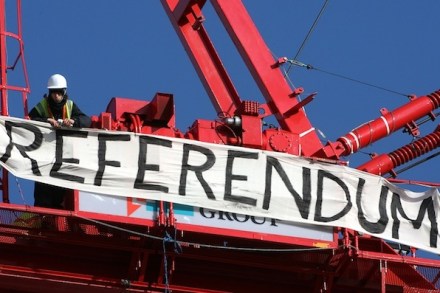
The next project for eurosceptic Tory MPs is to get a free vote for government ministers on the EU referendum. They want David Cameron to tell his frontbenchers whether or not they can campaign for a different stance to the one he’ll take (even if he wants to give the impression he might advocate leaving or remaining), and they want him to do it at the Tory conference in a few weeks' time. One of the reasons the eurosceptics want this is that it will make it easier for them to add the names of senior ministers to their lists of supporters of leaving the EU, and to do so as early as possible in order to build momentum for their campaign.

Does David Cameron really need to worry about Jeremy Corbyn’s stance on military intervention?

From our UK edition

Jeremy Corbyn becoming Labour leader will make it much more difficult for David Cameron to bring a vote to the House of Commons authorising British involvement in air strikes against the so-called Islamic State in Syria. That’s the received wisdom, anyway, but is it true? Tom Newton Dunn reported in the Sun this week that ‘dozens’ of Labour MPs were prepared to defy their party whip if it forbade support for action in Syria, which would mean the government would be able to cobble together a majority of Conservative MPs and Labourites, even if a group of Tories defied their whip. Yesterday the Prime Minister told the Commons that the work to remove both Assad and Isil would ‘on occasion, require hard military action’.

Adoption begins at home

From our UK edition

Would you open your home to a migrant child? If the reaction to the drowning of three-year-old Alan Kurdi is anything to go by, thousands of families across Britain are ready to welcome Syrian refugee children — including an impressive number of politicians. Bob Geldof has offered space for three families in one of his spare houses. Walking past the two empty beds in my spare room, I felt the same tug: why couldn’t those beds have two little heads nestling on the pillows, safe after years of horror? It’s the same instinct we feel when a toddler tumbles over on the street and his face crumples up into tears: we want to help, we want to hug. But there’s something odd about the rush of offers to help Syrian children.

Owen Paterson to write policies for Tory leadership hopeful

From our UK edition

It’s official: the Tory leadership contest is well and truly underway. No matter that everyone’s interested in the Labour result this weekend and no matter that David Cameron hasn’t even set a date for his departure. This evening, at a drinks reception in a parliamentary lair, Owen Paterson announced that he would be drawing up a set of robust Tory policies for whoever wants to stand as leader to adopt. Speaking to a group of MPs, peers and hacks, the Tory MP said that his think tank UK 2020 - which he said he set up after ‘I was fired’ by the Prime Minister - would work on a series of challenging policy papers over the next few months, which would provide a platform for a future leadership contender.

What the government’s first Commons defeat actually means in practice

From our UK edition

Following the government’s first Commons defeat of the new parliament, I understand that ministers are not going to try to reverse the primary legislation that introduces a ‘full fat’ version of the purdah restrictions on what central and local government can publish during the EU referendum campaign. But what the government can do to get its way is to use a statutory instrument to set out certain exemptions from those purdah restrictions. This was what the government amendment to new clause 10 of the legislation will allow: that changes to purdah can be introduced through secondary legislation, which must be approved by MPs. This means ministers can try again at a later date to get their way on the sort of purdah (a skimmed, rather than full fat, version).

Government will not deny ‘kill list’ of Isis targets

From our UK edition

Does the government hold a ‘kill list’ of terrorists fighting for the so-called Islamic State who can be taken out at a moment’s notice? Michael Fallon certainly seemed to suggest so this morning on Radio 4, saying the government ‘would not hesitate’ to launch further attacks on those who posed a threat to this country. The Prime Minister’s official spokeswoman neither confirmed nor denied the existence of a list when asked about it. She said: ‘It means the government remains absolutely committed to doing what is necessary to protect British people here on the streets of Britain.’ Pressed on the existence of a list of names, she said: ‘It means that our approach is to protect us from that threat.

Government defeated in the Commons on purdah

From our UK edition

So as predicted on Coffee House earlier, Tory rebels and the Labour frontbench did manage to conspire together this evening to defeat the government on purdah. The Commons voted against amendment 53 to the EU Referendum Bill 285 ayes to 312 noes, and then did not oppose Labour's amendment 4, which means that a 'full fat' version of purdah has been approved by MPs. The Labour celebrations of this defeat were notably muted: it's difficult to get too excited when your own party is in turmoil. But David Cameron has just suffered a defeat on a matter that the whips and ministers had been scheming over for months. First they snuck this report stage and third reading of the Bill in for the first day back so that rebels were in disarray.

Defeat looms as Labour and Tory rebels work together on purdah

From our UK edition

Following a confusing afternoon, Tory rebels have told the Labour whips they will back their amendments to the EU referendum bill which introduce a ‘full fat’ version of purdah. This means that the government, unless it yields at the last minute on the legislation, will be defeated. It was not clear whether the Tories would vote with Labour on those amendments - numbers 4 and 53. But they appear to have indicated to the Labour whips that they will support their amendments. More to follow...