Isabel Hardman

Isabel Hardman

Isabel Hardman is assistant editor of The Spectator and author of Why We Get the Wrong Politicians. She also presents Radio 4’s Week in Westminster.

PMQs: jeering Tories let themselves down

From our UK edition

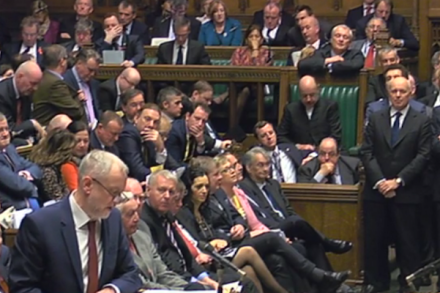
Today’s session of Prime Minister’s Questions was pointless. Describing any session as pointless is in itself a little pointless, as it takes you into the sort of territory where, like the author of Ecclesiastes, you end up declaring everything meaningless. But today really was a pointless session. The most obvious example of pointless behaviour came from the Tory side, with Conservative MPs deciding that they should return to the old days of roaring and jeering just as Jeremy Corbyn was asking questions about cuts to tax credits. David Cameron helped them out by chortling with exasperation as he responded without answering to yet another question from the Labour leader about whether he could guarantee that no family would be worse off as a result of the tax credit cuts.

Rows on Trident and Syria highlight Labour’s policymaking problems

From our UK edition

How does Labour make its policy? Different factions and frontbenchers are quarrelling about a number of issues such as Trident and action in Syria, but a common theme in each dispute is whose word actually represents official policy. Currently the party has a plethora of different stances on everything. Maria Eagle is having to explain that a Scottish Labour conference vote does not change the party’s official policy on Trident, while her Shadow Cabinet colleague Diane Abbott is explaining that it’s something the UK-wide party really should follow.

Will pro-EU Tory candidates struggle to find seats in 2020?

From our UK edition

That Tory activists are increasingly likely to vote to leave the EU rather than stay (see ConHome’s latest survey) in the referendum has all sorts of different effects on the party. But one is that it will make it more difficult for aspiring MPs who are quite in favour of staying in. A number of pro-European Tory activists mulling standing in 2020 are concerned that their europhilia will keep them out of the limited number of winnable seats that will come up for the next election. Competition will be fiercer because of the boundary review, which will reduce the overall number of seats from 650 to 600, and the Tory leadership is trying to ensure that no current MP who does want to stand again gets shut out. This means very few seats will come up anyway.

No10 insists that Cameron may still seek vote on bombing Syria

From our UK edition

Number 10 is this morning pushing back against the reports that David Cameron has abandoned a vote on extending British military involvement in action against Isis to Syria. Sources insist that they do not recognise the stories that have appeared in a number of papers and that nothing has changed. Those reports suggest that Cameron was struggling to persuade sufficient numbers of Labour MPs to back his stance. This is not particularly surprising given it was always going to be difficult to be confident that MPs from another party would definitely do as they said. The Tory whips can hardly apply the same methods to those MPs in the Opposition party as they do to those on their own side. Cameron has always said he will not bring a vote until there is consensus.

No, scientists haven’t discovered that ME ‘is not actually a chronic illness’

From our UK edition

Is Chronic Fatigue Syndrome actually an illness? My Spectator colleague Rod Liddle believes that the game is up on this little understood-condition after a news report last week which said that CFS ‘is not actually a chronic illness and sufferers can overcome symptoms by increasing exercise and thinking positively’ (the piece has since been amended online). This does sound rather strong, and perhaps a prompt to reconsider the way people with the condition are treated. There is, though, a small problem. The paper on which the report is based – in Lancet Psychiatry – makes no such claim. What it does say is the following: ‘Chronic fatigue syndrome is characterised by chronic disabling fatigue in the absence of an alternative diagnosis.

The ‘genius’ plan that stopped a Tory housing rebellion – and endangered a manifesto pledge

From our UK edition

The Housing and Planning Bill gets its second reading in the House of Commons this afternoon, and though Labour has been making angry noises about it, it won’t encounter as many problems as it might have done. This might ultimately be a bad thing for the Tories, though. The rebellion that won’t happen would have been on the right-to-buy for housing associations, which the Tories put in their manifesto, but which a number of their own MPs were deeply worried about. Housing associations were so worried about the impact of the government legislating to force them to sell off their homes that they made a voluntary offer to ministers to design their own scheme so that the government didn’t need to legislate.

Theresa May doesn’t rule out supporting leaving the European Union

From our UK edition

Could Theresa May be the politician to lead the ‘Out’ campaign in the European Union referendum? James examined this prospect in his politics column recently, and Westminster watchers have been trying to pick up clues as to whether the Home Secretary is preparing to support leaving the EU. Today she gave very little away on the Andrew Marr Show, but it was what she didn’t say that was the most telling. May insisted that the most important thing at the moment was that Britain did the renegotiation.

Children in care deserve better support as they adjust to adult life

From our UK edition

One of the few interesting questions from a Tory backbencher at PMQs this week was one from Michelle Donelan about children in care, particularly residential care. It may well have been planted, as it allowed the Prime Minister to announce a review of residential care, to coincide with Care Leavers Week. Today, as part of that week, the Public Accounts Committee found ‘systematic weaknesses’ in the support for care leavers, arguing that ‘central and local government must both take more responsibility for improving outcomes. One of the PAC’s recommendations was that children leaving care need better support from personal advisers, as currently many of those young people receive 'too patchy’ a service as they adjust to independent living.

Tory MPs hold their breath for tax credit changes

From our UK edition

George Osborne received a fulsome banging of desks last night at the 1922 Committee, joking that he should come back again once he’s won a vote if he gets that sort of reception when he’s lost. Tory MPs were doing the desk banging for the benefit of those hacks skulking outside, but they are now holding their breath to see what the Chancellor actually comes up with to mitigate the tax credit cuts in the Autumn Statement. Inside the meeting, the Chancellor was upbeat, but made clear that there will be movement on the issue. The waiting game means that David Cameron had to refuse to answer the same question six times at PMQs, and anyone else asked about the issue in broadcast interviews will have to deploy the same duck and weave technique.

Cameron rekindles collective responsibility row with EU comments

From our UK edition

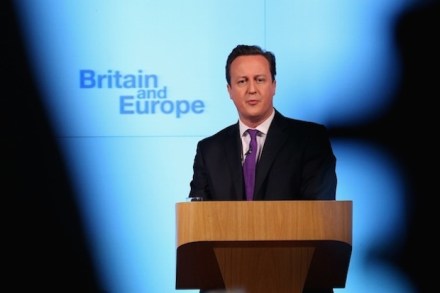
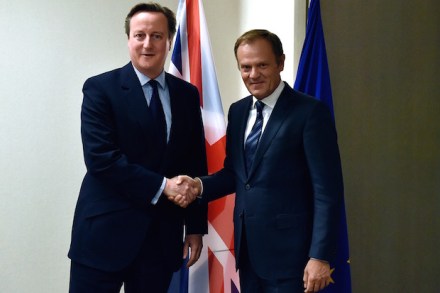
David Cameron’s decision to make it clear that he is definitely not ruling out Brexit by saying that ‘people need to understand there are significant downsides’ to being outside the European Union has been greeted with derision in eurosceptic circles. Campaigners argue that the Prime Minister clearly doesn’t think he’ll get much from his renegotiation if he doesn’t think it’s worth continuing to threaten that he could possibly campaign to take Britain out of Europe in order to spook EU leaders into giving him what he wants.

PMQs: Corbyn hones his skills as Leader of the Opposition, but not as an election winner

From our UK edition

Jeremy Corbyn’s growing confidence at Prime Minister’s Questions is almost perfectly in step with his growing unpopularity outside the Chamber. He has perfected his geography teacher stare of disapproval to the extent that Tory MPs now automatically fall silent when he talks for fear of being kept behind after class. And he isn’t leaping all over the place with a phone-in format that doesn’t hold the Prime Minister to account. This week, the Labour leader focused on tax credits, and highlighted David Cameron’s inability to answer his questions about whether he could guarantee that no-one would be worse off as a result of the changes.

Osborne prepares to face 1922 Committee as Tory anger at peers builds

From our UK edition

It is difficult to exaggerate the fury in the Tory party at the House of Lords after last night’s double defeat. MPs I have spoken to today want swift and damaging retribution from the government for the Upper Chamber’s behaviour that goes far beyond what ministers are likely to propose, with some suggesting that the bishops should be the first to take the hit because they should understand the constitutional delicacies involved in votes like this given their ‘privileged constitutional position in the Chamber’.

Ministers must now work out how to avoid a similar showdown with the Lords

From our UK edition

Unsurprisingly, the double defeat in the Lords on tax credits came up at Cabinet today. Baroness Stowell, Leader of the House of Lords, told the meeting that peers had broken the ‘longstanding convention’ of primacy of the Commons on financial matters. The Prime Minister reiterated his desire for a ‘rapid review’, details of which may emerge later today (once ministers have worked out what that rapid review might entail). Ministers need to work out what it is possible to announce that ensures the same scenario doesn’t arise again when the government tries to get a new Statutory Instrument through. The changes need to be something that the Lords will approve, otherwise the government will end up in a protracted battle with the Upper House.

Osborne pledges help for tax credit claimants after Lords humiliation

From our UK edition

Tonight has not been a good one for George Osborne, with peers refusing to take his word that he was in ‘listening mode’ about tax credits. He didn’t look particularly happy about the matter when he gave a pooled clip to broadcasters a few minutes ago. He complained about an unelected group of Labour and Lib Dem lords voting down a matter passed by the House of Commons, and added: ‘I said I would listen and that’s precisely what I intend to do. I believe we can achieve the same goal of reforming tax credits, saving the money we need to save to secure our economy while at the same time helping in the transition.

Number 10 lashes out at Lords on tax credits vote

From our UK edition

Number 10’s response to the government being defeated twice in the Lords on tax credits is, unsurprisingly, to say that the problem is the House of Lords, not the policy in question. A Number 10 spokesman has said this evening that there will be a review to see how the breach of a constitutional convention can be repaired: ‘The Prime Minister is determined we will address this constitutional issue. A convention exists and it has been broken. He has asked for a rapid review to see how it can be put back in place.’ There will be further details of this review tomorrow. This does suggest that the government will hold firm to its policy on tax credits, while creating a fight over the way the Lords functions. But that may not be the correct reading.

Peers offered tax credit deal: behave and Osborne will listen to you

From our UK edition

The House of Lords is unusually packed this afternoon for the debate on tax credit cuts. As I explained earlier, there are four motions to consider, and the government has decided to plump for one by the Bishop of Portsmouth as the least worst way of peers expressing their dissatisfaction with the situation. Tory Leader of the Lords Baroness Stowell has just told peers that she visited Number 11 this morning and that the Chancellor ‘would listen very carefully were the House to express its concern in the way that it is precedented for us to do’.

What to expect from today’s Lords showdown on tax credits

From our UK edition

There could be four troublesome votes on tax credits in the Lords this afternoon, each challenging not just the measures that George Osborne is keen to introduce, but also the way that the Lords functions. The most troublesome of all in terms of the constitutional implications is the amendment to the motion introducing the instrument from Baroness Manzoor. This is the Lib Dem ‘fatal’ motion and it changes the government motion ‘that the draft Regulations laid before the House on 7 September be approved’ to ‘that this House declines to approve the draft Regulations laid before the House on 7 September’.

Labour MPs try to ward off deselection threat

From our UK edition

As well as the rather big problem of how to get rid of a leader they think is unpalatable to the general voting public, Labour MPs also have to work out how to protect themselves from deselection. Simon Danczuk seems to be the only member keen to talk about the former, claiming today that he’s happy to be a ‘stalking horse’ if Labour performs badly in next May’s local, London and Holyrood elections. But without many colleagues backing him and the leadership contest rules and party membership remaining the same, Danczuk could find that his intervention drops like a dead donkey.

Arnie Graf: Corbynmania feels like student politics, not people trying to form a government

From our UK edition

Arnie Graf was, for a little while, the man who was supposed to rebuild the Labour party after its 2010 defeat. He was a famed community organiser from the US, brought over by Ed Miliband to have a go at revitalising is party. Graf didn’t last, but last night he spoke about his experiences with the Labour party, and what he thought of the current surge in membership under Jeremy Corbyn. This was his first brush with proper party politics, and while Graf had clearly enjoyed the work he’d done in building up the party in small local areas with community meetings, he said ‘I wouldn't come back to it where the party is now’. But surely the surge in membership was exactly what someone like him, keen to organise groups of people, was after?

MPs approve plan to introduce English votes for English laws

From our UK edition

MPs have just approved the change to the Commons regulations that will introduce English votes for English laws by 312 votes to 270. The proposals mean an additional stage of scrutiny in the Commons where a grand committee of either English MPs or English and Welsh MPs can consider and veto the proposals. It is not particularly clear how often this situation would arise, and therefore it really does remain to be seen whether this will practically make a great deal of difference to Parliament. The debate on the measure saw Scottish National Party MPs warning of the creation of two classes of MP, and of damage to the Union.