Isabel Hardman

Isabel Hardman

Isabel Hardman is assistant editor of The Spectator and author of Why We Get the Wrong Politicians. She also presents Radio 4’s Week in Westminster.

Why Tory MPs are so worked up about forced academisation

From our UK edition

Tory MPs remain confident that they will force the government into a U-turn over forced academisation. Though departmental sources are pushing back against reports in today’s Financial Times that ministers are putting the brakes on the reforms, they cannot answer the question of how the changes would actually get through the House of Commons. And though David Cameron put up a spirited defence of the policy at Prime Minister’s Questions yesterday, Tory MPs have been saying that they have yet to see the evidence base for forcing schools that may be perfectly successful and stable into changing the way they are run.

Why is Scottish Labour putting so much effort into its Trident policy?

From our UK edition

It’s perhaps not a surprise that Scottish Labour will oppose Trident renewal in the party’s manifesto for the Holyrood elections. The party did hold a symbolic vote on the matter at its conference last autumn, and delegates voted against renewal of the nuclear deterrent, despite Kezia Dugdale’s own preference for multilateral disarmament. And it’s not a surprise that this has enraged trade union GMB Scotland, which is pushing for a vote in favour of the Trident successor programme at today’s Scottish Trades Union Congress conference. SMB Scottish Secretary Gary Smith accused the Scottish Labour party of playing ‘fast and loose with thousands of livelihoods at Faslane, Coulport, Rosyth and across our wider defence-related industries’.

Leave campaigners brace themselves for ‘In’ onslaught

From our UK edition

If the number of foreign politicians and international organisations that the government is enlisting in the campaign to stay in the EU is anything to go by, David Cameron and George Osborne are a bit nervous about the outcome of the referendum. This week in particular has seen the Chancellor using not just the might of the Treasury to scare voters about Brexit, or just the might of the President of the United States, but also eight former US Treasury secretaries. In their letter today, the former ministers write that Britain leaving the EU would threaten the Special Relationship. They argue: ‘It would reduce Britain’s very positive influence as an ally of the United States and a strong participant in the G7 and in the G20.

Can filibustering be filleted out of Private Members’ Bills?

From our UK edition

‘The Commons at its best’ is a bit of a pompous phrase that people apply to all sorts of sessions in Parliament that aren’t really the Commons at its best at all. But the Commons at its worst is surely easy to find: it’s when MPs meet on a Friday to discuss Private Members’ Bills. These sessions have turned into a circus of MPs proposing slightly rubbish legislation, and Philip Davies or one of his colleagues talking that legislation out so that there cannot be a vote on its second reading, thereby killing it.

Government avoids defeat on banking bill

From our UK edition

Today's Treasury questions was a pretty tame affair. Labour produced a pretty mild set of questions on tax avoidance and solar energy, while Tory eurosceptics only caused trouble in the opening questions by complaining about the Treasury's analysis of the economic consequences of Brexit - and at the very end when Sir Edward Leigh and Stewart Jackson challenged the Chancellor again on the matter. But there wasn't much heat in either line of inquiry. What was more interesting was the way George Osborne managed to avoid a growing rebellion on the Bank of England and Financial Services Bill when he took a topical question from Tory MP Charles Walker.

Labour MPs fry Corbyn over McDonald’s ban

From our UK edition

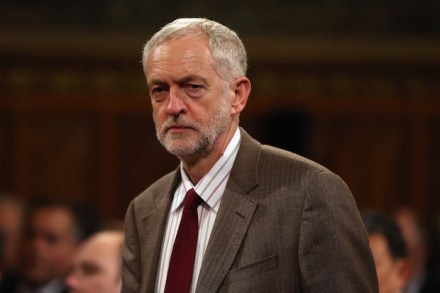
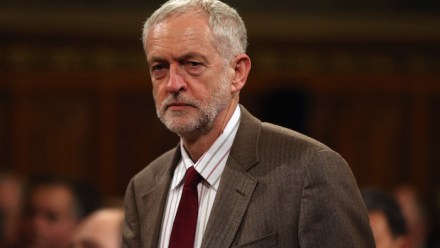
Although the weekly meeting of the parliamentary Labour party is a private affair, Jeremy Corbyn’s spokesman offers journalists lurking in the committee corridor outside a briefing as soon as it has concluded. Today he had to take questions from hacks on whether or not his boss goes to McDonald’s - prompted by the news that the Labour party is banning the fast food outlet from having a stall at its party conference. Both the staff and the burger ban came up at the meeting. It started with an observation from Baroness Armstrong that the Labour leader now has a phalanx of staff with him when he attends these sessions, as opposed to just one or two advisers.

Labour backbenchers focus fire on Emily Thornberry again at Defence Questions

From our UK edition

Departmental questions in the House of Commons are generally an opportunity for backbenchers of all parties to hold the government to account. But a strange pattern is emerging at Defence Questions, whereby the backbenchers of each of the two main parties pour their efforts into making life uncomfortable for their own frontbenchers, even though Labour’s team isn’t actually in government. So today Michael Fallon and his ministers had to contend with complaints from Sir Edward Leigh about the suggestion that Britain leaving the European Union would harm Britain’s national security.

Priti Patel brings primary schools into the EU debate

From our UK edition

Another interesting change of tack in the EU referendum campaign comes from the Leave camp today, with Priti Patel warning about school places. The employment minister warns that EU migration is putting ‘unsustainable pressure’ on schools, saying: ‘The shortage of primary school places is yet another example of how uncontrolled migration is putting unsustainable pressures on our public services. ‘Education is one of the most important things the Government delivers, and it’s deeply regrettable that so many families with young children are set to be disappointed today.’ In one sense, this isn’t a surprising intervention: it’s primary school offer day, when parents find out whether their children have got places at their first choice.

How ministers had to change tack in the EU referendum campaign

From our UK edition

George Osborne harnesses the might of the Treasury machine today in the EU referendum campaign, publishing a weighty tome that tweaks 200 pages to warn of the consequences of Britain leaving the EU. He also warns of a ‘profound consequences for our economy, for the living standards of every family, and for Britain’s role in the world’. Those profound consequences include every family being £4,300 a year worse off as a result of Brexit, the Chancellor argues. John Redwood has already dismissed the document - which hasn’t yet been published - as ‘absurd’. But what it does tell us is that the government has accepted that the security argument alone won’t win the referendum.

Referendum camps try to enthuse voters as official campaign starts

From our UK edition

Rather like the 2015 General Election campaign, the EU referendum campaign feels as though it has been going on rather a long time. And yet today is in fact only the start of the official ten-week campaign. There may be some in Westminster who are filled with great excitement at the thought of another ten weeks of bickering about who has the most negative campaign. But the campaigns do have the difficult challenge of motivating those who back them to get out and vote on the day, and endless fighting and negativity about negativity won’t quite do the trick.

Tories expect academy policy U-turn

From our UK edition

Tory MPs are increasingly convinced that the government may back down on some of its plans for forced academisation of all schools, I understand. The Commons is currently holding an Opposition Day debate on the plans, confirmed in last month’s Budget. They have upset a good number of Conservative MPs and councillors, not least because they appear to contradict the government’s commitment to localism. A large number of MPs are complaining in the debate about the dangers of imposing the academy model on all schools, and removing the requirement for academies to have parent governors.

What is Labour’s official position on John Whittingdale?

From our UK edition

A Shadow Cabinet split has opened up over whether John Whittingdale should step aside from making decisions about press regulation. Labour decided this morning that it was going to attack the Culture Secretary for the revelations about his private life, arguing that they meant he could not take decisions about press regulation. Maria Eagle issued a statement saying ‘in order for the public to have any confidence in the government’s approach to press regulation and to allay any concerns about perceptions of any undue influence, the secretary of state must now recuse himself from any decision making over this matter, just as Vince Cable was removed from deciding media policy in the last Parliament’.

Will Ruth Davidson’s ski-doo stunts pay off at the ballot box?

From our UK edition

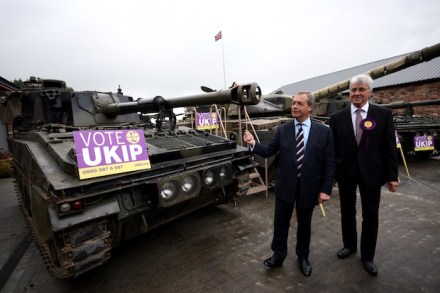
Just a few days into the official campaign for the Holyrood elections and Ruth Davidson has had to change her tactics. The plan had originally been for the Scottish Conservatives to run a serious campaign which has fewer tanks than the election campaign, and more serious speeches. ‘We tried that whole idea of you know we're going to do this really stripped down, just speeches, and just like listening to people bla bla bla,’ says Davidson. ‘And then kind of all the press went this is really boring and we went, yeah, it kind of is.’ And so Davidson has been playing ice hockey, racing blue and red cars, and driving a ski-doo. When we meet, she is touring a very serious looking factory.

Our approach to the elderly is a national scandal

From our UK edition

Parents are so worried about the behaviour of nursery workers looking after their children that they are installing secret cameras to keep tabs on them. Can you imagine the outrage that would follow this story, if it were true? Yet when, as the Times reports today, the vulnerable people concerned are elderly, then the abuse attracts far less attention. The newspaper reported this morning that charity Action on Elder Abuse is encouraging people to install hidden cameras in the rooms of older relatives to monitor their carers. The charity’s helpline received 7,529 calls from people worried they were victims of financial abuse last year, up from 3,500 the previous year.

Parliament is becoming an easy place for ministers to calm rows

From our UK edition

The government has had a messy few weeks: that much is clear. And the latest mess, which is the row following the Panama Papers leaks, is still all over the press a week after the story broke. There are apparently more revelations to come. But the government has also settled into a pattern of having multiple damaging rows which are played out in the media over days, with a series of ill-judged responses making matters worse, followed by an attempt to calm things down in the House of Commons on a Monday afternoon.

Cameron’s handling of the tax row means it won’t go away any time soon

From our UK edition

David Cameron will give a statement in the Commons addressing the row about his tax arrangements, with George Osborne expected to publish his own tax return in the coming days too. That the Prime Minister has had to prepare a statement for MPs so that he can avoid being hauled to the Commons by Labour with an urgent question shows both how serious this row is for Cameron, but also how he is trying to compensate for being unprepared last week. He had clearly underestimated how potent the revelations in the Panama Papers would be, thinking that they could be dismissed with a mere line about this being a ‘private matter’. The bitty statements and changes of tack that came over the following days shows that no-one in Downing Street really thought Cameron was in any danger.

The government has returned to a period of omnishambles

From our UK edition

You can tell a lot about how a party’s press operation thinks things are going from who it sends out to do its dirty work on the airwaves. Yesterday the Conservatives sent Michael Fallon out to defend the Government’s £9m pro-EU leaflet, which suggested that they knew it was going to be controversial and would need defending by someone skilled at sticking to the line, even when the line is totally untenable and difficult to defend. Today, Nick Boles popped up on Radio 4 to defend David Cameron’s eventual admission that he had indeed made money from the offshore fund set up by his father.

David Cameron defends £9m spend on EU leaflets

From our UK edition

David Cameron has defended the £9m government leaflet promoting the EU as ‘money well spent’ and ‘necessary’, as the Tory party erupts into fury once again. What’s interesting about this new row - over a leaflet sent to all homes which sets out ‘why the Government believes that voting to remain in the European Union is the best decision for the UK’ - is that it has incensed not just those usual suspects who are annoyed that the Remain side already has a natural advantage in the referendum campaign in that it can wheel out the Prime Minister for guaranteed media attention whenever it likes.

Do the Tories want to lose London?

From our UK edition

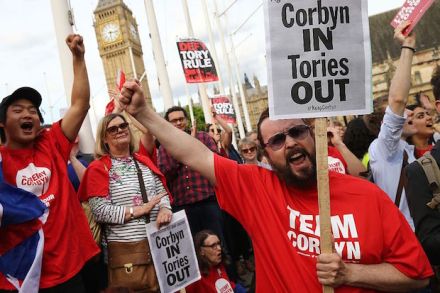
The Labour plotters who dream of ousting Jeremy Corbyn had high hopes for the local elections on 5 May. They envisaged a moment of humiliation for their leader in Scotland, Wales and England; a moment that would prove beyond doubt that the party’s leftwards lurch had narrowed its appeal and consigned it to the electoral wilderness. A good time, in other words, to stage a coup. Corbyn’s loyalists, for their part, had been preparing to blame the rebels and their constant sniping. Neither side imagined what now looks likely: that Labour might soon be celebrating a stunning victory in London. The party is expecting a sharp decline in its total number of English council seats.

The Tories should have known the taxing questions were coming

From our UK edition

Downing Street has spent the past 24 hours trying to clarify David Cameron’s links to an offshore fund set up by his late father, which never paid tax in Britain. Initially, Downing Street said this was a ‘private matter’, Cameron was then asked about the matter, and said ‘I own no shares, no offshore trusts, no offshore funds, nothing like that. And, so that, I think, is a very clear description.’ Then Downing Street issued a statement saying ‘to be clear, the Prime Minister, his wife and their children do not benefit from any offshore funds’. And today Number 10 had to clarify further: ‘There are no offshore funds/trusts which the prime minister, Mrs Cameron or their children will benefit from in future.