Isabel Hardman

Isabel Hardman

Isabel Hardman is assistant editor of The Spectator and author of Why We Get the Wrong Politicians. She also presents Radio 4’s Week in Westminster.

Nice attack: Quiet shock reigns on the city’s streets

From our UK edition

Nice is quiet today, moving a little slower than it was yesterday, but it still moves. There is a strange disconnect between the way a city that has fallen victim to an horrific terror attack looks on television, and how it feels to those moving around it. Even somewhere that has seen such a terrible number of deaths in the middle of a lovely, gentle family event which had been filled with smiles and the oohs and ahhs of a firework display then looks surprisingly normal the following day. People were of course still going to work and buying coffee this morning, just with slightly blank expressions on their faces, or with phones pressed to their ears as they spoke to all their family and friends to reassure them that they were safe.

At least 80 dead in Nice after lorry crashes into crowds

From our UK edition

A lorry has ploughed into crowds celebrating Bastille Day by the beach in Nice;  there are reports of at least 80 people killed. I am currently in the city, having watched the fireworks in the crowd on La Promenade des Anglais near the sea, where the attack took place. I was just walking home when the screaming began, and people started running from the main square. The streets were full of people running in panic and sirens ringing: no one, at present, knows what happened. At first there were reports of a dozen dead; now it's several dozen. One of the papers here, Nice Matin, has published a photograph of a HGV saying it was ‘riddled with bullets’. That squares with some of the reports on French TV.

May’s man of influence

From our UK edition

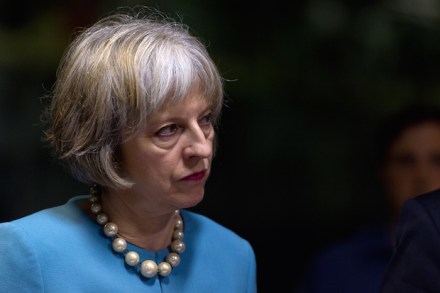
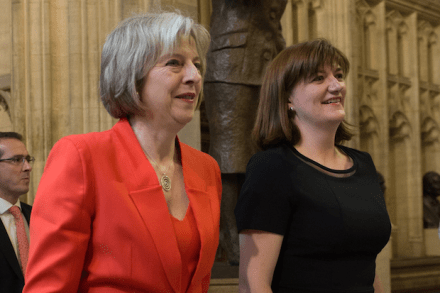
Civil servants in the Home Office, even the senior ones, always felt a little nervous when walking towards Theresa May’s office. It wasn’t so much the meeting with the Home Secretary that they dreaded as the characters who lurked in the room directly outside hers. One senior official describes a typical scene: Fiona Hill, one of May’s special advisers, ‘sitting back, getting ready to go out with her stockinged feet on the desk, giving a civil servant an absolute rollicking’. May’s two other special advisers, Nick Timothy and Stephen Parkinson, were also forces to be reckoned with. Now, it seems, this team is being reassembled — to help her run Britain. All three have taken a break from government in the past couple of years.

David Cameron’s legacy is out of his control

From our UK edition

It was a rather cruel pathetic fallacy that the Prime Minister who had to resign early after creating a political storm by accidentally taking Britain out of the European Union gave his final speech from Downing Street under rumbling, rolling storm clouds. At one point, the wind whooshed back David Cameron’s hair and rain began to splatter on the hundreds of cameras watching his statement. Cameron clearly wanted to use the statement to tell the British people what he thought his legacy was, and to highlight the ways in which he thought he had performed particularly well.

Where will Theresa May get her policies from?

From our UK edition

Theresa May takes over as Prime Minister this afternoon much sooner than she expected at the start of the week. First on her agenda is to appoint her Cabinet, which we are expecting to happen later today, but then the new Tory leader will have a great number of gaps to fill in when it comes to what she thinks about policy. A full leadership contest would have revealed this, but instead we will have to get to know May as she does the job. Those looking for clues about what sort of policies the new Prime Minister will adopt could do worse than to look at the work the 2020 Conservatives Group has started doing.

Labour chief whip complains to Corbyn and Momentum about abuse of MPs

From our UK edition

Labour MPs are becoming increasingly agitated about the amount of abuse and intimidation they are receiving, to the extent that the party’s chief whip has complained to Jeremy Corbyn and written to the head of Corbynite group Momentum to seek assurances that it is cracking down on bad behaviour in its ranks. Rosie Winterton has been writing to Jon Lansman, who chairs Momentum, over the past week about allegations from a number of Labour MPs about activists from the group. The group has officially made it clear that people shouldn’t be protesting outside MPs’ offices, or intimidating their staff. But many parliamentarians are extremely upset by the level of abuse they are receiving, not just online but at meetings too.

What might David Cameron do next?

From our UK edition

David Cameron has chaired his last ever, emotional, Cabinet meeting this morning, with just a final Prime Minister’s Questions lying between him and freedom. He may want to follow the example of Tony Blair and have a memorable sign off such as ‘and that is that, the end’, though it’s not clear whether he’ll find quite so many MPs keen to give him a standing ovation as he walks out, the Prime Minister who accidentally took Britain out of the European Union. But what Cameron chooses to do next is interesting. He has already said that he wants to stand again as MP for Witney in 2020.

Labour party split over whether to split

From our UK edition

As well as all the other things that Labour MPs are anxious about at the moment, there is genuine anxiety in the party today that some MPs are considering splitting off to join a new, moderate group in politics. Certainly Labour MPs are pretty miserable about the state of their party - and about the way many of them are being treated by their own local parties. And many Labourites are starting to believe that a split is inevitable, with many arguing that it is wrong to be wary because of what happened to the SDP, as this would be a much larger chunk of MPs who would break off from the party than did in the 1980s.

And then there was one… Theresa May’s team prepare for government

From our UK edition

Chris Grayling has given this very brief statement on behalf of Theresa May in the past few minutes: ‘Can I start by thanking on behalf of Theresa May and on behalf of everyone involved in Theresa’s campaign team by thanking and paying a warm tribute to Andrea Leadsom. Her actions this morning have shown what a principled and decent politician she is and how willing she is to put the interests of the country before her own. She is a true public servant. Theresa is currently on her way back to London from Birmingham and she will make a statement later today. But on her behalf I’d just like to say that she is enormously honoured to have been entrusted with this task by so many of her parliamentary colleagues.

Andrea Leadsom: Theresa May is ‘ideally placed’ to implement Brexit

From our UK edition

Andrea Leadsom has withdrawn from the Tory leadership race, saying ‘the best interests of our country are best served by the immediate appointment of a strong and well-supported Prime Minister’ and that she did not have sufficient support to lead a strong and stable government. She said Theresa May was ‘ideally placed’ to implement Brexit and that she would withdraw immediately so that the new Prime Minister could be appointed immediately. Leadsom did not mention the torrid weekend that she has had, in which she sustained heavy criticism for her comments about having children giving her a ‘direct stake’. But even her supporters had come away from the past few days concluding that she was naive and on a steep learning curve.

Jeremy Corbyn hints at legal challenge if he’s kept off the ballot paper

From our UK edition

Jeremy Corbyn was insistent this morning on the Andrew Marr Show that he isn’t going anywhere. More than that: he insisted that Labour is ‘changing the way politics is done’. His opponents in the party would agree, as it happens. Corbyn is going nowhere, certainly not anywhere near to Number 10, but also nowhere near being a functioning Opposition leader. And he is changing the way politics is done, by making it more and more difficult for Labour to ever get into power. The interview itself was proof that under Corbyn, Labour cannot function as an Opposition.

Angela Eagle threatens Labour leadership bid on Monday

From our UK edition

Finally, the Labour coup is about to begin. Or at least, Labour MPs are talking about the fact that the Labour coup is about to begin, after weeks of threatening it. After talks between the party’s Deputy Leader Tom Watson and Labour’s trade union backers broke up today, Angela Eagle has said she will launch her leadership challenge to Jeremy Corbyn on Monday. The talks broke down because Corbyn would not resign and the parliamentary Labour party would not accept his leadership after voting overwhelmingly in favour of a motion of no confidence two weeks ago, and so there was no possible compromise to reach. Corbyn’s camp are confident that they have the support of Labour members.

Why Andrea Leadsom may still benefit from her naive comments about motherhood

From our UK edition

One of the rules of modern leadership contests is that at some point there is an almighty row about whether one of the candidates is just better than the other because she happens to have had children of her own. Labour reached that stage on 6 July 2015 when Helen Goodman wrote a piece saying she was supporting Yvette Cooper because she was a mother, which the Liz Kendall camp took exception to. The Tories reached it almost exactly a year later when Andrea Leadsom gave an interview to the Times in which she said she had a ‘real stake in the future of our country’ because she has children.

What has happened to Labour’s coup?

From our UK edition

Things have gone mysteriously quiet in the Labour party. Every so often, Len McCluskey and Tom Watson emerge from a meeting, asking their comrades to give them a little bit more time before any of them move against Jeremy Corbyn. And nothing seems to happen. How much more time do the plotters need to give the unions and the party’s deputy leader before they give up and make a move on the leader? Or have thy already given up, and decided that they can’t defeat him and that it’s all over? Some reports in the past few days suggest that Labour MPs have marched all the way up the hill by resigning from the frontbench and passing a vote of no confidence in Jeremy Corbyn, only to get close to the summit and realise they don’t like heights.

Gove camp nervous as Tory MPs go to vote again

From our UK edition

This afternoon we will find out which two Tory MPs will face the Conservative party members in the leadership contest. Theresa May is the favourite and is far out in front of her closest rival, Andrea Leadsom, who has a decent lead over the third candidate, Michael Gove. But neither have had a very good few days. Leadsom was mocked for talking about frontal cortexes at the first party hustings this week, and has endured a great deal of criticism about her claims she is an experienced City figure.

Tony Blair’s rumination over his own ‘good faith’

From our UK edition

Tony Blair appeared emotional, sounded hoarse, and constantly fixated upon his belief that he acted in ‘good faith’ over Iraq when he responded to the Chilcot report this afternoon. The former Prime Minister spoke or took questions for two hours, and started by saying that he accepted ‘full responsibility, without exception and without excuse’. But he also made clear that he disagreed with Chilcot’s findings that the decision to invade Iraq could have been delayed. The key feature of the long press conference, though, was Blair ruminating constantly on whether he had acted in good faith when taking the decision to go to war.

‘I will be with you, whatever’: What Chilcot tells us about Tony Blair

From our UK edition

The Iraq Inquiry report is utterly scathing about Tony Blair. It paints a critical picture of his sofa government, in particular the way in which that government approached planning and preparation for Iraq without Saddam Hussein, and his ‘certainty that was not justified’ in presenting the severity of the threat posed by Iraq’s weapons of mass destruction to Parliament. The Prime Minister also appeared more concerned about the politics of the military action than its detail, and failed repeatedly to ensure that the relevant ministerial oversight and Whitehall resources were directed to the conflict. And he seemed unable to challenge or disagree with the US when necessary.

Iraq Inquiry: Key points from Sir John Chilcot’s statement

From our UK edition

Should the UK have gone to war in Iraq? Did it have the necessary legal basis and intelligence to do so? And did it mess up once involved militarily in the country? Sir John Chilcot’s Iraq Inquiry finally published its report this morning, and these are the key conclusions that he reached in his statement: While military action against Saddam Hussein ‘might have been necessary at some point’, in March 2003, he posed no imminent threat, the strategy of containment could have been continued for ‘some time’, and the majority of the Security Council supported continuing UN inspections and monitoring’. ‘Military action at that time was not a last resort,’ Sir John said in his statement.

How the UK messed up Iraq: what the Chilcot Inquiry says about post-conflict planning

From our UK edition

The Iraq Inquiry dismisses claims that the aftermath of the invasion could not have been foreseen. It describes the planning and preparations for the country after the fall of Saddam Hussein were ‘wholly inadequate’. In his statement, Sir John said that ‘despite explicit warnings, the consequences of the invasion were underestimated’. The report details both an awareness of the inadequacy of plans and a marked lack of effort from Whitehall. It says: ‘The scale of the UK effort in post-conflict Iraq never matched the scale of the challenge. Whitehall departments an their ministers failed to put collective weight behind the task.