Igor Toronyi-Lalic

Igor Toronyi-Lalic is arts editor of The Spectator

Welcome to Culture House Daily

From today, The Spectator's gift for online enlightenment and trouble-making will now extend into the world of culture. Our aim is take the insurgent spirit of Toby Young's Modern Review, and apply it to the digital world -- that is, to provide low culture for highbrows, and high culture for lowbrows  Culture House Daily will be a deference-free, one-stop shop for the latest news and sharpest views on the arts. Unveiling a steady stream of fresh content each day, Culture House Daily will present a mixture of news, overnight reviews and opinion, alongside plenty of lovely images. It will be the perfect space to help you navigate the shifting sands of contemporary culture.

Anything you can smash, I can smash better

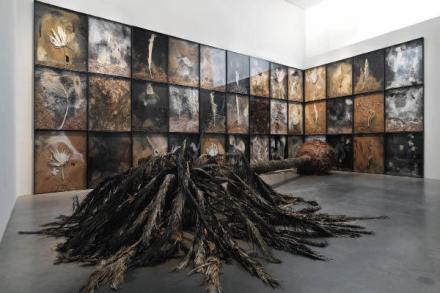
Art is under attack. Another week, another expensive poke in the eye. Last Sunday, Miami artist Maximo Caminero destroyed a $1 million vase by Ai Weiwei in protest at the museum ignoring the work of local artists. Before this, there was Wlodzimierz Umaniec’s defacement of a Tate Modern Mark Rothko in the cause of 'Yellowism', which saw the  Pole jailed for two years. Then came the story of the kids caught clambering over a $10 million Donald Judd. It’s hard not to smile. The irony of it all is too delicious. An art form that has for 100 years demanded that practitioners shaft society’s norms is, in turn, having its norms shafted. The art establishment is being out-transgressed. We can't have that. Caminero’s case is instructive.

Give Steve McQueen a Nobel prize not an Oscar

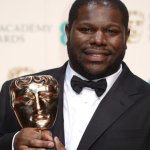
Film critic Armond White has been booted out of the New York Film Critics Circle. Officially it was for heckling Twelve Years A Slave director Steve McQueen at a press conference. But they can’t have liked him telling the truth about the movie. Namely, that it’s crap. We should listen to  hecklers. Especially when they’re as serious as White. That they have to heckle their message is usually a sign that something is up. And something is up.  The consensus surrounding Twelve Years a Slave is getting unhealthy. For many the very act of telling Solomon Northup's story is enough to immortalise the film. No matter that the acting is one-note, the editing clumsy, the score criminal. Twelve Years is the first film to tell the real story of slavery.

Sound and vision | 19 November 2011

The 20th century was a century of musical revolutions. One of the last and most audacious ignited 50 years ago on the east and west coasts of America. And in a small but significant way The Spectator played a part in fanning the flames. In 1968 a young critic and early-music specialist by the name of Michael Nyman was sent out by the magazine to review a new work by Cornelius Cardew, a little-known British maverick. What struck Nyman about Cardew’s new piece, The Great Learning, was how different the musical language was from that of the complex and angsty European avant-garde. ‘It was very gentle, it was very modest, it wasn’t trying to make a huge technical statement,’ Nyman once explained.

The art of giving

How will the arts world plug the funding gap? Igor Toronyi-Lalic investigates It’s an idea so simple in concept, so elegant in execution, so bursting with potential, that you kick yourself for not thinking of it yourself. ‘You put your project here,’ explains 28-year-old solicitor and budding internet entrepreneur Michael Troughton, scrolling down the front page of his flash new website. ‘And you put your money there.’ Even his cat comes to investigate. What Troughton is describing is WeFund.co.uk, the first British attempt to apply crowdfunding to arts financing. Barack Obama used crowdfunding for his 2008 presidential bid — that is, asking a lot of people to give a small amount of money.

Yes to Bach, no to Debussy

The ‘poet of the piano’, Murray Perahia, talks to Igor Toronyi-Lalic about being championed by Horowitz, his rise to fame and how his injury taught him what to play Murray Perahia was 17 when Vladimir Horowitz, perhaps the finest pianist of the 20th century, knocked on the door of his family house in the Bronx. ‘Could I speak to Mr Perahia?’ the great man said through the door. ‘Hold on, I’ll get my father,’ said Murray. ‘No,’ said the voice. ‘I mean Murray Perahia. It’s Mr Horowitz here.’ Young Murray still had no idea who this visitor was. ‘In my Jewish neighbourhood, everyone was Mr Horowitz,’ he says. But once he opened the door, the penny dropped.

Getting in on the act

Old operatic conventions will no longer do, says Igor Toronyi-Lalic: no more parking and barking Caricatures are often instructive. Those that acquire legs will offer a crystallised version of the truth. The hoary send-up of opera, for example — the lardy singers, the stilted poses, the outstretched arms — is representative of a historic reality. Opera singers did once park and bark. Character was once illustrated through stock gesture and semaphore. The presumed impossibility of mastering both the singing and the acting meant consigning half the art form to the dustbin. ‘How can you act if you have to hold a sustained note for six measures in the middle of an emotional climax, with your eyes glued on the conductor?

‘I’ve written as well as I can’

Igor Toronyi-Lalic talks to Sir Peter Maxwell Davies as he celebrates his 75th birthday A month ago, Sir Peter Maxwell Davies shuffled on to the Royal Albert Hall stage to a wall of sweet applause after a performance of one of his works. It wasn’t always so. Rewind to the 1960s when etiquette dictated that half the audience would walk out or boo whenever his shock of hair bobbed into view. But the Master of the Queen’s Music has come a long way. He’s now an obedient courtier — a very convincing, plummy one with an aristocratic stoop, and, though one can catch something every now and again in his mad blue eyes, the radical charge has by and large gone both from his demeanour and his musical language.

‘Booming, beaming waves of noise’

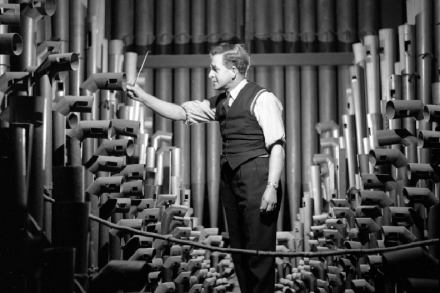
Igor Toronyi-Lalic looks back to the early 20th century when organs were in their heyday ‘As in England, in America the organ is King,’ wrote the French organ-composer Louis Vierne in 1927, following a phenomenally successful three-month tour of America and Canada. His 50 recitals had drawn in around 70,000 obsessed fans, including some 6,000 at the Wanamaker’s department store in Philadelphia alone, home to the world’s largest organ. There was a time, not so long ago, when the organ and its practitioners were at the top of the musical pile.

Under cover of absurdity

Igor Toronyi-Lalic on the power of animation to subvert and propagate ideas The day after the attack on Pearl Harbor in 1941, the American army, on one of its first assignments, requisitioned Disney Studios and remained there for eight months. It was the only studio to suffer that fate but Walt Disney, ever the patriot, was more than obliging. By 1942, 93 per cent of his output (which was by now the largest of any Hollywood studio) was under government contract. He produced propaganda cartoons, such as the 1943 anti-Nazi film Education for Death, a series of animated instructional films — including, quite improbably, A Few Quick Facts about Venereal Disease — and enlisted Donald Duck full-time. In the words of one historian, Disney became a ‘bona fide war plant’.

Screen saver

Igor Toronyi-Lalic on the important role opera played in the early days of cinema In 1978, the Swiss impresario Rolf Liebermann picked the veteran American director Joseph Losey to direct a film adaptation of Mozart’s opera Don Giovanni. At that point they hadn’t yet met or spoken but Liebermann, having passed over Franco Zeffirelli and Patrice Chéreau, must have felt pretty confidant that Losey was the right man for the job. When they finally came together, Liebermann was horrified. Losey had never heard Don Giovanni and considered Verdi and Wagner boring. To prove to him it wasn’t, Liebermann dragged Losey to the Paris Opéra where he was director. Before the lights were out, Losey was asleep.