Ian Thomson

Ian Thomson is the author of books including Dante’s Divine Comedy: A Journey Without End.

Travel Special – Jamaica: Meeting the queen’s man

From our UK edition

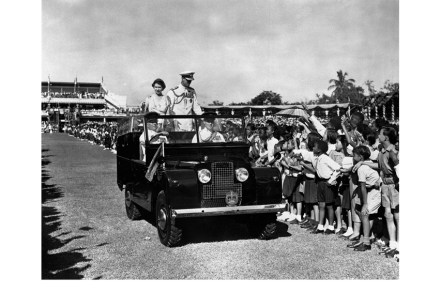
This August, Jamaica celebrates the 50th anniversary of independence. Amid the bunting and parades, talk will be of Britain’s continued presence in the island and the role of the monarchy in particular. Jamaicans are often incredulous that Queen Elizabeth II should still be their head of state. The Jamaican prime minister, Portia Simpson-Miller, has taken steps to replace the Queen with an elected president; yet she vigorously embraced Prince Harry during his Jubilee tour. Recently in Jamaica I went to see the outgoing governor-general, Sir Howard Cooke. Jamaican by birth, Sir Howard was known to love Britain. We met in the Jamaican capital of Kingston. Soldiers in khaki drill saluted me as the taxi pulled up at the entrance to King’s House on Hope Road.

Rover dose

From our UK edition

The other day my five-year-old Labrador was diagnosed with acute cannabis intoxication. I had been taking Olga for a walk on Hackney Downs when she disappeared behind an abandoned railway. I imagined she had found some fox shit and was rolling in it delightedly. Bad pooch! On the way home she began to stumble and fall over; half an hour later she was virtually unconscious. With Olga disoriented and whimpering in the car we drove to a vet in Canonbury. The vet took one look at Olga. ‘Very subdued. Seems almost sedated. Most likely it’s a case of oral marijuana poisoning.’ Marijuana? ‘It’s got nothing to do with me,’ I said. My chocolate-brown retriever was now zonked on the table.

Bookends: A network of kidney-nappers

From our UK edition

Raylan Givens, an ace detective in the Raymond Chandler mould, has encountered just about every shakedown artist and palooka in his native East Kentucky. His creator, Elmore Leonard, is a maestro of American noir; Raylan (Weidenfeld, £18.99), his latest thriller, presents a familiar impasto of choppy, street-savvy slang and hip-jive patter that verges on a kind of poetry. Typically, Raylan charts a murky underworld where criminals are in cahoots with politicians, and where murder is a consequence of this corruption. In his curl-toed cowboy boots, Federal Marshal Givens is summoned to investigate a case of trafficking in human body-parts. A man has been found moribund in a bathtub with his kidneys apparently removed by surgery.

Godfather of rap

From our UK edition

At a funeral in New Orleans in 1901, Joe ‘King’ Oliver played a blues-drenched dirge on the trumpet. This was the new music they would soon call jazz. A century on, from the hothouse stomps of Duke Ellington to the angular doodlings of Thelonious Monk, jazz survives in the vocal inflections of rap. To its detractors, rap presents black (increasingly, white) people to the world in terms the Ku Klux Klan might use: illiterate, gold-chain-wearing, sullen, combative buffoons. (‘Life ain’t nothing but bitches and money’, harangued the Los Angeles combo N.W.A. in a reversal of Martin Luther King’s ‘black improvement’.) Yet Bob Dylan had offered an early version of rap in ‘Subterranean Homesick Blues’; rap has its pedigree.

Montserrat Notebook

From our UK edition

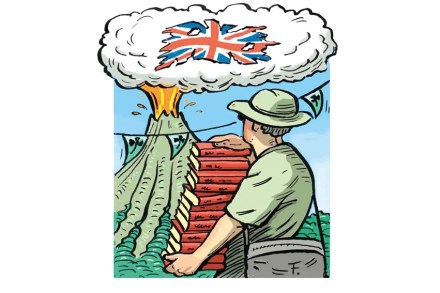
Montserrat, a smoulderingly beautiful volcanic island in the British West Indies, is a 15-minute flight from Antigua. Apart from me, the only passenger on the propeller plane is a birdwatcher from England, who hopes to catch a glimpse of the ‘critically endangered’ Montserrat oriole. After the volcano eruptions of 1995 to 1997, the island’s old capital of Plymouth was entombed in 40 feet of ash, and people air-freighted in their thousands to Gatwick. There is now a swelling Montserratian community in Stoke Newington, north London. ••• As a British dependency (one is not allowed to say ‘colony’), Montserrat receives £10 million a year in British government aid and a further £8 million in grants.

Still roughing it

From our UK edition

We are all tourists now, and there is no escape. The first thing we see as we jet round the world is a filth of our own making. Resort hotel seepage. Takeaway detritus. Travel, in its pre-package sense, can no longer be said to exist. Airports even have ‘comfort zones’ with dental clinics, cinemas and (at New York’s JFK) funeral parlours. Some travel writers, desperate to simulate the hardship of Victorian travel, have imposed artificial difficulties on themselves. The late Eighties saw a glut of such daft titles as Hang-Gliding to Borneo and To Bognor on a Rhinoceros. In every case, however, it would have been quicker to take the train. Why windsurf across the Mojave when there’s a decent coach service?

Bookends: Saving JFK

From our UK edition

Stephen King’s latest novel is a time-travel fantasy about the assassination of John F. Kennedy. At almost 750 pages, 11.22.63 is drawn-out even by blockbuster standards. Critics have bemoaned its surfeit of period detail (bobby socks, Hula Hoops, big-finned cars). I rather enjoyed it. King, now an august-looking 64, is a writer of towering cleverness, whose fiction manages to appeal to a reading public both popular and serious. Much of what passes these days for literary fiction is mere creative writing. Give me genre fiction (John le Carré, Martin Cruz Smith) any day. A fiction without a story — Kings knows — is scarcely worth its weight in paper. Before King was the emperor of bestsellerdom he studied English at the University of Maine (his birthplace). 11.22.

Cocktail Hour Under the Tree of Forgetfulness by Alexandra Fuller

From our UK edition

There is always a special risk, says Alexandra Fuller, when putting real-life people into books. Not all those who recognised themselves in her terrific memoir of 1960s and 1970s white-ruled Africa, Don’t Let’s Go to the Dogs Tonight, had appreciated their transformation. The author’s own mother, Nicola Fuller, was disquieted to find herself as a character in that ‘awful book’ (as she refers to it today). Was she really that flaky and drunk? Or was that how others perceived her? Most writers make life more interesting than it is; I suspect that Alexandra Fuller is among them. In Cocktail Hour Under the Tree of Forgetfulness she returns to the Africa of her childhood and to her eccentric farmer family.

Dark days in the Dale

From our UK edition

One of the great books to have come out of the British-West Indian encounter is Journey to an Illusion by the Jamaican journalist (and former London bus conductor) Donald Hinds. Published in 1966, the book is made up of a series of interviews with Jamaicans and other West Indians resident in Britain. Throughout, Hinds is haunted by the ‘race disturbances’ that swept Britain in 1958. Tensions erupted first in Nottingham then, more grievously, in west London. White youths (‘Teddy Boys’ to the tabloid press) beat up blacks and Asians in Shepherd’s Bush and the area then known as Notting Dale between the factories of Wood Lane and the newly claimed middle-class streets of Notting Hill Gate.

A dancer’s progress

From our UK edition

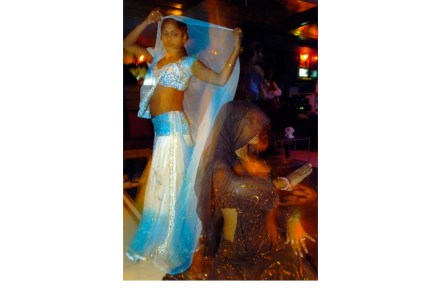
In 1971, at the height of the Indo-Pakistan war, my parents took me with them to Bombay. I was ten and it was my first trip abroad. My father worked for Brooke Bond, and had ‘tea business’ to attend downtown. First we checked into the Taj Hotel. On the waterfront, beggar children with lurid wounds and deformities were shaking tins at passers-by. The poverty unsettled me. The Taj was swank, I could see that, but outside all was dirt and destitution. (At a cinema nearby, jarringly, Carry on Loving was being advertised as the comedy ‘fillum’ sensation of the year.) Over dinner, my parents explained that Bangladesh, formerly East Pakistan, was under attack. Bombay seemed strange enough to me.

Tallinn tales

From our UK edition

During the Twenties and Thirties, the Estonian capital of Tallinn was known to be a centre for espionage, infiltrated by White Russian intriguers bent on blocking Bolshevik access to north-west Europe. Graham Greene first visited in the spring of 1934  — ‘for no reason’, he writes in his memoir Ways of Escape, ‘except escape to somewhere new’. He spent many happy hours in Tallinn, he records, ‘when I was not vainly seeking a brothel’. (The brothel had been recommended to him by Baroness Budberg, a Russian-Estonian exile living in London and mistress of, among others, H. G.Wells.

Talking about regeneration

From our UK edition

Iain Sinclair, the London novelist and poet, is always on the move. From the industrial sumplands of Woolwich to the jagged riversides of Gravesend, he rakes unfrequented zones for literary signs and symbols, locations of forgotten films and other arcana. His previous book, Hackney, That Rose-Red Empire, revealed that Joseph Conrad had been a patient in the German Hospital in Dalston. Whenever I drive past that hospital (now converted into private flats), it resonates with the presence of the Congo-sick Polish author. Typically, Sinclair explores London on foot, gathering all kinds of off-piste detail as he does so.

City of miracles

From our UK edition

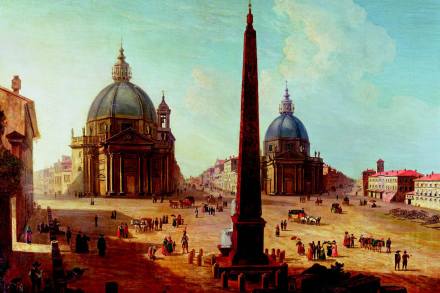
In the autumn of 1984, after an unexplained fall, I found myself in a hospital in Rome acutely head-injured and disorientated. I had been found sprawled on the floor of my flat on Via Salaria; the police suspected an intruder, yet nothing apparently was stolen. Bloody handprints covered the walls where I had tried to steady myself. I was 23 and newly arrived in Rome to work as a journalist and teach. Later, I regained consciousness outside a latrine on the sixth floor of San Giovanni hospital. A group of nuns with elaborate bird-like coifs swished past, each bearing a carafe of white wine. So I was in paradise — or perhaps a Fellini movie. (The carafes turned out to contain urine samples.) The nuns acted as paramedics, owing to a shortage of trained nurses.

Deep, dark mysteries

From our UK edition

For Peter Ackroyd, the subterranean world holds a potent allure. London Under, his brief account of the capital’s catacombs and other murky zones, manages to radiate a dark mystery and sulphur reek. ‘There is no darkness like the darkness under the ground’, Ackroyd announces, like a Victorian raree-show merchant. This is an entertaining if slightly daft book, that reveals what a weird world lies beneath our feet. Whether Ackroyd has actually been to all the places he describes is uncertain. Journalists have contorted themselves through narrow, stinking cave-galleries and risked leptospirosis from rat urine in their quest for London subterranea. But the stately Ackroyd? The London sewers are vividly described here.

Haitian horrors

From our UK edition

Twenty years ago, in 1991, I was shown round the National Palace in the Haitian capital of Port-au-Prince. A government official led me through long rococo halls crammed with oriental rugs, gilded boule clocks and vases of deep pink roses. Little had changed since Jean-Claude ‘Baby Doc’ Duvalier had fled Haiti in 1986. The Hall of Busts was lined with bronze heads of other Haitian presidents up to Elie Lescot in 1946. However, the bust of Jean-Claude’s dictator father ‘Papa Doc’ Duvalier had been removed to the ‘Dépot de Débris’, where it lay covered in dust. On 12 January 2010, the National Palace was turned to dust in an earthquake.

Nostalgie de la boue

From our UK edition

In the late 1960s I grew up in the London borough of Greenwich, which in those days had a shabby, post-industrial edge. Behind our house on Crooms Hill stood a disused London Electricity Board sub-station. Broken glass crunched underfoot and buddleia grew amid the fly-tipped junk. I went there chiefly to shoot at pigeons and set fire to things. Tea chests went up in a satisfying orange whoosh; I was mesmerised. One day, dreadfully, the LEB building burned down after I neglected to extinguish embers. The fire-fighters flashed a spectral white and blue, I remember, from the fire-engine’s beacon. I could no longer go there unnoticed. I was reminded of that episode while reading Edgelands, by the poets Paul Farley and Michael Symmons Roberts.

A war of nutrition

From our UK edition

The long summer that led up to the last days of peace in Europe in 1939 — the vigil of the Nazi assault on Poland on 1 September and the ensuing Phoney War — gave little hint of the storm to come. The long summer that led up to the last days of peace in Europe in 1939 — the vigil of the Nazi assault on Poland on 1 September and the ensuing Phoney War — gave little hint of the storm to come. As German troops engulfed Poland, however, the Nazi science of massacre was put to the test. Within two months of Hitler’s invasion, an estimated 5,000 Jews were murdered behind the Polish lines. Millions were subsequently starved to death. Food is the central focus of this grimly absorbing enquiry into the second world war.

So far from God . . .

From our UK edition

Ciudad Juárez, Mexico’s second largest border city, is clogged with rubbish, fouled with car exhaust and, increasingly, flooded with narcotics. Ciudad Juárez, Mexico’s second largest border city, is clogged with rubbish, fouled with car exhaust and, increasingly, flooded with narcotics. Mexican drug cartels are now so deeply ingrained in the city’s political and social fabric that not a single bar or shop remains ‘un-narcotised’. Mexico in the 21st century, according to Ed Vulliamy, is a nation shadowed by gangland enterprise and the rat-tat-tat of Kalashnikovs. To live on the US-Mexican border, how ever, calls for special qualities of endurance.

In a Greene shade

From our UK edition

Some travel writers, in an attempt to simulate the hardship of Victorian journeys, like to impose artificial difficulties on themselves. A glut of memorably foolish yarns with titles like Hang-Gliding to Borneo or To Bognor on a Rhinoceros discredited the genre in the 1980s. In every case it would have been quicker for the authors to take the train. Why wind-surf across the Mojave when there’s a serviceable coach service? Tim Butcher, formerly a Telegraph war correspondent, is biased towards old- fashioned travellers in the Redmond O’Hanlon mould who, with their bushy side-whiskers and squire-naturalist curiosity, continue a tradition of Victorian exploration.

Tangerine dreams | 28 August 2010

From our UK edition

Before tourism came travel; and before travel, exploration. A sense of wonder had accompanied journeys along the lip of the unknown, as the Victorian pathfinder was often an amateur scientist, required to bring home a trunkful of fossils. Today, of course, travel is merely an extension of the leisure industry. The first thing we see as we embark on our holidays is a filth of our own making (resort hotel seepage, takeaway detritus). Paul Bowles, himself no armchair excursionist, bemoaned the creeping industrialisation of travel — its translation into tourism — and what he called ‘the 20th century’s gangrene’, by which he meant, broadly, modernity.