Ian Thomson

Ian Thomson is the author of books including Dante’s Divine Comedy: A Journey Without End.

Stephen King isn’t as scary as he used to be, but ‘Doctor Sleep’ is still a cracker

From our UK edition

Though alcohol withdrawal is potentially fatal, booze has none of the media-confected glitz of heroin (imagine Will Self boasting of a Baileys Bristol Cream addiction). The 17th-century word for the sickness that follows excessive drinking — ‘crapula’ — effectively hints at the alcoholic’s sleazy kind of stupor. In his earlier years, Stephen King would drink himself daily into a wall-eyed hangover. His scariest novels — Carrie, The Stand, The Shining — were written in the 1970s when sobriety was a no-no for him. Jack Torrance, the author who goes off his rocker in The Shining, suffers the most horripilating of alcohol-tainted visions while holed up in the Overlook Hotel in the Colorado Rockies.

Mr Loverman, by Bernardine Evaristo – review

From our UK edition

In 1998, the Jamaican singer Bounty Killer released a single, ‘Can’t Believe Mi Eyes’, which expressed incredulity that men should wear tight trousers, because tight trousers are an effeminate display of gayness. Fear and loathing of homosexuals has a long history in the West Indies. Jamaica’s anti-sodomy laws, deriving from the English Act of 1861, carry a ten-year jail sentence for ‘the abominable crime’. Similar laws exist elsewhere in the Anglophone Caribbean, yet Jamaica is outwardly the most homophobic of the West Indian islands. A white man seen on his own in Jamaica is often assumed to be in search of gay sex. Batty bwoys (‘bum boys’) are in danger of being stoned, cutlassed or shot.

The poetry of the streets

From our UK edition

For good or ill, black West Indian culture is synonymous with youth culture in Britain today. Even among white teenagers, a Jamaican inflection (‘buff’, ‘bruv’) is reckoned hip. The ‘Jamaicanisation’ of British cities quickened after Jamaica’s independence in 1962, when more West Indians migrated to Britain, and London was poised to become the most Jamaican city in Europe. Zadie Smith is well placed to chart the vagaries of life in mixed-up, mixed-race Britain. Born in 1975 to a Jamaican mother and a British father, she grew up in the ethnically multi-shaded London borough of Brent. Her marvellous new novel, NW, crackles with reflections on race, music and migration in Brent’s north-west suburb of Willesden.

An Armenian Sketchbook, by Vasily Grossman – review

From our UK edition

Vasily Grossman, a Ukranian-born Jew, was a war correspondent for the Soviet army newspaper Red Star. His dispatches from the front between 1941 and 1945 combined emotional engagement with independent-minded commentary. A solitary, questioning spirit, Grossman set out always to document truthfully what he saw and heard. His report on the vile workings of the Treblinka death camp, ‘The Hell of Treblinka’, remains a masterpiece of controlled rage and unsparing lucidity. Unsurprisingly, Grossman was mortified when the man who had prevented Hitler’s annihilation of Jewry was suddenly set on their extinction. In early 1953, Stalin announced in the pages of Pravda that a plot to murder Kremlin members had been unmasked among Jewish doctors and intellectuals.

A Trip to Echo Spring, by Olivia Laing – review

From our UK edition

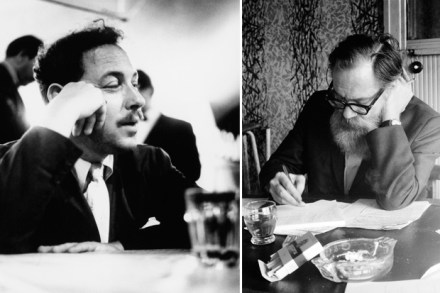
The boozer’s life is one of low self-esteem and squalid self-denial. It was memorably evoked by Charles Jackson in his 1944 novel The Lost Weekend; having hocked his typewriter for a quart of rye, the writer Don Birnam spends his lost weekend in a New York psychiatric ward, with a fractured skull. Where did he get that? The previous night’s drinking is remembered (if remembered at all) with bewilderment and guilt. Of course, the illusion of drink-fuelled happiness is familiar to most of us, even if the hangover seems a cruel price to pay. Olivia Laing, in her study of six alcoholic American writers, The Trip to Echo Spring (the title is taken from a Tennessee Williams play), demonstrates that one hardly need drink every day to be alcoholic.

Nicolas Roeg interview: ‘I hate the term “sex scene”’

From our UK edition

‘Oh, some of my films have been attacked with absolute vitriol!’ said Nicolas Roeg, 85, and still one of the darkest and most innovative of post-war British directors. We were sitting in his study in Notting Hill; nearby in Powis Square is the house Roeg used for his 1968 debut, Performance, starring Mick Jagger as the rock star who entices a gangster (James Fox) into a drug-induced identity crisis. The film was shelved for a year before Warner Brothers dared to release it. ‘The critics didn’t always get it then — but they do seem to now,’ said Roeg. Roeg was born in 1928 in St John’s Wood into a vaguely bohemian background.

Vauxhall, by Gabriel Ghadomosi; Sketcher, by Roland Watson-Grant – review

From our UK edition

At the grubbier end of my street in north London is the Somali mosque that was burned down earlier this month in an arson attack. The other day I asked at the police cordon if any arrests had been made. ‘Not that we know of’, said the duty officer. A smell of charred wood hangs over this dreary, out-at-elbow part of Muswell Hill. People complain that Somalis are heavily ‘welfare-dependent’, and have no wish to integrate into British society. It is true that immigrants today, with the internet, cheap flights and satellite television, are more likely to see themselves as members of a foreign country, hosted by, but not emotionally attached to, Britain. Diversity is here to stay, however, and many of us like it that way.

Inferno, by Dan Brown – review

From our UK edition

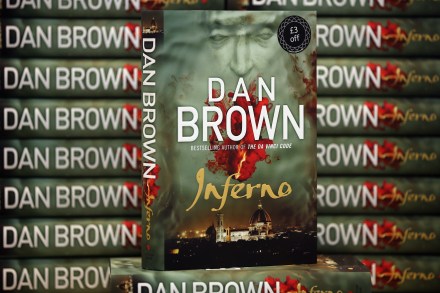
The other day, while shopping in Tesco, I was surprised to find copies of the Inferno for sale by the checkout. ‘Oh dear’, I declared, ‘who would have thought of finding Dante here?’ It was not Dante of course, but Dan ‘Dante’ Brown, whose latest extravaganza, Inferno, tips a nod to the Florentine poet’s medieval epic of fire and brimstone. Inferno, a bibliographic thriller in the Umberto Eco mould, is the fastest-selling novel of the moment. But let us be clear. Where Dante’s Inferno was ‘awful’ in that archaic sense of the word (still valid in Italian) of inspiring awe, Brown’s is merely awful. Correction: very awful.

‘The Making of a Minister’, by Roy Kerridge

From our UK edition

Back in the 1960s, England was a bad disappointment to many West Indians. In the grey city streets with their scruffy, bay-fronted houses they looked for somewhere to live. Many were surprised to find themselves categorised as ‘coloured’. (ROOM TO LET: REGRET NO KOLORED.) In the Anglophone Caribbean, the term ‘coloured’ applied to people of mixed race; in England it was one of the basic words of boarding-house culture and of polite vocabulary in general. The Making of a Minister, written (apparently) in the late 1960s, is a period piece, which alludes to ‘coloured men’ and unfolds round London’s Caribbean quarter — its boundaries roughly at Marble Arch, Bayswater, Notting Hill and Ladbroke Grove.

‘Well Done God!: Selected Prose and Drama of B.S. Johnson’, edited by Jonathan Coe – review

From our UK edition

B.S. Johnson railed intemperately at life, but in his fiction at least he found a lugubrious comedy in human failings. In 1973, aged 40, he killed himself by slashing his wrists in a bath while drunk. Today, in spite of his former high reputation as Britain’s ‘most subversive novelist’, Johnson is pretty well forgotten. On the evidence of the prose and plays collected in Well Done God!, however, it would be a mistake to consign him to the frivolous pastures of the literary bagatelle. Samuel Beckett, for one, enjoyed the irreverent boisterousness of his writing, and the admiration was mutual.

‘Fanny and Stella: The Young Men Who Shocked Victorian England’, by Neil McKenna – review

From our UK edition

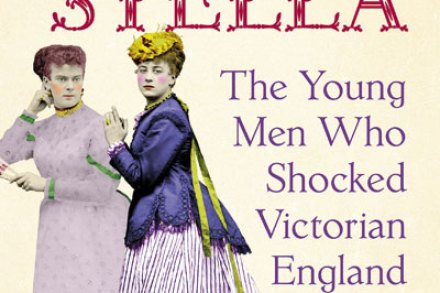
Mick Jagger, the Danny La Rue of rock, impersonates a woman on the cover of the 1978 Stones album Some Girls. Vaudeville performers in the Jagger mould love to put on lipstick and ‘false bubbies’ (as Neil McKenna calls them). Boy X-Factor contestants, with their shaved eyebrows, diamond earrings and nails lovingly manicured, present an almost Gloria Swanson-like image of adornment. Perhaps it is merely romantic to suggest that the stylised wigs and gowns worn by our bishops and high court judges also have a homoerotic component. The former Pope Benedict XVI’s ruby-red pumps were nothing compared to the faux ermines worn in the House of Lords.

A model of micro-history

From our UK edition

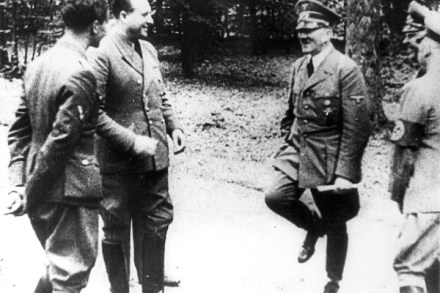
Adolf Hitler considered jazz a ‘racially inferior’ form of American black music, and banned it from the airwaves. Germany’s gilded youth flouted the prohibition by playing Duke Ellington in secret and greeting each other loudly in English: ‘Hallo, Old Swing Boy!’ Resistance was useless. The Brownshirts raided parties and even beaches in search of portable wind-up gramophones and gleefully kicked the shellac records to pieces. By 1942, Hitler’s police were arresting up to 50 people a day in Berlin alone. On learning of Hitler’s death in Berlin in January 1945, however, the Reich Chancellery staff put on jazz records and brought on the dancing girls.

Erratic historian of alternative pop

From our UK edition

Julian Cope, the well-read jester of English pop, was the founder member of the 1980s art-rock combo The Teardrop Explodes. With his antic appearance (Rommel overcoat, wild tawny hair), he falls into the erratic genius category. Drugs have played their part. By his own account, Cope has undertaken some dangerous chemical expeditions to the mind’s antipodes by means of lysergic acid. Yet he is no tiresome advert for drug-induced excess (still less for English whimsy). He is a recognised authority on the neolithic culture of Britain, for one thing, and has written two winningly eccentric volumes of musicology, Krautrocksampler and Japrock-sampler.

A heady mix of vice and voodoo

From our UK edition

By any standards, Haiti represents a great concentration of misery and dashed hopes. From the air, the Caribbean republic is a sun-scorched clinker; deforestation, caused by a ruinous cutting of timber for charcoal, has destroyed much of the green. Since independence in 1804, moreover, a succession of emperors, kings and presidents-for-life has contrived to instil terror in the people. François ‘Papa Doc’ Duvalier, dictator of Haiti from 1957 to 1971, entertained more than an anthropological interest in Afro-Caribbean sorcery rituals. His wardrobe of black suits and black homburgs lent him the aspect, says Bernard Diederich, of the voodoo divinity Baron Samedi, who haunts the churchyards in a top hat and tails like a ghoulish Groucho Marx.

The plight of the Poles

From our UK edition

Was a nation ever so beset by calamity as Poland? During the second world war, Polish cities were bombed, fought over hand-to-hand and crushingly shelled. Beyond their ideological differences, Hitler and Stalin were united in a determination to destroy the country. Without the Nazi-Soviet ‘friendship’ treaty of 1939, Hitler would not have been able to implement the mass killings of Jews in Poland, or Stalin been able to deport thousands of Poles as ‘enemies of the people’ to the frozen immensity of Siberia. Through their opportunist alliance, the dictators worked to undermine Polish statehood. At the war’s end, Poles found themselves dispersed in places as far-flung as India and Soviet Kazakhstan. History had blown them to a harsh lee shore.

Man smart

From our UK edition

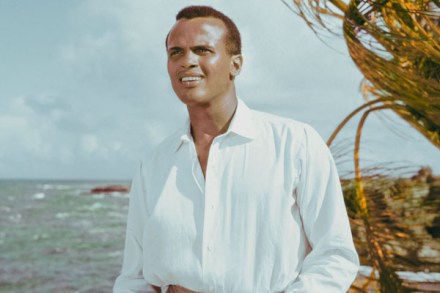
Port Antonio, in Jamaica, radiates a torrid, hothouse air. At night the inshore breeze smells faintly of bananas. Port Antonio was once Jamaica’s chief banana port, shipping out an average of three million bunches of ‘green gold’ a year. Harry Belafonte’s greatest hit, ‘The Banana Boat Song’, was sung by Port Antonio dock workers at the break of daylight when their shift was over. You know the song. The workers are tired and they want the day’s banana haul to be tallied and paid for: ‘Come, Mister Tally Man, tally me banana.’ Belafonte, an American of Jamaican heritage, understood the poverty of Caribbean life.

The world in arms

From our UK edition

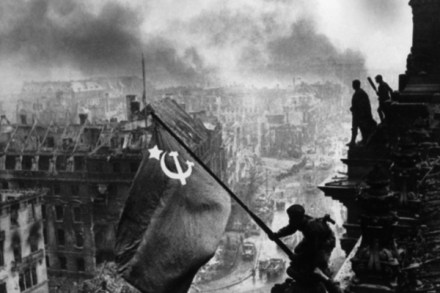
The long summer that led up to the last days of peace in Europe in 1939 — the vigil of Hitler’s assault on Poland and the subsequent Phoney War — gave little hint of the storm to come. As German troops engulfed Poland, however, Britain at last declared war on Hitler. Infamously, the Nazi science of massacre was put to the test in occupied Poland. Within two months of Hitler’s invasion, over 5,000 Jews were murdered behind the Polish lines. One year into the occupation a ghetto was established in Warsaw as a holding place for Jews prior to their deportation and death. A total of 265,000 of the city’s Jews were gassed over a single summer at Treblinka nearby. It was the largest slaughter of any single community in the second world war.

Life imitates art

From our UK edition

The other evening my wife came home to find me watching re-runs of Steptoe and Son. The washing up had not been done, and everything was in a state of bedragglement (including Olga, the family dog). ‘How can you bear to watch that stuff? Steptoe’s got a face like a squeezed lemon. He’s perfectly horrible. I’ll go further: he’s perfectly revolting.’ How could my wife not like Steptoe? The series had been a hit from the moment it was launched in 1962 and drew audiences of over 20 million. Ray Galton and his co-writer Alan Simpson combined a seaside postcard sauciness with the cockney menace of Harold Pinter (only with shorter pauses). The series is, among other things, a meditation on human decrepitude and the frustrations of a father-son relationship.

The tide turned

From our UK edition

A couple of years ago, a rescue operation was recorded at a lifeboat station in Poole, Dorset. ‘The boat was launched at 13.35p.m. following a call that a man and two children were stranded on rocks in the vicinity of Lulworth Cove. The wind was south-south-west force three. Visibility good. We reached the scene at 13.45p.m. The man and two children — one boy, one girl, both under five — were taken off the rocks and landed at an adjacent cove into the care of a local coastguard mobile unit.’ The report concluded: ‘The man’s name and address were not obtained.’ I can now reveal that the man was myself. At about noon that day, I had dug a pit in the sand for my children to muck about in, while I sat reading a book.

Speeding along the highway

From our UK edition

Back in the Sixties, if you wanted a fruitful, freakout-free LSD experience, you might have called on Mrs Aldous Huxley in Los Angeles, where she lived as a beatifically attuned Buddhist adept until her death in 2007. Aldous Huxley, her husband, had emigrated to America 70 years earlier in search of spiritual solace and the ‘benediction’ offered by psychotropic drugs. Evelyn Waugh was not alone in thinking that the States had driven Huxley dotty. Jim Morrison, the psychedelic Frank Sinatra, named his California band The Doors after Huxley’s crackpot hymn to the mescaline experience, The Doors of Perception. Tim Lott’s sixth novel, Under the Same Stars, dilates entertainingly on British attitudes to America as a supermarket for far-out fads and Huxley-like cults.