Ian Thomson

Ian Thomson is the author of books including Dante’s Divine Comedy: A Journey Without End.

Anders Brievik: lonely computer-gamer on a killing spree

From our UK edition

In 2011, Anders Breivik murdered 69 teenagers in a socialist summer camp outside the Norwegian capital of Oslo, and eight adults with a bomb attack. His hatred was directed at the children of Norwegian politicians who had allowed immigration to contaminate the sturdy bond (as he saw it) of Nordic race and nationhood. ‘You will all die today, Marxists!’ he hurrahed as he stalked and shot his way to infamy. Inflated with self-importance, Breivik was a self-styled ‘Justicious Knight Commander’ come to cauterise Norway of bloody foreigners. He advocated the racial rejuvenation of his homeland through the expulsion of Muslims, and to this end he photographed himself in masonic Crusader regalia, sumptuously gold-braided and primed for holy war. Was he mad?

What unites Churchill, Dali and T.S. Eliot? They all worshipped the Marx Brothers

From our UK edition

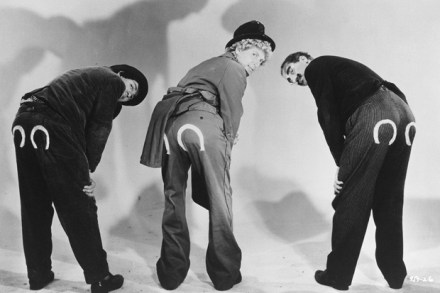
‘I had no idea you were so handsome,’ Groucho Marx wrote to T.S. Eliot in 1961 on receiving from him a signed studio portrait. The Missouri-born Eliot was the Marx Brothers’ devoted fan; three years later, in June 1964, Groucho called on the 75-year-old poet at his home in London. Eliot was interested in the Marx Brothers’ first undisputed film masterpiece, Animal Crackers (1930), while Groucho wanted only to quote from ‘The Waste Land’; however, the men agreed that they shared a love of cats and fine cigars. Winston Churchill was another who admired the Marxes and their deliciously mad repartee. During an air attack on London in May 1941 he found himself watching Monkey Business (1931), and was ‘glad of the diversion’.

Bob Marley: from reggae icon to Marlboro Man of marijuana

From our UK edition

A kind of political correctness dictates that one should not be too hard on Bob Marley, who died of cancer in 1981 aged 36. His loping, mid-tempo reggae sounds slightly vapid to my ears, but for many non-Jamaicans, Bob Marley is reggae; he remains an international Rasta celebrity, honoured with a waxwork at Madame Tussaud’s as well as a Jamaican Order of Merit (the third-highest honour in the Jamaican honours system). Last week, the Bob Marley estate announced that a special ‘Marley Natural’ marijuana blend was to go on sale legally in the United States next year.

Death wears bling: the glory of London’s Caribbean funerals

From our UK edition

Death is big business in parts of the Caribbean. In the Jamaican capital of Kingston, funeral homes with their plastic white Doric columns and gold-encrusted ‘caskets’ are like a poor man’s dream of heaven. The dwindling belief in an afterlife — the consolation that we might ever join our loved ones — has taken much of the old-time religion out of the West Indian funeral. Wealthier Jamaicans may lavish up to US $30,000 on a Cadillac hearse. Now even death wears bling. Fortunately, mortuary tradition survives in the Neo-African ‘Nine Night’ ceremony, where for nine nights the body remains in the deceased person’s home or ‘dead yard’ and hymn-singing mourners see to its safe departure to the next world.

The woman who invented the Italian resistance

From our UK edition

Italo Calvino, the Italian arch-fabulist, wrote a foreword to this celebrated wartime diary when it appeared in Italy in 1956. (The author displays an ‘ironic modesty’ and ‘simplicity’ in the writing, Calvino wrote approvingly.) The act of keeping an anti-Fascist diary of this sort during the German occupation carried an automatic death penalty. The author, Ada Gobetti, jotted down her entries in a cryptic English that only she could understand; at the war’s end she deciphered the jottings for eventual publication.

Wave goodbye to the weight-gaining, drunk-driving Inspector Wallander

From our UK edition

Some years ago I met the Swedish crime writer Henning Mankell at the Savoy Hotel in London, where he was staying. A waitress came up to our table. ‘I think, Belinda,’ Mankell said to her suavely, ‘that I would like a glass or two of your red wine!’ Momentarily confused, Belinda asked Mankell to repeat his order. After she had gone, Mankell commented peevishly to me: ‘What’s the matter with her? Was there anybody at home? Hello?’ Clearly, the hoped-for flirtation with Belinda had not come off. More than just the top button of Mankell’s black shirt was undone. Mankell could not have imagined how successful the Inspector Wallander mysteries would be when, 23 years ago, he published the first in the series.

The real Dad’s Army was no joke

From our UK edition

Dad’s Army, the sitcom to end all sitcoms, portrayed the Home Guard as often doddery veterans. In one episode, Private Godfrey’s genteel sisters are seen to prepare their Regency cottage for the feared Hitler invasion. ‘The Germans are coming, Miss Godfrey,’ Lance Corporal Jones warns. ‘Yes I know, so many people to tea,’ she chirrups, adding: ‘I think I’d better make some more.’ In contrast to Godfrey, the sitcom’s street-smart spiv Joe Walker could be relied on to come up with the goods. In his rakish trilby indeed he supplies the platoon with contraband cigarettes and is familiar with the legendary backs of lorries what things fall off of.

Ten years and an earthquake: the changing face of Haiti

From our UK edition

This summer, I returned to Haiti for the first time in ten years. I was itching to see how the Caribbean republic had changed after the terrible earthquake of 12 January 2010. This time, I would not be travelling by jitney, lorry or fishing boat, but in taxis and air-conditioned tourist coaches. Port-au-Prince, the capital, was as exhilarating and exhausting as I remembered it. The streets, thronged with pack animals and porters were a human ant heap. The smells I knew so well from earlier visits — sewage, burning rubbish — hit me forcefully and it was as though I had never been away. I made a bee-line for the Hotel Oloffson, a magnificent gingerbread mansion made famous by Graham Greene in his Haitian novel The Comedians.

Why I’m now scared of book clubs

From our UK edition

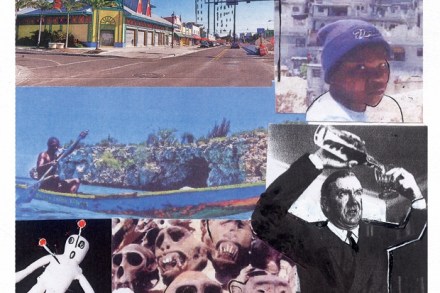
‘Hi Ian!’ the email began. ‘We are a group of mostly females who meet regularly in London to review really good reads. We are currently reading The Dead Yard, and were wondering if you would like to join us as our honorary guest while we fire you (gently) with questions about your book.’ The email concluded: ‘You will be well fed and thoroughly entertained! Kind regards, Phoebe.’ Very nice, but I sensed a danger. My book on Jamaica, The Dead Yard, has earned me a lot of enemies. For good or ill, it exposes a dark side of island life at odds with the ‘paradise’ of travel brochures. Bookshops in Jamaica had declined to stock the book when it came out in 2011, owing to its alleged ‘sensitive content’.

Only tourists think of the Caribbean as a ‘paradise’

From our UK edition

A couple of years ago in Jamaica, I met Errol Flynn’s former wife, the screen actress Patrice Wymore. Reportedly a difficult and withdrawn woman, her life in the Caribbean (apart from the few details she cared to volunteer) could only be guessed at. The Errol Flynn estate, an expanse of ranchland outside Port Antonio, was grazed by tired-looking cattle. ‘Haven’t we met before?’ Wymore said to me as I walked into her office after knocking. ‘You remind me of someone I know.’ I took in the riding crops and spurs hanging on the wall. After eight years of marriage, in 1958 Wymore had divorced Flynn, who died the following year at the age of 50 having more or less boozed himself into the grave.

The punk who inspired a generation of British woman to pick up a guitar

From our UK edition

Viv Albertine is deservedly famous as the guitarist of the tumultuous, all-female English punk band The Slits. Their debut album, Cut, released in 1979, combined jangly Captain Beefheart-style guitarwork with reggae rhythms and sardonic social commentary. Ariane ‘Ari Up’ Forster, the vocalist, added an element of wild-child abandon to Tessa Pollitt’s infectiously heavy bass lines. The album is a masterpiece. Albertine’s memoir takes its title from her mother’s routine complaint to her: ‘Clothes, clothes, clothes, music, music, music, boys, boys, boys — that’s all you ever think about!’ Albertine came to Britain from her native Australia in 1958, aged four.

Narcotically-induced mischief in an urban wasteland

From our UK edition

Fifteen minutes by rail from Paddington, Southall is a ‘Little India’ in the borough of Ealing. An ornate Hindu temple there, the Shree Ram, is set back from the beep and brake of traffic on King Street. When I visited, a pooja (prayer meeting) was underway. Incense fumes — a sweet suffocating presence — wafted round statuettes of the blue-skinned Krishna. The priest was surprised to see me: ‘You are coming from — ?’ ‘Paddington.’ ‘But you don’t look particularly Indian.’ ‘I’m not Indian.’ (With his sandalwood caste-mark and Nehru shirt, the priest himself was of Gujarati origin.) Racially diverse, Southall is distinctly out-at-elbow and peeling paint, but bustling all the same.

Exclamation marks, no; aertex shirts, yes!

From our UK edition

Jonathan Meades, the architectural, food and cultural commentator, appears on television in a pair of retro shades and a trademark Blues Brother suit. He looks like a poseur, and indeed studied drama at Rada. Lynn Barber, the ‘celebrity interviewer’, is the self-acknowledged scourge of pomposity and pretension. (Melvyn Bragg, among others, has felt the lash of her schoolmarm tongue.) Like Meades, Barber grew up in early 1950s middle-class England. An only child, she found a way out of the bridge/ canasta tea parties and sherry-tippling of Twickenham, her childhood home, to become a staff writer on Penthouse girlie magazine; her first book, published in 1975, was a sex manual entitled How to Improve Your Man in Bed (which, incidentally, my wife has still not read).

Jorge Luis Borges and his ‘bitch’

From our UK edition

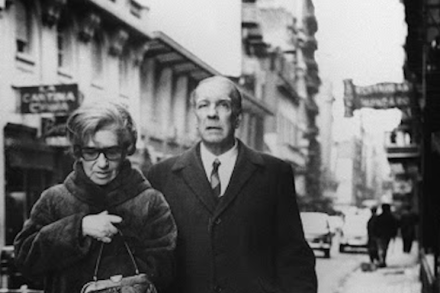
When Jorge Luis Borges died in 1986, at the age of 87, he left behind 100-odd slender fictions and as many poems, but no novels. Compared with the blockbusting authors of our age, this was a small (if perfectly formed) output. Many of Borges’s glittering ficciones are mere ironic fragments, at best notebook jottings. To his detractors his work amounted to little more than a babble of sweet nothings. ‘Who is Jorge Luis Borges?’ Philip Larkin gruffly enquired. (Larkin had not seen Nic Roeg’s trippy film Perfomance, where Mick Jagger is shown reading the Argentine author in the bathtub.) Born in Buenos Aires in 1899, Borges was acutely myopic as a child and in middle age he went blind.

Gay Paree: food, feuds and phalluses – I mean, fallacies

From our UK edition

In his preface to The Joy of Gay Sex (revised and expanded third edition), Edmund White praises the ‘kinkier’ aspects of homo-erotic life. Practical advice is given on frottage, spanking, sixty-nining, cruising, blowjobs, fisting, rimming and three-ways. Of course, Proust-inspired poetic exaltations to homosexual love have long characterised White’s fiction, from A Boy’s Own Story to Hotel de Dream. Yet White is no mere popinjay in thrall to high-flown campery; his mind is drawn to some very dark places. Between 1983 and 1999, as an ardent Francophile, White elected to live in Paris.

Was Flann O’Brien at his best when writing about drink? (Answers on a damp stressed envelope, please)

From our UK edition

On his deathbed in Dublin in the spring of 1966, Flann O’Brien must have been squiffy from tots of Paddy. A bottle of the amber distillate was smuggled in to the hospital on April Fool’s Day by a couple of well-wishers. O’Brien rang the bell to summon a nurse. ‘Sister,’ he told her solemnly, ‘I have two friends who are constipated and need a dose. Would you bring two glasses?’ Within a matter of hours the poker-faced Count O’Blather (O’Brien’s preferred authorial pseudonym) was dead. Flanneurs everywhere had reason to lament the passing of a notable Dublin wit and a writer of comic genius. But all was not lost.

‘She’s the most important Jewish writer since Kafka!’

From our UK edition

The Brazilian novelist Clarice Lispector was a riddlesome and strange personality. Strikingly beautiful, with catlike green eyes, she died in Rio de Janeiro in 1977 at the age of only 57. Some said she wrote like Virginia Woolf (not necessarily a recommendation) and resembled Marlene Dietrich. She was ‘very, very sexy’, remembered a friend. Yet she needed a great many cigarettes, painkillers, anti-depressants, as well as anti-psychotics and sleeping pills to get through her final years. Lispector had great fortitude over her illness, it was said, and suffered the ravages of ovarian cancer equably and without complaint. According to her biographer Benjamin Moser, Lispector’s was a life fraught with the shadow of past failures and past sorrows.

The many attempts to assassinate Trotsky

From our UK edition

Leon Trotsky’s grandson, Esteban Volkov, is a retired chemist in his early eighties. I met him not long ago in the house in Mexico City where his grandfather was murdered in 1940 with an ice-pick. Volkov had grown up in that house surrounded by 20-foot garden walls and watchtowers with slits in them for machine-guns. The protection was no defence against Trotsky’s eventual assassin, the Spanish-born Stalinist Ramón Mercader, who very ably infiltrated Trotsky’s Mexico circle and, on 20 August, struck the revolutionary on the front of his head with that gruesome weapon. Trotsky bellowed in pain but managed to fend off his assailant before collapsing. His bodyguards hurried in and beat off the intruder; Trotsky was rushed to hospital, where he died the following day.

Carlos Acosta, the great dancer, should be a full-time novelist

From our UK edition

Carlos Acosta, the greatest dancer of his generation, grew up in Havana as the youngest of 11 black children. Money was tight, but Carlos won a place at ballet school, and before long he was enthralling audiences at Covent Garden as a half Jagger, half Nureyev figure with a twist of the moon-walking Jackson in the mix. Now Acosta is about to leap into the world of literature with a debut novel, Pig’s Foot, written over a period of four years during rehearsal breaks. For all its manifest debt to Latin American so-called ‘magic realists’ (Marquez, Borges, Vargas Llosa), the novel stands triumphantly on its own. In pages of salty-sweetprose, it traces five generations of a black family through Cuba’s tumultuous recent history.

Italo Calvino’s essays, Collection of Sand, is a brainy delight

From our UK edition

The Japanese are sometimes said to suffer from ‘outsider person shock’ (gaijin shokku) when travelling abroad. Recently in London we had a lodger from Hiroshima who wanted to practise his karate routines in our back garden. Concerned to see him chopping at our apple tree in full combat gear, a metropolitan police helicopter hovered in close to take a look. Afterwards Mr Kinoto admitted to me that he was lost in London amid alien signs and habits. ‘The object of my time in England is not sightseeing’, he told me ruefully, ‘but home-staying.’ I thought of the Japanese lodger while reading Italo Calvino’s wonderful essays, Collection of Sand, published in Italy in 1984, a year before Calvino died at the age of only 62.