Ian Thomson

Ian Thomson is the author of books including Dante’s Divine Comedy: A Journey Without End.

Thankfully, Tony Blair was nowhere near my Sicilian holiday

From our UK edition

Sicily is far removed from the gracious suavities of Tuscany. With the souk-like atmosphere of its markets and obscure exuberance of life in the old Cosa Nostra towns, the Mediterranean island is halfway to Muslim Tunisia. The British Tuscanites who descend on the hills around Florence during the summer holidays as part of their ‘Toujours Tuscany’ dream – Tony Blair, Sting, David Cameron – are thankfully nowhere in evidence. In our post-Godfather world no history of Sicily would be complete without mention of the Mafia. The word is said to derive from the Arabic mahyas, meaning ‘aggressive boasting’: for almost three centuries until the Norman Conquest of 1061, Sicily was an Islamic emirate.

A celebration of the music of Jamaica

From our UK edition

In Jamaica, music is the vital expression. Night and day, amid the heat and narrow lanes of the capital, Kingston, rap, reggae, ska, dub, rocksteady, gospel and mento-calypso boom from giant loudspeaker cabinets: a joyous musical beat. Deejay-based dancehall – a digitalised reggae that Jamaicans sometimes call ragga or Yardcore – dominates the club scene and it conceivably influenced hip-hop with its turn-table-styles of delivery known as ‘toasting’ (scatting and talking over records while moving the crowds). But old-time reggae remains the musical voice of Jamaica, just as rai in the musical voice of Algeria and flamenco that of Spain. It is a trance-inducing music out of Africa.

Henri Christophe, King of Haiti, was not such a ridiculous figure

From our UK edition

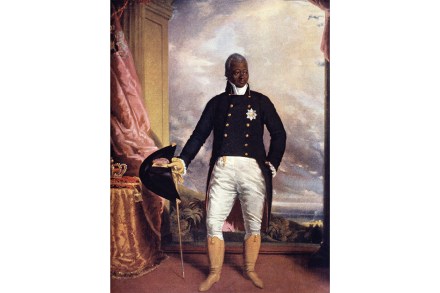
In January 1804 the West Indian island of Saint-Domingue became the world’s first black republic after the slaves toiling in the sugar fields rose up against their French masters and, at the end of a 13-year insurgency, proclaimed independence. Saint-Domingue was renamed Haiti (an aboriginal Taino-Arawak Indian word meaning ‘mountainous land’) and the Haitian flag created when the white band was solemnly removed from the French tricolore. Haiti’s is the only successful slave revolt in recorded human history. It was led by Toussaint Louverture, a Haitian former slave himself and emblem of slavery’s hoped-for abolition throughout the Americas. Thousands of French settler colonists were massacred during the Louverturian struggle.

Violence and beauty combine in Siena

From our UK edition

Siena, the jewel of Tuscan cities, was the mercantile and banking centre of medieval Europe. Bankers in Pre-Renaissance Siena preened themselves on their wealth and material possession. Banking (from the Italian banco, ‘counter’) is an Italian invention. Yet Dante consigned money-lenders to the seventh circle of Hell, where they are made to stare for eternity at their sacks of lucre. (Emblazoned with fancy coats of arms, the sacks would have held the equivalent of today’s venture capitalist bonus payments.) Usury was a dangerous professional game in Siena, one which invited church censure as well as personal spiritual dereliction. But without its money-making eminenti, Siena would have remained a provincial backwater, swampy with the threat of malaria.

The invisible man: The Glass Pearls, by Emeric Pressburger, reviewed

From our UK edition

Not all Germans were swayed by Hitler, but the majority were. Karl Braun, the fugitive Nazi doctor at the heart of Emeric Pressburger’s 1966 novel The Glass Pearls, was devoted to the furtherance of so-called ‘science’ under the Führer. In the interests of research he cut up the brains of a number of concentration camp inmates. His chosen victims – Jews and other ‘useless mouths’ – were crematorium fodder. Yet Braun sees himself as a decent, God-fearing family man. Undoubtedly he had to carry out unpleasant work, but does that mean he has no conscience? Pressburger, a Hungarian-born Jewish émigré, had reason to dislike the Germans: his mother and other close relatives were murdered at Auschwitz.

Naples will never escape the shadow of Vesuvius

From our UK edition

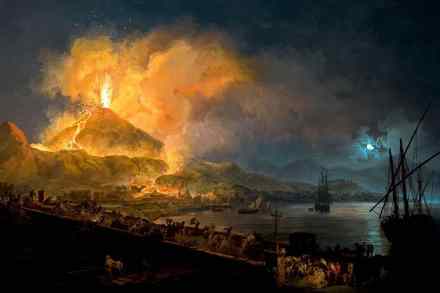
Naples, the tatterdemalion capital of the Italian south, is said to be awash with heroin. Chinese-run morphine refineries on its outskirts masquerade as ‘legitimate’ couture operations that transform bolts of Chinese silk into contraband Dolce & Gabbana or Versace. The textile sweatshops are controlled by the Neapolitan mafia, or Camorra. All this was exposed by the Italian journalist Roberto Saviano in his scorching reportage, Gomorrah. Published in Italy in 2006, Saviano’s was nevertheless a partial account, in which the carnival city of mandolins and ‘O Sole Mio’ was overrun by Armani-coutured killer-capitalists. Marius Kociejowski, poet, essayist and travel writer, is alert to the city’s reputation for Camorra and pickpocketing crime.

Celebrating Konstantin Paustovsky — hailed as ‘the Russian Proust’

From our UK edition

When is a life worth telling? The Soviet writer Konstantin Paustovsky’s six-volume autobiography The Story of a Life combines high drama with heroic misadventure in a comico-lyrical amalgam of history and domestic detail that enchants from start to finish. Why Paustovsky is not better known outside his native Moscow is a mystery. In the mid-1960s he was nominated for the Nobel prize. (He was pipped to the post by Mikhail Sholokhov, the author of the obediently propagandist And Quiet Flows the Don.) Denounced as a ‘counter-revolutionary’ by the Soviet Writers’ Union, Paustovsky belonged to that select band of writers who inspire true fandom.

Dark days in the Balkans: life under Enver Hoxha and beyond

From our UK edition

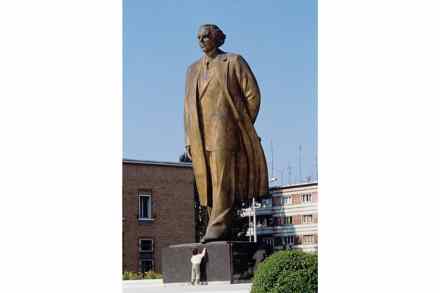
For many in the West, Albania remains as remote and shadowy as the fictional Syldavia of the Tintin comics. The country came into existence only in 1912, with the decline of the Ottoman Empire. Its first ruler, King Zog, was ousted by Mussolini when he invaded in 1939. Hitler used Albania as a springboard for the Nazi invasion of Greece. The national resistance against Italy and Germany was led by the Albanian partisan supremo Enver Hoxha (pronounced ‘Hodger’). After expelling the hated occupiers, in 1946 the artful Hoxha proclaimed himself head of a newborn socialist republic.

Darkness, desolation and disarray in Germany

From our UK edition

In Geoffrey Household’s adrenalin-quickening 1939 thriller Rogue Male, a lone English adventurer takes a potshot at Hitler and then runs for cover. Few Germans were brave or reckless enough to resist the Führer. Once Hitler’s lunacy had become manifest, however, the dilemma for German patriots was painful: to love the Fatherland yet desire the downfall of Nazism. On 20 July 1944 a bomb went off in a briefcase at German GHQ in east Prussia but, extraordinarily, Hitler sustained only damaged eardrums and a pair of scorched trousers. The conspirators were hanged from meat hooks and, as a final gratuitous cruelty, their widows were sent bills for ‘execution costs’.

It takes a trained ear fully to appreciate Indian music

From our UK edition

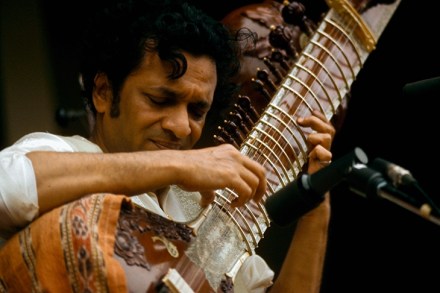
At George Harrison’s 1971 concert for Bangladesh, awkwardly, the audience applauded after Ravi Shankar and his musicians had paused to tune their sitars and tablas. ‘If you appreciated the tuning so much,’ Shankar said, half in jest, ‘I hope you’ll enjoy the music even more.’ To the untrained ear, Indian music may sound unmelodious and directionless as it strays into apparent pre-concert tuning registers and monotony. Nonetheless, its transcendental Zen-like qualities impressed Richard Wagner, who was drawn to the spirituality and joss-stick mysticism (as he saw it) of the east. A devotional song performed by the Punjab Sufi vocalist Nusrat Fateh Ali Khan can soar as ecstatically as Parsifal.

Battle royal: Harry and Meghan’s brand of revenge

From our UK edition

36 min listen

Is it fair to blame Meghan for the Royal Family's problems? (00:55) Why is China censoring a book of Dante's poetry? (12:40) Would you go to moon? (24:50)With The Spectator's US editor Freddy Gray; The Spectator's restaurant critic Tanya Gold; author Ian Thomson; Kerry Brown, professor of Chinese Studies at King's College London; The Spectator's commissioning editor Mary Wakefield; and Spectator columnist Matthew Parris.Presented by Cindy Yu.Produced by Max Jeffery, Natasha Feroze and Matthew Sawyer.

dante paradise

A Scottish Paradise

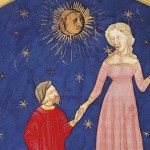
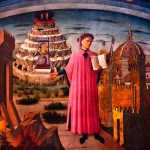
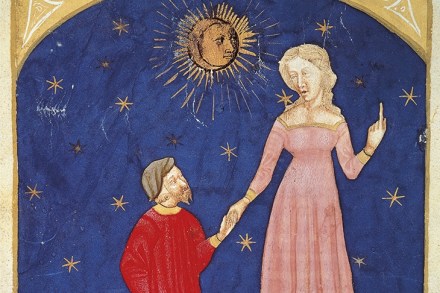
As every Italian schoolchild knows, The Divine Comedy opens in a supernatural dark wood just before sunrise on Good Friday, 1300. Dante Alighieri, a figure in his own work, has lost his way in middle age and is alone and frightened in the darkness. The ghost of the Roman poet Virgil is about to show him Hell: ‘Midway in the journey of our life I found myself in a dark wood, for the right path was lost.’ Begun in the early 14th century, Dante’s poem is, for many, the greatest single work of western literature. With its dramatic chiaroscuro of hellish fuming mists and paradisal stellar regions, the poem is ‘awful’ in the archaic sense of the word (still valid in the Italian terribile), meaning to inspire awe.

My fight to stop the Chinese censors sanitising Dante

From our UK edition

My book on Dante Alighieri was due to come out in Chinese translation later this year, but first I had to consent to sizeable cuts. Even by the standards of other authoritarian states the Beijing censors struck me as overzealous. It seems odd that the medieval Italian poet could cause such unease among modern-day totalitarians. A sanitised Chinese communist version of my book did not sit well with the 700th anniversary of Dante’s death in 1321, and in the end I withheld permission. The cuts were the work of Beijing’s blandly named Institute for World Religions. The institute undertakes ‘book cleansing’ operations on behalf of the state. No book can be published legally in China today without being vetted.

CIA spies lose faith

From our UK edition

With its grim John le Carré atmosphere, communist Eastern Europe in the late 1980s was a melancholy, out-at-elbow place. The Estonian capital of Tallinn crawled with Russian money-changers (‘Comrade, we do deal?’). The television in my hotel room was detuned from capitalist Finnish to Soviet channels, but I was able to pick up Miami Vice from across the Gulf of Finland. Guests were not allowed to visit the 21st floor, which officially did not exist. The KGB apparently had an office up there where they monitored Helsinki radio waves and the hotel’s 60-odd bugged rooms. Perhaps it is no coincidence that the wallet-thin Minox camera had been invented in Tallinn (by one Walter Zapp, in 1936). It was a favourite with Cold War spooks.

A tinpot Caesar

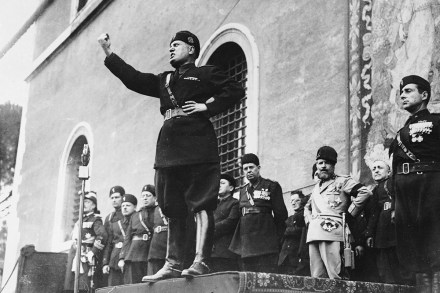
In 1919, an obscure political agitator called Benito Mussolini assembled a ragbag of Blackshirt diehards in the Lombard capital of Milan and launched the movement that was to become, two years later, the National Fascist party. The party took its name from the classical Roman symbol of authority — an ax bound in rods, or fasces. Once in power, Mussolini introduced the stiff armed Roman salute after the handshake was deemed fey and unhygienic. At times he wore a richly tasseled fez and thrust out his chin pugnaciously for the cameras. For all his posturing and demagoguery, Mussolini was widely admired in pre-war Britain, where Lord Rothermere’s Daily Mail routinely carried flattering portraits of him.

mussolini

Alasdair Gray gives us a vivid new Paradiso

From our UK edition

As every Italian schoolchild knows, The Divine Comedy opens in a supernatural dark wood just before sunrise on Good Friday 1300. Dante Alighieri, a figure in his own work, has lost his way in middle age and is alone and frightened in the darkness. The ghost of the Roman poet Virgil is about to show him Hell: Midway in the journey of our life I found myself in a dark wood, for the right path was lost. Begun in the early 14th century, Dante’s poem is, for many, the greatest single work of western literature. With its dramatic chiaroscuro of hellish fuming mists and paradisal stellar regions, the poem is ‘awful’ in the archaic sense of the word (still valid in the Italian terribile), meaning to inspire awe.

City of dazzling mosaics: the golden age of Ravenna

From our UK edition

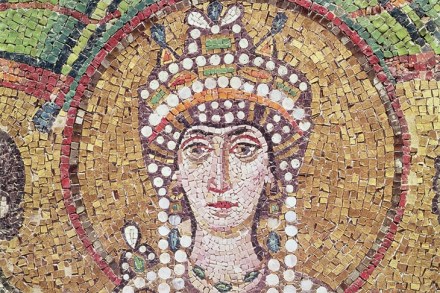
When we refer to someone as ‘Byzantine’ we usually mean guileful or too complicated and labyrinthine in manner or speech. Perhaps the term is ill-applied: Byzantium, the medieval Greek city on the Bosporus which the Roman Emperor Constantine I renamed Constantinople, was not in essence an unfathomable, over-hierarchical or manipulative sort of place. It flourished for more than 1,000 years, until the Ottoman Turkish onslaught in the 15th century, by dint of its ‘extraordinary resilience and self-confidence’, says Judith Herrin, a leading Byzantinist. The northern Italian city of Ravenna, with its wondrous mosaicked churches and gilded mausolea that miraculously survived the aerial bombardments of the second world war, was manifestly also a Byzantine city.

Should we all be prepping for the end of days?

From our UK edition

In the Covid-19 crisis the calamity-howlers have found a vindication: go back to survival mode and bunker down because nobody believed Noah until it was way too late. Bunker: Building for the End Times, a hybrid of reportage and philosophical musing, considers contemporary survivalist culture in all its manifest craziness, from the doomsday realtors who sell bomb-proof, virus-free bunker space to the Bible-belt survivalists who pack their INCH bags (I’m Never Coming Home) and bug out to bunker encampments in Wyoming in anticipation of the Final Judgment. In the modern concrete bunker Bradley Garrett sees an extreme expression of our fear of nuclear, chemical, biological and climatic calamity.

From ‘divine Caesar’ to Hitler’s lapdog – the rise and fall of Benito Mussolini

From our UK edition

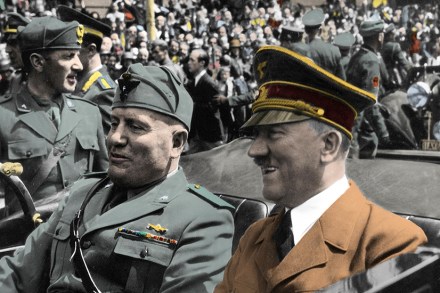
In 1919, an obscure political agitator called Benito Mussolini assembled a ragbag of Blackshirt diehards in the Lombard capital of Milan and launched the movement that was to become, two years later, the National Fascist Party. The party took its name from the classical Roman symbol of authority — an axe bound in rods, or fasces. Once in power, Mussolini introduced the stiff-armed Roman salute after the handshake was considered fey and unhygienic. At times he wore a richly tasselled fez and thrust out his chin pugnaciously for the cameras. For all his posturing and demagoguery, Mussolini was widely admired in pre-war Britain, where Lord Rothermere’s Daily Mail routinely carried flattering portraits of him.

Animation lends itself readily to propaganda

From our UK edition

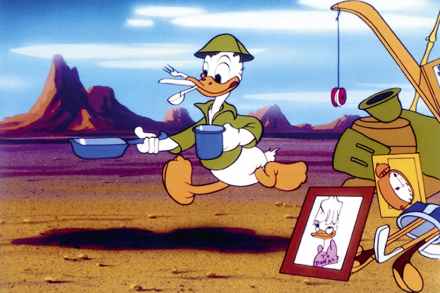
Qasem Soleimani, the Iranian major-general blown up by the US over the New Year, will have seen himself arrested by Saudi troops in a computer-animated film of the ‘liberation’ of Iran from Ayatollah rule. Saudi Deterrent Force was a six-minute fantasy released online by anonymous video-makers in Saudi Arabia in 2017. It was viewed over 750,000 times before Iranian animators struck back with Battle of the Persian Gulf II, in which the Great Satan and perceived Saudi lackey Donald Trump is humiliated in an imagined Gulf battle led by Soleimani. Now that Soleimani is, in Pentagon-speak, a ‘vaporised non-person’, Saudi Deterrent Force acquires added interest for us as propaganda.