Ian Proud

Ian Proud was a member of His Majesty's Diplomatic Service from 1999 to 2023. He served as economic counsellor at the British Embassy in Moscow from July 2014 to February 2019

The crisis facing the Royal Navy

From our UK edition

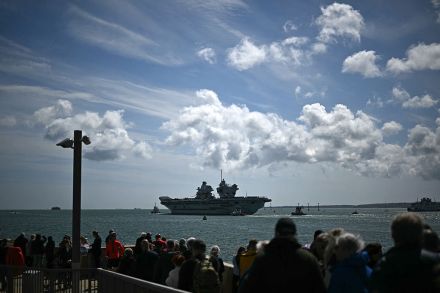
General Sir Gwyn Jenkins is stepping into the role of First Sea Lord at a difficult time, with the Royal Navy’s fleet in a sorry state. On 22 April, Carrier Strike Group 25 (CSG25) set sail on an eight-month publicity tour, leaving British waters sparsely defended. Keir Starmer posed on the flight deck of HMS The Prince of Wales, his battleship grey hair perfectly set like a middle-aged Ken doll. He said the CSG25 shows ‘the UK’s leadership on global issues and security and defence’. It really doesn’t. Britain could only field one of its two carriers, one destroyer, one frigate and one attack submarine. The Royal Navy also has insufficient logistics vessels to support the deployment, with no new solid store ships expected before the end of this decade.
Britain’s diplomats need language classes

From our UK edition

Britain is increasingly seen as a bit-part player. That’s down both to our post-Brexit identity crisis and being gradually overtaken by emerging economies such as India and Brazil.  But it’s also because British diplomats don’t have the skills they need to advance Britain’s interests with purpose and credibility.  Take foreign languages. Almost three quarters of Britain’s ambassadors aren’t fluent in the language of the countries where they serve. In the Middle East, most diplomats don’t hit the expected standard in Arabic. In Moscow, one third can’t speak Russian and the picture is similar for Mandarin speakers across our vast diplomatic network in China.

Britain is losing the spy game to Russia

From our UK edition

Russia’s decision to kick out six alleged British spies in August prompted a strange sense of deja vu. After the Salisbury nerve agent attack in March 2018, I sweated for a week in the British Embassy in Moscow, waiting to hear if I’d be kicked out in the diplomatic tit-for-tat. We need a better plan for Russia expertise if we really want to outsmart Putin Russia’s announcement was timed to embarrass Keir Starmer as he travelled to Washington last week for talks with Joe Biden. It was also a blow to the critically small pool of Russia experts in the British government. In the hostile goldfish bowl of UK-Russia relations, both sides are constantly on the lookout for ‘undeclared’ intelligence officers (i.e.