Ian Acheson

Ian Acheson

Professor Ian Acheson is a former prison governor. He was also Director of Community Safety at the Home Office. His book ‘Screwed: Britain’s prison crisis and how to escape it’ is out now.

How Joe Biden can be a true friend to the Irish

From our UK edition

On this day in 1974, a body was recovered in quiet fields near the Country Tyrone village of Clogher, hard against Northern Ireland’s frontier. It was that of Cormac McCabe, the headmaster of a nearby secondary school, who was also a part-time officer in the Ulster Defence Regiment, locally raised ‘home battalions’ of the British Army. McCabe had been kidnapped the day before, having crossed the border to have lunch in Monaghan town with his wife and disabled daughter. Exposed and defenceless, he was the softest of targets for the Provisional IRA terrorists who abducted him, shot him in the head and then dumped him in a bog field.

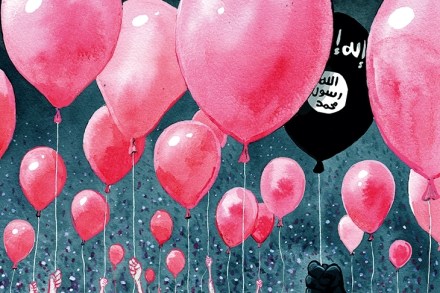
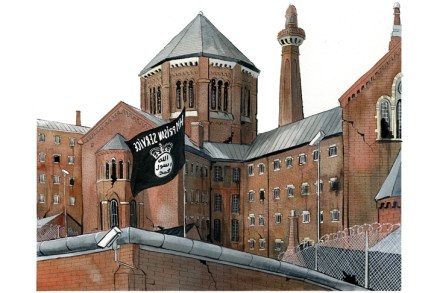
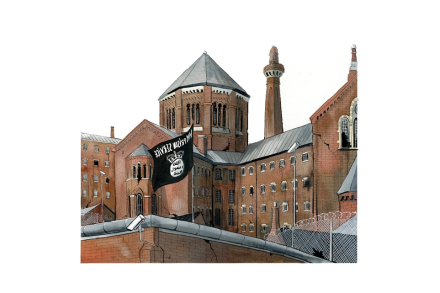
Britain’s prisons are a breeding ground for Islamist terror

From our UK edition

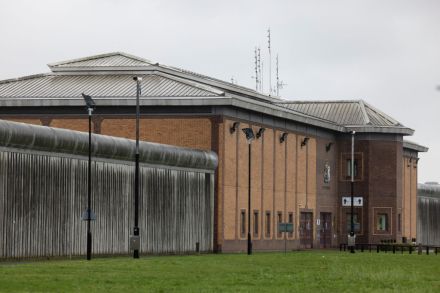
Was Reading terrorist Khairi Saadallah radicalised behind bars? What we do know is that locking Saadallah in HMP Bullingdon to develop a ‘close’ relationship with radical cleric Omar Brooks was an extraordinary lapse in operational security. Only 16 days after leaving the prison, the violent, troubled and combat experienced Saadallah launched his murderous attack in Reading. At the very least, it is clear that prison served little purpose in stopping him. Once again, this raises the question of whether Britain's jails are a breeding ground for radicalisation.

Northern Ireland is still plagued by terrorism

From our UK edition

It’s slow business for global terrorists these days with all the targets banged up under Covid house arrest. But there’s one place in the United Kingdom where it has been pretty much business as usual for violent extremism. Northern Ireland’s police service has just released its security assessment for 2020. This contains some startling information for a place with roughly the same population as Hampshire. Last year there were 39 shooting incidents and two security related deaths, the same number as in 2019. The number of bombings – which include viable devices defused by the army – actually rose year on year to 17, with 8 happening in Belfast. Imagine this happening in Southampton.

The problem with deradicalisation

From our UK edition

Is it possible to 'deradicalise' terrorists? Jonathan Hall QC, the government's terror watchdog, doesn’t think so. He may have a point, but it’s complicated. One of the institutional problems we have is a sort of misplaced arrogance based, in part, on the historic experience of counter-insurgency against violent Irish republicans. Until quite recently, the Ministry of Justice press office referred to our prison deradicalisation processes as ‘world-class.’ Hall himself only recently began looking at our distinctly Heath-Robinson terrorist risk management ‘system’ after London Bridge killer Usman Khan ran rings around it.

What Unicef doesn’t understand about police and tasers

From our UK edition

Use of force isn't like the movies. It’s often messy, frightening and it can go sideways very quickly. I vividly remember my first arrest as a volunteer police officer, surrounded by jeering teenagers in a seaside amusement arcade wrestling on the ground with a completely non-compliant powerfully built kid. When we eventually got the cuffs on him, it turned out he was deaf and most of his resistance was because he couldn’t understand my repeated attempts to negotiate with him.  As head of security at HMP Wandsworth, I recall standing in the centre supervising an entirely correct and proportionate restraint and relocation of a prisoner. All the staff were white. The assailant, bowed double, handcuffed, bellowing with rage and distress, was black.

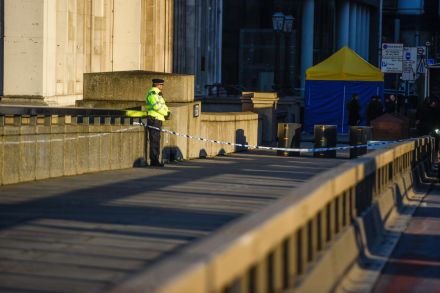
Are we any closer to stopping the next Usman Khan?

From our UK edition

This weekend is the first anniversary of the London Bridge attack. Usman Khan murdered two young people at an event he was invited to, run by the ‘Learning Together’ scheme, which is part of the University of Cambridge. The conference was designed to celebrate the achievements of people like Khan who had joined the course while serving in high-security HMP Whitemoor. Saskia Jones and Jack Merritt were stabbed to death by the dedicated Islamist, supposedly on community supervision nearly a year after being released from prison for terrorism crimes. Twelve months later, are we any closer to understanding that fatal convergence of perpetrator and victims?

The Crown makes difficult viewing for IRA apologists

From our UK edition

Series four of The Crown begins with the murder of Lord Mountbatten at Mullaghmore in August 1979. Mountbatten was killed with three others, on the same day 18 British soldiers were ambushed at Warrenpoint. It was a devastating blow for the British establishment. But it held a more intimate horror too. If you listen carefully to the scene in The Crown, you can hear Mountbatten speak to a ‘Paul’ as they prepare his boat, Shadow V, for its fateful journey out of the harbour before being blown to pieces by the IRA.

David Goodhart’s fatal mistake in the eyes of his EHRC critics

From our UK edition

What is the Equality and Human Rights Commission for? It’s definitely not for the likes of David Goodhart, according to plenty of progressive types reacting to the news of Goodhart's appointment as one of the EHRC's commissioners. 'Appointing the spectacularly ill-suited Goodhart to the EHRC is an awful move from the government,' says the journalist Rachel Shabi. 'The EHRC’s credibility plummets further,' says Corbynista David Rosenberg. Goodhart, it seems, has made the fatal mistake of being out of step with a long-established orthodoxy that has stacked the governance of our public institutions with left-leaning facsimiles.

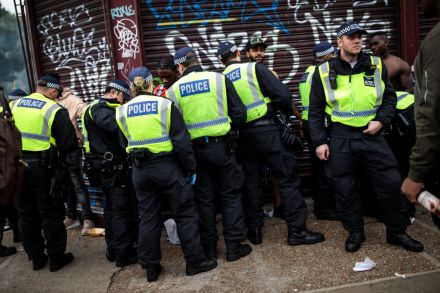
Don’t blame the police for stop and search

From our UK edition

Given recent stories about the police putting your door in if you have more than six people over on Christmas day, it seems almost quaint to be talking about Stop and Search as an abuse of state power. Yet the release of statistics this week that show black people are nine times more likely to have this power used against them in the street, ought to give us pause for thought. Stop and Search is an unavoidably intrusive state activity. You can be stopped by the police if they have a reasonable suspicion that you have illicit items in your possession, such as guns, drugs or equipment to be used in a burglary. When stopped, you are asked to account for your movements and a search of your outer clothing takes place.

Rural Britain isn’t racist

From our UK edition

Is the British countryside racist? BBC Countryfile presenter Ellie Harrison thinks so. 'Even a single racist event means there is work to do,' she said. 'In asking whether the countryside is racist, then yes it is; but asking if it’s more racist than anywhere else — maybe, maybe not.' As a native Northern Irishman who has been warmly welcomed on the fringes of southern England’s Big Empty, Dartmoor, I don't agree. It's sadly true, as Harrison points out, that there are racists everywhere in life. There are homophobes, misogynists and all sorts of intolerant people often hiding in plain sight. But these people are in the minority. And that includes in the countryside. So Harrison's performative shaming will achieve little.

The terror threat inside our prisons

From our UK edition

Later today, two men will be sentenced for their part in the attempted murder of a prison officer at high security HMP Whitemoor in January 2020. Unfortunately, extreme violence against the men and women who put on the uniform has become almost normalised in a system beset with squalor, overcrowding and unchecked predatory behaviour. Even so, the particular characteristics of this incident are of huge concern. The two prisoners were charged under terrorism legislation.

In praise of Boris Johnson’s justice shake-up

From our UK edition

It ought to be a good day at the office (at last!) for Robert Buckland, the Secretary of State who has outraged the legal profession. He spent most of last weekend on the media rack defending the government’s position that it might break international law to defy an agreement with the EU that it had negotiated.  Today is much more straightforward. His ‘get tough’ sentencing white paper contains a myriad of proposals that will resonate with ordinary people baffled by a justice system ever more remote from the idea of public protection and punishment, lost in abstractions, passing sentences that bear little relationship to the gravity of the crime.

The ticking terror time bomb in our prisons

From our UK edition

This week saw the publication of an independent review into multi-agency arrangements that manage terrorist offenders released into the community. The report was ordered by the Government following the horrific murders committed by released Islamist extremist, Usman Khan in November of last year who was at the time subject to these arrangements and had convinced professionals he had given up terror. It provided a golden opportunity for radical proposals to overhaul a plainly broken risk management system. Unfortunately, it turned out to be a swing and a miss. Risk assessment and threat management of ideologically motivated offenders is perhaps one of the most challenging tasks for criminal justice professionals.

Was it right to jail the man who urinated at Keith Palmer’s memorial?

From our UK edition

The wheels of justice have, for once, turned with decent haste and Andrew Banks is now banged up. Banks's crime? To relieve himself at Saturday's demonstration just inches away from the memorial of PC Keith Palmer, who was murdered trying to prevent an Islamist terrorist gain access to Parliament in 2017. The contrast between supreme sacrifice and supreme idiocy can hardly be greater. My reaction, like those of many others was repulsion at what looked like a disgusting act of desecration.  Westminster Magistrates' Court was told that Banks had consumed 16 pints, hadn’t slept, didn’t notice PC Palmer's memorial and was in London to ‘defend statues’ but he couldn’t say which ones.

Tougher terrorism laws are popular. But will they actually work?

From our UK edition

Social media is predictably swamped by the usual well-heeled, left-wheeled liberal rights activists decrying the major changes to terrorism laws introduced by Justice Secretary Robert Buckland this morning. The new Counter Terrorism and Sentencing Bill entering Parliament today delivers swingeing changes to the sentencing, risk assessment and supervision of this countries violent extremists. Fatal defects in the system had become all too apparent in two acts of jihadi terrorism that straddled last Christmas. The murderous rampage of Usman Khan, who killed two young people involved in an educational charity supporting him when on licence from prison, was followed by Sudesh Amman’s dramatic assault.

How will the government handle coronavirus in our prisons?

From our UK edition

Covid-19 has entered our prison system. There are now at least two confirmed coronavirus cases in HMPs Manchester and Highdown in Surrey, which means staff and prisoners there are in isolation and hospital. This was inevitable, and as I have said previously, our overcrowded and under-resourced jails need special, urgent consideration. Prisons incubate many malign things behind their walls. Local prisons in particular are overcrowded and insanitary transit camps for people and viruses. So, now that prisoners have become infected, what’s to be done? The Government does have a plan.

The nightmare scenario of a coronavirus prison outbreak

From our UK edition

Scared about coronavirus as you go about your everyday life? Spare a thought for those living and working inside our battered prison system. In Italy yesterday the anxiety that underpins all incarceration suddenly exploded into violence. Rioting left six prisoners dead, staff were taken hostage, dozens escaped and one prison in Poggioreale near Naples was ‘completely destroyed’. The ferocious backlash was in response to tough new measures introduced across the country to try to slow the relentless progress of Covid-19. These included a ban on the all-important prisoner family visits, which are seen by experts as dramatically increasing the risk of contagion in places almost wholly unsuited to withstand its effects.

In defence of the Prevent strategy

From our UK edition

What is the point of UN Special Rapporteurs? On Tuesday, their expert on terrorism and human rights, Fionnuala Ni Aolain, released a report which was seized upon by the Independent and the usual dodgy ‘advocacy’ groups that speak on behalf of convicted extremist as being evidence that our counter-terrorism Prevent strategy violates international law. Rapporteurs are independent subject experts hired by the UN and given a mandate by its Human Rights Council to investigate and report on areas of concern. I have fond memories, while at the Equality and Human Rights Commission, of being lectured on our dire housing situation by one such visiting rapporteur, the Brazilian former Marxist Raquel Rolnik (Favellas anyone?).

Beware Sinn Fein’s Trojan horse

From our UK edition

I got my first Irish passport a few months ago. It felt like a vaguely transgressive gesture because my primary British identity was forged on the Northern Irish border where many Unionists like me paid for their UK citizenship in blood. In the event, if anything, I felt proud of the way this document allowed me to articulate a dormant part of my identity. Sinn Fein’s remorseless rise in this weekend’s Irish general election has strangled that hopeful feeling. Sinn Fein have surged ahead to top the poll of first preference votes, smashing the Republic’s dominant two-party cartel that has ruled Ireland in coalition for a generation.