Ian Acheson

Ian Acheson

Professor Ian Acheson is a former prison governor. He was also Director of Community Safety at the Home Office. His book ‘Screwed: Britain’s prison crisis and how to escape it’ is out now.

Arthur Labinjo-Hughes and our broken child protection system

From our UK edition

The official sentencing remarks on the short life and cruel death of Arthur Labinjo-Hughes begin with this trigger warning from the judge: ‘This is one of the most distressing and disturbing cases with which I have had to deal.’ This week Emma Tustin was sentenced to life with a minimum term of 29 years for the murder of her stepson Arthur last year. Thomas Hughes, her partner and Arthur’s father, was sentenced to 21 years after being found guilty of manslaughter. Both were also convicted on several charges of child cruelty. In his sentencing remarks the judge described their behaviour as ‘cruel and inhuman’. And no wonder.

What the Liverpool attack means for Britain

From our UK edition

What’s happening in Liverpool? This morning police declared the detonation of a device in a taxi outside a large women’s hospital, and subsequent arrests of four people in the city, as a ‘terrorist incident'. It has just been announced that our terror threat level has been raised from ‘substantial’ to ‘severe’ meaning another attack is highly likely.  It appears the Liverpool incident involved a taxi passenger detonating an improvised explosive device outside the hospital, which was apparently its intended destination. The single passenger was killed as the car exploded and was engulfed in flames. The CCTV image is extraordinary, showing a blast of some force showering debris around.

We must do more to protect our MPs

From our UK edition

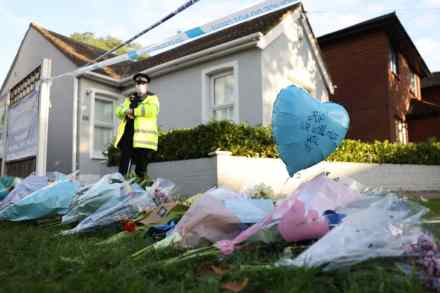
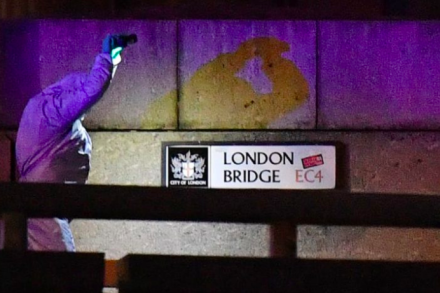
Sir David Amess’s backstory tells you much about his commitment to constituency politics that led to his cruel murder yesterday. He was born and grew up in a terraced house in London’s East End. There was little money. His dad was an electrician, his mother a tea lady and seamstress. In short they were not born into privilege and were exactly the kind of people who might visit an MP’s constituency surgery on a Friday in the hope of having their small catastrophes fixed. Democracy might be crowned with abstractions but it is built on the weekly efforts of our 650 MPs – who hear these struggles face to face and fight for the rights of people who sent them to parliament. On Friday David Amess was martyred to that cause, to which he devoted nearly 40 years of his life.

The problem with having a happy clappy prison service

From our UK edition

The new Justice Secretary Dominic Raab has said in the past that he wants prison to be ‘unpleasant.’ To that extent he should be pleasantly surprised. Our prisons are indeed engines of despair, indolence, violence and incivility. Our Prison and Probation Service, notoriously allergic to transparency and accountability, has been able to camouflage this to some extent during the pandemic. It’s harder for prisoners to be unpleasant when they’re locked down in a space hardly bigger than a disabled toilet for 23 hours a day. In the meantime, the department Raab has now inherited – with an ever-growing army of HQ bureaucrats – has not been idle.

Why are armed men still able to parade around Northern Ireland?

From our UK edition

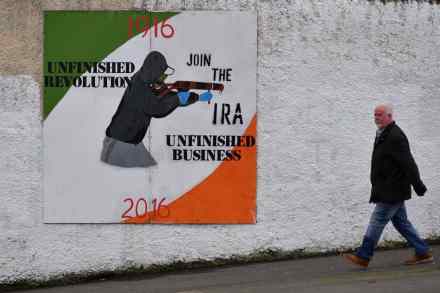
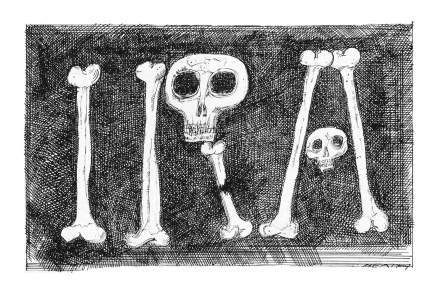
Is the Police Service of Northern Ireland equal to the task of dealing with the sour, indigestible remnants of Troubles paramilitarism? Events this weekend in an estate on the outskirts of Derry, showing yet more glorification of a terrorist by armed men firing weapons, suggests otherwise. Michael Devine, the man who was venerated by half a dozen goons dressed in black this weekend, starved himself to death in Northern Ireland’s notorious Maze prison in 1981 along with nine other republican prisoners in pursuit of political status. He was also a founder of the Irish National Liberation Army (INLA), one of the most viciously and overtly sectarian paramilitary death squads produced by the Troubles.

The case for isolating terrorists in prison is stronger than ever

From our UK edition

Watching last night’s ITV report from inside two of Britain’s highest security jails was an odd experience for me. The focus on terrorist offenders at HMP Frankland gave us a unique (although much pixelated) glimpse inside the separation units I urged the government to create back in 2016. I’ve had virtually no formal contact with HM Prison Service since. I sense this is in no small part due to the embarrassment I caused my former senior colleagues by revealing their corporate approach to counter terror –mired at that time in a culture of complacency, arrogance, denial and ineptitude. https://www.youtube.com/watch?

Boris’s crime crackdown will be harder than he thinks

From our UK edition

Can crime be beaten with a beaten down police force? The government certainly hopes so. Today, the Prime Minister launched the much trailed ‘Beating Crime’ Plan. Not trailed enough, according to the boss of the cops’ union, The Police Federation, who says the first he heard about the plan was last Sunday — shortly after his organisation, representing 130,000 front line officers, passed a vote of no confidence in the Home Secretary. How has this fracture between police and politicians come to pass? In rhetorical terms, this is the most pro-police administration in the last ten years. It has certainly worked hard to exorcise the malign impact of Theresa May.

Finally, a prison drama that captures the truth about life on the inside

From our UK edition

BBC One's new jailhouse drama is surprisingly watchable. ‘Time’ had me itching in my seat. And not in a good way. As a former prison officer, I remember the ‘NATO standard’ woolly pulley worn by Stephen Graham’s character with no affection but at least his seems to fit, which is bad continuity. All chafing aside, Sunday’s opener was a harrowing masterpiece. Having advised TV production companies on prison dramas in the past, I am used to producers saying, ‘Yes, we understand that’s not what happens in the real world, Ian, but we are trying to tell a story.

The catalogue of failures that allowed Usman Khan to kill

From our UK edition

The inquest into the murder of Saskia Jones and Jack Merritt by Islamist terrorist Usman Khan has revealed a collision of arrogance, hubris, naïveté and incompetence from which the two graduates arguably paid with their lives. Saskia and Jack were attached to a prison education programme supported by Cambridge University called ‘Learning Together’. The scheme, which appears not to have been formally evaluated, inspected or risk assessed by its creators – and had no clear rehabilitation purpose – placed criminology students from the university alongside prisoners on a study programme. In late 2017, at High Security HMP Whitemoor, Khan – an active threat to prison staff – was allowed to join this group.

Why Sinn Fein can’t really apologise for the IRA’s atrocities

From our UK edition

What are we to make of Sinn Fein's latest experiment with the language of regret when it comes to the murder of Lord Mountbatten just after his nephew’s Royal funeral? It's not hard to be cynical about the Shinners. This is after all the political party that appointed a convicted terrorist bomber as Director of 'Unionist outreach' not so long ago. A party that dragged its feet on pensions for victims of paramilitary terrorists in their attempt to include injured perpetrators. A party that police services on either side of the border says is run by shadowy figures in the army council of the IRA. Their uncamouflaged leader, Mary Lou McDonald chopped up a word salad in an interview on Times radio this weekend and came up with a new side dish in obfuscation.

Northern Ireland’s sink estates are fertile ground for fundamentalists

From our UK edition

Northern Ireland is routinely voted one of the happiest places to live in the UK. A few weeks ago, a survey revealed that Belfast was the best city to raise a family in Britain. The Province is in the top ten digital economies of the future. A world-class film production industry is transforming it into the Hollywood of Europe adding tens of millions of pounds to the local economy. It's a stark contrast to the ugly scenes from over the Irish Sea flashing across our screens this week. Working-class loyalist communities are in a dangerously mutinous mood that is hard to square with this parallel world. Alienation and opportunity often exist in the same postcode, literally a stone’s throw away.

A ‘hard rain’ is needed at the Ministry of Justice

From our UK edition

When was the last time you read about a cabinet minister saying officials had him ‘played for a fool'? Our Lord Chancellor, Robert Buckland, is nobody’s fool but he’s certainly had the mushroom treatment when it comes to conditions at the privately-run Rainsbrook secure children’s unit. It’s a sign of a much deeper cultural malaise familiar to all of us who once worked for the Ministry of Justice or its agencies.  A report into Rainsbrook’s operation released this week by the Commons Justice Select Committee exhausted superlatives when it described the incompetence of the contractor running the unit and its legions of state monitors, which allowed the institution to lock youngsters in their cells for 23 and a half hours a day for a fortnight.

Who’s to blame for the Clapham Common debacle?

From our UK edition

On Saturday evening, daughters, fathers and mothers of daughters and siblings of daughters gathered in Clapham Common at a vigil. Facing these police officers were hundreds of people seeking to remember Sarah Everard. What followed was a clash that turned what could have been a respectful memorial into a moment of apparently callous state repression threatening the future of the Met’s first female Commissioner, Cressida Dick. Dick has called out the armchair critics of her officers' actions in Clapham. But make no mistake: the Met Police is in the dock. And Dick's condemnation of those criticising her force won't wash, either for politicians or the senior leadership of the Met, who jointly carry the can.

No, jail staff shouldn’t call prisoners ‘residents’

From our UK edition

What do you call someone in prison? An inmate? Prisoner? How about a 'resident'? That's how those locked up in Britain's jails are now described by the Ministry of Justice and the Prison Service. Apart from the cringing absurdity of labelling people whom the state has detained as if they had voluntarily checked into the care home from hell, what does this tell us about the culture of the Prison Service? And why does it matter? The Ministry of Justice has form for assaults on the English language. Recent guidance on offenders, still under a prison sentence but being supervised in the community, has cancelled this apparently dangerously oppressive label replacing it with ‘supervised individuals’.

Are loyalists plotting a return to violence?

From our UK edition

What are we to make of Loyalist paramilitary groups withdrawing support for the Good Friday Agreement over the invidious trade border that now exists in the Irish sea? The Loyalist Communities Council, a group that represents the Ulster Volunteer Force (UVF), Ulster Defence Association (UDA) and the Red Hand Commando, has written to Boris Johnson and Ireland’s Taoiseach, Micheál Martin, warning of 'permanent destruction' of the 1998 peace agreement unless changes are made to the Brexit agreement.  'If you or the EU is not prepared to honour the entirety of the agreement then you will be responsible for the permanent destruction of the agreement,' David Campbell, the chairman of the LCC, said.

What Roy Greenslade doesn’t understand about the Troubles

From our UK edition

Belleek is the most westerly point in the United Kingdom. It’s a small village, right on Northern Ireland’s frontier where Country Fermanagh reaches out towards the Atlantic. The final destination for many motorists driving across a now invisible border are the beaches of County Donegal. It is the place we learned this weekend where journalist Roy Greenslade was persuaded to support the violent extremism of the provisional IRA in the 1970s and 80s. Greenslade’s views on republican terrorism were, of course, an open secret for many years, as he rose to senior positions at the Sunday Times, the Daily Mirror and, latterly, became a professor of journalism at City, University of London.

Unionists should work with the Irish Taoiseach

From our UK edition

Sinn Fein is not a normal political party. Don’t take my word for it, the charge is laid by the Irish Taoiseach, Micheál Martin, in his frequent clashes with the party’s leader Mary Lou McDonald in the Irish parliament. The Shinners smell power in the South. According to the latest polls they are the most popular party in the Republic of Ireland. Meanwhile the Irish political ruling class have long disdained Sinn Fein, a party that sees itself as the authentic inheritor of the 1916 uprising that ejected Britain from most of Ireland. But Sinn Fein shouldn’t be let off the hook for their unrepented and inextricable links to the Provisional IRA who, above all other combatants, perverted the cause of Irish unity with 30 years of sectarian slaughter.

Is a poetry contest really the way to remember Martin McGuinness?

From our UK edition

‘What rhymes with Patsy Gillespie?’ That was the starkest reaction on social media to the recent announcement of the launch of a poetry prize dedicated to Derry IRA commander and former deputy first minister of Northern Ireland, Martin McGuinness. Mr Gillespie, 42, was a cook at the Fort George Army base in Derry city. In October 1990, republican terrorists abducted him from his home in front of his family, taking them hostage. They chained him to the driver’s seat of a van full of explosives and forced him to drive into a permanent army checkpoint on the border where they detonated the 1,200lb bomb, killing him and five soldiers. Gillespie was identified only by a piece of his flesh stuck to a zip.  It’s hard to find any poetry in such sadistic barbarism.

The grim reality of being locked up during lockdown

From our UK edition

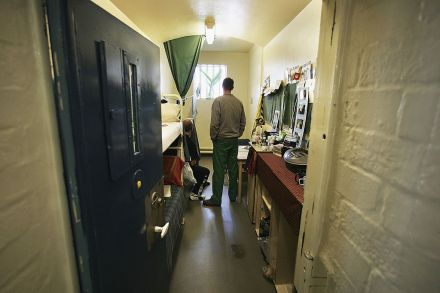
What's it like being locked up during lockdown? The latest statistics on prison safety paint a grim picture of life behind bars, which has been made worse by the pandemic. Even the good news must be caveated. Assaults on staff have reduced quite dramatically, which in any circumstances must be a good thing given a backdrop of record-breaking rates of violence until the virus struck. However, they have reduced mainly as a consequence of an unprecedented lockdown introduced to prevent the spread of Covid-19. This has dramatically reduced the time inmates spend outside their cells; as a consequence, it has rather limited the available opportunities for prisoners to knock seven bells out of prison officers and each other.

We need to stamp out extremism in our prisons

From our UK edition

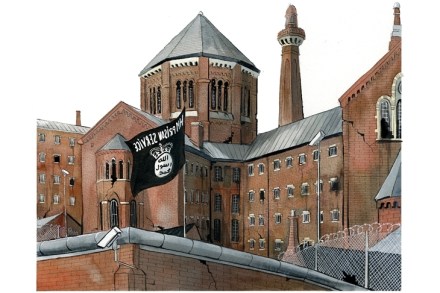
Jonathan Hall QC, the government’s independent reviewer of terrorism legislation, has launched an inquiry into how our prison service is managing the threat posed by terrorism. The backdrop to his review is the rapidly accumulating evidence that, across our penal system, violent extremism has increased its grip resulting in outrageous attacks on either side of the prison walls. In an interview with the Times, Hall said he found it ‘astonishing’ that convicted terrorists, far from being at risk from other vengeful inmates, achieve iconic status. This is not astonishing for those of us who have been writing and arguing for some years about the need for a transformed response to jail extremism that goes beyond benign containment.